Tamil Nadu: The Bastion of Hindu Dharma and Sanskrit Heritage
June 9, 2026
  • Read Ecopy
  • Circulation
  • Advertise
  • Careers
  • About Us
  • Contact Us
Android AppiPhone AppArattai
Organiser
  • ‌
  • Bharat
    • Assam
    • Bihar
    • Chhattisgarh
    • Jharkhand
    • Maharashtra
    • View All States
  • World
    • Asia
    • Europe
    • North America
    • South America
    • Africa
    • Australia
  • Editorial
  • International
  • Opinion
  • RSS @ 100
  • More
    • Op Sindoor
    • Analysis
    • Sports
    • Defence
    • Politics
    • Business
    • Economy
    • Culture
    • Special Report
    • Sci & Tech
    • Entertainment
    • G20
    • Azadi Ka Amrit Mahotsav
    • Vocal4Local
    • Web Stories
    • Education
    • Employment
    • Books
    • Interviews
    • Travel
    • Law
    • Health
    • Obituary
  • Subscribe
    • Subscribe Print Edition
    • Subscribe Ecopy
    • Read Ecopy
  • ‌
  • Bharat
    • Assam
    • Bihar
    • Chhattisgarh
    • Jharkhand
    • Maharashtra
    • View All States
  • World
    • Asia
    • Europe
    • North America
    • South America
    • Africa
    • Australia
  • Editorial
  • International
  • Opinion
  • RSS @ 100
  • More
    • Op Sindoor
    • Analysis
    • Sports
    • Defence
    • Politics
    • Business
    • Economy
    • Culture
    • Special Report
    • Sci & Tech
    • Entertainment
    • G20
    • Azadi Ka Amrit Mahotsav
    • Vocal4Local
    • Web Stories
    • Education
    • Employment
    • Books
    • Interviews
    • Travel
    • Law
    • Health
    • Obituary
  • Subscribe
    • Subscribe Print Edition
    • Subscribe Ecopy
    • Read Ecopy
Organiser
  • Home
  • Bharat
  • World
  • Operation Sindoor
  • Editorial
  • Analysis
  • Opinion
  • Culture
  • Defence
  • International Edition
  • RSS @ 100
  • Magazine
  • Read Ecopy
Home Bharat

Tamil Nadu: The Bastion of Hindu Dharma and Sanskrit Heritage

Tamil Nadu has historically preserved Hindu Dharma and Sanskrit, with its rulers, saints, and scholars ensuring their continuity alongside Tamil traditions. Despite modern narratives attempting to separate Tamil from Sanskrit, historical evidence highlights their deep-rooted coexistence in spiritual and scholarly domains

Dr Niranjan B PoojarDr Niranjan B Poojar
Mar 18, 2025, 07:00 pm IST
in Bharat, Tamil Nadu
Follow on Google News
FacebookTwitterWhatsAppTelegramEmail

Tamil Nadu has played a pivotal role in preserving Hindu Dharma and the Sanskrit language for millennia. Despite being a region with a distinct linguistic identity, its deep-rooted connection to Sanskrit and Sanatana Dharma remains unparalleled. This article explores how Tamil rulers, saints, and scholars safeguarded Hindu traditions and Sanskrit, ensuring their continued relevance. Through historical records, mandir traditions, and the contributions of great Tamil saints, we analyse the unbroken lineage of spiritual and linguistic continuity in the region.

Tamil Nadu, often regarded by Marxist ideologues as the cradle of Dravidian civilisation, has historically been a stronghold of Hindu Dharma and Sanskrit scholarship. Contrary to modern narratives that attempt to distance Tamil culture from Hindutva and Sanskrit, historical evidence shows a deep and symbiotic relationship between them. From the Sangam era to the Bhakti movement, Tamil Nadu has been instrumental in upholding Vedic and Hindu traditions.

The great Tamil dynasties, including the Cholas, Pallavas, and Pandyas, actively patronised Sanskrit along with Tamil, ensuring the survival of both languages. Tamil Nadu has also given rise to some of the greatest Hindu saints, such as Adi Shankaracharya, Ramanujacharya, and the Alwars, who not only upheld Hindu Dharma but also embraced Sanskrit scriptures.

Historical Legacy: Patronage of Sanskrit and Hindu Dharma

1. Tamil Dynasties and Their Contribution to Hindu Dharma

A. Pallava Dynasty (275 CE – 897 CE)

  • The Pallavas were ardent patrons of Hindu Dharma, responsible for constructing some of the earliest stone mandirs, including the Kailasanatha mandir in Kanchipuram.
  • They supported Sanskrit and Tamil scholars, commissioning inscriptions in both languages.
  • Mahendravarman and Narasimhavarman promoted the study of the Vedas and Upanishads while fostering Tamil literary traditions.

B. Chola Dynasty (848 CE – 1279 CE)

  • The Cholas were known for their unwavering devotion to Hindu Dharma and their contributions to Sanskrit scholarship.
  • The Copper Plates of Rajendra Chola (1042 CE) reveal that Sanskrit was used for religious and aristocratic purposes, while Tamil was used for administration and governance.
  • The magnificent Brihadeeswarar mandir in Thanjavur stands as a testament to their commitment to Hindu traditions.
  • Chola rulers made extensive donations to Sanskrit colleges (Agraharas), ensuring the preservation of Vedic knowledge.

C. Pandya Dynasty (4th Century BCE – 16th Century CE)

  • The Pandyas were known for their patronage of Vedic traditions, which contributed to the survival of Hindu Dharma in South.
  • The renowned Meenakshi mandir in Madurai became a hub for Sanskrit learning and Vedic rituals.
  • Scholars such as Nakkeerar and Parimelazhagar wrote Tamil commentaries on Sanskrit texts, proving that both languages coexisted harmoniously.

The Role of Tamil Bhakti Saints in Protecting Hindu Dharma

The Bhakti movement (6th–9th century CE) played a significant role in preserving Hindu Dharma and Sanskrit traditions. Saints such as the Alwars (Vaishnavite saints) and Nayanars (Shaivite saints) spread devotion to Vishnu and Shiva through Tamil hymns while revering Sanskrit scriptures such as the Vedas, Upanishads, and Bhagavad Gita.

A. Alwars (Vaishnavite Saints)

  • Saints such as Periyalvar, Andal, and Nammalvar wrote Tamil hymns (Divya Prabandham) inspired by Sanskrit scriptures.
  • Their hymns reflect deep Vedic knowledge and encouraged mandir worship aligned with Hindu traditions.
  • Sri Ramanujacharya, the great Vaishnavite philosopher, played a crucial role in propagating Sanskrit and Tamil Hindu scriptures while revitalising Vishishtadvaita Vedanta.

B. Nayanars (Shaivite Saints)

  • Prominent saints such as Appar, Sundarar, and Manikkavasagar composed Tamil hymns that upheld the core tenets of Hindu Dharma
  • Their works align with Sanskrit Agamas and Vedic traditions, demonstrating that Tamil and Sanskrit complemented each other.

Mandirs as Centers of Sanskrit Learning and Hindu Dharma

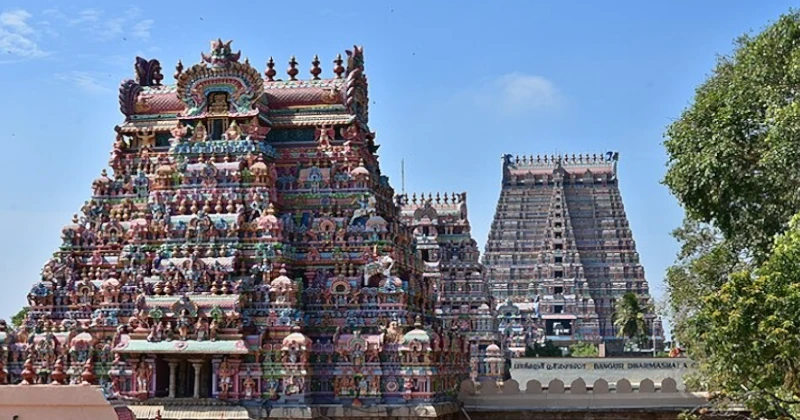
Tamil Nadu is home to some of the grandest Hindu mandirs, which served as centers of Sanskrit learning and Vedic discourse.

  • Chidambaram mandir – A hub of Vedic studies and home to the famous Sanskrit Ananda Tandava Stotra.
  • Kanchipuram – Known as the “City of a Thousand mandirs,” it became a center for Advaita Vedanta, largely due to Adi Shankaracharya’s influence.
  • Ranganathaswamy mandir, Srirangam – A sacred site where Ramanujacharya propagated Vishishtadvaita Vedanta, ensuring the continuity of Sanskrit scriptures.
  • Madurai’s Meenakshi mandir – A Shaiva Siddhanta and Vedic learning hub that continues to perform rituals in accordance with Sanskrit traditions.

The Harmony Between Tamil and Sanskrit

Tamil Nadu has always upheld a unique balance between Tamil and Sanskrit. Several Tamil scholars wrote extensively on Sanskrit texts, translating and interpreting them for a wider audience.

A. Kambar and His Contribution

Kambar, the great Tamil poet, translated Valmiki’s Ramayana into Tamil (Kamba Ramayanam), preserving the essence of the original Sanskrit text.

B. Thiruvalluvar and the Influence of Sanskrit

  • Thiruvalluvar, the legendary Tamil poet and author of Thirukkural, was deeply influenced by Sanskrit scriptures such as the Dharmashastras and Bhagavad Gita.

C. Agastya: The Bridge Between Tamil and Sanskrit

  • Sage Agastya, revered in both Tamil and Sanskrit traditions, is credited with bringing Sanskrit knowledge to Tamil Nadu while also enriching Tamil grammar and literature.

Modern Challenges and the Need for Revival

During colonial rule, a narrative was propagated to create a false divide between Tamil and Sanskrit. The British and missionary scholars encouraged the “Dravidian vs. Aryan” theory, leading to attempts to disconnect Tamil identity from Hindu Dharma and Sanskrit traditions. Even today, political and ideological movements seek to downplay Sanskrit’s influence in Tamil Nadu. However, historical and mandir traditions prove that Tamil Nadu has always been a defender of Sanatana Dharma and Sanskrit heritage.

Tamil Nadu has played an indispensable role in preserving Hindu Dharma and Sanskrit. The great Tamil kings, saints, and scholars ensured that Sanskrit and Tamil coexisted harmoniously, complementing each other in spiritual and administrative domains. Despite modern distortions, the region remains deeply intertwined with Hindu traditions and Sanskrit learning. Tamil Nadu remains a beacon of Hindu Dharma, proving that its cultural roots are deeply embedded in both Tamil and Sanskrit traditions.

Topics: CholasSanatana DharmaHindu DharmaPandya DynastySanskrit HeritageMeenakshi mandir
ShareTweetSendShareSend
✮ Subscribe Organiser YouTube Channel. ✮
✮ Join Organiser's WhatsApp channel for Nationalist views beyond the news. ✮
Previous News

Bihar: Elderly Dalit woman thrashed and raped allegedly in Gopalganj, police arrests key accused Chote Alam

Next News

Bofors cover-up still haunts India: ‘Papers don’t lie, but governments do,’ says Chitra Subramaniam

Related News

Tamil Nadu Governor Rajendra Vishwanath Arlekar

Tamil Nadu Governor calls Thiruvalluvar a ‘sanatani’; says his wisdom matters more than saffron or white robes

An eternal civilization cannot be eradicated! The Sanatana Dharma debate beyond politics and ideology

The 12 Major Upanishads explained in detail: Complete philosophical guide to Sanatan Dharma and Vedic wisdom

Tamil Nadu CM Joseph Vijay , TVK Madurai Central MLA VMS Mustafa , Udayanidi Stalin, DMK MLA (Left to Right)

Tamil Nadu: Hindus question CM Joseph’s silence after TVK MLA Mustafa endorses Udhayanidhi’s anti-Sanatana remarks

Tamil Nadu: Udhayanidhi Stalin repeats ‘eradicate Sanatana’ remark inside Assembly, CM Joseph silently nods his head

Kedarnath Dhaam opens from April 22, Wednesday

Kedarnath Opens: A sacred journey into India’s timeless spiritual consciousness

Load More

Latest News

India delivered a historic performance at the inaugural World Yogasana Championships, finishing at the top of the medal tally with an astounding 114 medals, including 102 golds

World Yogasana Championships: India scripts historic triumph with 114 medals and 102 gold medal wins

Protest erupts in POJK

Why is PoJK protesting? JAAC ban, anti-Pakistan slogans and public anger against Pakistan Army — Read here

India slams Pakistan over its Fatna al Hindustan narrative

India tears Pakistan at UN over ‘Fitna al Hindustan’ narrative; Exposes Islamabad as an ‘organised factory of hate’

India's Permanent Representative to United Nations Ambassador Harish Parvathaneni

India & Afghanistan are “civilisational states”: Indian Envoy at UN reaffirms health, education & humanitarian aid

Bulldozer action on houses linked to drug traffickers in Rourkela's Meenapada area

Odisha: Major crackdown on drug traffickers in Rourkela; Bulldozers demolish houses of Farida, Imran & other accused

Prime Minister Narendra Modi with Agri Minister Shivraj Singh Chouhan

India’s Agricultural Revolution: Rising output, record procurement and expanding farmer support since 2014

Remembering Birsa Munda on his death anniversary

Birsa Munda Death Anniversary: Revisiting the life & enduring legacy of India’s legendary tribal icon Dharti Aaba

A massive 200-kg Shivling recovered from the waters of the Ganga in Varanasi

Hidden Beneath the Ganga for 2,500 Years? 200 kg Shivling discovery draws thousands of devotees in Kashi

A representative image

Four years of Jan Samarth: How India’s digital credit gateway has processed over Rs 3 lakh crore in loan applications

The Ganesha idols are the historical evidence of the Temples of learning at Qutub Complex, part of the broken remains from the 27 Nakshatra Vidya Mandirs that were destroyed by invaders

Why is it important to reclaim the Hindu heritage of the ‘Qutub Complex’?

Load More
  • Privacy
  • Terms
  • Cookie Policy
  • Refund and Cancellation
  • Delivery and Shipping

© Bharat Prakashan (Delhi) Limited.
Tech-enabled by Ananthapuri Technologies

  • Home
  • Search Organiser
  • Bharat
    • Assam
    • Bihar
    • Chhattisgarh
    • Jharkhand
    • Maharashtra
    • View All States
  • World
    • Asia
    • Africa
    • North America
    • South America
    • Europe
    • Australia
  • Editorial
  • Operation Sindoor
  • Opinion
  • Analysis
  • Defence
  • Culture
  • Sports
  • Business
  • RSS @ 100
  • Entertainment
  • More ..
    • Sci & Tech
    • Vocal4Local
    • Special Report
    • Education
    • Employment
    • Books
    • Interviews
    • Travel
    • Health
    • Politics
    • Law
    • Economy
    • Obituary
  • Subscribe Magazine
  • Read Ecopy
  • Advertise
  • Circulation
  • Careers
  • About Us
  • Contact Us
  • Policies & Terms
    • Privacy Policy
    • Cookie Policy
    • Refund and Cancellation
    • Terms of Use

© Bharat Prakashan (Delhi) Limited.
Tech-enabled by Ananthapuri Technologies