TISS Study: Influx of Bangladeshis and Rohingya migrants a bane on Mumbai’s resources, fuels socio-economic tensions
August 16, 2026
  • Read Ecopy
  • Circulation
  • Advertise
  • Careers
  • About Us
  • Contact Us
Android AppiPhone AppArattai
Organiser
  • ‌
  • Bharat
    • Assam
    • Bihar
    • Chhattisgarh
    • Jharkhand
    • Maharashtra
    • View All States
  • World
    • Asia
    • Europe
    • North America
    • South America
    • Africa
    • Australia
  • Editorial
  • International
  • Opinion
  • RSS @ 100
  • More
    • Op Sindoor
    • Analysis
    • Sports
    • Defence
    • Politics
    • Business
    • Economy
    • Culture
    • Special Report
    • Sci & Tech
    • Entertainment
    • G20
    • Azadi Ka Amrit Mahotsav
    • Vocal4Local
    • Web Stories
    • Education
    • Employment
    • Books
    • Interviews
    • Travel
    • Law
    • Health
    • Obituary
  • Subscribe
    • Subscribe Print Edition
    • Subscribe Ecopy
    • Read Ecopy
  • ‌
  • Bharat
    • Assam
    • Bihar
    • Chhattisgarh
    • Jharkhand
    • Maharashtra
    • View All States
  • World
    • Asia
    • Europe
    • North America
    • South America
    • Africa
    • Australia
  • Editorial
  • International
  • Opinion
  • RSS @ 100
  • More
    • Op Sindoor
    • Analysis
    • Sports
    • Defence
    • Politics
    • Business
    • Economy
    • Culture
    • Special Report
    • Sci & Tech
    • Entertainment
    • G20
    • Azadi Ka Amrit Mahotsav
    • Vocal4Local
    • Web Stories
    • Education
    • Employment
    • Books
    • Interviews
    • Travel
    • Law
    • Health
    • Obituary
  • Subscribe
    • Subscribe Print Edition
    • Subscribe Ecopy
    • Read Ecopy
Organiser
  • Home
  • Bharat
  • World
  • Operation Sindoor
  • Editorial
  • Analysis
  • Opinion
  • Culture
  • Defence
  • International Edition
  • RSS @ 100
  • Magazine
  • Read Ecopy
Home Bharat

TISS Study: Influx of Bangladeshis and Rohingya migrants a bane on Mumbai’s resources, fuels socio-economic tensions

A recent report by the Tata Institute of Social Sciences (TISS) titled Illegal Immigration to Mumbai: Analysing Socio-Economic and Political Consequences—highlights how the steady influx of Bangladeshi and Rohingya migrants is straining Mumbai’s already overburdened infrastructure and creating deep-seated cultural insecurities among local residents

Richa KapoorRicha Kapoor
Nov 15, 2024, 05:00 pm IST
inBharat, Delhi
Follow on Google News
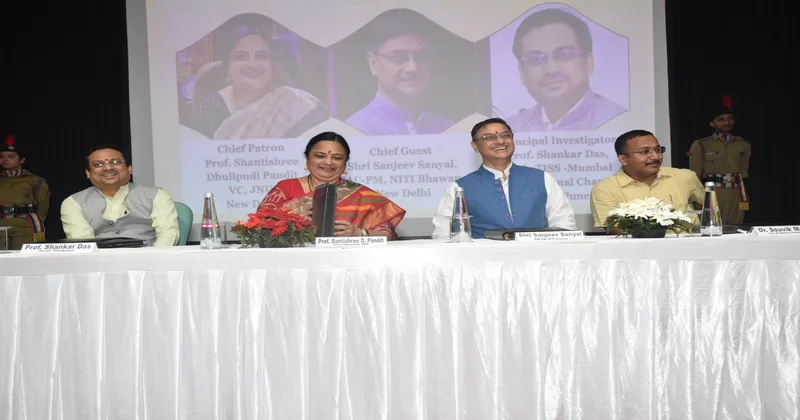
(From Left to Right) Prof. Shankar Das (Pro Vice-Chancellor,Dean, School of Health Systems Studies, TISS);JNU VC Santishree Pandit; Sanjeev Sanyal, economist and member of the Economic Advisory Council to the Prime Minister; Souvik Mondal (Asst. Prof., School of Health System Studies, TISS)

(From Left to Right) Prof. Shankar Das (Pro Vice-Chancellor,Dean, School of Health Systems Studies, TISS);JNU VC Santishree Pandit; Sanjeev Sanyal, economist and member of the Economic Advisory Council to the Prime Minister; Souvik Mondal (Asst. Prof., School of Health System Studies, TISS)

Facebook
Twitter
WhatsAppTelegramEmail

NEW DELHI: A national seminar titled “Illegal Migration to Mumbai: Analysing Social, Economic, and Political Consequences” was recently organised at Jawaharlal Nehru University (JNU). During the seminar a report prepared by Tata Institute of Social Sciences was presented which showcased how the Illegal immigrants have precariously overcrowded in Mumbai slums, putting unsustainable pressure on the city’s public services like healthcare, education, and sanitation, water supply,  electricity.

While addressing the gathering Prof. Shankar Das (Pro Vice-Chancellor, Dean, School of Health Systems Studies) highlighted that it is high time that the people and the authorities wake up to this alarming situation. TISS Pro VC Shankar Das highlighted how immigration pressures India’s economic and social fabric, pointing to threats to infrastructure, population dynamics, and cultural identity. “It’s a great concern for the nation, especially for its economic opulence, population dynamics, health, and other amenities,” Das said, expressing concern about the risks posed to language and culture.

According to the report, prepared by Souvik Mondal (Asst. Prof., School of Health System Studies), Rohingyas immigrants are reshaping Mumbai’s labour market and demographic balance, igniting social tensions. A large number of these Rohingyas and illegal migrants from Bangladesh secure low-skill jobs. They seek employment as domestic workers and in sectors like construction and informal sales at very low wages thereby fueling resentment among local residents. A large number of these illegal migrants send remittances to their home countries, which not only reduces potential tax revenues for India but also impacts the nation’s  economic growth.
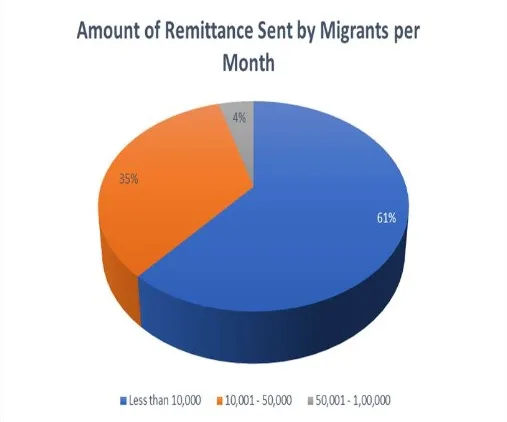
Amount of remittances sent by migrants per month. (TISS Report: Primary survey, 300 samples)

Most of these people are working in sectors such as construction, domestic work, and informal sales at very low wages and that is fueling resentment among local residents. The report indicates this competition is a growing vulnerability, as political factions exploit it for vote-bank dynamics, thereby fuelling communal divides and adding layers of social unrest in the city.
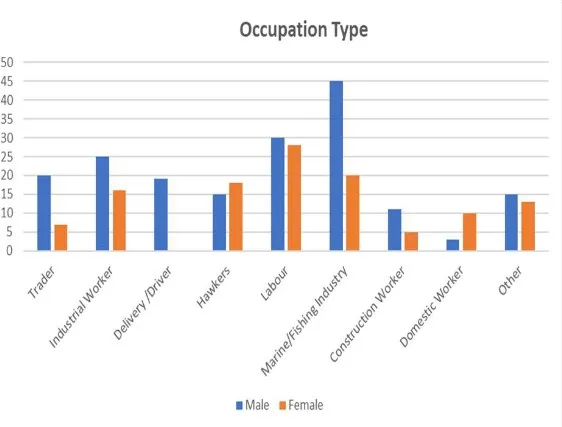
Type of occupation of the illegal migrants

Demographic Shifts Intensify Social Divides

The TISS report has highlighted that from 1951 to 1981, both total population growth and natural increase rose steadily, with natural increase peaking during the 1971-1981 decade due to industrialisation and economic expansion which decreased significantly by 2011, indicating a trend of slowing population growth influenced by socio-economic factors.

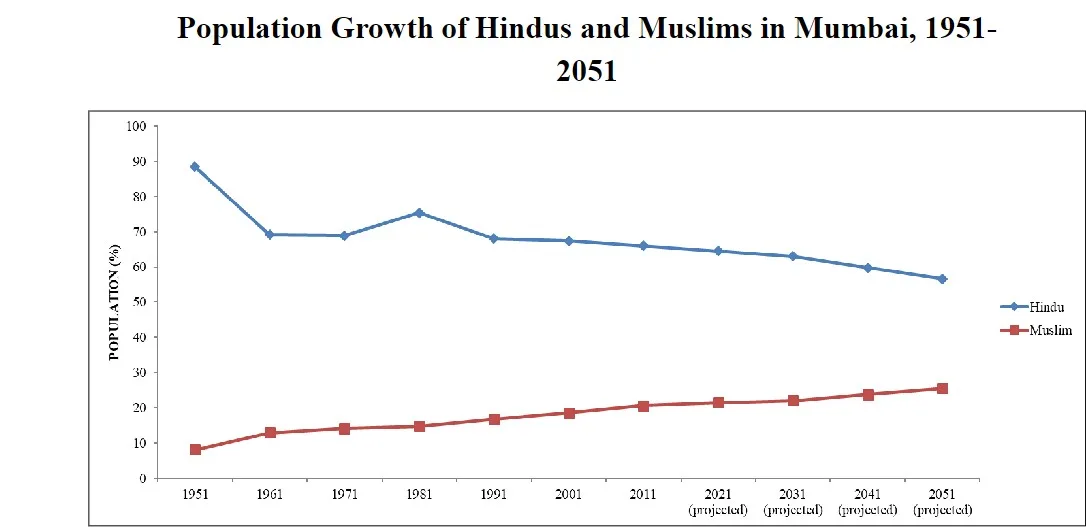
The male population consistently exceeded the female population, with a narrowing gap from 1991 to 2011 due to improved gender equality and job opportunities for women. Hindus represented about 90 per cent of the population in 1951, declining to around 65 per cent by 2011, while Muslims increased from below 10 per cent to around 20 per cent in the same period.
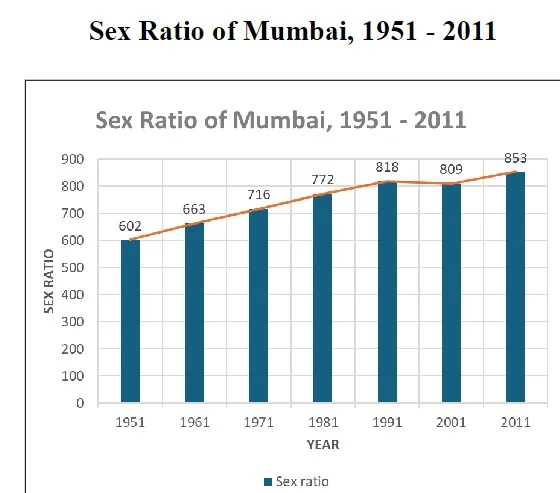
Sex Ratio (TISS Report: Primary Survey, 300 samples)

The TISS report highlights the city’s stark demographic shifts over recent decades. The Hindu population in Mumbai has declined from 88 percent in 1961 to 66 percent in 2011, while the Muslim population has risen from 8 percent to 21 percent in the same period. The report warns of projections indicating that by 2051, Hindus could fall below 54 percent, with the Muslim population potentially rising to 30 percent. This shifting balance, the report states, has fostered a sense of cultural insecurity among the Marathi population, with local residents fearing an erosion of traditional values and community cohesion.
xx

Network Sustaining Illegal Immigration

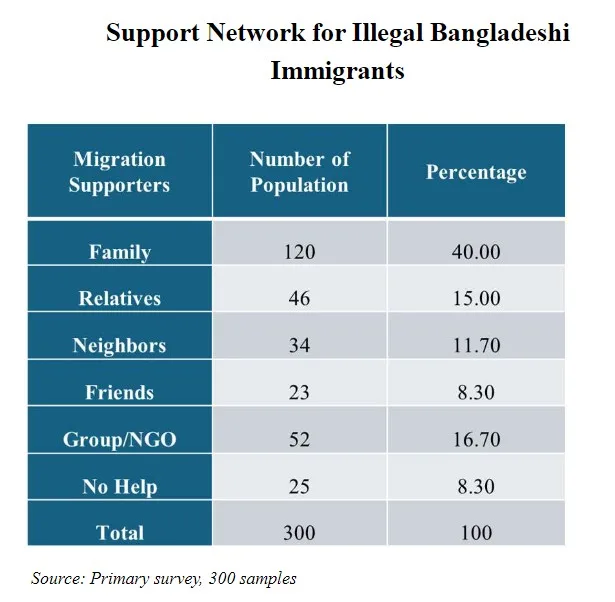
The TISS study identifies a complex network that facilitates the illegal migration of Bangladeshi and Rohingya nationals into Mumbai. A primary survey conducted by TISS revealed that 40 percent of migrants rely on family ties within the city to maintain their residency, while informal support structures help many others navigate local challenges. This network, according to the report, enables a cyclical pattern of migration that further strains Mumbai’s infrastructure.
Meanwhile, addressing the gathering, Sanjeev Sanyal, economist and member of the Economic Advisory Council to the Prime Minister, termed illegal immigration a global issue which has huge implications on politics, security, and the country’s demographics worldwide.

Sanyal highlighted the global relevance of the issue. “Elections are being fought on the topic of illegal immigration, whether we like it or not,” he stated. “It is now a global issue. It is a topic that is debated, it is an issue that drives electoral politics both ways, and it is an issue that I think ultimately needs to be honestly discussed. One of the real problems has been that, due to certain misplaced political correctness, this issue has not been discussed seriously, particularly in academia, where it was considered a topic that was to be sort of brushed under the carpet. But I think the time has come to have an honest discussion on this matter,” Sanyal added.

JNU VC Santishree Pandit echoed the concerns around illegal immigration. She urged the audience to understand the potential risks posed by unregulated migration. “Please remember, let us not be in a state of denial,” she said, stressing that unchecked immigration could undermine constitutional rights, especially for women and marginalised communities. “The constitutional rights and women’s rights given by Babasaheb Ambedkar to India will be at stake because those who come in do not accept that constitution. They want their own law above the Constitution of India.”

Pandit urged young intellectuals to understand the depth of Ambedkar’s views on migration and communal harmony. Quoting from Ambedkar’s work Pakistan or the Partition of India, she highlighted his advocacy for structured migration policies to ensure societal balance. “Please stop garlanding him and start reading him,” she advised, calling on citizens to honour Ambedkar’s legacy by safeguarding his vision of India’s inclusive, constitutional framework.

The TISS report calls for both immediate and long-term policy interventions to stem the inflow of illegal migrants, address employment imbalances, and protect the socio-cultural fabric of Mumbai. Without such measures, the study warns, Mumbai’s infrastructure may reach a breaking point, exacerbating both social and political volatility in one of India’s largest metropolitan centers.

Topics: JNUEconomicTISSIllegal Migration to Mumbai: Analysing Socialand Political Consequences
Richa Kapoor
Richa Kapoor
Richa Kapoor is working as Senior Assistant editor for the digital platform of Organiser. She writes for us on a wide array of topics including finance, education, politics, and international affairs. Her interest also lies in covering issues related to protection of cows and doing soft stories. [Read more]
Share12
Tweet
SendShareSend
✮ Subscribe Organiser YouTube Channel. ✮
✮ Join Organiser's WhatsApp channel for Nationalist views beyond the news. ✮
Previous News

Kerala: Controversy erupts over State Government’s online booking system for Sabarimala Pilgrimage

Next News

The Hindu Spiritual & Service Fair 2024: Celebrating Bharatiya values through service and spirituality

Related News

JNU Prof loses cool over ABVP slogans against Umar Khalid amid venue row

Video| JNU Prof loses cool when ABVP targets Umar Khalid as University cancels venue for UAPA accused’s book programme

ABVP Opposes function on Delhi riot accused Umar Khalid in JNU; Programme cancelled

ABVP JNU opposes programme linked to Umar Khalid at Jawaharlal Nehru University; Programme cancelled

JNU cancels auditorium booking for Umar Khalid's book discussion

JNU cancels Umar Khalid’s book discussion event as permission was asked for ‘Adivasi Diwas’ hiding the real purpose

JNU Cites SC Order, Urges Campus Community to Avoid Jantar Mantar

JNU issues advisory asking students, staff to avoid gatherings at Jantar Mantar, exercise restraint on social media

ABVP JNU takes out funeral procession to commemorate the end of Maoism

ABVP JNU marks March 31 as ‘End of red terrorism’ with effigy burning

Heavy police deployment formed a barricade at the JNU entrance on Thursday as a large crowd of left activists gathered, reflecting the escalating tension on campus

JNU Violence Ground Report: How left extremist politics disrupt academic atmosphere and deepens crisis in the campus

Load More

Latest News

Muslim League anchored planned atrocities against Hindus on Direct Action Day in Calcutta

Decoding the horrors of Direct Action Day; Revisiting the forgotten lessons from the streets of Calcutta

Punjab: NHRC member Priyank Kanoongo flags no I-Day Celebrations at schools near India-Pak border; questions AAP Govt

Great Calcutta Killings 1946

Great Calcutta Killings in August 1946: Urban pogrom and the teleology of partition in colonial Bengal and India

Independence Day 2026: World leaders wish India, hail its global rise & growth story; Signals deeper strategic ties

Kerala: Halal Fayida Islamic Banking Cooperative Society depositors stranded as crores remain unaccounted for

Abusive language used during recent protest in Delhi cannot be the language of Bharatiya youth. It is time to introspect yourself where are we making mistakes in guiding our future generation

80th Independence Day: Youth and Nation – Change begins with responsibility

The Tiranga embodies India’s freedom, unity and values, inspiring us to turn patriotism into responsible action

From Tiranga in Every Home to Tiranga in Every Heart: Turning national pride into everyday patriotism

Atul Limaye, Sah Sarkaryavah, RSS, while addressing at an Akhil Bharatiya Vidyarthi Parishad (ABVP), the student wing of the RSS, event held in Chhatrapati Sambhajinagar in Maharashtra, on August 2

Independence Day 2026: Youth and Nation – The Anarchic alternative

Keralam: CM Satheeshan omits Vande Mataram on Independence Day at govt offices; BJP events render full version

Decolonisation saw nations across Africa and Southeast Asia reclaim their cultures, languages and identities after independence (This image is generated by AI)

From Colonial Rule to Cultural Revival: How African and Southeast Asian nations shed their colonial legacies

Load More
  • Privacy
  • Terms
  • Cookie Policy
  • Refund and Cancellation
  • Delivery and Shipping

© Bharat Prakashan (Delhi) Limited.
Tech-enabled by Ananthapuri Technologies

  • Home
  • Search Organiser
  • Bharat
    • Assam
    • Bihar
    • Chhattisgarh
    • Jharkhand
    • Maharashtra
    • View All States
  • World
    • Asia
    • Africa
    • North America
    • South America
    • Europe
    • Australia
  • Editorial
  • Operation Sindoor
  • Opinion
  • Analysis
  • Defence
  • Culture
  • Sports
  • Business
  • RSS @ 100
  • Entertainment
  • More ..
    • Sci & Tech
    • Vocal4Local
    • Special Report
    • Education
    • Employment
    • Books
    • Interviews
    • Travel
    • Health
    • Politics
    • Law
    • Economy
    • Obituary
  • Subscribe Magazine
  • Read Ecopy
  • Advertise
  • Circulation
  • Careers
  • About Us
  • Contact Us
  • Policies & Terms
    • Privacy Policy
    • Cookie Policy
    • Refund and Cancellation
    • Terms of Use

© Bharat Prakashan (Delhi) Limited.
Tech-enabled by Ananthapuri Technologies