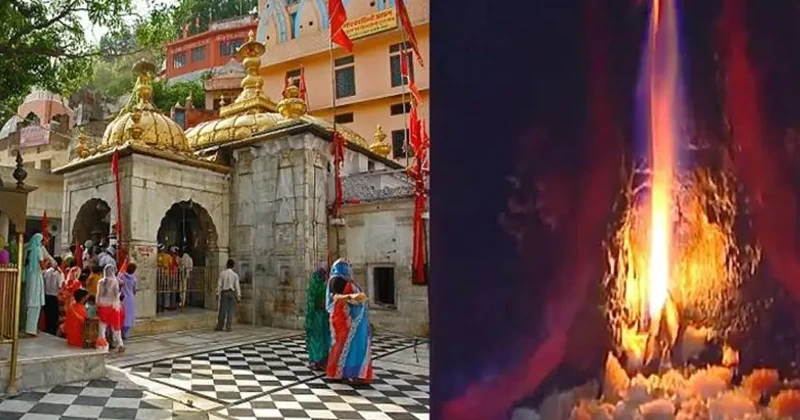
In the annals of Bharat’s history, few figures have been as mythologised as Akbar, the Mughal emperor often hailed as the epitome of religious tolerance. His legacy, however, has been shaped by selective memory and political agendas, creating an image of a ruler who supposedly bridged the divide between Hinduism and Islam. One of the most enduring myths surrounding Akbar is that he visited the Jwala Ji temple, a sacred site for Hindus in the hills of Himachal Pradesh. This claim, however, lacks any historical foundation. It is not recorded in any of Akbar’s official accounts, most notably the Akbarnama, which serves as the definitive chronicle of his reign. Instead, the story of his supposed pilgrimage to the Jwala Ji temple is an invention that has been perpetuated over time to construct a narrative of Akbar as a religiously tolerant and enlightened ruler.
The Alleged Visit to Jwala Ji Temple: A Fabrication
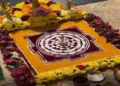
The Jwala Ji temple, a revered Hindu shrine, has been a significant site of worship for centuries, representing the enduring faith of Hindus across generations. The legend of Akbar visiting this sacred temple has been passed down through folk traditions, often cited as proof of his supposed religious inclusiveness.
The local priest, Girish Sharma Ji, is important in sharing the historical and mystical narratives surrounding the Jwala Ji temple. According to his recounting, the story of Emperor Akbar’s interaction with the temple is one of defiance followed by reluctant reverence. Initially sceptical due to his Islamic beliefs, Akbar sought to extinguish the eternal flames of Maa Jwala Devi by flooding the sanctum with water and covering the flames with iron plates. However, despite these efforts, the flames continued to burn brightly, an event which the priest and local devotees interpret as a manifestation of divine power.
Girish Sharma Ji further elaborates that, after witnessing this miracle, Akbar offered a golden Chhattar (umbrella) to the goddess in a gesture of humility. However, the umbrella was said to have been transformed into another metal, indicating the goddess’s rejection of the gift in response to the emperor’s previous attempts to control or destroy the divine presence.
This tale, shared by Girish Sharma Ji and other priests at the temple, remains a crucial part of the local religious narrative and is viewed by the community as a testament to the enduring power and sanctity of Maa Jwala Devi. The story speaks to the mystical and miraculous nature of the temple and serves as a symbol of faith triumphing over scepticism, regardless of one’s beliefs.
However, the Akbarnama, Akbar’s own detailed account written by his court historian, Abul Fazl, makes no mention of such an event. Given the temple’s prominence and Akbar’s role in shaping historical narratives, if he had indeed visited it, this would have been a noteworthy event recorded for posterity. The absence of any reference to the visit in this primary historical text strongly suggests that the story distorts history.
The Akbarnama is a comprehensive account of Akbar’s military victories, political strategies, cultural pursuits, and personal life. Had Akbar made such a pilgrimage to a major Hindu religious site, it would have been documented in this official record. It not only underscores the inaccuracy of this tale but also highlights the constructed nature of the myth propagated through later interpretations of his reign.
Religious Tolerance: A Selective Narrative
Akbar’s reign is frequently lauded for its supposed religious tolerance. He is often depicted as a ruler who transcended religious boundaries, promoting an environment of peace and coexistence between Hindus and Muslims. His policy of Sulh-e-Kul (peace with all) is celebrated as a groundbreaking initiative aimed at fostering harmony. Akbar abolished the jizya tax on non-Muslims, promoted Hindus to key positions in his administration, and engaged in interfaith dialogue with scholars from diverse backgrounds. Yet, this portrayal overlooks a more nuanced and, at times, contradictory reality.
Akbar’s religious policies were, at best, pragmatic attempts to maintain control over a vast, diverse empire. While he did promote Hindus to high offices and made symbolic gestures of tolerance, his actions were often motivated by political expediency. His religious inclusivity, for instance, helped consolidate loyalty among his Hindu subjects, who comprised a significant portion of his empire’s population. However, this tolerance was not always consistent. His early reign saw religious persecution, destruction of temples, and forced conversions—actions that contradict the image of the tolerant ruler that has come to dominate popular historical narratives.
The Darker Side of Akbar’s Rule
While marked by some moments of religious tolerance, Akbar’s reign was also shaped by authoritarianism and, at times, religious intolerance. His early years as emperor were far from peaceful in the religious sense. Akbar followed strict Sunni practices and did not hesitate to impose them upon others. He oversaw the destruction of several Hindu temples, including the Keshava Deo temple in Mathura, which was demolished to make way for the Idgah mosque—a clear act of religious dissent.
Furthermore, his attempts to create a new syncretic religion, Din-i Ilahi, failed miserably, highlighting the limits of his religious vision. This attempt to blend Hinduism, Islam, and other religions was not widely accepted and died out shortly after his death, further demonstrating the ineffectiveness of his religious policies when not backed by genuine popular support.
Why the Myth of Jwala Ji Temple Visit Persists
So why does the myth of Akbar’s visit to Jwala Ji temple persist? The answer lies in the post-colonial construction of Akbar’s image. During the British colonial period, historians and administrators often emphasised the “tolerant” aspects of Akbar’s rule to present him as a model ruler who could control his empire through benevolent governance. This narrative, forged in the fires of colonialism, was further perpetuated in the post-independence era, where Akbar was used as a symbol of unity between Hindus and Muslims in Bharat.
In a country where religious divisions have often been exploited for political purposes, the myth of Akbar’s religious tolerance became an idealised version of history. By emphasising his supposed visit to the Jwala Ji temple, historians and politicians have sought to reinforce the narrative of a ruler who bridged divides, casting aside the more inconvenient aspects of his reign.
The Importance of Revisiting Historical Truths
It is imperative that we critically engage with historical narratives and challenge the myths that have been perpetuated over time. The story of Akbar’s alleged visit to Jwala Ji temple is not just a minor inaccuracy but a distortion of history that serves a larger political and ideological agenda. It creates a one-dimensional image of Akbar as a perfect, tolerant ruler and obscures the complexities and contradictions of his reign.
By revisiting primary sources, such as the Akbarnama and other contemporary accounts, we can uncover a more accurate portrayal of Akbar—one that acknowledges his achievements and shortcomings. Akbar was undoubtedly a shrewd political leader and a significant figure in Bharat’s history, but his reign was not free from religious intolerance, authoritarianism, or the destruction of cultural heritage.
It is vital to recognise the distortion of historical narratives, such as the alleged visit of Akbar to the Jwala Ji temple, because it shapes our collective memory and cultural identity. By relying on fabricated tales of religious tolerance, we obscure the authentic history of Bharat, including the experiences of those who faced religious persecution under Mughal rule.