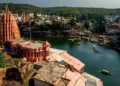
As Jharkhand heads into elections, the Organiser team has been travelling the state’s villages and tribal belts, witnessing first-hand the intensity of this neck-and-neck contest. The major players—Jharkhand Mukti Morcha (JMM) and Bharatiya Janata Party (BJP)—have rallied their bases with distinct promises and priorities. JMM, the incumbent party, banks on a platform of freebies, notably Rs 2,500 monthly aid for women and increased MSP for farmers. Meanwhile, the BJP’s campaign focuses on Adivasi Asmita (tribal identity) and calls attention to illegal infiltration, a matter they claim threatens the region’s demographic and cultural fabric.
Currently, we are in the heart of Santhal Pargana, a region historically tied to tribal heritage, comprising districts like Sahibganj, Pakur, Dumka, Godda, and Deoghar. Here, BJP claims that illegal Bangladeshi settlements are eroding the local demographic landscape—a claim the JMM-led government has dismissed as exaggeration, accusing the BJP of fear-mongering.
Mosque and madrasa in every three kilometer
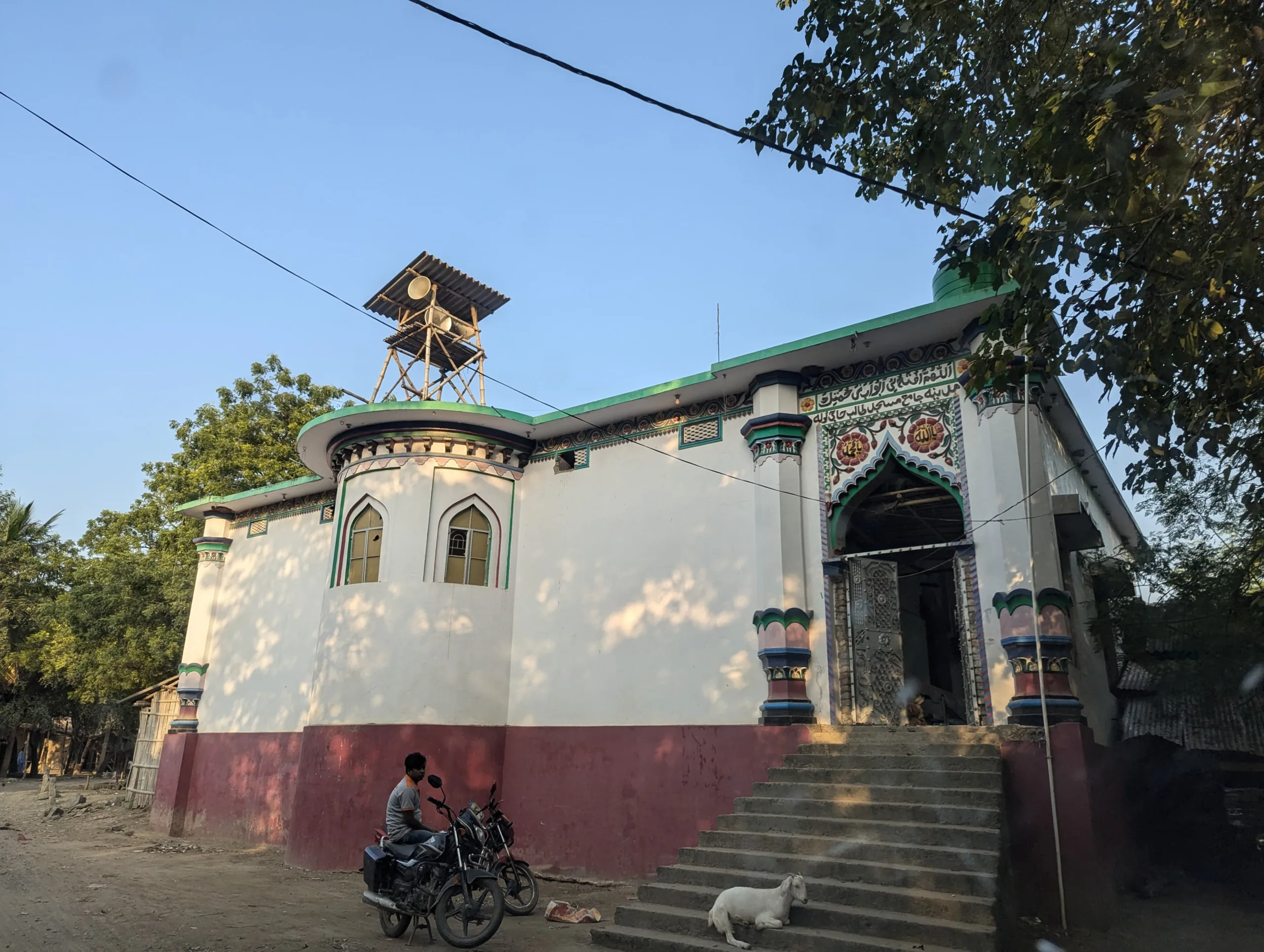
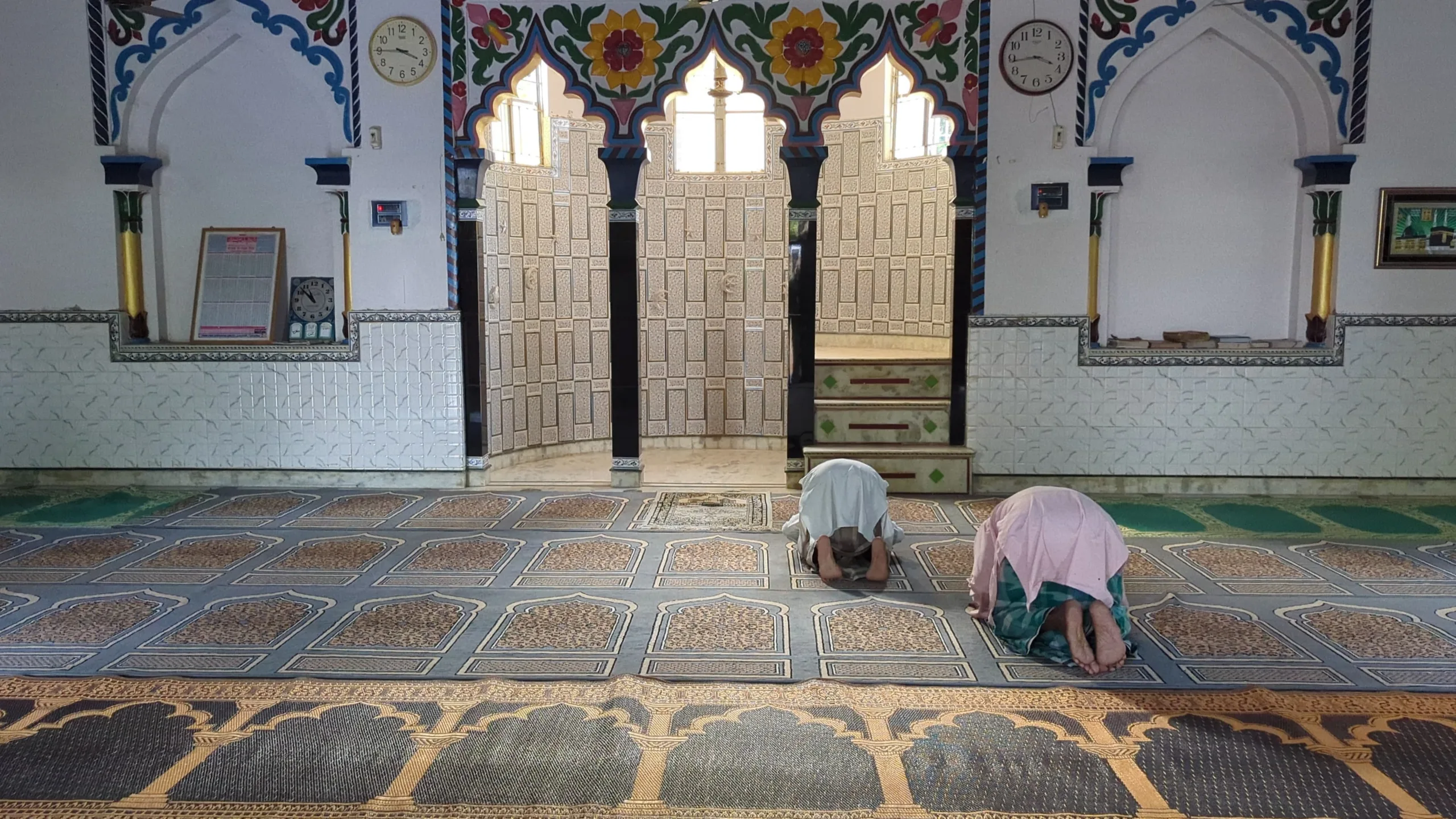
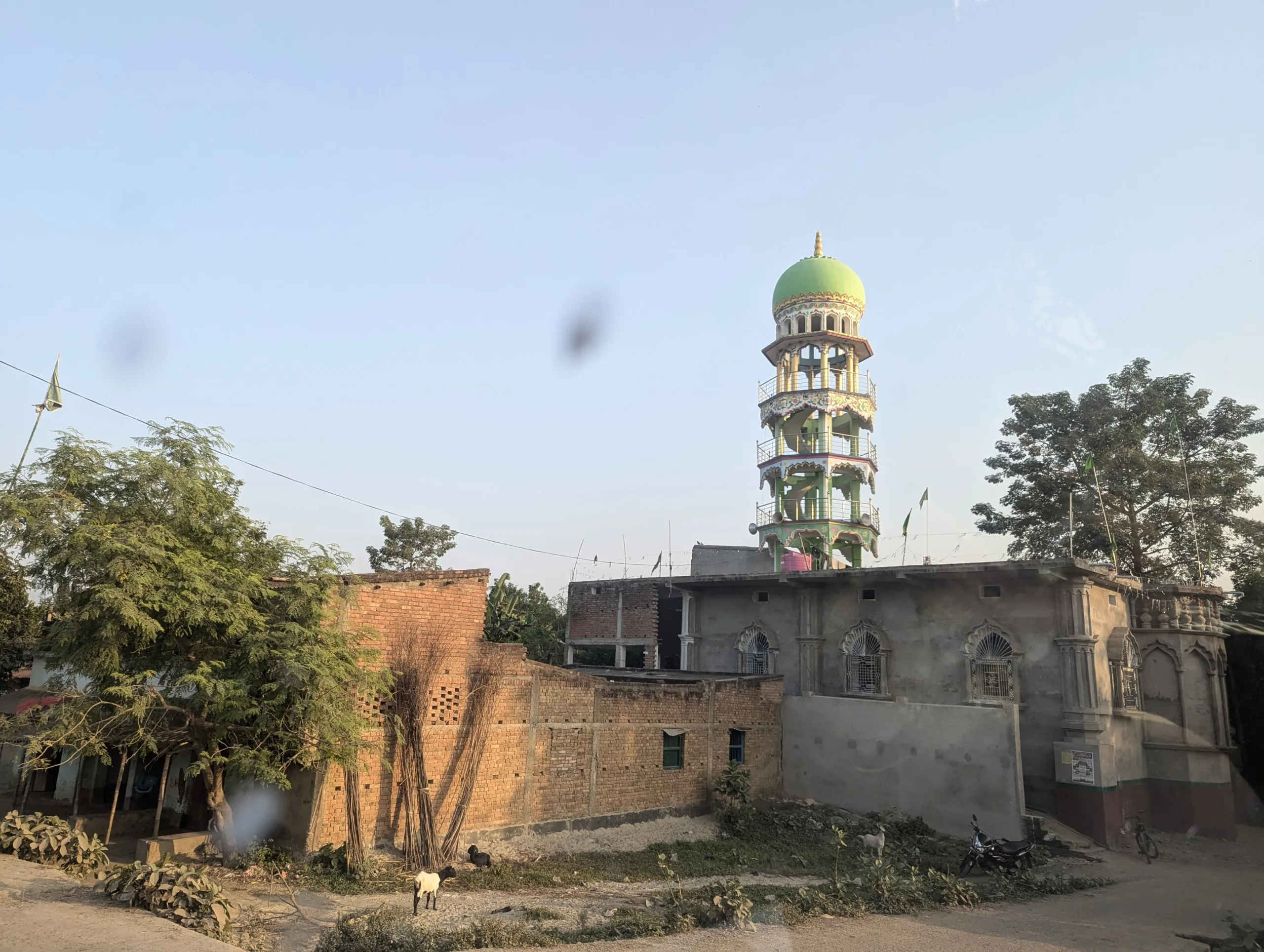
Our journey through Sahibganj district took us to several villages, including Mansingha, Rajmahal, Udhiya, and Piyarpur. In each of these, the demographics stood stark: with Muslim populations exceeding 15,000 in each village. Astonishingly, not a single Hindu family was found in these villages. In Uttar Palasgachi, a village with about 11,000 Muslim residents, only 35 Hindu families remain. For nearly seven kilometers, we did not encounter a single Hindu house; instead, mosques and madrasas dotted the landscape every three kilometers. It felt different from Bharat as we know it, with a distinctively different social structure. In each household, groups of five or six women sat preparing beedis, while clusters of 15-16 children played nearby, some of them in such poverty that they lacked basic clothing.
This story is not meant to be another narrative of hardship for Hindus in the so-called ‘Muslim Areas’ but to showcase the resilience they find in unity, especially during festivals. Hindu celebrations offer a brief but powerful sense of solidarity, serving as a reminder of their heritage and pride.
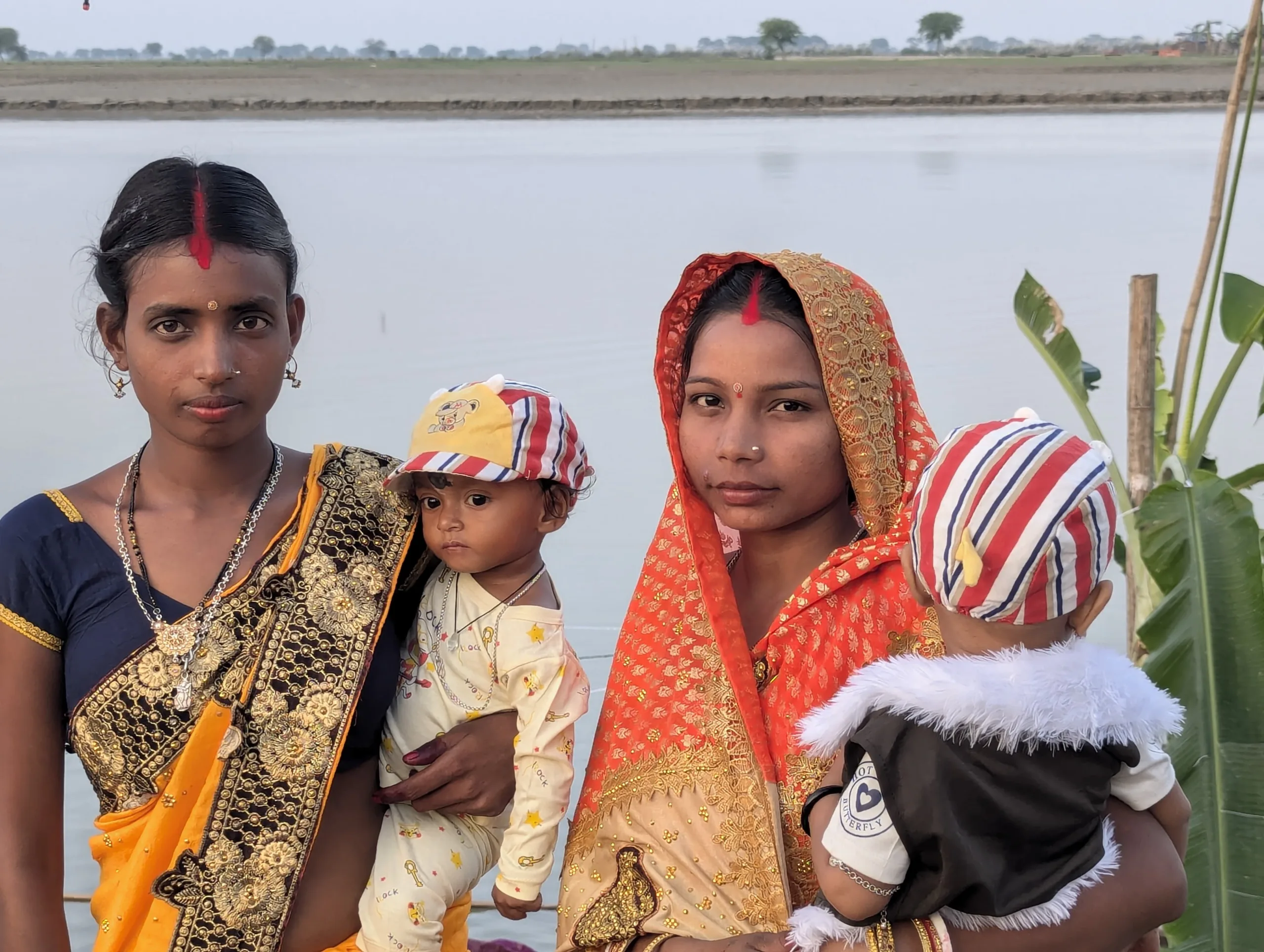
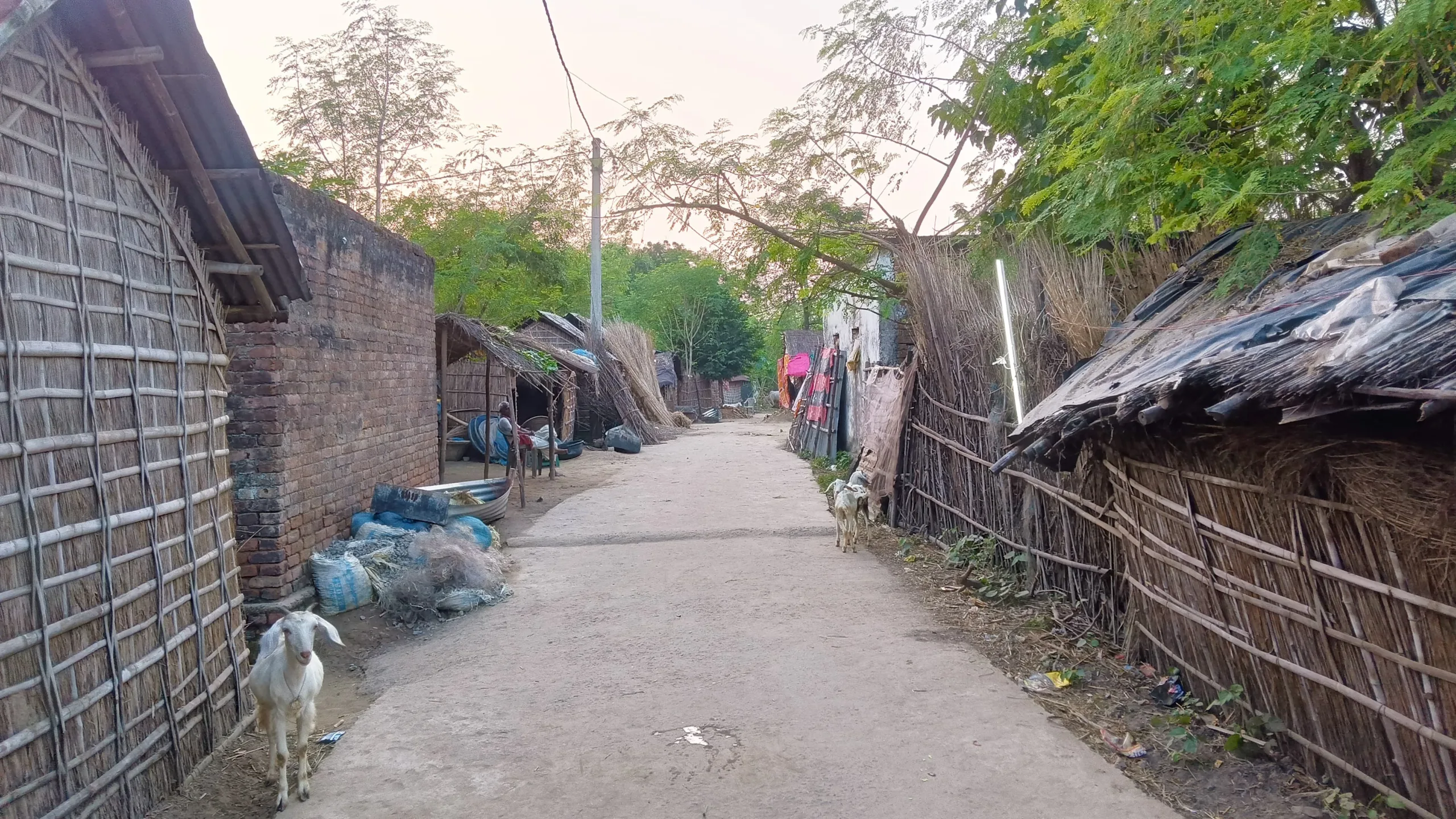
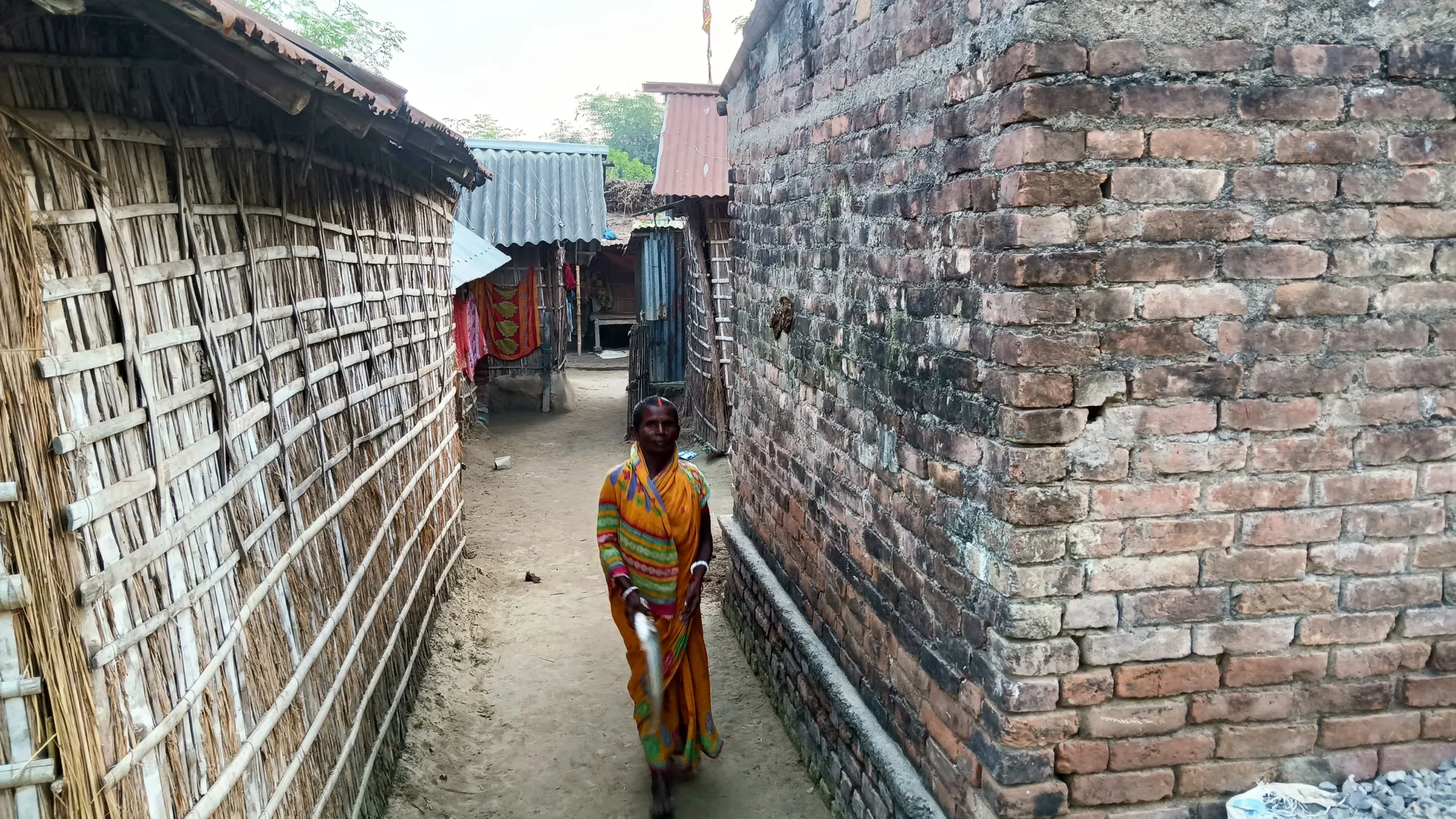
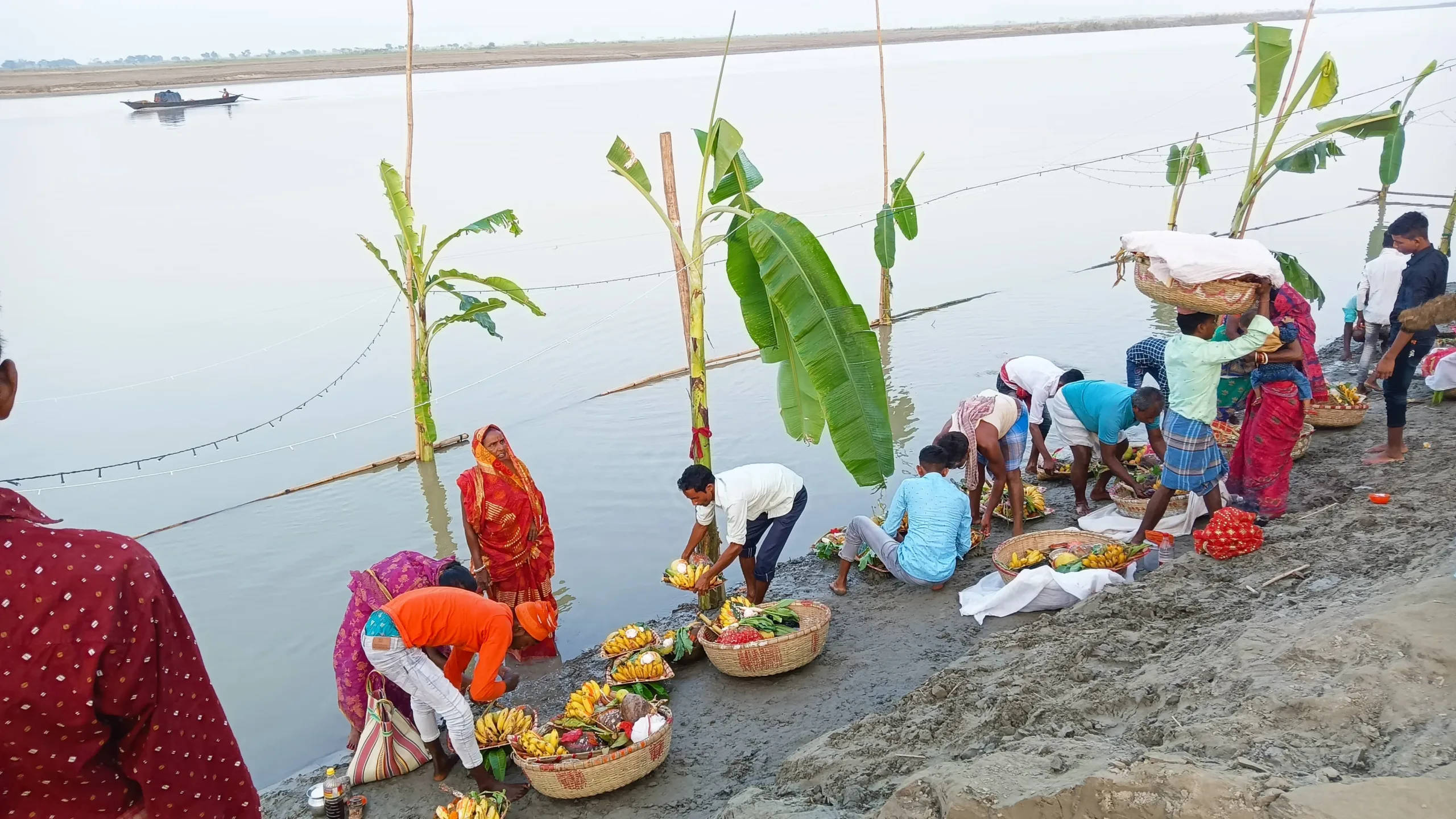
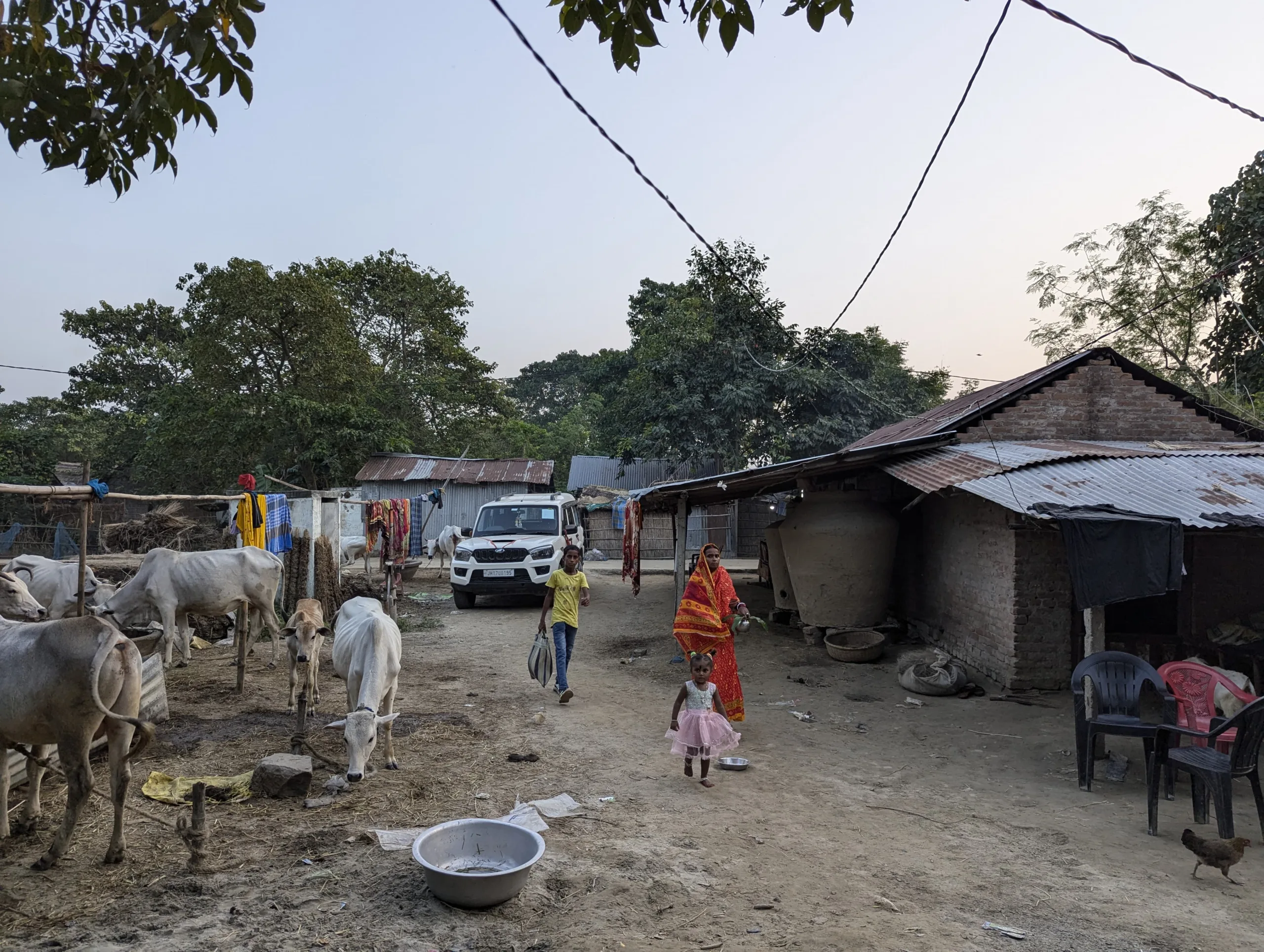
Reaching the Hindu tola was a sight to behold. This area was home to about 35 families from the Machwara (fishermen) community, whose members commonly use the surname Choudhary and fall under the Scheduled Caste category. As the auspicious Chhath Puja was being celebrated, we saw men carrying supa and daura for the ritual, while the women dressed in vibrant saris, adorned with jewellery and sindoor marking their foreheads, walked in procession toward the river ghat for the puja. The scene resembled countless Chhath gatherings across Jharkhand, but the challenges of these families added a sobering element.
Hindus and Chhat Puja
We spoke with Dhani Choudhary, a local Hindu who has lived here for nearly 40 years. Originally from the Pathoda Jheel area, his family and others were forced to relocate due to expanding Muslim settlements there.
“We have celebrated Chhath here for most of our lives now,” he shared, “but it is a little different from other places. We have to follow certain restrictions.” He explained these constraints: “We switch off the music if it clashes with the time of Azaan. We cannot play Chhath songs during the morning argha or in the evening either. We are not allowed to decorate our lanes with rangoli or flowers because Muslims cross this lane on their way to their basti.”
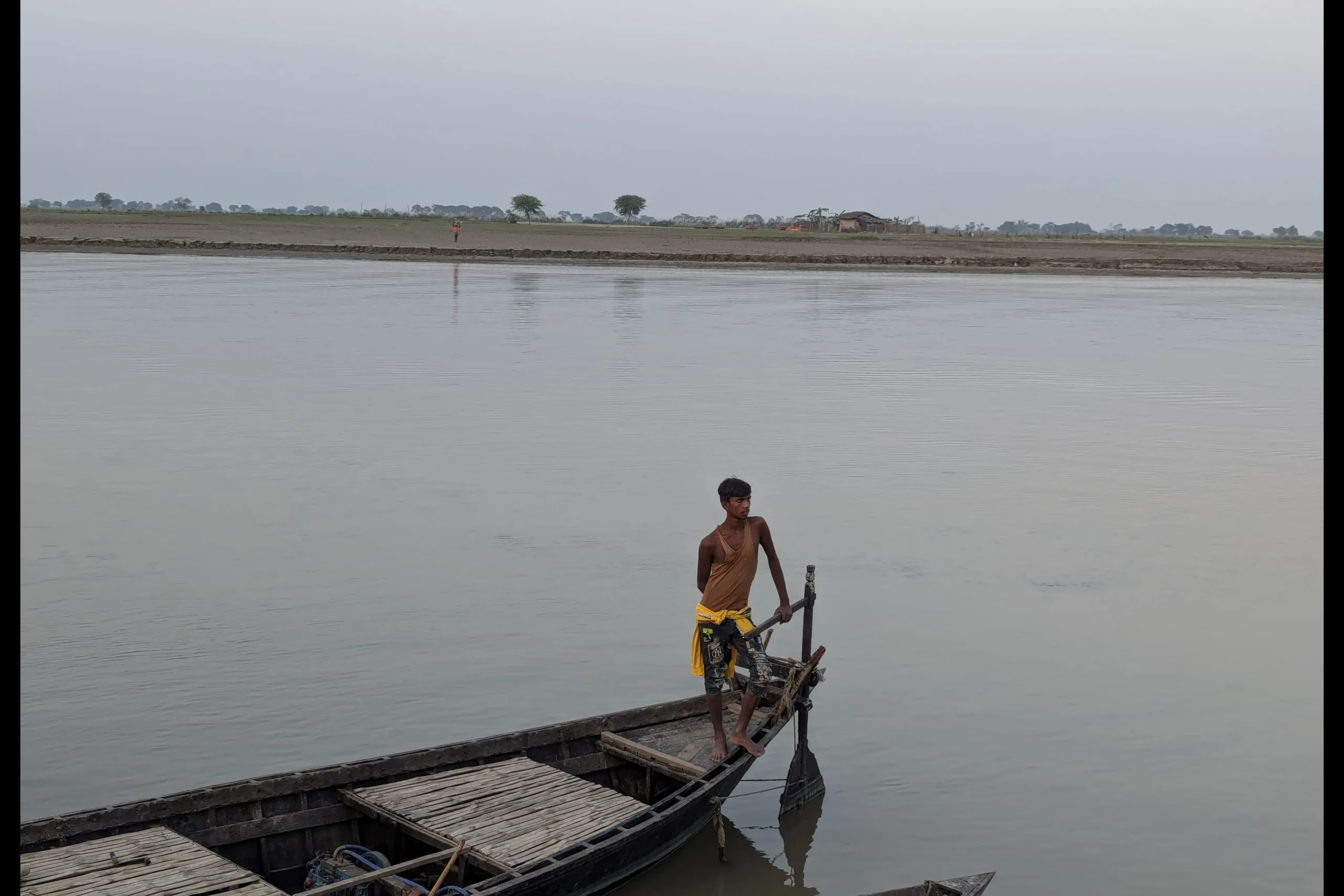
Dhani, like many in his community, earns a living by fishing in the nearby Ganga River, just 200 meters from his home. Fishing is not exclusive to the Hindu Machwara; Muslim families also fish in these waters. However, Dhani revealed how the dynamics shift in areas where Muslims are in the majority.
Hindus made to pay ‘tax’ to live
“Almost a kilometer from where we fish is an island where Hindus and Muslims traditionally plant watermelon and cucumber. We usually sow four to five varieties of watermelon at different times of the year,” he explained. “Hindus are skilled watermelon farmers, so we often produce more. But the Muslims, being in the majority, don’t just take a share—they demand part of our harvest as a sort of ‘tax’ because we live here.”
Dhani continued, describing a harsh shift in fishing practices over recent years. “Fishing used to be open for us until around 2014. Back then, the practice was simple: we would catch fish, and in return, the local Muslims would take some of the best fish we caught, along with a portion of our income as a sort of ‘tax,’” he explained. “However, when the Modi government came to power, we felt empowered to resist this unfair custom. We argued that there was no need to pay these taxes anymore, as the government did not mandate them. But since we stopped paying, the Muslim majority has restricted our fishing areas to just a few meters near the shore where we live. Now, if any Hindu fisherman dares to cross this ‘boundary’ into deeper waters, they face threats and face assault.”
No DJ, no Baraat allowed
Another local fisherman, Ashok Choudhary, echoed Dhani’s concerns and shared additional hardships. “Fishing does not provide enough for my family, so we also keep cows for additional income. But even that has become difficult. The Muslims around here take our cows if we let them graze openly,” he shared. “Many of my cows have gone missing, so I have started tying them up within our courtyard. But they still find ways to take them away. It’s a daily struggle to hold on to what is ours.”
Dhani’s wife spoke of an unsettling experience from their wedding. “During our wedding, a fight broke out, and the entire celebration was disrupted,” she recalled with frustration. “The Muslims had a problem with the dhol in the baarat. Here, we are not allowed to have DJs at weddings. We play music from small speakers connected to our phones, and even that has to be turned off five times a day during their prayers. On my wedding day, when the band played for the rituals, they came and objected. It escalated into a scuffle, and they even attacked the groom. The wedding turned tense, and we had to proceed as if we were mourning. Relatives are now afraid to visit us; if anyone like you comes, all the Muslims nearby gather around and stare.” She pointed to the people who had watching us from a safe distance.
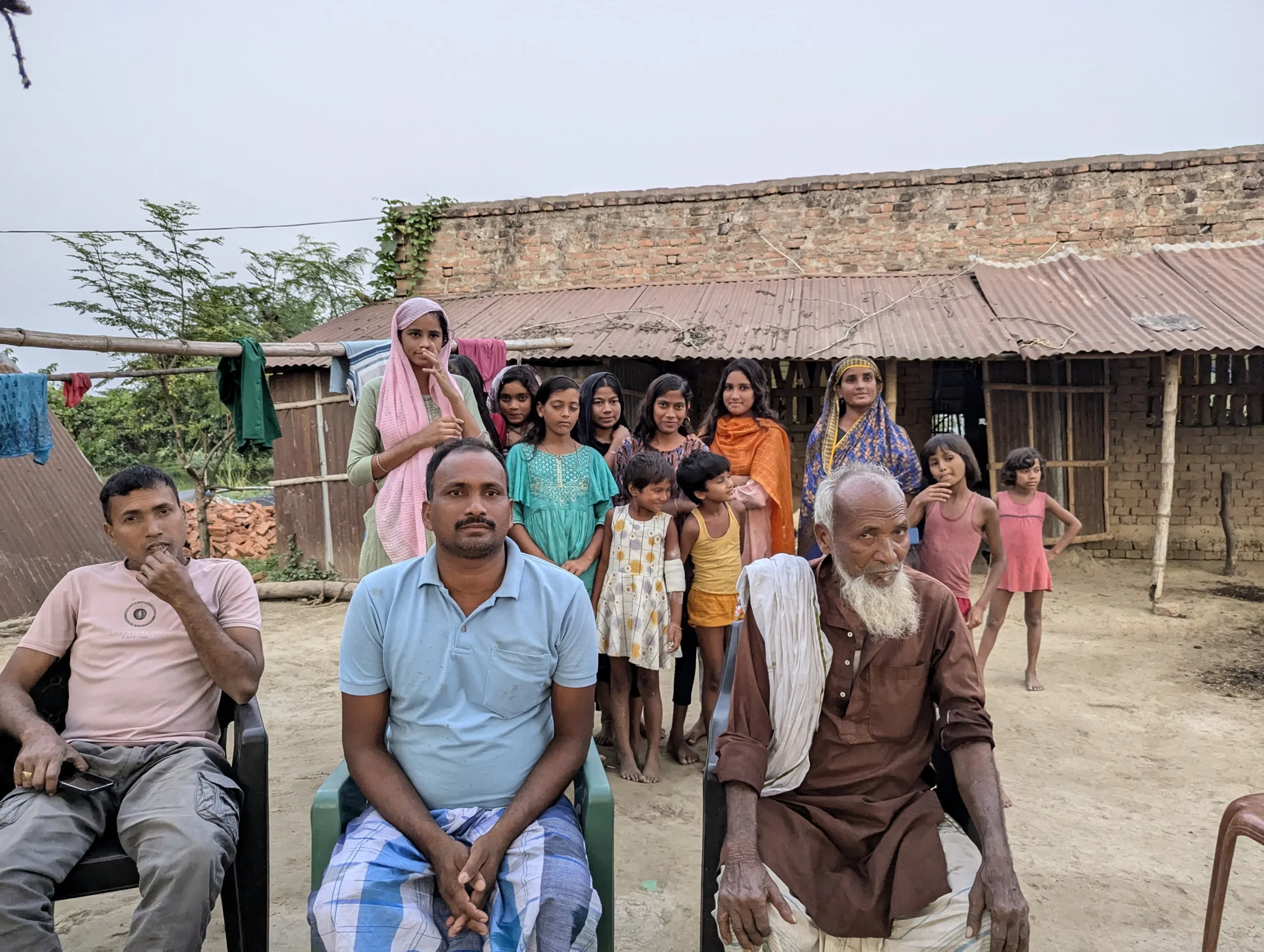
Initially, the Hindu residents were hesitant to speak to us, fearing reprisals if their identities were revealed. However, once reassured by a local activist, they shared their experiences openly. Sundar Choudhary, a man in his late fifties, disclosed a heart-wrenching reality. “Madam,” he said somberly, “our daughters and sisters face threats to their safety almost daily. Assaults happen, and the issues are ‘settled’ with payments of one or two lakh rupees. Nothing ever comes of it. This has become a routine; we are not safe and no one comes to our aid. Scuffles break out, and by the time anyone informs the authorities, the damage is already done. Our homes have been set on fire, we are looted and we stand by as silent witnesses. Many of us are leaving; soon, only a few of us will remain. Living here is like living in Pakistan, with a constant threat to our lives, the dignity of our women and our culture.”
Muslims who come from outside
Rajkumar Choudhary, another resident, spoke with deep-seated frustration about the shifting demographics. “These are not the Muslims of Bharat,” he insisted. “Most of them have come from outside. Almost every month, new people arrive, so how else is their population growing so rapidly while ours is not? For us, it takes 20 years for a child to grow up, but their numbers increase each month. Something’s wrong here. Even if we leave, I doubt it will change the situation. They will spread further, crossing the Ganga, into Bengal and beyond. They come from that direction and soon, the vacant lands here will be filled with shanties and they will claim to be natives.”
On our return journey, we decided to speak with some of the local Muslim families to hear their perspectives on their ancestral roots in the area and the issue of illegal Bangladeshi settlers. About three kilometers from the Hindu family we had visited, we met Abdul Hamid, who claims his family has lived in this locality for the past sixty years. Hamid, a father of eight sons and three daughters, lives alongside his extended family, spread across six to seven nearby houses. His three younger brothers and their children also reside in the area, forming a close-knit clan within the region. Hamid’s sons, each with around five children, have collectively built one of the many big families in the locality.
Bangla or Bangladeshi Muslims
In a candid conversation, Hamid shared his views on regional issues and the allegations of Rohingya settlements. He said, “Bangladesh and Pakistan were once parts of India. During the Partition, some of us went here, others went there. I even have brothers living in Pakistan. Likewise, those coming from Bangladesh are my brothers and sisters too. They have their own country now, which is a different matter, but calling them ‘infiltrators’ is unfair. If they come here, we, along with the government, should welcome them.”
However, as soon as we turned the camera on, Hamid’s tone shifted. He said, “If anyone from Bangladesh comes here, why should I give them my land? Absolutely not. Bangladesh and Pakistan are separate nations now, and those coming from there are our enemies. I would take up arms to defend our borders. It’s my duty, and I won’t allow any Bangladeshi to settle here.” When asked to repeat his earlier statement about brotherhood, he sidestepped the question and firmly stated, “My blood and sweat are for India, where I was raised, and I will die for it.”
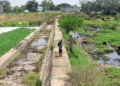
The region’s poor infrastructure stood out, with minimal connectivity, lack of proper roads, street lighting, schools, and basic water facilities. Yet, families like Hamid’s have continued to live there for decades. Off-camera, Hamid and others voiced their frustrations, saying, “The current Soren government, BJP, Congress – they’re all the same. We don’t exist for them; no political party has done anything for us. Look around and see for yourself.”
But once the camera was back on, Hamid changed his tone again, saying, “Yes, there are issues with roads, lights, and water, but look, wires have been installed. I am certain that the Soren government will bring us everything soon. I believe in his governance, and he will rise to power.”
The journey to this isolated settlement has been a sobering experience for Organiser. The remoteness, the lack of basic connectivity, and the resilience of life here are starkly unimaginable. Many of the local Muslims are reluctant to speak openly; when they do, their words shift as soon as they realise they are on record. They claim to possess documents proving their ties to this land, but our team was unable to verify any such proof. This place is in dire need of a thorough investigation.
Why this story is important?
Amidst the challenges, one sight stood out with incredible poignancy: the Hindu community’s celebration of Chhath. From a distance, the festival seemed like a bright beacon, uniting them against the many adversities they face in this region. Despite opposition, they had managed to install lights and set up speakers to play devotional Chhath songs, prepared to defend their celebration if necessary. This festival—revered beyond words—filled them with hope and courage to stand their ground, defend their homes, and cherish their traditions.
Dhani echoed the same sentiment and shared, “The only reason we are able to celebrate this festival or other small things we do is just because we fight and take a stand for us together. Had we been alone, we could not even imagine of having any such celebration.”
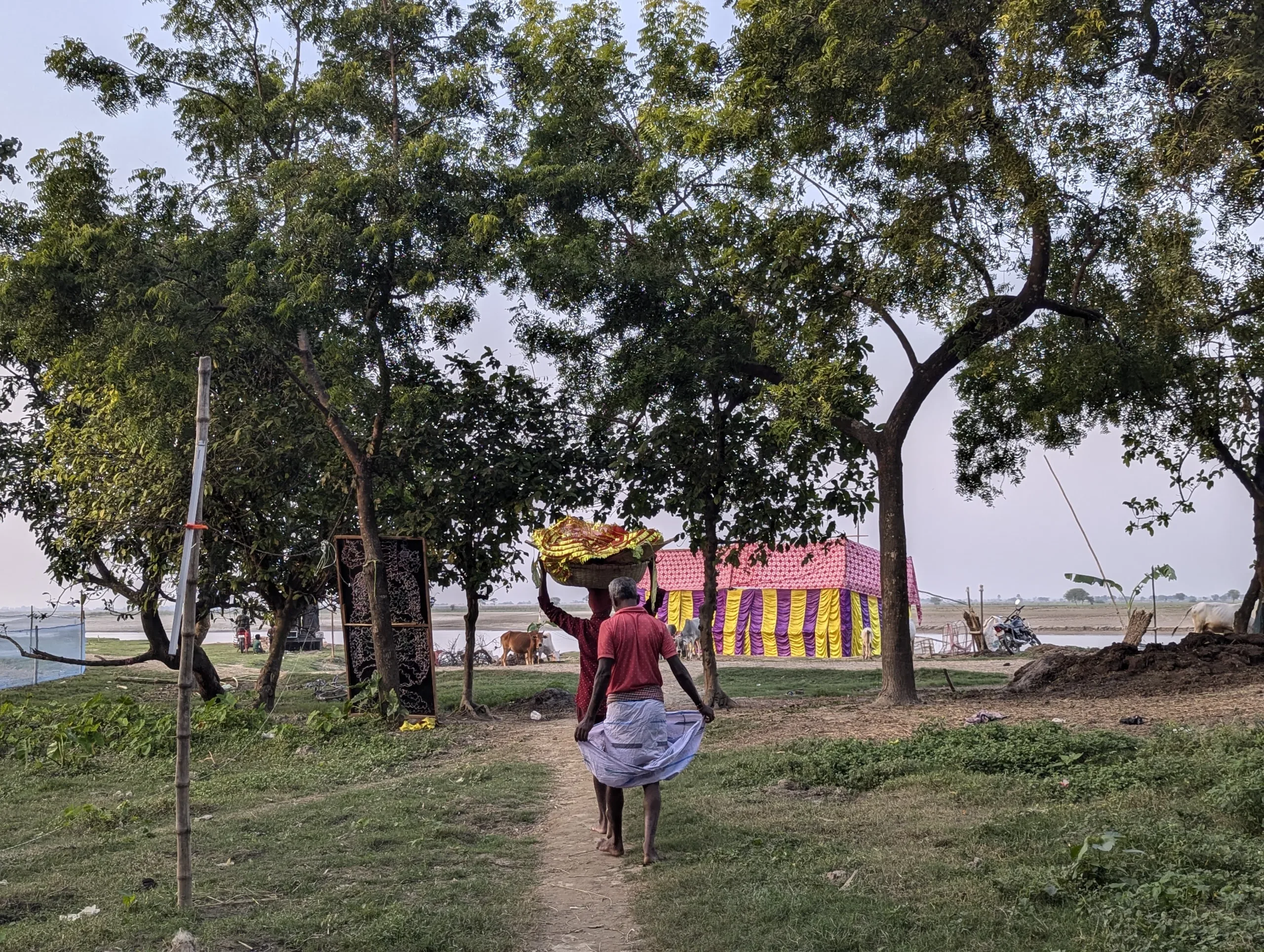
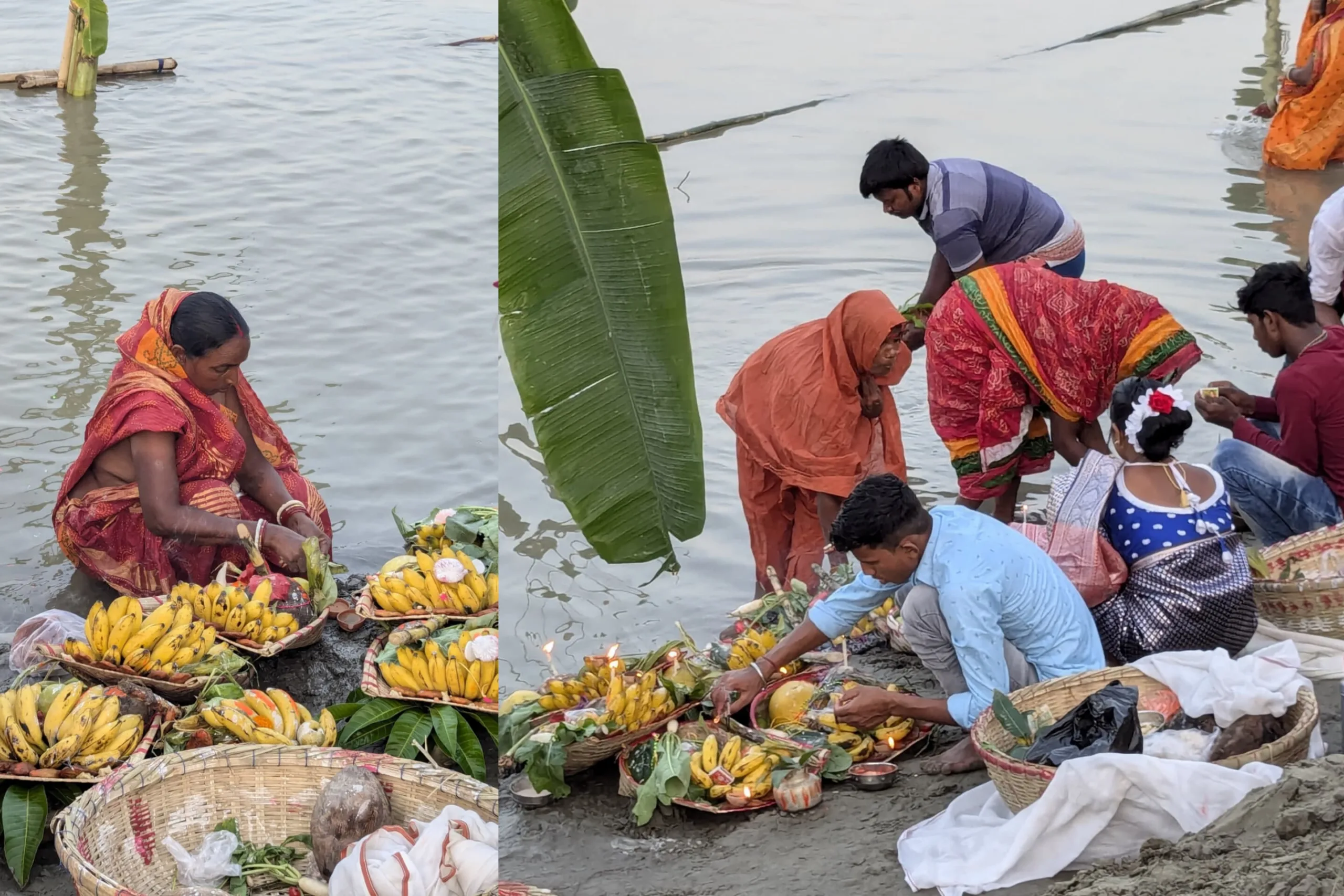
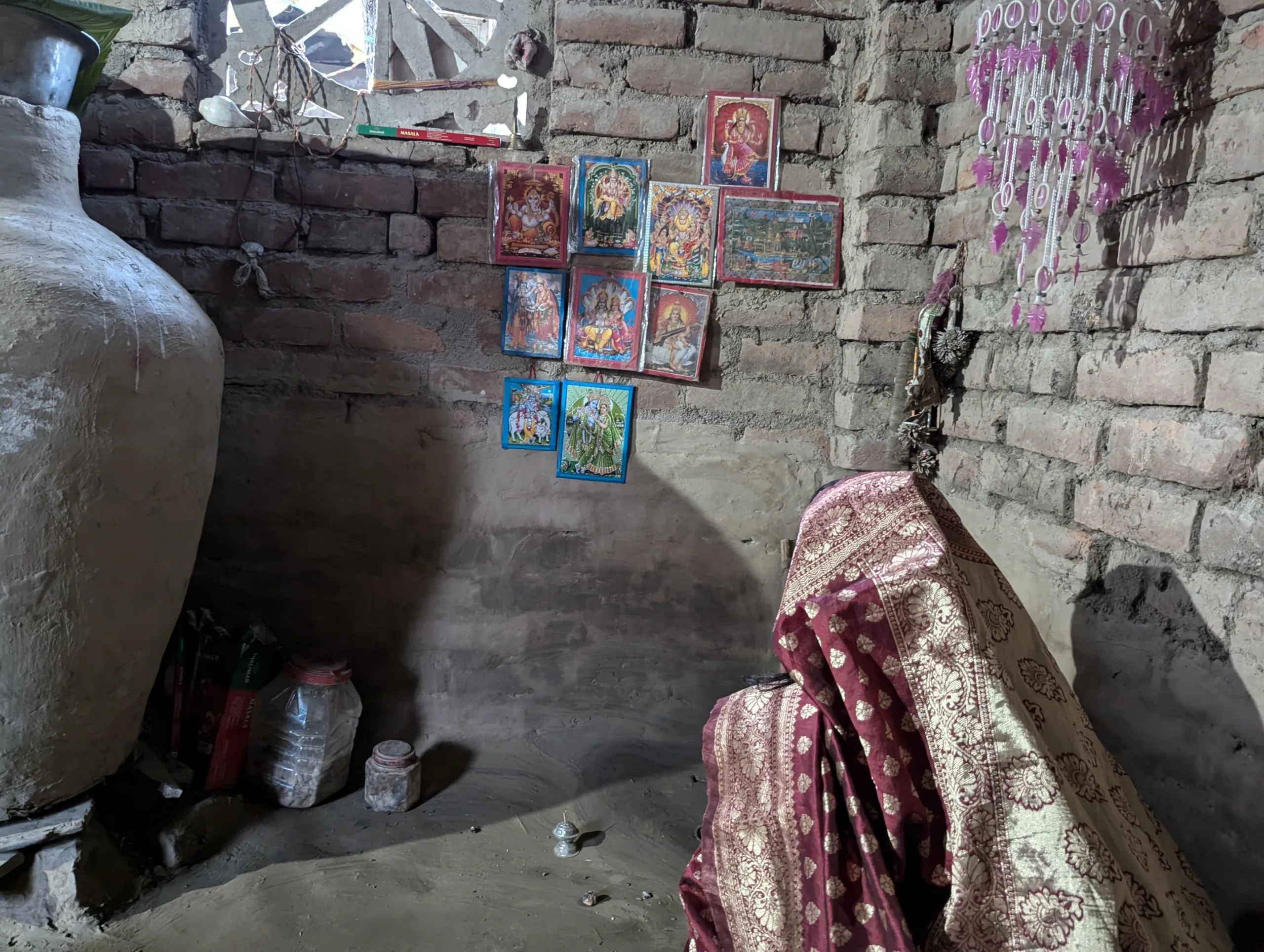
For these Hindus, festivals like Chhath are not just occasions of celebration; they are powerful moments of unity, drawing strength from shared culture and heritage. It is during these festivals that they find the courage to face the forces around them, the resilience to defend what is theirs.
Many have expressed a desire to relocate to other areas, weary from the continuous struggles here. Yet, they want to make this move as a united community, standing together no matter where they go. This story, their story, deserves to be shared for the world to understand the courage it takes to remain rooted in faith and unity amid such challenges.