Counter-Terrorism Strategy: Why coordination between States and Union is key to National Security
June 19, 2026
  • Read Ecopy
  • Circulation
  • Advertise
  • Careers
  • About Us
  • Contact Us
Android AppiPhone AppArattai
Organiser
  • ‌
  • Bharat
    • Assam
    • Bihar
    • Chhattisgarh
    • Jharkhand
    • Maharashtra
    • View All States
  • World
    • Asia
    • Europe
    • North America
    • South America
    • Africa
    • Australia
  • Editorial
  • International
  • Opinion
  • RSS @ 100
  • More
    • Op Sindoor
    • Analysis
    • Sports
    • Defence
    • Politics
    • Business
    • Economy
    • Culture
    • Special Report
    • Sci & Tech
    • Entertainment
    • G20
    • Azadi Ka Amrit Mahotsav
    • Vocal4Local
    • Web Stories
    • Education
    • Employment
    • Books
    • Interviews
    • Travel
    • Law
    • Health
    • Obituary
  • Subscribe
    • Subscribe Print Edition
    • Subscribe Ecopy
    • Read Ecopy
  • ‌
  • Bharat
    • Assam
    • Bihar
    • Chhattisgarh
    • Jharkhand
    • Maharashtra
    • View All States
  • World
    • Asia
    • Europe
    • North America
    • South America
    • Africa
    • Australia
  • Editorial
  • International
  • Opinion
  • RSS @ 100
  • More
    • Op Sindoor
    • Analysis
    • Sports
    • Defence
    • Politics
    • Business
    • Economy
    • Culture
    • Special Report
    • Sci & Tech
    • Entertainment
    • G20
    • Azadi Ka Amrit Mahotsav
    • Vocal4Local
    • Web Stories
    • Education
    • Employment
    • Books
    • Interviews
    • Travel
    • Law
    • Health
    • Obituary
  • Subscribe
    • Subscribe Print Edition
    • Subscribe Ecopy
    • Read Ecopy
Organiser
  • Home
  • Bharat
  • World
  • Operation Sindoor
  • Editorial
  • Analysis
  • Opinion
  • Culture
  • Defence
  • International Edition
  • RSS @ 100
  • Magazine
  • Read Ecopy
Home Bharat

Counter-Terrorism Strategy: Why coordination between States and Union is key to National Security

Jammu & Kashmir is a classic example of how seamless coordination between the state and central agencies helps fight terrorism. The national counter-terrorism policy is very important to ensure that the centre and the states are on the same page when it comes to fighting this problem called terrorism

Vicky NanjappaVicky Nanjappa
Nov 8, 2024, 01:30 pm IST
in Bharat, Delhi
Follow on Google News
Representative image

Representative image

FacebookTwitterWhatsAppTelegramEmail

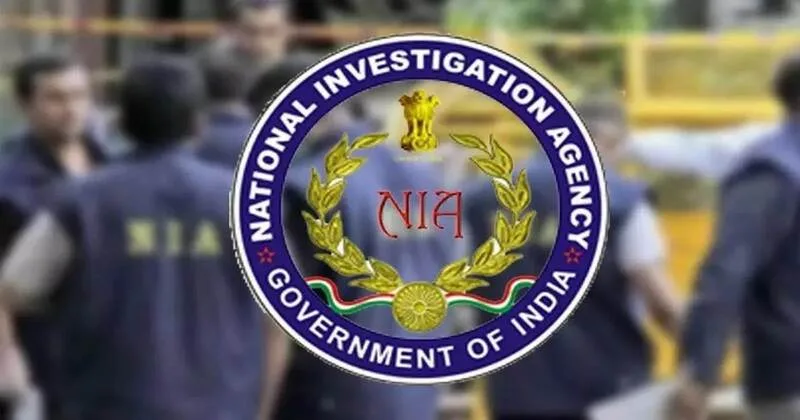
Union Home Minister Amit Shah said at an anti-terrorism conference in New Delhi that the Government will soon bring a national counter-terrorism strategy to fight terrorism and their ecosystem. It was an important decision and comes in the wake of the rising number of terror threats, most of which are emanating from online sources. However, in the fight against terror, the agencies have faced one major issue: the lack of coordination with the states, especially when the same party is not running the Governments of the Union and the states. The importance of coordination was seen in J&K when the security agencies were able to eliminate a large chunk of terrorists. The central agencies such as the National Investigation Agency, Enforcement Directorate and even the Indian Army had often complained that there was a lack of coordination with the state police, as a result of which both the terrorists and separatists were able to thrive.

How state-centre coordination helped

There were many occasions when the terrorists had advanced information about a possible raid and very often would manage to escape. This was also to do with the fact that there were governments in J&K which were sympathetic towards the separatists who, in turn, nurtured terrorists by calling them freedom fighters.

All that, however, changed once the Government in J&K collapsed and the president imposed rule. This got the state police under the control of the Union Government. The success was immediately visible.

The Army undertook operations with nearly a 99 per cent hit rate. This was largely thanks to the seamless coordination the Indian Army and the J&K police enjoy. Former Research and Analysis Wing Chief C D Sahay explains that coordination is needed at both levels. The J&K police have the best Intelligence with them, and providing the same to the Indian Army resulted in such successful operations.

The same is the case with the NIA and ED, which took over money laundering probes in J&K. The terror funding case was a turning point, and once the separatists were squeezed of their funds, the actual colours came out, and they went silent, while many others were arrested on charges of funding terror.

An NIA official tells Organiser that in these cases, there was ample support from the local police. They would provide us with pinpointed information, which ultimately helped us dismantle terror funding networks to a large extent. Further, no advance information reached these people before the raids took place. With the J&K police seeing the entire operation under wraps, it became easier for the NIA and the ED to undertake operations and attain a success rate.

The new laws that would be introduced, as stated by Amit Shah, are important in the context of seamless coordination between the states and the centre. Since law and order are state subjects, the state police are the first responders in every case, including those relating to terrorism.

Why seamless coordination is the need of the hour

Since the police fall under the state government, there could be biases, such as what one witnessed in the case of Abdul Madani from Kerala. By the time the central agencies take over the case, the evidence could be manipulated or wiped out. Due to this attitude by the states, the central agencies either start from scratch or even hit a dead end. Even after taking over the case, there are times when the central agencies have had to wait for weeks before the state police hands over the relevant documents.

Further, the state police are always there first at the crime scene. Suppose anything is altered at the crime scene due to biases or political pressure. In that case, the central agencies find it very hard to recreate that crime scene and proceed with the investigation.

In such an event, looking at the J&K scenario, the new anti-terror laws became extremely crucial. The threat against Bharat is increasing by the day. There is a deep-state, Islamist radical terror groups and cyber criminals who are always looking to disrupt peace in the country. With the threat perception rising and being very high, it becomes all the more important to have a law in place that allows for coordination between the state and the centre.

Also Read: Ghar Wapsi in Ambedkar Nagar: 8 people renounce Islam and adopt Sanatan Dharma

Amit Shah made it clear that these laws were not to take away the autonomy of the states. He said that while law and order are state subjects and states have geographical boundaries and constitutional limitations, terrorism does not, and hence, all security agencies, central and states, should work in close coordination, chalk out joint strategies, and share Intelligence.

He also said that the Government has come up with a vision for the model anti-terrorism squad and a model special task force for the states and Union Territories. If adopted, it would work as a common structure and platform to deal with the menace of terrorism, he added.


 

Topics: Union Home Minister Amit ShahJammu & KashmirNational SecurityAnti-terrorism conference
Share1TweetSendShareSend
✮ Subscribe Organiser YouTube Channel. ✮
✮ Join Organiser's WhatsApp channel for Nationalist views beyond the news. ✮
Previous News

Tamil Nadu: Public outcry over surge in forced conversion cases, backlash over appeasement politics of DMK 

Next News

J&K: Two VDG members, Kuldeep Kumar and Nazir Ahmed, killed by terrorists in remote Kuntwara area of Kishtwar 

Related News

DRDO successfully tests Long-Range Precision Missile

India’s ‘Tomahawk’ Takes Flight: DRDO successfully tests long-range precision cruise missile

US protests against India’s FCRA amendments; Transparency norms rattle foreign funded missionary networks

J&K: India fast-tracks Kirthai II hydropower project on Chenab; A startegic move against Pakistan post IWT abeyance

PM Modi’s era through the prism of strategic governance

From Gujarat Model to Global Leadership: Assessing PM Narendra Modi’s 12-year journey of strategic governance

Kashmiri Pandits at Kheer Bhawani Temple(File Photo)

J&K: Exiled Kashmiri Pandits throng temples amid enhanced security; Crowd peaks on Jyestha Ashtami at Kheer Bhawani

J&K: Zojila tunnel clears key hurdle; Signals new era of connectivity for Ladakh

Load More

Latest News

Indian Coast Guard (ICG) team with indigenous Air Cushion Vehicles (ACVs) in Goa on June 18, 2026

Indian Coast Guard inducts Indigenous Air Cushion Vehicle (ACV) for coastal security operations

Lebanon must get out of the clutches of Hezbollah

Demand to Free 22 Muslim Prisoners Sparks Fresh Political Controversy in Tamil Nadu (This image is generated by AI)

Tamil Nadu: After Muslim quota push, calls for early release of long-term Muslim prisoners stirs political storm

Prime Minister Narendra Modi with US President Donald Trump

A Handshake, Not a Hug: Why PM Modi must assert India’s strategic red lines in his crucial meeting with Trump

Next Radical Move by Muslim League in Kerala? Plants Jamaat-e-Islami Men in Congress Ministers’ Offices; Youth Protests

Golden Temple after Operation Blue Star in 1984

The immoral attempt by Congress to link BJP to Operation Blue Star

Madras High Court

Madras HC stays Church near temple in Coimbatore; petitioner alleges post-TVK govt push, flags malafide intentions

India’s first made-in-India C-295 aircraft marks a shift from state control to nation-building through public-private partnership

From Nationalisation to Nation Building: The difference between socialism and integral humanism

Representative Image

Karnataka’s fake teacher salary scam: RTI exposes closure of departmental inquiry against tainted officials

PPP Chairman Bilawal Bhutto Zardari

Pakistan: Bilawal Bhutto Zardari’s PPP to form govt in Gilgit-Baltistan with 11 seats after elections for 24-member

Load More
  • Privacy
  • Terms
  • Cookie Policy
  • Refund and Cancellation
  • Delivery and Shipping

© Bharat Prakashan (Delhi) Limited.
Tech-enabled by Ananthapuri Technologies

  • Home
  • Search Organiser
  • Bharat
    • Assam
    • Bihar
    • Chhattisgarh
    • Jharkhand
    • Maharashtra
    • View All States
  • World
    • Asia
    • Africa
    • North America
    • South America
    • Europe
    • Australia
  • Editorial
  • Operation Sindoor
  • Opinion
  • Analysis
  • Defence
  • Culture
  • Sports
  • Business
  • RSS @ 100
  • Entertainment
  • More ..
    • Sci & Tech
    • Vocal4Local
    • Special Report
    • Education
    • Employment
    • Books
    • Interviews
    • Travel
    • Health
    • Politics
    • Law
    • Economy
    • Obituary
  • Subscribe Magazine
  • Read Ecopy
  • Advertise
  • Circulation
  • Careers
  • About Us
  • Contact Us
  • Policies & Terms
    • Privacy Policy
    • Cookie Policy
    • Refund and Cancellation
    • Terms of Use

© Bharat Prakashan (Delhi) Limited.
Tech-enabled by Ananthapuri Technologies