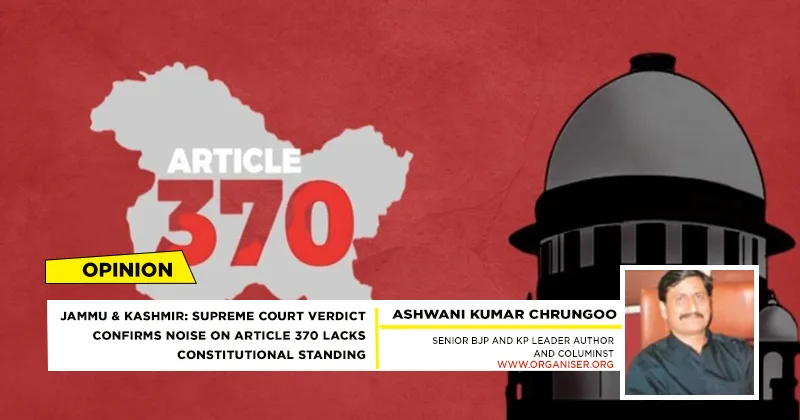
It has been observed in the post-election scenario that some Kashmir centric political leaders are eager to keep the pot of Article 370 boiling. They very well know that they can make only a futile noise on the issue yet they want the new government and the Assembly of the UT of J&K to be a party to this noise. Their statements in this regard are aimed at bringing the UT government and the J&K Assembly in direct confrontation with the Central Government. In addition, this has also potential to vitiate the general atmosphere in the valley as is evident from the heinous terror attacks on civilians, primarily the non-local employees and labourers, in Kashmir.
Article 370 was the creation of the Constitution of India which was formulated by the Constituent Assembly of India in 1949 and made effective from January 26 1950. The Constituent Assembly passed on all its powers to amend the constitution to the parliament of India. There was a long pending demand of the socio-political circles in India to abrogate the Article 370 and Article 35A in the Indian constitution as they were responsible for creating ‘a state within a state’ in J&K . They also created a wall of hatred among the citizens in the state and were discriminatory in essence and practice. The seven-decade old slogan of “Aek nishaan, aek vidhan, aek pradhan” for J&K had developed a tremendous acceptability throughout the nation across political parties.
Consequent upon the verdict of the Lok Sabha elections in 2019, the BJP-NDA got almost two-thirds majority in the lower house of parliament. In the upper house too, they were in a driving position to take an initiative on Article 370 and the issues related to granting any sort of special status to J&K. Immediately after the formation of the new government in June 2019, the Central government discussed this issue with its allies, the like-minded parties and also with some opposition parties as well. It found an overwhelming response in both the houses of the parliament in regard to the issue and thus initiated a wide ranging exercise on different fronts to realise the objective.
The government sought legal and constitutional advice on the subject; security and law & order issues were discussed threadbare at appropriate levels and political discussions with various political parties, groupings and leaders were held. It ensured that the law and order situation remained under complete control and steps were taken to realise the objective with minimum or no damage to the convenience of the public. Foolproof arrangements were planned in the whole of J&K state in the event the government went ahead with the desired objectives.
Amit Shah, the Home Minister, paid an important visit to J&K in the last week of July 2019, almost ten days before the date on which the resolution on Article 370 was tabled in the Rajya Sabha. In Srinagar, he held very serious discussions with the administrative and security set-up of the state, the army and the intelligence agencies, some important political figures, newly elected panches and sarpanches of the state besides having an elaborate meeting with the office bearers of the BJP. Thus after making a complete assessment of the situation, the government went ahead with its mission.
The President of India under the provisions of the Article 370 issued a formal promulgation to decommission the Article 370 and also abrogate the Article 35A of the constitution. The government brought a resolution on the issue in the Rajya Sabha on 5th August 2019 on the basis of the Presidential promulgation and also presented a Bill on the bifurcation of the J&K state. Simultaneously, these were also tabled in the Lok Sabha by the Home Minister on the subsequent day. After due discussion and debate in both the houses, the resolution and the Bill were passed by both the houses. In the Rajya Sabha, an unexpected two-third majority voted in their favour while in the Lok Sabha, they got a huge three-fourth majority.
With an overwhelming approval of the parliament, the Central government initiated the necessary exercise to implement the above said Presidential promulgation, the resolution and the Bill. Accordingly, two new Union Territories, Ladakh and J&K, were constituted with effect from 31st October, 2019. All separatist symbols including the separate constitution of the state, flag, state subject/permanent residential certificate concept and practice were brought to a permanent end with the issuance of the government orders.
The West Pakistan refugees, Valmiki samaj and the Gorkha community living in J&K state were granted full citizenship and also the voting rights in the UT of J&K. The discrimination against the women who married non-state citizens was done away with and they were also granted full citizenship without any sort of hiccups. The government of the UTs issued new guidelines regarding the domicile issue in the UTs of J&K and Ladakh and things were brought at par with other states. Consequently, the so-called special status was brought to an end completely.
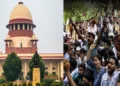
However, some political leaders, parties, organisations, lawyers of the UT and also a few NGOs took the issue of abrogation of Article 370 etc to the Supreme Court of India and challenged the parliamentary action of 5th August 2019 in the highest court. The apex court admitted the petition and constituted the constitution bench of five judges headed by the Chief Justice of India to hear the petition. While the petitioners were represented by a battery of senior advocates, the government side was represented by the Advocate General of India, the Solicitor General of India and other senior advocates.
The bench heard the petitioners and their arguments for almost one and a half months during the period between August-September, 2023. The debate and discussion in the Court Room no. 1 on the topic was telecast live and was also available on the website. During the intense argumentation by the advocates from both the sides, the constitution bench made certain very important observations which became the cornerstones of the final judgement by the apex court. The court hearing was done on a day to day basis and the people throughout the nation followed the debate in the courtroom with great interest and attention.
The Supreme Court clearly observed during the hearing that Article 370 was purely a temporary and transitory provision and was also nomenclatured in the constitution accordingly. It was never a permanent arrangement in the constitution. The Article had also an internal provision to get itself amended and abrogated too. The court brushed aside the concept of the so-called sovereignty or the divisible sovereignty (internal and external sovereignty) of the J&K state. The bench maintained that the Maharaja of the J&K state had surrendered complete sovereignty to the Union of India like all other states while signing the Instrument of Accession in 1947. It said that Article 35A was discriminatory in nature and was violative of the fundamental rights of the citizens guaranteed under Article 16, 19, 20 and 21 of the constitution of India.
The Court also directed the government of India to formulate an elaborate table of the states which merged or acceded with the Union of India and also of the smaller states which merged with the bigger states before accession thus putting an end to the issue of confusion regarding merger and accession of the state for good. It also sought clarifications from the Central government in regard to the UT status of Ladakh and J&K, assembly elections in J&K and also the statehood issue of the UT of J&K. Major parties involved in the petitions termed these issues as peripheral and expressed vehemently that the apex court needed to go into the fundamental question of the constitutional validity of the parliamentary actions of 5th August, 2019 and the consequent constitutional and administrative orders issued by the government.
The Apex court at the end of the hearing in September, 2023 reserved the judgement in the case and also asked the interested parties to send their presentations directly to the court in writing within a stipulated time-frame in case they wanted to add to their earlier submissions. The Constitution bench of the Supreme Court of India took time to go through the whole process of internal discussion and debate and ultimately fixed 11th December 2023 as the day for the judgement. The historic judgement of the apex court finally brought the ‘mindset of duality’ to an end forever.
The highest court in its judgement, elaborately and very well clarified that there was no malafide intention visible in exercise of powers under Article 370(3) by the President of India when legislative action to make Article 370 dysfunctional was taken by the Parliament on August 5, 2019. It is also noteworthy that the Court declared that the President of India had no necessity of any consultations with the state legislature/state constituent assembly to bring to an end the existence of Article 370.
It is ironic that the plaintiffs on the one hand were talking of democracy and on the other hand demanded permanence based on the crown that is long gone. Once the judgement was delivered by the Apex court, a few political groups and associations with the help of some senior lawyers went for a review petition in the Supreme Court, which was heard by the Court. The petition was finally dismissed by the Court and with this came to end the migraine of Article 370.
When the parliamentary actions of August 2019 have been upheld by the Supreme Court of India and there exists an overwhelming support to the government on the action, it is futile to exploit the sentiments of the public again by the political groups and leaders. The noise on it in essence and practice lacks constitutional, legal and political standing and everybody needs to know that.