73rd Anniversary of Bharatiya Jana Sangh: How its ideology is reflected in today’s BJP
June 7, 2026
  • Read Ecopy
  • Circulation
  • Advertise
  • Careers
  • About Us
  • Contact Us
Android AppiPhone AppArattai
Organiser
  • ‌
  • Bharat
    • Assam
    • Bihar
    • Chhattisgarh
    • Jharkhand
    • Maharashtra
    • View All States
  • World
    • Asia
    • Europe
    • North America
    • South America
    • Africa
    • Australia
  • Editorial
  • International
  • Opinion
  • RSS @ 100
  • More
    • Op Sindoor
    • Analysis
    • Sports
    • Defence
    • Politics
    • Business
    • Economy
    • Culture
    • Special Report
    • Sci & Tech
    • Entertainment
    • G20
    • Azadi Ka Amrit Mahotsav
    • Vocal4Local
    • Web Stories
    • Education
    • Employment
    • Books
    • Interviews
    • Travel
    • Law
    • Health
    • Obituary
  • Subscribe
    • Subscribe Print Edition
    • Subscribe Ecopy
    • Read Ecopy
  • ‌
  • Bharat
    • Assam
    • Bihar
    • Chhattisgarh
    • Jharkhand
    • Maharashtra
    • View All States
  • World
    • Asia
    • Europe
    • North America
    • South America
    • Africa
    • Australia
  • Editorial
  • International
  • Opinion
  • RSS @ 100
  • More
    • Op Sindoor
    • Analysis
    • Sports
    • Defence
    • Politics
    • Business
    • Economy
    • Culture
    • Special Report
    • Sci & Tech
    • Entertainment
    • G20
    • Azadi Ka Amrit Mahotsav
    • Vocal4Local
    • Web Stories
    • Education
    • Employment
    • Books
    • Interviews
    • Travel
    • Law
    • Health
    • Obituary
  • Subscribe
    • Subscribe Print Edition
    • Subscribe Ecopy
    • Read Ecopy
Organiser
  • Home
  • Bharat
  • World
  • Operation Sindoor
  • Editorial
  • Analysis
  • Opinion
  • Culture
  • Defence
  • International Edition
  • RSS @ 100
  • Magazine
  • Read Ecopy
Home Bharat

73rd Anniversary of Bharatiya Jana Sangh: How its ideology is reflected in today’s BJP

On this 73rd anniversary of the Bharatiya Jana Sangh (BJS), a crucial precursor to the Bharatiya Janata Party (BJP), this occasion encourages exploration of the BJS's foundational principles and their lasting influence on the BJP's ideology and policies in contemporary Indian politics

WEBDESKWEBDESK
Oct 21, 2024, 04:45 pm IST
in Bharat, RSS in News
Follow on Google News
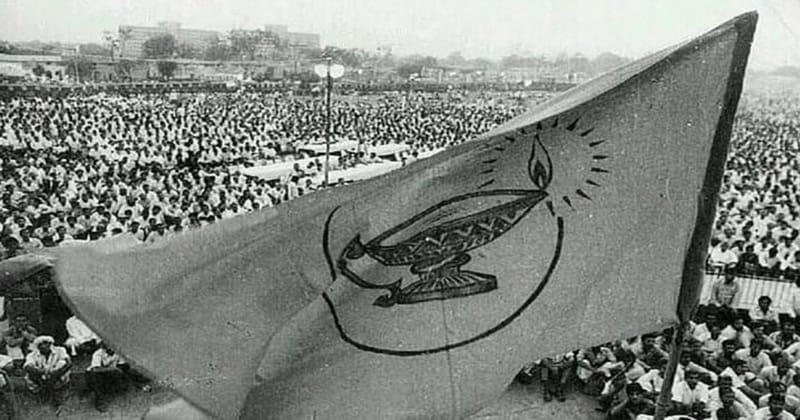
Representative image

Representative image

FacebookTwitterWhatsAppTelegramEmail

October 21, 2024 marks the 73rd anniversary of the Bharatiya Jana Sangh (BJS), which is seen as the forerunner of the Bharatiya Janata Party (BJP). Understanding why the BJS was formed and how it evolved helps us grasp the current structure and beliefs that guide the BJP and its Government today.

The establishment of the BJS was important in post-independence Indian politics because it aimed to challenge the dominant ideas of Pandit Jawahar Lal Nehru and offer a different perspective. At that time, Nehru’s beliefs and the Congress party were the main forces in Indian politics, and it seemed unlikely that anyone could successfully present an alternative to them.

The journey of the BJS and later the BJP has been significant. Now, 73 years later, it’s evident that Nehru’s political framework is struggling, while the BJS’s non-Nehruvian ideas and programs have become dominant in Indian politics and public discourse through the BJP’s policies. That’s why it’s crucial to reflect on the evolution of the BJS, as it laid the groundwork for the BJP, which was established in 1980. Since 2014, the BJP has grown to become the most dominant political force in the country

For a short time (1977-80), the BJS merged with the Janata Party, but when that party fell apart in 1980, BJS leaders continued their mission to create an alternative political vision by founding the BJP. Although the organization had a new name, its ideology and structure remained deeply rooted in the foundations laid by the BJS.

The founding of the BJS

Dr Syama Prasad Mookerjee was the founding president of the BJS. A significant reason for the formation of the BJS was the influence of the Rashtriya Swayamsevak Sangh (RSS), which opposed the Nehruvian approach to politics.

The RSS recognised that after the ban imposed on it in 1948 following Mahatma Gandhi’s assassination, there were very few political voices to support the organisation as its members faced harassment and victimisation.

When the ban on the RSS was lifted in 1949, there was a heated discussion about its future direction. Some members wanted the organization to enter politics directly. After extensive debate, the second Sarsanghchalak, M S Golwalkar, chose to support Dr Syama Prasad Mookerjee in his efforts to create a political party that could challenge Nehru and the Congress.

Dr Mookerjee resigned from Nehru’s cabinet in response to the Nehru-Liaqaut pact between India and Pakistan. He accused Nehru of betraying the cause of Bengali Hindus, who were facing communal violence in East Pakistan.

The establishment of the BJS was a unique organisational experiment in Indian politics. Unlike other parties that first set up a national structure before establishing state and district units, the BJS created its state-level units prior to its formal national founding. The BJS units for Punjab, PEPSU (Patiala and East Punjab States Union was a state of India that comprised eight princely states. It existed between 1948 and 1956 with Patiala as its capital) and Delhi were formed by May 1951. In the following six months, provincial party units were established in West Bengal, Uttar Pradesh, Rajasthan, and Madhya Bharat (Central India). However, the BJS was officially launched as an all-India party during a national convention held in Delhi on October 21, 1951.

Before the formal establishment of the BJS, Mookerjee met with Golwalkar, Balasaheb Deoras, and Bhaurao Deoras in early 1951 at the home of Nagpur sanghchalak Babasaheb Ghatate. This meeting was crucial as the RSS not only decided to fully support the BJS but also provided some of its full-time workers, known as pracharaks, to assist with organizational tasks. This tradition has continued with the formation of the BJP, as the RSS still lends its full-time workers to the party.

The first manifesto of the BJS, released at its founding convention, highlighted key issues, including promoting Swadeshi economics, ensuring cow protection, decentralising power, taking a strong stance on Pakistan, integrating Kashmir as an essential part of India, promoting Indian languages, and moving away from the Western approach to policy-making. The BJS maintained its stance on these issues over the years, continuing to prioritise them.

Also Read: Attack on RSS Swayamsewaks on Sharad Purnima: Bulldozer action by Bhajan lal Govt against accused Naseeb Chaudhary

The 73rd anniversary of the Bharatiya Jana Sangh serves as a reminder of its foundational role in shaping the ideological framework of the Bharatiya Janata Party. The principles established by the BJS, such as Swadeshi economics, cow protection, and a strong stance on national integrity, continue to influence the BJP’s policies today. As the party remains a dominant force in Indian politics, understanding the BJS’s legacy helps us appreciate the continuity of its vision. The evolution from the BJS to the BJP illustrates a sustained commitment to an alternative political paradigm. Ultimately, this journey highlights the enduring impact of the BJS on India’s political landscape.

Topics: Syama Prasad MookerjeeBRSBharatiya Janata PartyRashtriya Swayamsevak SanghBharatiya Jana Sangh
ShareTweetSendShareSend
✮ Subscribe Organiser YouTube Channel. ✮
✮ Join Organiser's WhatsApp channel for Nationalist views beyond the news. ✮
Previous News

Trudeau’s endorsement of Khalistan forces heightens risks for Hindus in Canada

Next News

Karnataka: BJP leaders unite against Minister Byrathi Suresh’s controversial remarks on B Y Vijayendra’s mother’s death

Related News

K Annamalai Resigns from BJP, Party accepts his resignation

Ex- Tamil Nadu party chief K Annamalai quits from BJP, Nitin Nabin accepts resignation

Change of Guard in Punjab BJP: Challenges, opportunities and the road ahead

BJP meets Governor over Karnataka’s Ladle Mashak Dargah case withdrawal

Karnataka Dargah Dispute: BJP complaints to governor over case withdrawal by govt, alleges insult to Hindu sentiments

Champai Soren demands inquiry into 'Delisting' and Church-Held land issues in Jharkhand

Jharkhand’s Tribal Identity Under Threat? Champai Soren seeks probe into conversions and church land holdings

VHP International President Alok Kumar

No place for Jihadi extremism in the modern world; ideological supporters must also be held accountable: Alok Kumar Ji

Dr. Purnendu Saxena, Madhya Kshetra Sanghachalak (Madhya Pradesh and Chhattisgarh) at the concluding ceremony of the Sangh Shiksha Varg (Students and Professionals), organised by the Mahakaushal Prant of the RSS

Family values & cultural upbringing can prevent religious conversions: Dr Purnendu Saxena, Madhya Kshetra Sanghachalak

Load More

Latest News

West Bengal Set for Bullet Train Project, Says Railways Minister

Massive Rail Boost for West Bengal: Bullet train, 60 new metro rakes and Rs 14,205 crore allocation announced

Uttar Pradesh Chief Minister Yogi Adityanath reviewing meeting for upcoming Tourist Circuit

UP Charts New Tourism Vision: From Chhatrapati Shivaji Maharaj Museum to Vindhyachal Circuit

Visuals from the site of protest in Jantar Mantar

From ‘Azadi’ slogans to disrespect of national flag: Inside the Cockroach Janta Party protest at Jantar Mantar

Chairman of the Rastriya Swatantra Party of Nepal Rabi Lamichhane meets PM Modi in New Delhi

From the China Card to Development Diplomacy: Nepal opens a new chapter in its political reset with India

'Stand Up for Abhishek': Expelled TMC MLA Claims Party Was Asked to Applaud Mamata's Nephew After Crushing Election Defeat

West Bengal: Expelled TMC MLA Ritabrata claims party was asked to applaud Mamata’s nephew after crushing defeat

Forced to Remove the “Faith”: How Hindu students are targeted at exam centres

A representative image generated using AI

Gujarat: Parsi woman Married to a Muslim man cremated with Hindu rites after VHP’s intervention

She showed the "Made in Pakistan" label attached to the bedsheet

Made in Pakistan bedsheet sold at Pune religious fair? Viral video triggers investigation

India's first Prime Minister Jawahar Lal Nehru and India's current Prime Minister Narendra Modi

From ‘Ship to Mouth’ under Nehru to free rations for 80 crore under Modi: Inside India’s food security revolution

Picture from the site of protest

22 million followers, a few hundred on ground: Cockroach Janta Party faces its first reality check at Jantar Mantar

Load More
  • Privacy
  • Terms
  • Cookie Policy
  • Refund and Cancellation
  • Delivery and Shipping

© Bharat Prakashan (Delhi) Limited.
Tech-enabled by Ananthapuri Technologies

  • Home
  • Search Organiser
  • Bharat
    • Assam
    • Bihar
    • Chhattisgarh
    • Jharkhand
    • Maharashtra
    • View All States
  • World
    • Asia
    • Africa
    • North America
    • South America
    • Europe
    • Australia
  • Editorial
  • Operation Sindoor
  • Opinion
  • Analysis
  • Defence
  • Culture
  • Sports
  • Business
  • RSS @ 100
  • Entertainment
  • More ..
    • Sci & Tech
    • Vocal4Local
    • Special Report
    • Education
    • Employment
    • Books
    • Interviews
    • Travel
    • Health
    • Politics
    • Law
    • Economy
    • Obituary
  • Subscribe Magazine
  • Read Ecopy
  • Advertise
  • Circulation
  • Careers
  • About Us
  • Contact Us
  • Policies & Terms
    • Privacy Policy
    • Cookie Policy
    • Refund and Cancellation
    • Terms of Use

© Bharat Prakashan (Delhi) Limited.
Tech-enabled by Ananthapuri Technologies