One Nation One Election: A game-changer for Democracy and its stakeholders
June 4, 2026
  • Read Ecopy
  • Circulation
  • Advertise
  • Careers
  • About Us
  • Contact Us
Android AppiPhone AppArattai
Organiser
  • ‌
  • Bharat
    • Assam
    • Bihar
    • Chhattisgarh
    • Jharkhand
    • Maharashtra
    • View All States
  • World
    • Asia
    • Europe
    • North America
    • South America
    • Africa
    • Australia
  • Editorial
  • International
  • Opinion
  • RSS @ 100
  • More
    • Op Sindoor
    • Analysis
    • Sports
    • Defence
    • Politics
    • Business
    • Economy
    • Culture
    • Special Report
    • Sci & Tech
    • Entertainment
    • G20
    • Azadi Ka Amrit Mahotsav
    • Vocal4Local
    • Web Stories
    • Education
    • Employment
    • Books
    • Interviews
    • Travel
    • Law
    • Health
    • Obituary
  • Subscribe
    • Subscribe Print Edition
    • Subscribe Ecopy
    • Read Ecopy
  • ‌
  • Bharat
    • Assam
    • Bihar
    • Chhattisgarh
    • Jharkhand
    • Maharashtra
    • View All States
  • World
    • Asia
    • Europe
    • North America
    • South America
    • Africa
    • Australia
  • Editorial
  • International
  • Opinion
  • RSS @ 100
  • More
    • Op Sindoor
    • Analysis
    • Sports
    • Defence
    • Politics
    • Business
    • Economy
    • Culture
    • Special Report
    • Sci & Tech
    • Entertainment
    • G20
    • Azadi Ka Amrit Mahotsav
    • Vocal4Local
    • Web Stories
    • Education
    • Employment
    • Books
    • Interviews
    • Travel
    • Law
    • Health
    • Obituary
  • Subscribe
    • Subscribe Print Edition
    • Subscribe Ecopy
    • Read Ecopy
Organiser
  • Home
  • Bharat
  • World
  • Operation Sindoor
  • Editorial
  • Analysis
  • Opinion
  • Culture
  • Defence
  • International Edition
  • RSS @ 100
  • Magazine
  • Read Ecopy
Home Bharat

One Nation One Election: A game-changer for Democracy and its stakeholders

The 'One Nation One Election' proposal seeks to hold simultaneous national, state, and local elections to reduce costs, streamline resources, and improve governance. While backed by many political parties, its implementation requires constitutional amendments and broad political consensus.

Dr K Venkatakrishna RaoDr K Venkatakrishna Rao
Sep 27, 2024, 07:00 pm IST
in Bharat, Opinion
Follow on Google News
FacebookTwitterWhatsAppTelegramEmail

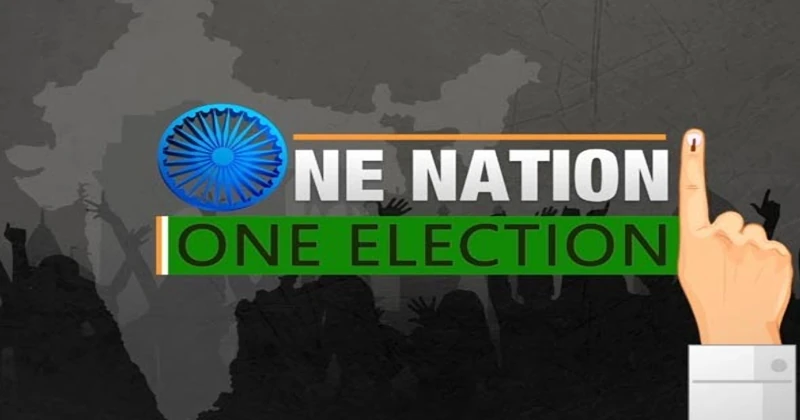
Last week, the Union cabinet approved a high-level committee’s recommendation headed by former President of India Ramnath Kovind to implement simultaneous national, state, and local polls across India. The committee has recommended conducting Lok Sabha and state assembly elections together, followed by local body elections within a 100-day window.

The high-level committee consulted with various national and regional parties, experts, and the public and gathered feedback. Simultaneous elections are not new for India, and the agenda is not new. Till 1967, elections in India were held simultaneously. However, this practice was disrupted when several legislative assemblies were dissolved prematurely in 1968 and 1969. After that, the Election Commission of India favoured the ‘One Nation One Election’ in 1982. The law commission under Justice BP Jeevan Reddy in 1999 and then PM Vajpayee in 2003. Senior BJP leader Advani mentioned in a blog for ‘One Nation One Election’ in 2010. With cabinet approval of the Kovind committee recommendations, India moved towards ‘One Nation One Election’.

The main intuition behind the ‘One Nation One Election’ is to reduce elections’ frequency and save resources. The financial burden of frequent elections has grown substantially. A study estimated that five years election expenditure including general elections and state elections from 2024 to 2029 could be Rs 10 lakh crore. The estimated expenditure for the 2024 general elections alone by political parties and their candidates is Rs 1.35 lakh crore, significantly from the Rs 60,000 crore in the 2019 general elections. 2024 general elections expenditure surpasses the 2020 US elections expenditure, which stood at Rs 1.20 lakh crore. The political parties and their candidates could save nearly Rs 3 to 5 lakh crore if the ‘One Nation One Election’ idea is adopted. Political parties across the spectrum spared no expense to win over the seat.

Like general elections expenditures, the political parties will spend similar expenditures in state legislative elections and local body elections. Kovind’s committee suggested that simultaneous elections could help 1.5 per cent growth in the countryside, equivalent to Rs 4.5 lakh crore for a financial year, half of the government spending on public health and one-third of government spending on education. When the ‘One Nation One Election’ could reduce these costs and streamline the use of resources, including govt personnel, law enforcement persons such as employees of state governments, state police, central reserved, armed forces who are heavily involved in election duties. Frequent elections can also lead to corruption due to continuous fundraising by politicians for their campaigning and managing their followers. ‘One Nation One Election’ could reduce the number of campaigns due to simultaneous elections.

In democracy, all the political parties prioritise the vote bank and welfare politics. Due to frequent elections, governments can not function smoothly due to model code conduct (MCC); they can not make aggressive developmental activity decisions. Due to less frequent elections, state governments will have less pressure to announce populist measures or more freebies to attract the vote bank. It will also help the state for stable financial management. Simultaneous elections can simplify the voting process and reduce the misuse of the voter list, such as missing voters’ names from the electoral list.

India is not the only country that is aiming to have simultaneous elections in the world. Many countries in the world are already practising simultaneous elections. Sweden conducts national, provincial and local elections every four years together. In South Africa, national and state provincial elections are held every five years.

To Implement the ‘One Nation One Election’ concept, the Modi government has to keep more efforts now. In 2019, the Modi government had a full majority, it could have been easy in the previous government. Now, the Modi government lacks the majority and strong opposition, trying to create hurdles for him and his government. Another good thing for the Modi government in the Kovind’s committee report is 32 political parties have supported the Idea and only 15 parties have opposed the Idea in the political consultations process. To put the report into action, the government has to draft a constitutional amendment bill to amend several articles. This bill has to be passed by a two-thirds majority of parliament.

However, the government must build a broad consensus among political parties and the State Governments. To secure the consensus in the parliament, either a standing committee or joint parliamentary committee composed of various political parties for a collective bill. Apart from the parliament consensus, the union government must also work with the state governments. The constitution mandates that any amendment that affects local government elections should be ratified by at least half of the country’s state legislatures. BJP-ruled governments are more than a dozen in the country, so it may not be a big challenge for Modi’s government.
Topics: DemocracyElection Commission of IndiaModi governmentOne Nation One Election
ShareTweetSendShareSend
✮ Subscribe Organiser YouTube Channel. ✮
✮ Join Organiser's WhatsApp channel for Nationalist views beyond the news. ✮
Previous News

What Bharat 6G encompasses, why it’s a Game-Changer for society, and how to achieve its goals

Next News

Odisha’s Malkangiri sees posters urging Maoists to abandon rebellion, return home and reunite with family 

Related News

Beyond the Thucydides Trap: Why the rise of India differs fundamentally from China

A representative image

Ayushman Bharat Crosses 90 Cr ABHA Accounts: How Modi govt is building the world’s largest digital health ecosystem

SIR and Article 324: Supreme Court strengthens the constitutional spine of Indian Democracy; Reaffirms ECI’s authority

Andhra Pradesh State Chief Electoral Officer (CEO) Vivek Yadav, I.A.S., Additional Chief Electoral Officer Venkateswara Rao, and Assistant CEO Srinivasa Rao held a special meeting with representatives of various major political parties on May 26.

EC meets political parties as Andhra Pradesh process SIR 2026 for 4.16 crore electors

Opposition party of Turkey launches massive protest against the autocratic rule of President Erdogan

“Democracy dead in Turkey”, says opposition: Protest against President Erdogan dictatorship; Police intensify crackdown

Organised protest ecosystems driven by ideology, identity politics and digital mobilisation are increasingly testing democratic systems in India and the United States

Protest Industry: Why democracies like India and US are under persistent threat

Load More

Latest News

House worth Rs 2 crore of drug peddler bulldozed in J&K

Anti-narcotics campaign in J&K: Police demolish Rs 2 crore residential property linked to drug peddler Sheikh Tasaduq

As fuel shortages rippled across Asia, New Delhi expanded supplies to its neighbours while Beijing sought to turn energy security into strategic influence.

The Hormuz Test: How India’s energy assistance outshines China’s conditional approach

Demographic changes in Bharat’s border districts have raised concerns about migration, security, and social cohesion

Demographic Shift in Border Areas of Bharat: The dangerous design

FIR filed against the Islamists in the Love Jihad case in Bhopal

Love Jihad again in Bhopal: Minor Hindu girl forced to drink beer, trapped and pressured to convert by Islamists

The ₹100 Crore Dhaba: How Amrik Sukhdev Revolutionised Highway Dining in India

The Dhaba Story: The family that changed highway dining

After TCS Controversy, Wipro Faces Fresh 'Corporate Jihad' Allegations as Former Employee Details Harassment, Religious Pressure and Forced Resignation

Exclusive | Corporate Jihad at Wipro? Hindu employee says Shahina told her, ‘Accept Islam, I’ll marry you to a Sheikh’

Mizoram CM Lalduhoma says Myanmar refugee influx has become a burden

Myanmar refugee influx has become a burden on Mizoram: CM Lalduhoma

Prime Minister Narendra Modi

PM Modi to launch Rs 21,770 cr mega projects in Surat & Daman; Infrastructure, healthcare among key projects

Ebola medical countermeasures that were sent by Bharat arrived at Africa’s Ebola Continental Supply Chain mechanism in Entebbe, Uganda bringing the total to just under 50MT

Ebola Crisis in Uganda: India delivers life-saving medical supplies to African nation

Cabinet approves Rs 9,585 crore scheme to replace old trucks and buses in Delhi-NCR

Delhi-NCR gets major pollution relief push as centre clears Rs 9,585 cr vehicle replacement scheme for trucks and buses

Load More
  • Privacy
  • Terms
  • Cookie Policy
  • Refund and Cancellation
  • Delivery and Shipping

© Bharat Prakashan (Delhi) Limited.
Tech-enabled by Ananthapuri Technologies

  • Home
  • Search Organiser
  • Bharat
    • Assam
    • Bihar
    • Chhattisgarh
    • Jharkhand
    • Maharashtra
    • View All States
  • World
    • Asia
    • Africa
    • North America
    • South America
    • Europe
    • Australia
  • Editorial
  • Operation Sindoor
  • Opinion
  • Analysis
  • Defence
  • Culture
  • Sports
  • Business
  • RSS @ 100
  • Entertainment
  • More ..
    • Sci & Tech
    • Vocal4Local
    • Special Report
    • Education
    • Employment
    • Books
    • Interviews
    • Travel
    • Health
    • Politics
    • Law
    • Economy
    • Obituary
  • Subscribe Magazine
  • Read Ecopy
  • Advertise
  • Circulation
  • Careers
  • About Us
  • Contact Us
  • Policies & Terms
    • Privacy Policy
    • Cookie Policy
    • Refund and Cancellation
    • Terms of Use

© Bharat Prakashan (Delhi) Limited.
Tech-enabled by Ananthapuri Technologies