
Could Turkey's inclusion into the BRICS put India in danger?
October 4, 2026
  • Read Ecopy
  • Circulation
  • Advertise
  • Careers
  • About Us
  • Contact Us
Android AppiPhone AppArattai
Organiser
  • ‌
  • Bharat
    • Assam
    • Bihar
    • Chhattisgarh
    • Jharkhand
    • Maharashtra
    • View All States
  • World
    • Asia
    • Europe
    • North America
    • South America
    • Africa
    • Australia
  • Editorial
  • International
  • Opinion
  • RSS @ 100
  • More
    • World Hindu Congress 2026
    • Op Sindoor
    • Analysis
    • Sports
    • Defence
    • Politics
    • Business
    • Economy
    • Culture
    • Special Report
    • Sci & Tech
    • Entertainment
    • G20
    • Azadi Ka Amrit Mahotsav
    • Vocal4Local
    • Web Stories
    • Education
    • Employment
    • Books
    • Interviews
    • Travel
    • Law
    • Health
    • Obituary
  • Subscribe
    • Subscribe Print Edition
    • Subscribe Ecopy
    • Read Ecopy
  • ‌
  • Bharat
    • Assam
    • Bihar
    • Chhattisgarh
    • Jharkhand
    • Maharashtra
    • View All States
  • World
    • Asia
    • Europe
    • North America
    • South America
    • Africa
    • Australia
  • Editorial
  • International
  • Opinion
  • RSS @ 100
  • More
    • World Hindu Congress 2026
    • Op Sindoor
    • Analysis
    • Sports
    • Defence
    • Politics
    • Business
    • Economy
    • Culture
    • Special Report
    • Sci & Tech
    • Entertainment
    • G20
    • Azadi Ka Amrit Mahotsav
    • Vocal4Local
    • Web Stories
    • Education
    • Employment
    • Books
    • Interviews
    • Travel
    • Law
    • Health
    • Obituary
  • Subscribe
    • Subscribe Print Edition
    • Subscribe Ecopy
    • Read Ecopy
Organiser
  • Home
  • Bharat
  • World
  • Operation Sindoor
  • Editorial
  • Analysis
  • Opinion
  • Culture
  • Defence
  • International Edition
  • RSS @ 100
  • Magazine
  • Read Ecopy
Home World

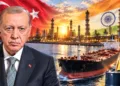
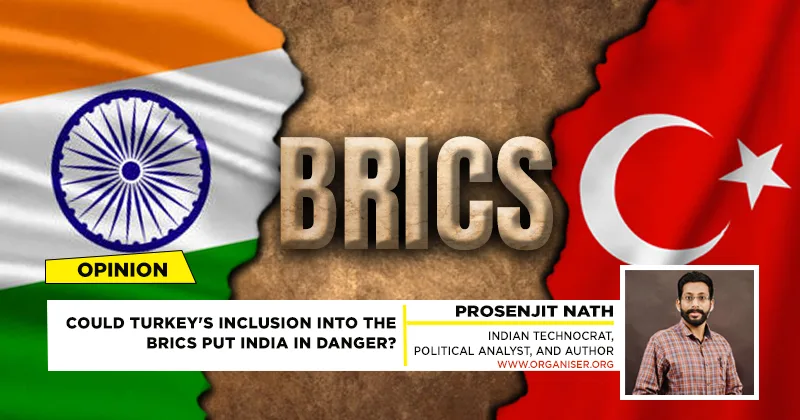
Could Turkey’s inclusion into the BRICS put India in danger?

Recep Tayyip Erdogan's Turkey has bid to join BRICS, marking a significant shift as it would become the first NATO member in the group. This development could complicate India's foreign policy, balancing its strategic ties with both Western and emerging powers amidst ongoing global conflicts

Dr Prosenjit NathDr Prosenjit Nath
Sep 16, 2024, 08:00 pm IST
inWorld, Opinion, International Edition
Follow on Google News
Facebook
Twitter
WhatsAppTelegramEmail

Recep Tayyip Erdogan, 70, has been Turkey’s president considering 2014. Before that, Erdogan, a strongman who wields an iron hand in his country, was once the top minister for around eleven years. His party, the Justice and Development Party (AKP), is socially conservative and emphasises standard Islamic values, and Erdogan regularly employs nationalist rhetoric and policies.

Erdogan is now not normally described as a fundament. However,  his strategy for Islam in politics is significant. He comes from a heritage of political Islam and has roots in Turkey’s Islamist mot, i. Even though he initially portrayed himself as a moderate, pro-Western Islamic democrat, over time, he has an increasing number of emphasised Islamic values in public coverage and rhetoric. Yet, whilst he has challenged components of Turkey’s standard secularism, he hasn’t sought to dismantle it completely.

Erdogan’s relationship with Russia is complicated and pragmatic as a substitute than strictly seasoned or anti-Russia. He has cooperated with Russia on power projects, army purchases (e.g., S-400 missile system), and Syria. Still, he has additionally had tremendous conflicts with Russia, which include Turkey’s downing of a Russian jet in 2015 and opposing aspects in conflicts like Libya.

Erdogan attempts to stabilise family members with Russia and the West, regularly enjoying every difference for Turkey’s benefit. This is huge because, when you consider that 1952, Turkey has been and stays a member of NATO, whose cause is to warranty the freedom and safety of its members and characterise most of the Western world via political and navy means.

Why are Turkey and Erdogan at the centre of attention?

Why am I going on about Erdogan? As of last week, Erdogan’s Turkey has formally bid to join the BRICs, the intergovernmental company comprising Brazil, Russia, India, China, South Africa, Iran, Egypt, Ethiopia, and the United Arab Emirates.

Formed in 2006, BRICS pursues the collective delivery of the world’s most necessary growing nations to undertake the political and financial strength of the wealthier international locations of North America and Western Europe. As it has expanded, with new individuals such as Argentina, Egypt, Ethiopia, Iran, Saudi Arabia, and the United Arab Emirates invited to participate this year, BRICS has emerged as an effective geopolitical counterweight to the West.

The expansion and the developing impact symbolise a huge shift in the international order that has prevailed since the end of World War II. This alternate displays the broader style of strength diffusion from the West to rising economies, especially in Asia.

Turkey’s bid to join BRICS is massive because it will become the first NATO member to join if it succeeds.

While BRICS is now not an army alliance, its developing monetary and political coordination should not directly affect NATO’s strategic calculations. The strengthening of ties between Russia and China, in particular, affords a complicated task for NATO’s strategic planning. Now, the scenario can flip as a substitute complex with a NATO member attempting to be part of the BRICS.

Turkey’s geographic position straddling Europe and Asia has made it an integral NATO ally, mainly during the Cold War. It controls entry to the Black Sea through the Oophorous Strait and borders numerous key regions, including the Middle East and the Caucasus.

On the one hand, Turkey has been a key member of NATO. Turkey keeps the second-largest navy in NATO after the United States. It has participated in several NATO operations and peacekeeping missions in Kosovo and Afghanistan. It has hosted NATO missile defence systems, consisting of early warning radar, as a phase of the alliance’s missile guard project. It has additionally been a key accomplice in NATO’s counter-terrorism efforts, in particular given its trip in combating home terrorist corporations and its proximity to combat zones in the Middle East.

What does this mean for the Indian subcontinent?

Let’s first take a look at India’s family members in Turkey. Trade family members between Turkey and India have been growing, and each nation is trying to find ways to amplify bilateral exchanges and investments. The two nations preserve diplomatic ties and interact in high-level visits.
That’s the appropriate news. The not-so-good information is that there have been some factors of anxiety between the two international locations in recent years.

Turkey’s help for Pakistan’s function in the Kashmir dispute has been a widespread supply of friction with India. Turkey has raised the Kashmir problem at global boards like the UN, which has now not been well-received with the aid of India. While there have been some defence collaborations between the two countries, the relationship in this region is restrained in contrast to Turkey’s ties with Pakistan or India’s ties with different countries.

Turkey’s nearer ties with Pakistan and its tries to enlarge its impact on the Muslim world have every so often put it at odds with India’s interests.

Turkey’s cross to be part of BRICS comes when there are predominant shifts in the geopolitical situation. The ongoing Russia-Ukraine battle is coming into its 0.33 year. Since Hamas attacked Israel on October 7, Israel’s offensive in Gaza has continued, and the dangers of escalation involving Iran and different entities in the vicinity are now real. In the US, all eyes are on what occurs in the November 5 presidential election: the two contenders, Donald Trump and Kamala Harris, have diametrically contrary views on NATO’s function in Ukraine and peace strikes in the Middle East.

India has for a lengthy adopted a non-aligned or, as some name it, multi-aligned overseas policy. It balances a cordial relationship with Russia with its strategic relationship with the US. India’s Prime Minister has visited Russia (to meet with President Vladimir Putin) and Ukraine (to meet President Volodymyr Zelensky). India’s relationship with China is testy, typically pushed via the reality that China is a large monetary rival, several-fold more effective than India; its advances in India’s neighbourhood have been rapid, and continuing conflicts with India over territorial disputes have been annoying.

Suppose the entry of a vital participant such as Turkey also shores up BRICS, and a robust China-Russia-Turkey axis emerges inside corporation Tion. Will the organisation’s movements go away from India? Would it unbalance its overseas coverage method of tightrope walking?

Topics: NATO-memberTurkey in BRICSTurkeyRecep Tayyip ErdoganBRICS
Dr Prosenjit Nath
Dr Prosenjit Nath
The writer is a technocrat, political analyst, and author. [Read more]
Share5
Tweet
SendShareSend
✮ Subscribe Organiser YouTube Channel. ✮
✮ Join Organiser's WhatsApp channel for Nationalist views beyond the news. ✮
Previous News

Karnataka: Tensions rise in Dakshina Kannada as communal clashes erupt during Eid Milad procession

Next News

Kejriwal resignation: AAP to announce new Delhi CM tomorrow

Related News

Narco kingpin Navpreet Singh deported to India from Turkey; Amit Shah vows destruction of drug menace by 2029

Erdogan’s Turkey turns to Indian refiners as Russian diesel supplies shrink, reshaping Ankara’s fuel-sourcing strategy amid global energy disruptions

Turkey buys record diesel from India; US ally’s imports come amid Trump’s tariff threat on New Delhi over Russian oil

Representative Image

Can BRICS change the global economic order?

Police action against protesters highlights the intensifying restrictions surrounding LGBTQ rights in Turkey

Sharia Raid in Turkey: 162 LGBTQ+ suspects arrested in Erdogan’s crackdown; Rights groups warn of growing repression

India’s “Nalanda Approach” uses engagement with SCO, BRICS and the Quad to strengthen strategic autonomy in a fragmenting world

The Nalanda Approach: How India connects a fragmenting world through SCO, BRICS and strategic autonomy

BRICS New Delhi Declaration 2026

BRICS New Delhi Declaration 2026: Science, technology, energy & human capital for resilient global south

Load More

Latest News

Captain Smit Machchhar and Israel Prime Minister Benjamin Netanyahu

Flydubai Terror Attack: PM Netanyahu speaks to Captain Smit; Invites PM Modi & Indian pilot for Israel Independence Day

Chenai, Dhanda after winning mixed team trap gold

Japan Asian Games 2026 | ‘Never, never, never give up’: Chenai, Dhanda stress power of self-belief

Choudhri obtained a Talaq divorce in Pakistan without Azhar’s knowledge; the Texas Supreme Court later rejected its recognition over lack of notice and due process

Secret Sharia Talaq Divorce in US: Texas Supreme court rejects divorce over lack of notice, upholds wife’s due process

ABVP demands Ashoka Chakra for Captain Smit Machchhar

ABVP Office-Bearers Meeting in Itanagar: Demands Ashoka Chakra for Captain Smit Machchhar for his exemplary courage

The Peshmerga Forces: How Iraqi Kurdistan is building a stronger security apparatus!

The Crown Has Changed, But Not the Mindset!

Rashtra Sevika Samiti lauds Captain Smit Machchhar’s valour when there was a terror attack on Flydubai Aircraft

Rashtra Sevika Samiti hails Captain Smit Machchhar’s courage as an embodiment of Bharatiya sanskars & dharma

Durga Puja in Bengal and constant attacks by Islamists under Mamata regime

Ahead of Durga Puja 2026 in West Bengal – Take a look at how Islamists vandalised pandals between 2017-2026

Karnataka Chief Minister DK Shivakumar

Karnataka: CAG flags gap in Anna Bhagya audit; Exposes unavailable family, ineligible ration cards & fake Aadhaar

Jodhpur police bust work from home blackmail racket; 2 Muslim men arrested, nude videos & data of 30 women recovered

Load More
  • Privacy
  • Terms
  • Cookie Policy
  • Refund and Cancellation
  • Delivery and Shipping

© Bharat Prakashan (Delhi) Limited.
Tech-enabled by Ananthapuri Technologies

  • Home
  • Search Organiser
  • Bharat
    • Assam
    • Bihar
    • Chhattisgarh
    • Jharkhand
    • Maharashtra
    • View All States
  • World
    • Asia
    • Africa
    • North America
    • South America
    • Europe
    • Australia
  • Editorial
  • Operation Sindoor
  • Opinion
  • Analysis
  • Defence
  • Culture
  • Sports
  • Business
  • RSS @ 100
  • Entertainment
  • More ..
    • Sci & Tech
    • Vocal4Local
    • Special Report
    • Education
    • Employment
    • Books
    • Interviews
    • Travel
    • Health
    • Politics
    • Law
    • Economy
    • Obituary
  • Subscribe Magazine
  • Read Ecopy
  • Advertise
  • Circulation
  • Careers
  • About Us
  • Contact Us
  • Policies & Terms
    • Privacy Policy
    • Cookie Policy
    • Refund and Cancellation
    • Terms of Use

© Bharat Prakashan (Delhi) Limited.
Tech-enabled by Ananthapuri Technologies