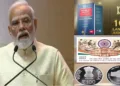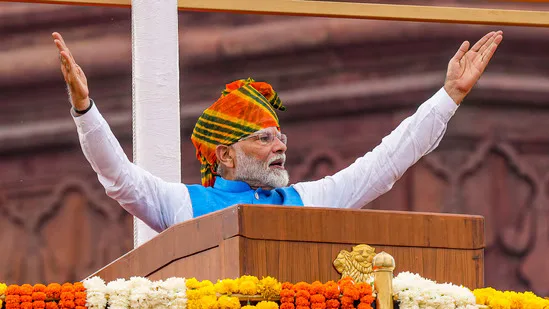
On the 78th Independence Day of India, Prime Minister Narendra Modi addressed the nation from the historic Red Fort in New Delhi, marking his 11th consecutive address from the iconic site. As he hoisted the national flag, the Prime Minister once again underscored his vision for a unified electoral system in India, passionately advocating for the implementation of ‘One Nation, One Election’ (ONOE).
The Vision for ‘One Nation, One Poll’
During his speech, Prime Minister Modi proposed the synchronisation of elections for the Lok Sabha and state assemblies. The Prime Minister argued that frequent elections have become a significant impediment to the nation’s progress, as they not only strain resources but also disrupt the continuity of governance and development initiatives.
“Frequent elections are creating hurdles in the progress of the nation,” PM Modi declared from the ramparts of the Red Fort.
He further elaborated, “It has become easy to link any scheme or initiative with elections. There are elections somewhere every three to six months. Every work is linked to elections.” By advocating for ONOE, the Prime Minister emphasised the need to streamline the electoral process, thereby reducing the constant election-related disruptions that affect policy implementation and governance.
“The nation has come forward for one nation, one election,” PM Modi announced, reflecting the growing momentum behind this idea. The concept of simultaneous elections, where both national and state elections are held together, is seen as a way to create a more efficient and less costly electoral process.
Historical Context and Political Support
The idea of ‘One Nation, One Election’ is not new. It was first proposed in the 1980s when the Election Commission suggested the need for a system that would allow simultaneous elections for the Lok Sabha and state assemblies. The concept gained further traction in 1999 when the Justice B.P. Jeevan Reddy-headed Law Commission recommended a return to simultaneous elections, as was the norm in the early decades of India’s independence.
“Elections for the Lok Sabha and state assemblies were held simultaneously in 1951-52, 1957, 1962, and 1967,” PM Modi noted, referencing the period when this practice was standard. However, the cycle was disrupted due to the premature dissolution of various state assemblies and the Lok Sabha, leading to the staggered electoral process that exists today.
Under the BJP-led government, the official discussion on ONOE gained renewed attention. In 2015, the Parliamentary Standing Committee on Personnel, Public Grievances, Law, and Justice explored the feasibility of holding simultaneous elections. The committee recommended a phased approach, proposing elections in two stages: halfway into the Lok Sabha term and at the end of the term. Despite these discussions, the proposal has faced significant opposition from various political parties.
Current Developments and the Role of Kovind
The government’s recent decision to form a committee, led by former President Ram Nath Kovind, to explore the feasibility of ONOE has reignited the debate. This move comes at a critical time, as five states, including Madhya Pradesh and Rajasthan, are preparing for assembly elections in November-December 2024. These state elections will be followed closely by the Lok Sabha elections, expected in May-June 2024. The formation of the committee suggests that the government may be considering advancing some state elections to coincide with the Lok Sabha polls, thereby testing the waters for ONOE.
Kovind’s committee will examine the legal, logistical, and constitutional aspects of implementing ONOE. The committee’s role is crucial, as it will explore how the country can transition back to simultaneous elections, a practice that has been dormant for decades. The Prime Minister’s emphasis on ONOE in his Independence Day address indicates the government’s serious intent to push this agenda forward.
Economic and Governance Implications
The potential benefits of ONOE are significant. Experts argue that simultaneous elections could lead to substantial cost savings, reduce the administrative burden on government machinery, and alleviate the strain on security forces. In 2018, the Law Commission, in its report, highlighted several advantages of ONOE, including cost savings, enhanced governance efficiency, and the ability to focus on long-term developmental goals without the constant disruption of election cycles.
“The 2019 Lok Sabha elections cost the exchequer around Rs 60,000 crore, including expenses incurred by political parties and the Election Commission,” Modi pointed out, illustrating the financial burden of frequent elections. In comparison, the cost of holding simultaneous elections is estimated to be significantly lower. The Election Commission has projected that ONOE could be conducted for around Rs 4,500 crore, according to reports from The Indian Express.
Beyond the financial aspects, PM Modi argued that ONOE would enable the government to focus more on development rather than being perpetually in election mode. He has been a consistent advocate for this system, reiterating its importance in various forums over the years. In November 2020, Modi asserted that “One Nation, One Election is the need of the country,” emphasising how the continuous cycle of elections hampers development.
Opposition and Challenges
Despite the potential benefits, ONOE faces significant opposition from several political parties. Critics argue that simultaneous elections could undermine the federal structure of the country, where states have the autonomy to dissolve their assemblies and call for elections independently. Additionally, there are concerns that ONOE could lead to a presidential-style system of governance, which some believe would erode the parliamentary democracy that India has upheld since independence.
Opposition parties like the Aam Aadmi Party (AAP) and Shiv Sena (UBT) have been vocal in their criticism. AAP, in January, accused the BJP of using ONOE as a means to replace the parliamentary system with a presidential one. Similarly, Shiv Sena (UBT) leader Sanjay Raut questioned the necessity of ONOE, stating, “The country is already one, is anyone questioning that? We demand fair elections, not ‘one nation, one election.’ This proposal is being brought to divert attention from our demand for fair elections.”
The road to ONOE is fraught with challenges, both logistical and political. Implementing such a system would require significant constitutional amendments and widespread political consensus, which may prove difficult given the diverse political landscape of India.
As Prime Minister Modi concluded his Independence Day address, it was clear that ONOE is set to be a major point of discussion in the coming months. The formation of the Kovind-led committee marks a significant step towards exploring the feasibility of this ambitious idea. While the benefits of ONOE are evident, its implementation will require careful consideration of the potential impact on India’s democratic processes and federal structure.
The debate over ONOE is not just about elections; it is about the future of governance in India. As the nation moves forward, the discussion will likely intensify, with political parties, experts, and the public weighing in on the merits and challenges of simultaneous elections. For now, Prime Minister Modi has set the stage for what could be one of the most transformative changes in India’s electoral history.