In March 1950, the East Pakistan (now Bangladesh) once again burst into flames of communal violence. The Noakhali tragedies were ruthlessly repeated. As foretold by visionary and practical Savarkar, ‘the birth of Pakistan endangered the peace and prosperity of Bharat, and Pakistan sought every opportunity for expansion.’ Even leaders like Jaiprakash Narayan was upset by such tragic situation in East Pakistan and advised to send our armed forces in disturbed area if there is no other way to stop the carnage. Opinion of media was also in same favor.
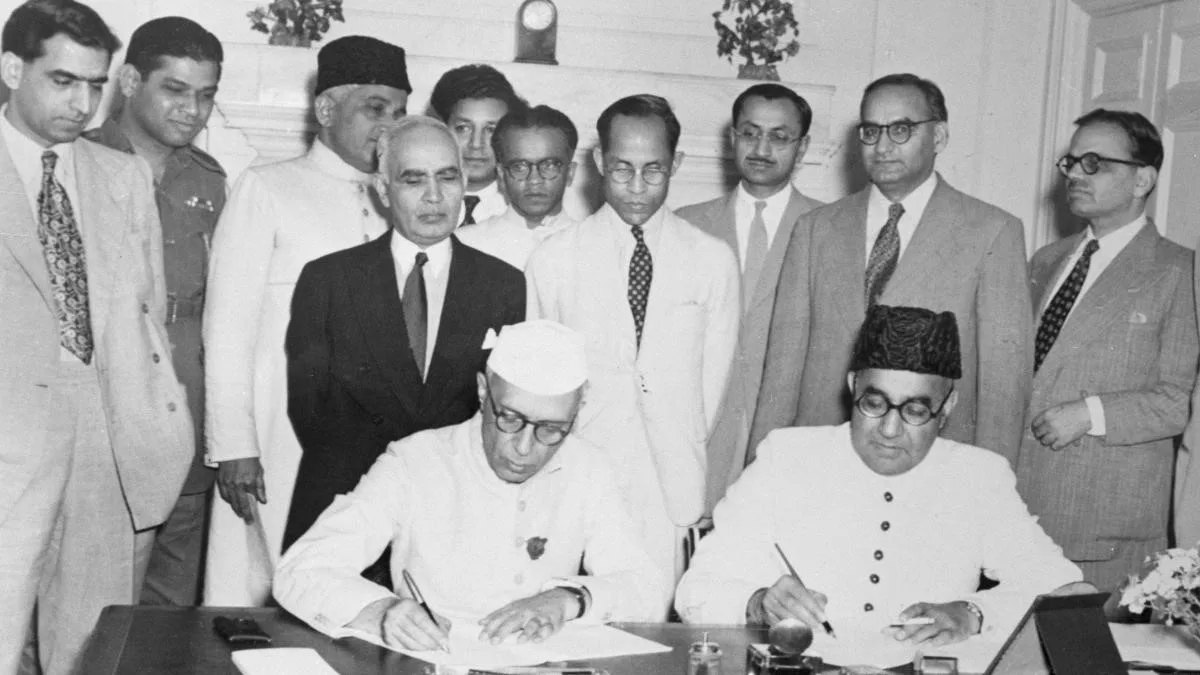
On this background, India’s then Prime Minister Pandit Jawaharlal Nehru invited Pakistan’s then Prime Minister Liaqat Ali Khan to solve the minority problem in respective country and to have the bilateral treaty for safe return of refugees and to safeguard minority rights in both countries. This was good move with good intentions by Nehru for safety and security of minority and their fundamental rights in respective country. Liaqat Ali supposed to reach Delhi on April 8, 1950, to have discussion on this issue and which would be resulted into Nehru–Liaquat Pact. This pact was providing for the right of the refugees to return to their original places and guaranteeing the recovery of abducted women and the right to transfer all movable property and to dispose off immovable property and the non-recognition of all forced conversions during the period of disturbances. The fact is, Pakistan never followed up this pact.
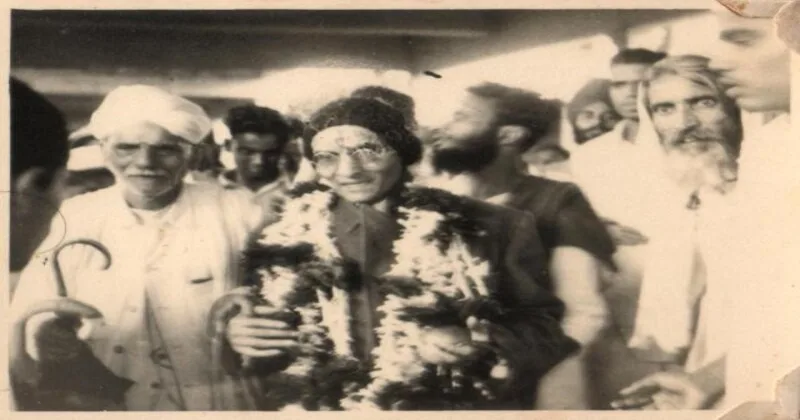
However before arrival of Liaqat Ali to Bharat, Veer Savarkar, who was staying in Dadar, Mumbai, far away from Delhi, was arrested at his Dadar, Mumbai house on April 4, 1950, under the Preventive Detention Act and kept in the Hindalga jail in Belgaum (now Belagavi). In the early morning, an officer reached Savarkar’s house and showed him an arrest warrant. He was allowed to finish his morning ablutions and then take him to the Arthur Road Jail. Even before the dawn of April 4, 1950, nearly 100 policemen of Mumbai’s CID divided themselves into different groups under ‘Operation Hindu Mahasabha’ and the officers made the raids on several Hindu Mahasabha leaders and arrested LB Bhopatkar, GV Ketkar (the editor of the Kesari and grandson of Lokmanya Tilak), Mamarao Date (the editor of the Kal), KB Limaye, G. M. Nalavade, BN Bhagvat, SV Deodhar, Bal Savarkar (Secretary of Veer Savarkar), R Agarwal, SS Sapre, N.H. Halelkar and others and put in different jails.
Congress’ conspiracy against Savarkar
While giving the reason behind the arrest of Hindu Mahasabha leaders, Nehru noted, ‘The speeches of the Hindu Mahasabha leaders demand the liquidation of Pakistan. I can imagine no greater offence to a foreign power than to make such a suggestion…… Section 3 of the Preventive Detention Act, which came into force on February 25, 1950, empowered the Central and the State Governments to detain any person to prevent him from acting in any manner prejudicial to the defence and security of India and the relations of India with other countries……I think it might well be considered that people who shout too much about war with Pakistan or people who take pledges to liquidate Pakistan come within the scope of this clause. There can be no doubt that the relations of India with a foreign power are affected.’ (Nehru, Jawaharlal. Selected Works of Jawaharlal Nehru, Series 2, Vol. 15 (Part 1), Published by Jawaharlal Nehru Memorial Fund, New Delhi, 1993, page 40-41 & 159–60) These allegations are completely baseless, because the Hindu Mahasabha in 1950 was no longer a strong party after the tragic incident of the Mahatma Gandhi murder and subsequent ban on the Hindu Mahasabha. In the case of Savarkar, he had not even made any anti-government or anti-Nehru statements at that time and was out of active politics or any political movement. It may be hatred towards Savarkar or an attempt to eliminate him politically in the wake of the upcoming first general elections that the country was to witness in 1951.
It was only fear of Nehru that the Hindu Mahasabha leaders demand the liquidation of Pakistan would affect relations of India with Pakistan; but in contrast, Pakistan has continuously trying for liquidation of Bharat since its formation but none of Pakistan leaders fear that it would affect relations of Pakistan with Bharat.
The arrest of Veer Savarkar in independent Bharat by the Nehru Government was condemned and criticized by almost the entire media, political leaders, and freedom-loving organisations like the Civil Liberties Union of Bombay. Condemning this action, the Free Press Journal, which had never shown even an iota of sympathy for the Hindu Mahasabha, said: “The offensive against the Hindu Mahasabha and the R.S.S. leaders and workers has only one implication. That is, that, Premier Nehru has elected to appease Pakistan and imperil the integrity and the independence of India. The offensive against the Hindu Mahasabha and the R.S.S. has a two fold purpose; one is to divert India’s attention from the policy of appeasement; the other is to create a panic that there is a Hindu conspiracy and rally the progressive elements in support of the policy of appeasement of Pakistan.” (The Free Press Journal, 5 April 1950)
The charges given for Savarkar’s arrest were that he was inciting Hindus against Muslims. This was completely false as after his acquittal from the Gandhi Murder Trial neither he made any speech or issued any statement on the Muslim problem nor given the Commissioner of Police any excuse to twist his speech or statement.
Liaqat Ali left Bharat after signing the pact, however, Savarkar was still in jail. What was the reason or logic for keeping him in jail when Liaqat Ali had already left Bharat and reached Pakistan? From Belagavi jail Savarkar send letter to the Government of Mumbai on April 26, 1950, refuting the Commissioner’s baseless charges and requested the Government to order his release unconditionally. But in case Government was not ready to release him unconditionally, then he should be released under the condition that he would not take part in current politics for any period Government might lay down just as Government had done in the case of Dr. N B Khare and other Hindusabha leaders. Savarkar told that he would retire from the political field soon.
The habeas corpus that Savarkar’s son Vishwas Savarkar filed in the Mumbai High Court came up for hearing before the division bench of the Mumbai High Court on July 12 1950. Before Chief Justice M.C. Chagla and Justice Gajendragadkar, CK Daphtary, the advocate general of Mumbai, stated that the government are willing to release Savarkar if he undertook to retire from politics and stay confined to his house. He was given an option to be released from prison only if he abstained from politics for a year or till the first general elections or the third world war, whichever took place first. Finally, Savarkar was released after 99 days on July 13, 1950, from Belagavi jail.