'Bastar: The Naxal Story' unveiling the real face of ultra-left extremism
July 9, 2026
  • Read Ecopy
  • Circulation
  • Advertise
  • Careers
  • About Us
  • Contact Us
Android AppiPhone AppArattai
Organiser
  • ‌
  • Bharat
    • Assam
    • Bihar
    • Chhattisgarh
    • Jharkhand
    • Maharashtra
    • View All States
  • World
    • Asia
    • Europe
    • North America
    • South America
    • Africa
    • Australia
  • Editorial
  • International
  • Opinion
  • RSS @ 100
  • More
    • Op Sindoor
    • Analysis
    • Sports
    • Defence
    • Politics
    • Business
    • Economy
    • Culture
    • Special Report
    • Sci & Tech
    • Entertainment
    • G20
    • Azadi Ka Amrit Mahotsav
    • Vocal4Local
    • Web Stories
    • Education
    • Employment
    • Books
    • Interviews
    • Travel
    • Law
    • Health
    • Obituary
  • Subscribe
    • Subscribe Print Edition
    • Subscribe Ecopy
    • Read Ecopy
  • ‌
  • Bharat
    • Assam
    • Bihar
    • Chhattisgarh
    • Jharkhand
    • Maharashtra
    • View All States
  • World
    • Asia
    • Europe
    • North America
    • South America
    • Africa
    • Australia
  • Editorial
  • International
  • Opinion
  • RSS @ 100
  • More
    • Op Sindoor
    • Analysis
    • Sports
    • Defence
    • Politics
    • Business
    • Economy
    • Culture
    • Special Report
    • Sci & Tech
    • Entertainment
    • G20
    • Azadi Ka Amrit Mahotsav
    • Vocal4Local
    • Web Stories
    • Education
    • Employment
    • Books
    • Interviews
    • Travel
    • Law
    • Health
    • Obituary
  • Subscribe
    • Subscribe Print Edition
    • Subscribe Ecopy
    • Read Ecopy
Organiser
  • Home
  • Bharat
  • World
  • Operation Sindoor
  • Editorial
  • Analysis
  • Opinion
  • Culture
  • Defence
  • International Edition
  • RSS @ 100
  • Magazine
  • Read Ecopy
Home Bharat

‘Bastar: The Naxal Story’ unveiling the real face of ultra-left extremism

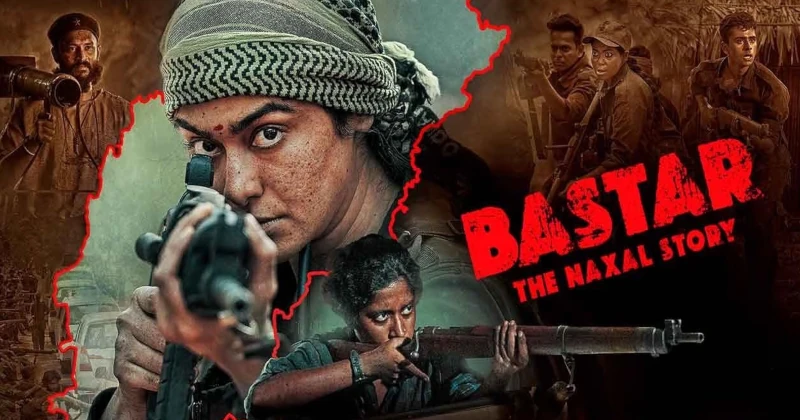
"Bastar: The Naxal Story," directed by Sudipto Sen and produced by Vipul Amrutlal Shah, depicts the harsh realities of red terrorism in Chhattisgarh. IPS officer Neerja Madhavan (Adah Sharma) battles Naxalite insurgency in Bastar, while Ratna, a villager, seeks vengeance for her husband's murder by Naxal leader Lanka Reddy

Diganta ChakrabortyDiganta Chakraborty
May 26, 2024, 12:00 pm IST
in Bharat, Opinion
Follow on Google News
FacebookTwitterWhatsAppTelegramEmail

“Bastar: The Naxal Story,” directed by Sudipto Sen and produced by Vipul Amrutlal Shah, is a movie that reveals the real face of left liberals behind their so-called progressive facade. This story is based on the brutal red terrorism in the tribal regions of Chhattisgarh.

The film centres around IPS officer Neerja Madhavan (Adah Sharma), tasked with combating red terrorism activities in Bastar. The narrative begins with a court case against Neerja, accused of using extreme measures against villagers by training them to fight Naxals through the Salwa Judum, a controversial anti-Naxalite militia. The film juxtaposes Neerja’s struggles with those of Ratna (Indira Tiwari), a villager whose husband is brutally killed by the Naxal leader Lanka Reddy (Vijay Krishna). Ratna’s journey of vengeance and her son’s unfortunate induction into the Naxal fold form a poignant subplot.

Adah Sharma delivers a commendable performance as Neerja Madhavan, bringing a determined and gritty persona to the screen. Her portrayal of a high-ranking police officer grappling with personal and professional challenges is one of the film’s highlights. Indira Tiwari’s performance as Ratna is equally compelling, providing an emotional anchor to the story.

Vijay Krishna’s intense and impactful portrayal of Lanka Reddy, the menacing red terrorism leader, is impressive. The supporting cast adds depth to the narrative, including Shilpa Shukla as the Machiavellian lawyer and Raima Sen in a notable role.

The film’s direction by Sudipto Sen is noteworthy. Sen, who previously helmed “The Kerala Story,” brings meticulous attention to detail and a strong narrative drive. The cinematography effectively captures the rugged beauty and harsh realities of the Bastar region, while the use of background scores and songs enhances the film’s emotional and dramatic impact.

“Bastar: The Naxal Story” delves into this historical backdrop, contextualising the rise of red terrorism against decades of systemic neglect, socio-economic disparities, and the exploitation of indigenous tribes (Adivasis). The film highlights how these marginalised communities, deprived of basic amenities and rights, became fertile ground for the Naxal ideology to take root and flourish. The film depicts the harsh truth of how the left liberals, wearing the mask of progressiveness and communism, exploited the people of the remotest classes for a long time in India. Not only that, but also how dangerous these types of activities are for the integrity of Bharat and the survival of Hindus can be imagined by watching this movie.

Another thing that has come up very noticeably in this film is how educated people are motivated to commit sedition to fulfil their petty interests. The film shows how JNU students celebrated the killing of 76 Indian soldiers. There is plenty of evidence that this is not merely false. We have seen many times anti-India slogans being raised in JNU by the students, behind which some so-called educated but anti-national professors and teachers are patrons. This movie shows us how the left-leaning liberals and red terrorism -minded people are in our system, whether it’s in the judiciary or maybe in political power. For that, we saw in this film how the Court restricted Salwa Judum (a state-sponsored anti-red terrorism militia) but not the activities of Naxalites. This film shows how an honest, brave IPS officer like Neerja has to face harassment and interrogation because the system is in the hands of anti-nationals.

A significant aspect of the film is its critique of the state’s role in the genesis and perpetuation of the red terrorism problem. Decades of governmental neglect, corruption, and exploitation have created a fertile ground for insurgency. This film also highlights the lack of infrastructure, healthcare, and education in Bastar, illustrating how these deficiencies contributed to the alienation and radicalisation of the local population. It explores how both state and Naxal interventions threaten traditional livelihoods and the cultural heritage of the Adivasis.

In today’s 21st century, this ultra-leftist ideology is a threat to the country and its citizens. I hope that this film will clarify for the general public what the red terrorism and the left-liberals truly represent. The film exposes the facade of the left-liberals and reveals their true sinister nature. For Hindus, “Bastar: The Naxal Story” offers several important lessons. The movie also highlights the dangers of ideological extremism, regardless of its origin. It serves as a reminder that any ideology can become oppressive and destructive when taken to an extreme.

In the end, “Bastar: The Naxal Story” is a powerful narrative that uncovers the grim realities of ultra-left extremism in Bharat. It serves as a wake-up call, urging society to address the underlying issues that fuel such movements. For Hindus, the film offers valuable lessons in empathy, social responsibility, and the need for inclusive development.


Topics: HindusnaxalitesBastar The Naxal storyLeft extremismBastar region
ShareTweetSendShareSend
✮ Subscribe Organiser YouTube Channel. ✮
✮ Join Organiser's WhatsApp channel for Nationalist views beyond the news. ✮
Previous News

Schools built with India’s financial assistance inaugurated in Nepal’s Dang district

Next News

Lok Sabha Elections 2024: Voting trend surely indicates repetition of 2019

Related News

AI generated video depicts Jesus as the father of Hindu deities

Attack on Hindu Faith Using AI: Video claims ‘Jesus is the father of Hindu deities’; Hindu groups protest, FIR filed

Amazon in dock for mocking Hindu Gods

Amazon File: From Ganesha to Aryabhatta – Has Amazon India become a platform for Anti-Hindu narratives?

Bangladesh Hindus protest against Bhagwan Ram photo desecration; Chant Jai Sri Ram against radical islamist atrocities

RSS Sarsanghchalak Dr Mohan Bhagwat addressing the gathering in Keralam on the occasion of lecture series on 100 years of RSS

Journey of RSS in 100 Years | Hindu means cultural heritage of Bharat; none is outsider to Sangh: Dr Bhagwat in Keralam

RSS functionaries on the stage on the occasion of samapan samaroh of Rashtriya Swayamsevak Sangh’s Karyakarta Vikas Varg–Pratham of Purvi Uttar Pradesh Kshetra on June 10

RSS has awakened self-realisation in Hindu society: Ramdatt Chakradhar

New York anti-Hindu Bill fails to advance: How the bill fueled bias & espoused caste discrimination

Load More

Latest News

Seva Bharati Purvanchal, Barpeta District Committee has launched the district's first completely free coaching programme for the National Eligibility-cum-Entrance Test (NEET)

Barpeta witnesses’ landmark in educational inclusion: Seva Bharati launches 1st completely free NEET coaching programme

Representatives of the civil society members addressing the media

14 Manipur civil society groups demand NRC update before 2027 Census; Meet top MHA officials in Delhi

Dignitaries on the stage on the occasion of 90 years of Rashtra Sevika Samiti and celebration of birth anniversary of its founder Lakshmibai Kelkar

Lakshmibai Kelkar Birth Anniversary | The need is not to give strength to women but to awaken it: Alka Inamdar

UP transformed from an electricity-deficient state to a model of household electrification and power reforms over the past decade

Ten Years of Power Reforms in UP: How electricity schemes transformed the state’s energy landscape

A representative image

Poshan Tracker: How India’s real-time nutrition monitoring platform is transforming nutrition governance

Melbourne [Australia], Jul 09 (ANI): Prime Minister Narendra Modi and Australian Prime Minister Anthony Albanese exchange a handshake, in Melbourne on Thursday. (@narendramodi X/ANI Photo)

India, Australia launch new era of strategic cooperation with uranium pact

ABVP's National General Secretary Dr Virendra Singh Solanki hoisted the flag at ABVP Lucknow Office on occasion of National Students' Day

ABVP’s 78th Foundation Day: World’s largest student organisation reaffirms its commitment to service & nation-building

T. Satisan speaks. L/R: E.N. Nandakumar, K.G. Venugopal, Adv. K. Ramkumar, Kummanam Rajasekharan and Sunil Vadayar

Keralam: RSS karyakartas in Kochi remember Emergency, honour anti-Emergency struggle veterans

Hindu Munnani protesting against the temple demolition move

Tamil Nadu: Hindu Munnani protests Rajakaali Amman Temple demolition in Ramanathapuram, alleges TVK is targeting Hindus

A representative image

How India turned a toy import crisis into a 152 Million US dollar trade surplus: Inside the Toy Story

Load More
  • Privacy
  • Terms
  • Cookie Policy
  • Refund and Cancellation
  • Delivery and Shipping

© Bharat Prakashan (Delhi) Limited.
Tech-enabled by Ananthapuri Technologies

  • Home
  • Search Organiser
  • Bharat
    • Assam
    • Bihar
    • Chhattisgarh
    • Jharkhand
    • Maharashtra
    • View All States
  • World
    • Asia
    • Africa
    • North America
    • South America
    • Europe
    • Australia
  • Editorial
  • Operation Sindoor
  • Opinion
  • Analysis
  • Defence
  • Culture
  • Sports
  • Business
  • RSS @ 100
  • Entertainment
  • More ..
    • Sci & Tech
    • Vocal4Local
    • Special Report
    • Education
    • Employment
    • Books
    • Interviews
    • Travel
    • Health
    • Politics
    • Law
    • Economy
    • Obituary
  • Subscribe Magazine
  • Read Ecopy
  • Advertise
  • Circulation
  • Careers
  • About Us
  • Contact Us
  • Policies & Terms
    • Privacy Policy
    • Cookie Policy
    • Refund and Cancellation
    • Terms of Use

© Bharat Prakashan (Delhi) Limited.
Tech-enabled by Ananthapuri Technologies