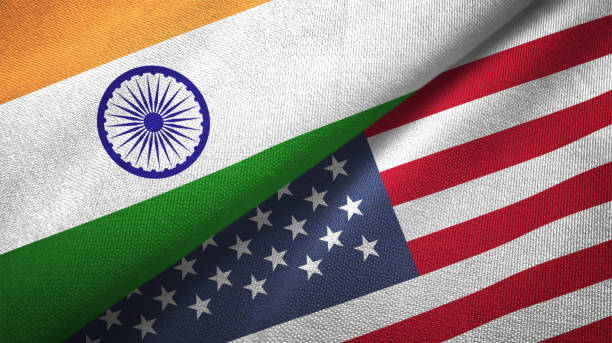
India’s CAA & US Lautenberg Laws: Similar still Different
August 18, 2026
  • Read Ecopy
  • Circulation
  • Advertise
  • Careers
  • About Us
  • Contact Us
Android AppiPhone AppArattai
Organiser
  • ‌
  • Bharat
    • Assam
    • Bihar
    • Chhattisgarh
    • Jharkhand
    • Maharashtra
    • View All States
  • World
    • Asia
    • Europe
    • North America
    • South America
    • Africa
    • Australia
  • Editorial
  • International
  • Opinion
  • RSS @ 100
  • More
    • Op Sindoor
    • Analysis
    • Sports
    • Defence
    • Politics
    • Business
    • Economy
    • Culture
    • Special Report
    • Sci & Tech
    • Entertainment
    • G20
    • Azadi Ka Amrit Mahotsav
    • Vocal4Local
    • Web Stories
    • Education
    • Employment
    • Books
    • Interviews
    • Travel
    • Law
    • Health
    • Obituary
  • Subscribe
    • Subscribe Print Edition
    • Subscribe Ecopy
    • Read Ecopy
  • ‌
  • Bharat
    • Assam
    • Bihar
    • Chhattisgarh
    • Jharkhand
    • Maharashtra
    • View All States
  • World
    • Asia
    • Europe
    • North America
    • South America
    • Africa
    • Australia
  • Editorial
  • International
  • Opinion
  • RSS @ 100
  • More
    • Op Sindoor
    • Analysis
    • Sports
    • Defence
    • Politics
    • Business
    • Economy
    • Culture
    • Special Report
    • Sci & Tech
    • Entertainment
    • G20
    • Azadi Ka Amrit Mahotsav
    • Vocal4Local
    • Web Stories
    • Education
    • Employment
    • Books
    • Interviews
    • Travel
    • Law
    • Health
    • Obituary
  • Subscribe
    • Subscribe Print Edition
    • Subscribe Ecopy
    • Read Ecopy
Organiser
  • Home
  • Bharat
  • World
  • Operation Sindoor
  • Editorial
  • Analysis
  • Opinion
  • Culture
  • Defence
  • International Edition
  • RSS @ 100
  • Magazine
  • Read Ecopy
Home World North America USA

India’s CAA & US Lautenberg Laws: Similar still Different

Going head-to-head with India’s CAA 2019 that provides citizenship to Hindus, Sikhs, Parsis, Jains, Christians from Pakistan-Afghanistan-Bangldesh (PAB) countries is the Lautenberg Amendment of the US Constitution which is often seen similar by many, but is actually quite distinct from the former in certain aspects during relative comparison

WEBDESKWEBDESK
Mar 19, 2024, 10:00 pm IST
inUSA, Bharat
Follow on Google News
Representative Image

Representative Image

Facebook
Twitter
WhatsAppTelegramEmail

The Citizenship Amendment Act (CAA) of India 2019, provides the Hindu, Sikh, Buddhist, Jain Christians and Parsi communities from Pakistan, Afghanistan Bangladesh (PAB) staying in India without required documents, a chance to become naturalised citizens on favourable terms. The PAB have declared themselves to be Islamic Nations constitutionally.

The main allegation against the CAA 2019 is that it incorporates religious discrimination and hence is in violation of Article 14 of the Indian Constitution (other constitutional provisions on equality apply on Indian citizens and not aliens). Most of the well-functioning democracies of the world today have constitutional provision for equal treatment under the law.

For example, the US has Equal Protection Clause from the Fourteenth Amendment to the American constitution which took effect in 1868. However, the world’s oldest democracy has also provided special treatment to the Jews, Christians who are a minority, facing persecutions in their home countries for close to two decades now.

The Lautenberg Amendment, was enacted on November 21, 1989 and has been renewed annually by the US Congress since. The amendment provided special treatment to people from historically persecuted groups without requiring them to show that they had been singled out and that means the members of these groups will not have to prove persecution in their individual case.

The amendment clearly specifies Jews, Evangelical Christians, Ukrainian Catholics, or Ukrainian Orthodox who are the nationals from the former USSR, Estonia, Lithuania, Lativia. This law was expanded in 2004 to include Jews, Christians, Bahai and other religious minorities in Iran.

Since the US and Iran don’t have diplomatic relations, the former officials could not travel to Iran to be accessed by potential refugees. An arrangement was worked out between the US and Austria under which, the above-mentioned religious minorities from Iran would travel to Vienna where they would be screened by American officials for their final processing before being resettled to the US.

Reportedly, nearly 100 percent of Iran religious minorities have travelled to Vienna since 2004 have been admitted to the US. Also, those, covered by the Lautenberg Amendment are eligible for Special Cash Assistance and for Federal Public Assistance programs such as Social Security, Medicaid, Food Stamps and Temporary Assistance for Needy Families.

First unlike the Lautenberg Amendment, which concerns itself with religious minorities living in other countries, the Indian CAA doesn’t concern itself with religious minorities living in PAB who want to come to India on grounds of persecution. It only concerns itself with providing a pathway to citizenship to those religious minorities from PAB who are already living in India.

Therefore, contrary to the popular misunderstanding, the CAA 2019 doesn’t insult the PAB countries by encroaching them into the minorities in their territory. CAA only concerns itself with people living in Indian territory and at this point, have nothing to do with PAB governments.

Also, Pakistan and Bangladesh have shown no concern for their nationalities who have illegally immigrated into other countries. They have never been enthusiastic about their repatriation. The former even its loyal Bihari Muslims stranded in Bangladesh state-less after the 1971 war.

The CAA provides a cut-off date of December 2014 after which any religious minorities from neighbouring countries, who flee to India cannot avail the benefits under the act. Secondly, like the Lautenberg Amendment which has clear foreign policy goals, the CAA is grounded in the history of the subcontinent. There is no justification for the realpolitik behind US only in putting Iran and not its ally Saudi Arabia’s name in the Lautenberg Amendment.

On the other hand, the CAA incorporates a reasonable classification, not discrimination on solid historical grounds. Only Islamic nations are selected because of the long history of systematic persecution of non-Muslims in the name of Islam in the subcontinent.

The subcontinent has been diverse and of course, where there is diversity, there would be some tensions between different communities. However, the Islamic persecution stands out, not just because of the depth of religious factor.

While persecutions of non-Muslim minorities occur in many Islamic nations, only Pakistan, Afghanistan and Bangladesh have been chosen because of the geographical and cultural affinity that render Indian subcontinent as one unit in history since time immemorial.

The bill includes only Hindu, Sikh, Buddhist, Jain, Parsi communities and not say Ahmadiyya (persecuted Muslims in Pakistan) for similar reason that it doesn’t include Iran, Saudi Arabia or other Islamic nations. The Act restricts its domain so as not to interfere with into issues of sectarian or communal strife or internal matters of the religion.

The CAA avoids encroaching into political and religious sovereignty of Islamic nations as they say while dealing with people in its own territory. Also, the since the Partition of the subcontinent happened to carve out as separate Muslims homeland, the most people who fled from PAB before December 2014 are non-Muslims. Ahmadiyya, as a new sect, in fact, were quite zealous, and one of the most ferocious supporters of demand for Pakistan.

While comparing the CAA 2019 with Lautenberg Amendment of US, we can clearly see that the former is very limited in its scope, and grounds itself in historical realities of the Indian subcontinent, instead of foreign policy, or geopolitics of religion around the world.

By limiting the scope of the bill in space, time and eligibility, CAA has avoided raising eyebrows of Islamic nations, many of whom are strategic partners of India, and has maintained intact the promise of CAA being truly an internal matter of the country. A refugee law, if India decides to bring one, would certainly require more and broader debate.


Topics: IranUSACAALautenberg AmendmentPABIndia
Share11
Tweet
SendShareSend
✮ Subscribe Organiser YouTube Channel. ✮
✮ Join Organiser's WhatsApp channel for Nationalist views beyond the news. ✮
Previous News

Delhi: Protesters vow to stop college from becoming Sandeshkhali amid sexual harassment allegations against professor

Next News

Kerala: People from all age groups beat the scorching sun to take part in PM Narendra Modi’s road show in Palakkad

Related News

India’s Defence Sector Rise: Self-reliance, indigenous military tech powering strategic edge & national security

Former Director General of Military Operations (DGMO)
Lieutenant General Rajiv Ghai

Operation Sindoor: Former DGMO Rajiv Ghai recalls Pakistan’s “Please Stop” plea amid BrahMos strikes

PM Modi and Bangladesh PM Tarique Rahman

Future trajectory of India-Bangladesh relations

India–Myanmar border dispute & the proposed land swap in Manipur

Independence Day 2026: World leaders wish India, hail its global rise & growth story; Signals deeper strategic ties

Pew Research Centre’s 2026 survey highlights Bharat’s growing global goodwill and influence.

Bharat’s rising global stature wins worldwide goodwill, Pew Research Centre’s 2026 survey reveals

Load More

Latest News

BMS volunteers gather at Jantar Mantar to raise 11 demands

BMS holds nationwide “Demand Day” over pending workers’ issues; thousands gather at Jantar Mantar to raise 11 demands

Devendranath Mahto who has been sitting on hunger strike since August 2 in Ranchi

Jharkhand Students Protest: Devendra Mahto ends 16-day hunger strike after JSSC-CGL scrapped; Students continue strike

Arrested accused in the case

Two Hindu minor girls from Jodhpur rescued in Ahmedabad after Aqib Ansari & Syed Ibrahim lured them through gaming apps

Peshwa Bajirao I

Peshwa Bajirao Birth Anniversary: The invincible warrior who took Swarajya to the heart of the Mughal Empire

Representative image

US: California public high school students take Mosque trip, given Qurans, encouraged to wear Hijabs; Parents sue

Keralam Governor Rajendra Viswanath Arlekar hosted the Independence Day ‘At Home’ reception at Lok Bhavan on August 15

Keralam: Transgenders, differently abled children among special guests at Governor’s ‘At Home’

Students protesting in Ranchi

Jharkhand: JSSC-CGL cancelled after 24 days of protest, but students refuse to call off protest over CBI probe

oby Mathew addresses RSS Yuva Sangamam

Keralam: Joby Mathew urges youth to pursue ambition with knowledge and hard work at RSS Yuva Sangamam

Keralam Governor Rajendra Vishwanath Arlekar releasing Sree Padmanabha Swami Permanent Pictorial Cancellation & Special Cover at Panchajanyam Nelpura Hall, in Thiruvananthapuram

‘Sree Padmanabha Swamy is with us’: Keralam Governor Arlekar calls for cultural preservation

‘Let us eradicate alcohol’: Nagapattinam village in Tamil Nadu imposes heavy fines to keep youth away from liquor

Load More
  • Privacy
  • Terms
  • Cookie Policy
  • Refund and Cancellation
  • Delivery and Shipping

© Bharat Prakashan (Delhi) Limited.
Tech-enabled by Ananthapuri Technologies

  • Home
  • Search Organiser
  • Bharat
    • Assam
    • Bihar
    • Chhattisgarh
    • Jharkhand
    • Maharashtra
    • View All States
  • World
    • Asia
    • Africa
    • North America
    • South America
    • Europe
    • Australia
  • Editorial
  • Operation Sindoor
  • Opinion
  • Analysis
  • Defence
  • Culture
  • Sports
  • Business
  • RSS @ 100
  • Entertainment
  • More ..
    • Sci & Tech
    • Vocal4Local
    • Special Report
    • Education
    • Employment
    • Books
    • Interviews
    • Travel
    • Health
    • Politics
    • Law
    • Economy
    • Obituary
  • Subscribe Magazine
  • Read Ecopy
  • Advertise
  • Circulation
  • Careers
  • About Us
  • Contact Us
  • Policies & Terms
    • Privacy Policy
    • Cookie Policy
    • Refund and Cancellation
    • Terms of Use

© Bharat Prakashan (Delhi) Limited.
Tech-enabled by Ananthapuri Technologies