Me-Dam-Me-Phi: Bridging generations and cultures; a celebration of ancestral reverence in Assam
June 5, 2026
  • Read Ecopy
  • Circulation
  • Advertise
  • Careers
  • About Us
  • Contact Us
Android AppiPhone AppArattai
Organiser
  • ‌
  • Bharat
    • Assam
    • Bihar
    • Chhattisgarh
    • Jharkhand
    • Maharashtra
    • View All States
  • World
    • Asia
    • Europe
    • North America
    • South America
    • Africa
    • Australia
  • Editorial
  • International
  • Opinion
  • RSS @ 100
  • More
    • Op Sindoor
    • Analysis
    • Sports
    • Defence
    • Politics
    • Business
    • Economy
    • Culture
    • Special Report
    • Sci & Tech
    • Entertainment
    • G20
    • Azadi Ka Amrit Mahotsav
    • Vocal4Local
    • Web Stories
    • Education
    • Employment
    • Books
    • Interviews
    • Travel
    • Law
    • Health
    • Obituary
  • Subscribe
    • Subscribe Print Edition
    • Subscribe Ecopy
    • Read Ecopy
  • ‌
  • Bharat
    • Assam
    • Bihar
    • Chhattisgarh
    • Jharkhand
    • Maharashtra
    • View All States
  • World
    • Asia
    • Europe
    • North America
    • South America
    • Africa
    • Australia
  • Editorial
  • International
  • Opinion
  • RSS @ 100
  • More
    • Op Sindoor
    • Analysis
    • Sports
    • Defence
    • Politics
    • Business
    • Economy
    • Culture
    • Special Report
    • Sci & Tech
    • Entertainment
    • G20
    • Azadi Ka Amrit Mahotsav
    • Vocal4Local
    • Web Stories
    • Education
    • Employment
    • Books
    • Interviews
    • Travel
    • Law
    • Health
    • Obituary
  • Subscribe
    • Subscribe Print Edition
    • Subscribe Ecopy
    • Read Ecopy
Organiser
  • Home
  • Bharat
  • World
  • Operation Sindoor
  • Editorial
  • Analysis
  • Opinion
  • Culture
  • Defence
  • International Edition
  • RSS @ 100
  • Magazine
  • Read Ecopy
Home Bharat

Me-Dam-Me-Phi: Bridging generations and cultures; a celebration of ancestral reverence in Assam

In a spirited tribute to their rich cultural heritage, the Ahom community in Assam observed the Me-Dam-Me-Phi festival every year on January 31. It is an annual event that has been ingrained in their traditions since the 12th century

Pallabi GogoiPallabi Gogoi
Jan 31, 2024, 08:00 am IST
in Bharat, Culture
Follow on Google News
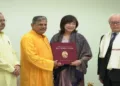
Me-Dam-Me-Phi festival of Assam (Image source: Twitter)

Me-Dam-Me-Phi festival of Assam (Image source: Twitter)

FacebookTwitterWhatsAppTelegramEmail

The Me-Dam-Me-Phi festival, observed annually on January 31, holds profound significance as a paramount celebration of ancestor worship by the Ahom community across Assam. Tracing its roots back to the 12th century, this fundamental festival has a special place in the hearts of the Ahom people. According to Ahom beliefs, ancestors reside above in the sky in a status similar to their earthly existence, enjoying eternal life while observing the activities of their descendants. The Ahom community firmly believes in the ongoing remembrance and worship of their ancestors, considering it a duty that extends as long as the family exists.
The ritualistic tribute to ancestors during Me-Dam-Me-Phi involves offerings (‘Me’), honoring ancestors (‘Dam’), and acknowledging God (‘Phi’). This festival is a religious ceremony and a cultural cornerstone, reinforcing the profound connection between the present generation and their ancestral heritage, particularly within the Tai (Thai) speaking communities.

Historically, Ahom Kings observed Me-Dam-Me-Phi prayers as solemn rituals commemorating war victories and seeking protection from potential dangers. Monarchs like Siu-huim-mong, Gadhadhar Singha, Pramatta Singha, and Rajeswar Singha conducted these ceremonies at Charaideo—the inaugural capital and burial ground of Ahom kings since the 13th century. During the festival, homage is paid to three revered deities: Grihadam, Dam Changphi, and Me Dam Me Phi, the God of heaven, with offerings and gifts.

While Ahom kings performed Me-Dam-Me-Phi in the past, the tradition has evolved. Since the loss of political power by the Ahom, it has been carried on by Ahom priests on a smaller scale. In recent decades, Me-Dam-Me-Phi has transformed into a public ritual, attracting the participation of the entire Ahom community. The festival has become a large-scale event in various parts of Assam, where people gather to pray to their ancestors, make offerings, and seek blessings for a good and healthy life, wealth, and prosperity.

For over four centuries, a public ceremony in Charaideo, Assam, has been a steadfast custodian of the Me-Dam-Me-Phi tradition, symbolising its enduring cultural and historical importance. According to Ahom beliefs, the festival transcends time, bridging the reverence of Ahom Kings with the spiritual connection between the contemporary generation and their divine forebears.

What sets the Me-Dam-Me-Phi festival apart is its inclusive nature, extending beyond the Ahom community to encompass various ethnic groups in Assam. This collective celebration becomes a poignant expression of honour and respect for ancestors, uniting people across different communities. During the festival, homage is paid to three revered deities—Grihadam, Dam Changphi, and Me Dam Me Phi, the God of heaven—with offerings and gifts.

The festivity transcends individual affiliations as communities come together, organising gatherings and participating in cultural events like drama, dance, and music, particularly in the evening. Rituals and customs are observed intimately within households, often in the kitchen. A central element of the celebration is the Damkhuta, a symbolic pillar, worshipped with offerings such as homemade wine, mah-prasad (beans and chickpeas), and a spread of rice with meat and fish. During Me-Dam-Me-Phi, a ritualistic component involves the sacrificial offering of buffaloes, ducks, pigs, and fowl.

The ceremony unfolds with the placement of ten altars, each dedicated to deities like Khao-Kham, Ai Leng Din, Jan-Sai-Hung, Leng-don, MutKum and Tai-Kum, Sit-lam-sam, Jasingpha, Lao-khri, Pu-jak-ji, Chao Phi dam, and Ra khin ba khin—revered gods and goddesses of the Ahom community. Essential items for the festival include agoli kol pat (upper half of fresh banana leaf), flowers, tamol (areca nut), eggs, luk lao (rice beer), and more.

The culmination of rituals is followed by a communal feast, bringing together participants to share in the festivities. This distinctive blend of religious observance and communal celebration underscores the cultural richness and communal spirit embedded in the Me-Dam-Me-Phi festival. It becomes a harmonious convergence of diverse communities, fostering unity through shared reverence for ancestral legacies.

The role of the Tai Ahoms extends beyond the borders of Assam and holds historical significance in the broader context of Indian society. In 1228 A.D., Chaolung Sukapha, a Tai, embarked on a transformative journey, leading a group of Tai people into Assamese soil and establishing the Ahom kingdom. The contributions of the Ahom kings have left an enduring impact on the cultural heritage of Assam, shaping its landscape with monuments and structures that stand as testaments to their historical significance. Monuments such as temples, devalayas, Satras, palaces, stone bridges, roads, tanks, maidams, and other distinctive creations are scattered across Assam, bearing witness to the cultural achievements and architectural prowess of the Ahom period. The Tai Ahoms’ legacy is integral to the cultural tapestry of Assam, highlighting their historical significance in the region.


Topics: AhomMe-Dam-Me-Phi festivalAssam
Share1TweetSendShareSend
✮ Subscribe Organiser YouTube Channel. ✮
✮ Join Organiser's WhatsApp channel for Nationalist views beyond the news. ✮
Previous News

Tamil Nadu: 2G scam fame A Raja sparks outrage among MG Ramachandran’s fans as he labelled him “loose”

Next News

Uttar Pradesh: Detailed action plan prepared to project state as ‘Most Favourite Tourist Destination’

Related News

Oplus_16908288

Love Jihad in Assam: Accused Ashique Ali who stabbed minor Hindu girl killed in police encounter

The Uniform Civil Code debate in Assam has reignited questions around equality, cultural identity and constitutional reform in India

Equality Without Assimilation: Why Assam’s UCC debate goes beyond legal uniformity

UCC Bill 2026 tabled in Assam Assembly

Assam Govt introduces UCC in assembly: Bill aims to curb polygamy, requires registration of all live-in relationship

Assam Assembly Echoes With Sanskrit and Tribal Tongues in Historic Oath Ceremony

History created inside Assam Assembly; Oath in Sanskrit and 3 tribal languages echoes the diversity of Bharat

3 Bangladeshis caught at the Digar Khal naka checkpoint in Assam

Entered India in 2012, now fleeing home: 3 Bangladeshis caught trying to slip out through Meghalaya

A Bangladeshi infiltrator who allegedly posed as a Hindu Bengali man to marry an Assamese woman was arrested in Assam’s Darrang district after his wife discovered his real identity

Bangladeshi infiltrator posed as Hindu, married Assamese girl; Busted after wife exposed him in Darrang

Load More

Latest News

Russia pitches for the co-production of Fifth Generation Su-57 with India

Russian President Putin renews Su-57 offer to India; Signals full access to 5th gen stealth fighter jet technology

Representative Image

Karnataka Terror Link Probe: Alla Baksh arrested in Tumakuru over links with foreign terrorists

From the Vedas to modern sustainability (This is an AI Generated image)

World Environment Day: Rediscovering Vedic ecology, ancient wisdom for a green future

K Annamalai Resigns from BJP, Party accepts his resignation

Ex- Tamil Nadu party chief K Annamalai quits from BJP, Nitin Nabin accepts resignation

Tahir Hussain, accused in 2020 Delhi riots case

2020 Delhi Riots Case: Tahir Hussain’s lies exposed; Admits attacking Hindus, raising ‘Kafiro Ko Maaro’ slogans

Kurla resident Huzaifa Ansari held by Delhi police and ATS in alleged ISI-linked terror recruitment case

Delhi Police and Thane ATS arrest Kurla mechanic Huzaifa for alleged role in ISI-linked terror recruitment network

Will Mamata Accept Her Rebel's Help? Humayun Kabir Offers to Send Ex-Boss Back to House

Need a seat, Didi? Ex-TMC rebel Humayun Kabir offers Mamata Banerjee a route back to West Bengal assembly

Wipro Issues First Statement On Religious Conversion Case In Pune

Corporate Jihad Row at Wipro: Company breaks silence, issues first statement, says it is cooperating with police

Imtiyaz Jaleel and Nida Khan named in the SIT Chargesheet in Nashik TCS Corporate Jihad probe

AIMIM leader Imtiaz Jaleel under scanner in TCS Nashik Corporate Jihad case after name surfaces in SIT chargesheet

Hindu victim in the case who was trapped by Islamist senior

After TCS, Wipro, Pune insurance employee accuses Mohammad Sadiq of harassment; Arrested by police

Load More
  • Privacy
  • Terms
  • Cookie Policy
  • Refund and Cancellation
  • Delivery and Shipping

© Bharat Prakashan (Delhi) Limited.
Tech-enabled by Ananthapuri Technologies

  • Home
  • Search Organiser
  • Bharat
    • Assam
    • Bihar
    • Chhattisgarh
    • Jharkhand
    • Maharashtra
    • View All States
  • World
    • Asia
    • Africa
    • North America
    • South America
    • Europe
    • Australia
  • Editorial
  • Operation Sindoor
  • Opinion
  • Analysis
  • Defence
  • Culture
  • Sports
  • Business
  • RSS @ 100
  • Entertainment
  • More ..
    • Sci & Tech
    • Vocal4Local
    • Special Report
    • Education
    • Employment
    • Books
    • Interviews
    • Travel
    • Health
    • Politics
    • Law
    • Economy
    • Obituary
  • Subscribe Magazine
  • Read Ecopy
  • Advertise
  • Circulation
  • Careers
  • About Us
  • Contact Us
  • Policies & Terms
    • Privacy Policy
    • Cookie Policy
    • Refund and Cancellation
    • Terms of Use

© Bharat Prakashan (Delhi) Limited.
Tech-enabled by Ananthapuri Technologies