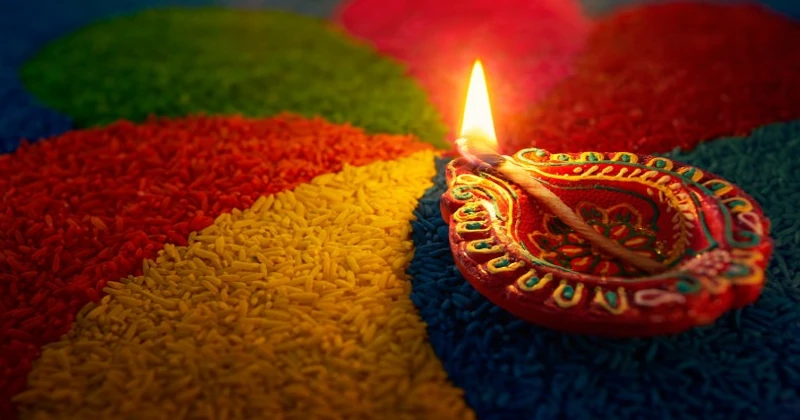
Deepawali is a festival of lights and is celebrated with great enthusiasm by all Indians all over the world. The uniqueness of this festival is its harmony of six philosophical foundations of Sanatan Dharma, with each day to a special thought or ideal. People celebrate each of the five days of festivities with true understanding, as it uplifts and enriches their lives.
1. Govatsa Dwadashi or Vasu Baras (November 9, 2023)
Govatsa Dwadashi is celebrated one day before Dhanteras. On Govatsa Dwadashi day cows and calves are worshipped. The wheat products are given to cows and calves after worship. People who observe Govatsa Dwadashi abstain from eating any wheat and milk products during the day. Govatsa Dwadashi is also observed as Nandini Vrat. Nandini is divine cow in Hinduism.
In Maharashtra Govatsa Dwadashi is known as Vasu Baras and it is considered first day of Deepawali.
In Gujarat, it is celebrated as Vagh Baras and as Sripada Vallabha Aradhana Utsav of Sripada Sri Vallabha, at Pithapuram Datta Mahasamsthan in the state of Andhra Pradesh.
In tune with the philosophy of seeing divinity in nature, first worship & lighting of the first Diwali lamp takes place on Govatsa Dwadashi.
2. Dhanteras (November 10, 2023)
Dhanteras is the second day of Deepawali. Dhan refers to wealth; hence, this day is celebrated to worship Lakshmi, the Goddess of Wealth. It is also called Dhanvantari Triodasi . It is in fact the thirteenth lunar day of Krishna Paksh, the dark forthnight of the month of Kartik. According to the Ayurveda it is the birthday of the deity Dhanvantari, so on this day Ayurvedic doctors (vaidyas) worship Him. On this day, Bhagwan Dhanvantari came out of the ocean with Ayurveda for mankind. This day marks the beginning of Deepawali celebrations. At sunset, Hindus bathe and offer a lighted diya with prasad (sweets offered at worship time) to Yamraj, the Lord of Death and pray for protection from untimely death. This offering should be made near a Tulsi tree, or any other sacred tree .
Another name for this day of Deepawali is Yamadeepdan. This name is associated with Yama, the God of Death. The sixteen year old son of King Hima was destined to die on this day. However, the devotion of his wife impressed Yama so much that he returned without taking the Prince’s life.
On this day, earthen lamps are lit for ancestors of the family and the lamps are floated down a river or pond. Lamps are also lit at the entrance of homes.
Offerings comprising of water, rice, jaggery, vermillion, and flowers are kept for Yama. In South India, this day is known as Asweyuja Bahula Thrayodasi. It is a very auspicious day and every household celebrates by buying silver, gold and utensils. In their homes, people literally wash coins in milk and water and worship Lakshmi, the Goddess of Wealth. They also distribute money to the poor and needy.
Across every State, the celebrations revolve around the common theme of dispelling the darkness of ignorance and welcoming the light of knowledge. This festival falls towards the end of the Hindu month of Ashwin and the beginning of the month of Kartik.
3. Choti Deepawali
The third day marks the celebration of Choti Deepawali, also called as Narak Chaturdashi. On this day bhagwan Krishna destroyed the demon Narakasur and made the world free from fear. On this day, one should massage the body with oil to relieve it of tiredness, bathe and rest so that Deepavali can be celebarated with vigour and devotion.
This day is also known as Roop Chaturdasi. Hindus perform a ritual bath and meditate in order to enhance their beauty. In connection with this, the second day is also referred to as Kali Choudas. People apply kajal (black eye liner) to the eyes in order to ward off kali nazar (evil eye). It is said that on the night of Choti Deepawali, you should not light the Yama Diya.
In Andhra Pradesh, this day is known as Divvela Panduga. At the end of this day, people take a bath with oil, accompanied by the bursting of firecrackers.
According to the epic Ramayana, Deepawali commemorates the return of bhagwan Ram from his 14-year exile after rescuing Sita and killing the demon Ravana. In rural areas of India, Deepawali, which occurs at the end of a growing season, is a harvest festival. After reaping their harvest, farmers celebrate with joy and thank the God and the demigods for granting them a good crop.
3. Lakshmi Puja
This is considered as the main day of Deepawali, commonly known as the Hindu New Year. This day is basically dedicated to the worship of Goddess Lakshmi, consort of bhagwan Vishnu, to receive blessings of wealth, prosperity, triumph of good over evil, light over darkness. For Jains, this day is known as Deva Deepavali. On this day, homes are brightly lit, and scriptures are read in order to worship bhagwan Mahavir. Kashmiri Pandits celebrate this day as Sukhsuptika, which literally means sleep with happiness. Badhausar is the name given to this day in Gujarat. It is believed that on this day, Goddess Lakshmi visits all homes that are brightly lit.
In some south Indian states, Deepawali is known as Balindra Puja. On this day, a puja is performed to bhagwan Krishna and an offering of oil is made. Sikhs celebrate Deepawali as Bandi Chhor Divas. This day is celebrated as a day of freedom by the Sikhs. Sindhis celebrate Deepavali as Diyari. They too perform a Lakshmi puja on this day.
In the Adi Parva of the Mahabarata, the Pandavas also returned from their exile in the forest during Deepawali time, giving people another reason for celebration.
4. Padwa and Govardhan Puja
The fifth day of Deepawali is usually celebrated as the New Year for most Hindus and is called as Bestavarsh. It is believed that bhagwan Krishna gave his protection to a cowherd family in Vrindavan to save them from the anger of bhagwan Indra. Hence this day is also termed as Annakoot. In Karnataka, this day is celebrated as Bali Pratipada. On this day, the demon king Bali descends to the earth to visit his loyal subjects. Bali Maharaja was defeated on this day by bhagwan Krishna’s dwarf incarnation, Vamanadeva. This day also ritually celebrates the love and mutual devotion between the wife and husband. Generally no money transaction takes place on this day.
5. Bhai Duj
The sixth day of the Deepawali is called Bhai teeka. The fifth day is also referred to as Yamadwitheya. It is a day dedicated to sisters. In the Vedic era, Yama (Yamraj, the Lord of death) visited his sister Yamuna on this day. He gave his sister a vardhan (a boon) that whosoever visits her on this day shall be liberated from all sins. They will achieve moksha or final emancipation. From then on, brothers visit their sisters on this day to enquire of their welfare. On this day, the sister applies vermillion on the forehead of her brother and prays for his long life.
This day marks the end of the sixth days of Deepawali celebrations. This is also known as Bhai fota among Bengalis. Bhai fota is an event especially among Bengalis when the sister prays for her brother’s safety, success and well being.
This day marks the end of the six days of Deepawali celebrations.
On the same night that Hindus celebrate Deepawali, Jains celebrate a festival of lights to mark the attainment of moksha by Mahavira, and Sikhs celebrate Bandi Chhor Divas. Deepawali is an official holiday in India, Nepal, Sri Lanka, Myanmar, Mauritius, Guyana, Trinidad and Tobago, Suriname, Malaysia, Singapore and Fiji. We can celebrate Deepawali in the true sense only when we know the significance of each of these days, its philosophical foundation and traditional way of celebrating the same.