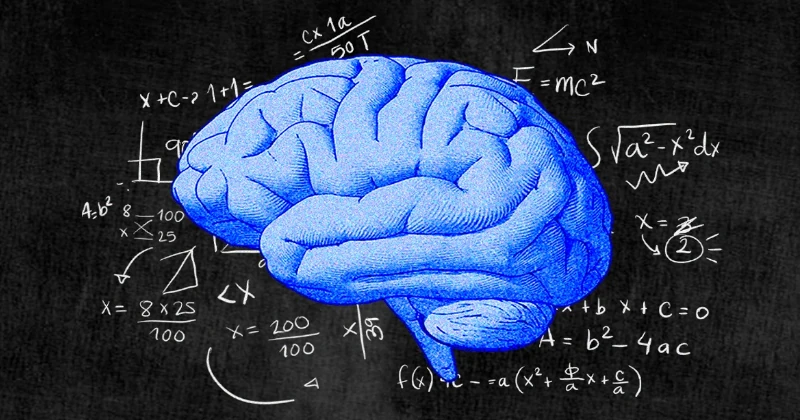
Study shows exciting the brain might be key to boosting maths learning
June 9, 2026
  • Read Ecopy
  • Circulation
  • Advertise
  • Careers
  • About Us
  • Contact Us
Android AppiPhone AppArattai
Organiser
  • ‌
  • Bharat
    • Assam
    • Bihar
    • Chhattisgarh
    • Jharkhand
    • Maharashtra
    • View All States
  • World
    • Asia
    • Europe
    • North America
    • South America
    • Africa
    • Australia
  • Editorial
  • International
  • Opinion
  • RSS @ 100
  • More
    • Op Sindoor
    • Analysis
    • Sports
    • Defence
    • Politics
    • Business
    • Economy
    • Culture
    • Special Report
    • Sci & Tech
    • Entertainment
    • G20
    • Azadi Ka Amrit Mahotsav
    • Vocal4Local
    • Web Stories
    • Education
    • Employment
    • Books
    • Interviews
    • Travel
    • Law
    • Health
    • Obituary
  • Subscribe
    • Subscribe Print Edition
    • Subscribe Ecopy
    • Read Ecopy
  • ‌
  • Bharat
    • Assam
    • Bihar
    • Chhattisgarh
    • Jharkhand
    • Maharashtra
    • View All States
  • World
    • Asia
    • Europe
    • North America
    • South America
    • Africa
    • Australia
  • Editorial
  • International
  • Opinion
  • RSS @ 100
  • More
    • Op Sindoor
    • Analysis
    • Sports
    • Defence
    • Politics
    • Business
    • Economy
    • Culture
    • Special Report
    • Sci & Tech
    • Entertainment
    • G20
    • Azadi Ka Amrit Mahotsav
    • Vocal4Local
    • Web Stories
    • Education
    • Employment
    • Books
    • Interviews
    • Travel
    • Law
    • Health
    • Obituary
  • Subscribe
    • Subscribe Print Edition
    • Subscribe Ecopy
    • Read Ecopy
Organiser
  • Home
  • Bharat
  • World
  • Operation Sindoor
  • Editorial
  • Analysis
  • Opinion
  • Culture
  • Defence
  • International Edition
  • RSS @ 100
  • Magazine
  • Read Ecopy
Home World

Study shows exciting the brain might be key to boosting maths learning

For the study, 102 participants were recruited, and their mathematical skills were assessed through a series of multiplication problems

WEBDESKWEBDESK
Sep 1, 2023, 11:00 pm IST
in World, Health
Follow on Google News
FacebookTwitterWhatsAppTelegramEmail

According to a new study from the Universities of Surrey and Oxford, Loughborough University, and Radboud University in the Netherlands, activating a brain region with electrical noise stimulation may improve mathematical learning in those who struggle with the subject.

This study was published in PL0S Biology

During this unique study, researchers investigated the impact of neurostimulation on learning. Despite the growing interest in this non-invasive technique, little is known about the neurophysiological changes induced and the effect it has on learning.

Researchers found that electrical noise stimulation over the frontal part of the brain improved the mathematical ability of people whose brain was less excited (by mathematics) before the application of stimulation. No improvement in mathematical scores was identified in those who had a high level of brain excitation during the initial assessment or in the placebo groups. Researchers believe that electrical noise stimulation acts on the sodium channels in the brain, interfering with the cell membrane of the neurons, which increases cortical excitability.

Professor Roi Cohen Kadosh, Professor of Cognitive Neuroscience and Head of the School of Psychology at the University of Surrey who led this project, said:

“Learning is key to everything we do in life – from developing new skills, such as driving a car, to learning how to code. Our brains are constantly absorbing and acquiring new knowledge.

“Previously, we have shown that a person’s ability to learn is associated with neuronal excitation in their brains. What we wanted to discover in this case is if our novel stimulation protocol could boost, in other words excite, this activity and improve mathematical skills.”

For the study, 102 participants were recruited, and their mathematical skills were assessed through a series of multiplication problems. Participants were then split into four groups: a learning group exposed to high-frequency random electrical noise stimulation, an overlearning group in which participants practised the multiplication beyond the point of mastery with high-frequency random electrical noise stimulation. The remaining two groups, consisted of a learning and overlearning group but they were exposed to a sham (i.e., placebo) condition, an experience akin to real stimulation without applying significant electrical currents. EEG recordings were taken at the beginning and at the end of the stimulation to measure brain activity.

Dr Nienke van Bueren from Radboud University, who led this work under Professor Cohen Kadosh’s supervision, said:

“These findings highlight that individuals with lower brain excitability may be more receptive to noise stimulation, leading to enhanced learning outcomes, while those with high brain excitability might not experience the same benefits in their mathematical abilities.”
Professor Cohen Kadosh adds:

“What we have found is how this promising neurostimulation works and under which conditions the stimulation protocol is most effective. This discovery could not only pave the way for a more tailored approach in a person’s learning journey but also shed light on the optimal timing and duration of its application.”

(with inputs from ANI)

Topics: HealthMaths learning
ShareTweetSendShareSend
✮ Subscribe Organiser YouTube Channel. ✮
✮ Join Organiser's WhatsApp channel for Nationalist views beyond the news. ✮
Previous News

Krishna temple in Patan Durbar Square: Newar architecture depicted with precision and purity

Next News

Use ‘Bharat’ instead of ‘India’: RSS Sarsanghchalak Dr Mohan Bhagwat gives a call in Assam

Related News

Indian surgeon conducts world’s longest cardiac telesurgery; Made-in-India robot echoes indigenous medical prowess

Kwality Walls shifts from palm oil to milk-based ice creams in India; Did the food giant prioritise profit over health?

Abrupt shift in the measle vaccine procurement policy by the Yunus regime led to death of hundreds of children

A ‘Man-Made’ Crisis in Bangladesh? How the Yunus Regime’s UNICEF bypass left millions of children vulnerable to measles

India finds new molecular mechanism in mycobacterium tuberculosis: A catalyst to realise the vision of TB Mukt Bharat

A Decline in Child Mortality in India: A nation moving in the right direction for children’s welfare

Ayush Ministry launches Yoga for Air Travel: An initiative to transform flight journey into a space for rejuvenation

Load More

Latest News

New York anti-Hindu Bill fails to advance: How the bill fueled bias & espoused caste discrimination

Beyond Alignment: How India is Carving Its Own Strategic Space Amid Global Power Play

Beyond Alignment: How India is Carving Its Own Strategic Space Amid Global Power Play

Chinese President Xi Jinping, Russian President Vladimir Putin and Prime Minister Narendra Modi

China’s New Tone Towards India: Tactical shift or strategic necessity? What Beijing’s push for RIC ties really signals

Keralam’s 2026 Fiscal Health White Paper has unveiled a mounting debt burden of Rs 5.07 lakh crore, exposing deep structural challenges in the state’s economy

Keralam’s Financial Reality Check: White Paper exposes Rs 5.07 lakh crore debt crisis

Tamil Nadu: TVK government arrests YouTuber Maridhas; BJP alleges crackdown on dissent

‘Every grave or dargah is not automatically Waqf property’: Madras High Court’s landmark verdict

US Court strikes down Trump’s $100,000 H-1B fee as executive overreach; Lawmakers & Republicans welcome the verdict

Union Defence Minister Rajnath Singh

Uttar Pradesh: Defence land goes green; Rajnath Singh clears 250 MW solar project in Sitapur

Afghanistan Foreign Minister Amir Khan Muttaqi and External Affairs Minister Dr. S. Jaishankar(File Photo)

India extends gratis long-term business visas to Afghan traders; Slams Pakistan for “trade & transit terrorism”

How Modi's Zero-tolerance doctrine reshaped India's anti-terror policy (This is an AI generated image)

Twelve Years of Modi Government and the rise of India’s zero-tolerance doctrine against terrorism

Load More
  • Privacy
  • Terms
  • Cookie Policy
  • Refund and Cancellation
  • Delivery and Shipping

© Bharat Prakashan (Delhi) Limited.
Tech-enabled by Ananthapuri Technologies

  • Home
  • Search Organiser
  • Bharat
    • Assam
    • Bihar
    • Chhattisgarh
    • Jharkhand
    • Maharashtra
    • View All States
  • World
    • Asia
    • Africa
    • North America
    • South America
    • Europe
    • Australia
  • Editorial
  • Operation Sindoor
  • Opinion
  • Analysis
  • Defence
  • Culture
  • Sports
  • Business
  • RSS @ 100
  • Entertainment
  • More ..
    • Sci & Tech
    • Vocal4Local
    • Special Report
    • Education
    • Employment
    • Books
    • Interviews
    • Travel
    • Health
    • Politics
    • Law
    • Economy
    • Obituary
  • Subscribe Magazine
  • Read Ecopy
  • Advertise
  • Circulation
  • Careers
  • About Us
  • Contact Us
  • Policies & Terms
    • Privacy Policy
    • Cookie Policy
    • Refund and Cancellation
    • Terms of Use

© Bharat Prakashan (Delhi) Limited.
Tech-enabled by Ananthapuri Technologies