How janjatiya communities have been an integral part of Indian society since ages
July 14, 2026
  • Read Ecopy
  • Circulation
  • Advertise
  • Careers
  • About Us
  • Contact Us
Android AppiPhone AppArattai
Organiser
  • ‌
  • Bharat
    • Assam
    • Bihar
    • Chhattisgarh
    • Jharkhand
    • Maharashtra
    • View All States
  • World
    • Asia
    • Europe
    • North America
    • South America
    • Africa
    • Australia
  • Editorial
  • International
  • Opinion
  • RSS @ 100
  • More
    • Op Sindoor
    • Analysis
    • Sports
    • Defence
    • Politics
    • Business
    • Economy
    • Culture
    • Special Report
    • Sci & Tech
    • Entertainment
    • G20
    • Azadi Ka Amrit Mahotsav
    • Vocal4Local
    • Web Stories
    • Education
    • Employment
    • Books
    • Interviews
    • Travel
    • Law
    • Health
    • Obituary
  • Subscribe
    • Subscribe Print Edition
    • Subscribe Ecopy
    • Read Ecopy
  • ‌
  • Bharat
    • Assam
    • Bihar
    • Chhattisgarh
    • Jharkhand
    • Maharashtra
    • View All States
  • World
    • Asia
    • Europe
    • North America
    • South America
    • Africa
    • Australia
  • Editorial
  • International
  • Opinion
  • RSS @ 100
  • More
    • Op Sindoor
    • Analysis
    • Sports
    • Defence
    • Politics
    • Business
    • Economy
    • Culture
    • Special Report
    • Sci & Tech
    • Entertainment
    • G20
    • Azadi Ka Amrit Mahotsav
    • Vocal4Local
    • Web Stories
    • Education
    • Employment
    • Books
    • Interviews
    • Travel
    • Law
    • Health
    • Obituary
  • Subscribe
    • Subscribe Print Edition
    • Subscribe Ecopy
    • Read Ecopy
Organiser
  • Home
  • Bharat
  • World
  • Operation Sindoor
  • Editorial
  • Analysis
  • Opinion
  • Culture
  • Defence
  • International Edition
  • RSS @ 100
  • Magazine
  • Read Ecopy
Home Politics

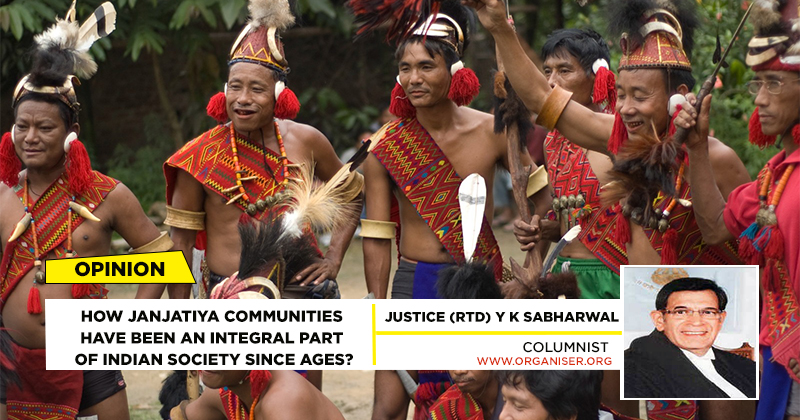
How janjatiya communities have been an integral part of Indian society since ages

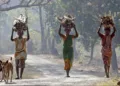
The tribal communities have been integral part of Indian societies since ages. Celebrating Indigenous People Day like America, Australia or Africa does not hold much logic in India

Justice (Retd) YK SabharwalJustice (Retd) YK Sabharwal
Aug 9, 2023, 09:30 pm IST
in Politics, Bharat, Opinion
Follow on Google News
FacebookTwitterWhatsAppTelegramEmail

There is a continuing debate in Bharat about the appropriateness of the use of the phrase ‘indigenous peoples’. Some scholarly work tends to support it while others are skeptical of the use of the term Indigenous peoples in the context of the argument against the use of the term ‘indigenous peoples’ for tribal people in India. I briefly summarise these.

Firstly, it is argued that it is not easy to identify indigenous people in India. For there have been continuous movement of populations with different language, race, culture and religion going back centuries and millennia. Tribal communities have been a part of historical process. In the circumstances the question arises as to how far back in history should one go to determine the identity of indigenous peoples? Whatever the nature of determination, it is likely to be extremely arbitrary and controversial.

Secondly, tribal and non-tribal peoples have lived in India in close proximity for over centuries leading to, as one author puts it, much acculturation and even assimilation into the larger Hindu Society.

Thirdly, in the case of Bharat some tribes are no longer tribes but have become, as the eminent sociologist André Battelle puts it ‘castes or something else. Fourthly, tribal peoples in many cases may have settled in Bharat long after some non-tribal peoples in other parts of Bharat. Finally, attention has been drawn to the serious national sovereignty issues involved revolving around question of “self-determination” and ownership of lands.

It may not be fair to say that the claim of some countries like Bharat about indigenous peoples is not correct. Bharat is indicted unjustifiably through, at time on the ground that it is resisting to accept the existence of the indigenous peoples in the society. When one looks at it from the standpoint of a person other than Bharatiya, it may appear that Bharat’s stand is not correct. But one who is familiar with the Bharatiya scenario may agree with this perception.

Bharat has a history of cultural assimilation even while we agree that some communities maintain their distinct identity within the nation. The country always presented unity in diversity and deserves cultural identity is no insignia of the existence of indigenous group. Indeed, Bharat accepts the existence of different tribes within its larger system again not different from the main culture in terms of the core values. True to its tradition of cultural assimilation and spirit of accommodation the Indian Constitution presents the picture of the larger system of permitting the smaller political systems of tribal population to be part of the system to remain distinct culturally but to be part of the larger system politically with sufficient autonomy whenever necessary and possible. Tribal people of other areas are taken as part of the main society in as much as special constitutional provisions have not been made for them. They are to be assimilated rather than to be made separate entity. Indeed, under the scheme their cultural identity is assured to be maintained.

UNHRC Is now to be replaced by the Human Rights Council. The working group was, as it was in 1995 and its term extended by the commission into the second International Decade of the World’s Indigenous Peoples (2005-2015). The key obstacles in achieving progress have inter alia include clauses relating to “self determination” treaty rights, and lands, territories and resources (see UN 2005, UN 2006). The feeling of many States with regard to these issues is strong as it involves their territorial integrity and political unity. On the other hand, there is an urgent need to correct the historical injustices heaped on the “indigenous peoples” where they exist. Bharat and Tribal Welfare Bharat has been successfully experimenting with federalism during the last half a century. And it should be said to the credit of the system that India has succeeded in affording protection of human rights of its citizens including the members of the tribal communities. Apart from administrative authorities including government wings of Department of Tribal Welfare both at Central and State levels and interstate council, India has several independent bodies such as National Human Rights Commission, State Human Rights Commission, Minorities Commissions, Scheduled Caste and Scheduled Tribes Commission, National Commission for Women etc. to safeguard the human rights of peoples who claim to be treated as indigenous peoples. Administrative efforts incorporating and employing affirmative action under the watchful eyes of vigilant independent judicial and quasi-judicial bodies may ensure the protection and promotion of rights of people who claim to be treated specially among the others. Bharat has the largest concentration of tribal people anywhere in the world except perhaps in Africa. The prominent tribal areas constitute approximately about 15 per cent of the total geographical area of the country. The main concentration of tribal people is the central tribal belt in the middle part of India and in the north-eastern states. However, they have their presence in all states and union territories.

(Excerpts from author’s speech delivered at the Plenary Session of the 72nd Conference of International Law Association in Toronto from June 4 to 8, 2006 on “Rights of Indigenous Peoples”)
Topics: UNHRCtribal communitiesbharatiyaNorth Eastern statesNational Human Rights CommissionIndigenous Peoples DayScheduled Caste and Scheduled Tribes CommissionMinorities Commissionsindigenous peoples
Share1TweetSendShareSend
✮ Subscribe Organiser YouTube Channel. ✮
✮ Join Organiser's WhatsApp channel for Nationalist views beyond the news. ✮
Previous News

NewsClick Row: Why NIA should investigate people exposed by NYTs report

Next News

Indian government probes ‘Havana Syndrome’: History and symptoms, causes explained

Related News

Swami Sadanand Saraswati

Gujarat: Shankaracharya Sadanand Saraswati leads Sanatan revival in tribal heartland of Dang

India calls Indus Waters Treaty outdated at UNHRC, says Pakistan cannot seek cooperation while exporting terror

“Indus Waters Treaty outdated”: India slams Pakistan at UN for “exporting terror”

A historical report examines missionary organisations in India, describing their wide-ranging activities across education, health, and social welfare, and their alleged role in conversions

Missionary Expansion in Colonial India: A detailed study of influence, conversion & cultural impact

Site of the blast at the firecracker unit in which 25 lives were lost in Virudhunagar

Tamil Nadu: NHRC demands report on Virudhunagar blast that claimed 25 lives

Madhya Pradesh committee report on missionary activities and vanvasi conversions

MP committee report on missionary activities, vanvasi conversions & post-independence socio-political unrest

World’s First ‘Vikramaditya Vedic Clock’ Installed at Kashi Vishwanath Temple

Indian Standard Timekeeping : Aligning time with the timeless

Load More

Latest News

J&K unit of BJP has filed the defamation case against the CM Omar Abdullah

J&K: BJP serves Rs 100-crore defamation notice to CM Omar for making allegations of bribery to NC legislators

(Left) CDS Gen N S Raja Subramani (Right) Union Defence Minister Rajnath Singh

Bharat’s bold leap towards Integrated Theatre Commands: CDS Gen Subramani pushes historic military reform

A delegation of Hindu Aikyavedi met Chief Minister VD Satheeshan

Keralam: Hindu Aikyavedi delegation meets CM, submits resolutions adopted at Hindu leadership conclave

IED blast targets Assam Rifles Convoy in Nagaland; One martyred

IED attack on Assam Rifles convoy in Nagaland; One soldier martyred, four injured; CM Rio terms it cowardly act

Representative Image

PoJK protests hit White House as Kashmiri diaspora shouts anti-Pakistan slogans; Muzaffarabad rises against abuse

Home Minister Amit Shah laying foundation stone for 125-foot Dr Syama Prasad Mookerjee statue in Kolkata

Dr Syama Prasad Mookerjee: Not just a statue but the foundation of Sonar Bangla

Indian mathematician T A Sarasvati Amma

The Woman Who Rewrote Mathematical History: The extraordinary journey of T A Sarasvati Amma

The people in Pakistan-occupied Jammu Kashmir (PoJK) are rising against Pakistan's brutality

POJK Unrest: Azad or gulam

Prime Minister Narendra Modi (Left) and Indonesian President Prabowo Subianto (Right)

PM Modi’s Indonesia Visit: Threads from the past, transformation for future

PoJK: Uprising against continued colonisation

Load More
  • Privacy
  • Terms
  • Cookie Policy
  • Refund and Cancellation
  • Delivery and Shipping

© Bharat Prakashan (Delhi) Limited.
Tech-enabled by Ananthapuri Technologies

  • Home
  • Search Organiser
  • Bharat
    • Assam
    • Bihar
    • Chhattisgarh
    • Jharkhand
    • Maharashtra
    • View All States
  • World
    • Asia
    • Africa
    • North America
    • South America
    • Europe
    • Australia
  • Editorial
  • Operation Sindoor
  • Opinion
  • Analysis
  • Defence
  • Culture
  • Sports
  • Business
  • RSS @ 100
  • Entertainment
  • More ..
    • Sci & Tech
    • Vocal4Local
    • Special Report
    • Education
    • Employment
    • Books
    • Interviews
    • Travel
    • Health
    • Politics
    • Law
    • Economy
    • Obituary
  • Subscribe Magazine
  • Read Ecopy
  • Advertise
  • Circulation
  • Careers
  • About Us
  • Contact Us
  • Policies & Terms
    • Privacy Policy
    • Cookie Policy
    • Refund and Cancellation
    • Terms of Use

© Bharat Prakashan (Delhi) Limited.
Tech-enabled by Ananthapuri Technologies