Uniform Civil Code: The Goan experience, reason for social harmony
June 24, 2026
  • Read Ecopy
  • Circulation
  • Advertise
  • Careers
  • About Us
  • Contact Us
Android AppiPhone AppArattai
Organiser
  • ‌
  • Bharat
    • Assam
    • Bihar
    • Chhattisgarh
    • Jharkhand
    • Maharashtra
    • View All States
  • World
    • Asia
    • Europe
    • North America
    • South America
    • Africa
    • Australia
  • Editorial
  • International
  • Opinion
  • RSS @ 100
  • More
    • Op Sindoor
    • Analysis
    • Sports
    • Defence
    • Politics
    • Business
    • Economy
    • Culture
    • Special Report
    • Sci & Tech
    • Entertainment
    • G20
    • Azadi Ka Amrit Mahotsav
    • Vocal4Local
    • Web Stories
    • Education
    • Employment
    • Books
    • Interviews
    • Travel
    • Law
    • Health
    • Obituary
  • Subscribe
    • Subscribe Print Edition
    • Subscribe Ecopy
    • Read Ecopy
  • ‌
  • Bharat
    • Assam
    • Bihar
    • Chhattisgarh
    • Jharkhand
    • Maharashtra
    • View All States
  • World
    • Asia
    • Europe
    • North America
    • South America
    • Africa
    • Australia
  • Editorial
  • International
  • Opinion
  • RSS @ 100
  • More
    • Op Sindoor
    • Analysis
    • Sports
    • Defence
    • Politics
    • Business
    • Economy
    • Culture
    • Special Report
    • Sci & Tech
    • Entertainment
    • G20
    • Azadi Ka Amrit Mahotsav
    • Vocal4Local
    • Web Stories
    • Education
    • Employment
    • Books
    • Interviews
    • Travel
    • Law
    • Health
    • Obituary
  • Subscribe
    • Subscribe Print Edition
    • Subscribe Ecopy
    • Read Ecopy
Organiser
  • Home
  • Bharat
  • World
  • Operation Sindoor
  • Editorial
  • Analysis
  • Opinion
  • Culture
  • Defence
  • International Edition
  • RSS @ 100
  • Magazine
  • Read Ecopy
Home Bharat

Uniform Civil Code: The Goan experience, reason for social harmony

Over the years, the people of Goa have been living in harmony with each other regardless of religion. One of the major reasons for this is the Common Civil Code, which governs all residents of the coastal State irrespective of their religion and gender

Adv Amogh ArlekarAdv Amogh Arlekar
Jul 17, 2023, 07:00 pm IST
in Bharat
Follow on Google News
FacebookTwitterWhatsAppTelegramEmail

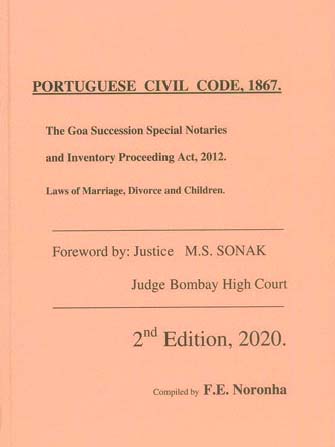
Goa was liberated from the Portuguese on December 19, 1961. Fourteen years after India attained independence, Goa was finally liberated and integrated to India. The freedom heralded a new dawn with new possibilities for Goans. But to ensure uniformity in law, the Goans had a strange relic of their past which benefitted them, the Portuguese Civil Code of 1867. By a Decree of November 18, 1869, the Civil Code of 1867 was extended, as of July 1, 1870, to the Overseas Provinces of Portugal. Thus, the Civil Code of 1867 became applicable also in Goa, Daman and Diu. After liberation, by virtue of the Goa, Daman and Diu (Administration) Act 1962, all laws in force in these territories, including the Civil Code, were kept in force after they were integrated with the Indian Union.

Since then, several legal acts of the Indian Union concerning Civil Law matters, such as the Indian Contract Act 1872 and the Indian Transfer of Property Act 1882, were extended to Goa, Daman and Diu and the corresponding provisions of the Civil Code were repealed. The remaining provisions of the code, notably those concerning Family and Succession Law, Property Law (except its transfer) and Tort Law, remained in force.

A Reason for social Harmony

Over the years, the people of Goa have been living in harmony with each other regardless of religion. The Common Civil Code is a big reason for this harmony. Here are some salient features of the Common Civil Code in Goa

1. Equal Rights: The Common Civil Code ensures equal rights and privileges to all individuals, irrespective of their religious beliefs. It recognises the principle of gender equality, granting women the same inheritance rights as men. This provision has played a significant role in empowering women and fostering gender equality within the state.

2. Marriages: the registration of marriages is made compulsory under the code so that the disputes which may arise can be resolved by the law. Consent of men and women is required before marriage. The code allows for a prenuptial agreement which can alter the ratio of the distribution of assets.

3. Communion of Assets: Under the 1867 Code, a communion of assets is, by default, constituted among married couples, comprising all their assets brought to the marriage or acquired after it (article 1108). Those assets are to be administered by the husband (article 1117). Consent of both spouses is nevertheless required for the disposition by any of them of immovable property integrating the communion (article 1119). Furthermore, if the couple becomes separated or divorced, each of them is entitled to half of the common assets (articles 1121 and 1123). The regime of general communion of assets was also called in Article 1108 marriage as per the custom of the realm.

4. Secularism: The Common Civil Code in Goa promotes the principle of secularism by treating all citizens equally, regardless of their religious background. It upholds the idea that personal laws should not infringe upon the principles of justice, equality, and human rights.

5. Legal Certainty: The implementation of a Common Civil Code in Goa has provided legal certainty and predictability. It eliminates confusion and discrepancies arising from multiple personal laws, thereby streamlining the legal system.

People from all communities reside in Goa and have flourished in the state. None of the religious or tribal communities have faced any discrimination because of the Civil Code in Goa. The peaceful coexistence of all communities in Goa is a shining example of how communities can coexist peacefully with a UCC.

Goa’s experience with the Common Civil Code demonstrates that a UCC is not only feasible but also beneficial for a diverse society. Extending this model to the rest of India is essential for social cohesion, gender justice, legal certainty, and national integration. It is time for India to transcend religious boundaries and embrace a Uniform Civil Code that upholds the principles of justice, equality, and individual rights for all citizens. By doing so, we will pave the way for a stronger, more united India.


Topics: Uniform Civil CodePortuguese Civil Code of 1867Common Civil Code demonstrates that a UCCIndian Contract Act 1872Goa was liberated from the Portuguese
Share3TweetSendShareSend
✮ Subscribe Organiser YouTube Channel. ✮
✮ Join Organiser's WhatsApp channel for Nationalist views beyond the news. ✮
Previous News

Chirag Paswan demands six Lok Sabha seats, one Rajya Sabha before taking a call to join NDA

Next News

‘Conversion to another religion does not change person’s caste’ says Kerala High Court

Related News

The Uniform Civil Code debate in Assam has reignited questions around equality, cultural identity and constitutional reform in India

Equality Without Assimilation: Why Assam’s UCC debate goes beyond legal uniformity

Assam CM Himanta Biswa Sarma

Assam Passes UCC: Congress party’s proposed amendment over second wife rejected

New Delhi, May 24 (ANI): Union Home Minister Amit Shah speaks during Janjatiya Sanskriti Samagam, at Red Fort, in New Delhi on Sunday. (ANI Photo/Naveen Sharma)

Janjati Sanskritik Samagam | “No need to fear UCC”: Amit Shah reassures tribals, pre-empts conspiracy narrative

UCC Bill 2026 tabled in Assam Assembly

Assam Govt introduces UCC in assembly: Bill aims to curb polygamy, requires registration of all live-in relationship

Assam cabinet clears UCC bill

Assam: Himanta Biswa’s first cabinet clears UCC bill, adopts BJP Sankalpa Patra as government’s guiding framework

First Halala Case Under UCC Filed in Uttarakhand, Husband and In-Laws Booked (This image is generated by AI)

Uttarakhand Police registers India’s first Halala FIR under UCC by Shahin against her husband, Mohammad Danish

Load More

Latest News

President Droupadi Murmu confers the Padma Shri on former civil servant R.V.S. Mani on June 23, 2026.

Former MHA official RVS Mani honoured with Padma Shri for contributions to internal security

Tamil Nadu: Temple funds only for temple property; TVK govt concedes before Madras High Court

Keralam’s former Industries Secretary, Mohammed Haneesh IAS (Right Side)

Keralam Cashew Scam: Former Industries Secretary Md Haneesh apologises before High Court after contempt proceedings

Tamil Nadu: Assembly Speaker directs all bureaucrats to strictly follow warrant of precedence after Mayor-MLA row

Kamakhya Mandir

Kamakhya Mandir’s Ambubachi Mela: The ancient tradition that honours the menstruation of mother Earth

Amazon in dock for mocking Hindu Gods

Amazon File: From Ganesha to Aryabhata-Has Amazon India become a platform for Anti-Hindu narratives?

The West Bengal Budget 2026–27 aims to drive growth through infrastructure, industry, innovation and welfare

Reimagining Bengal: How the West Bengal Budget 2026–27 seeks to balance growth, welfare & economic transformation

Pratiraksha is Gujarat Police's Aadhaar-based verification platform designed to identify illegal workers and prevent identity fraud in industrial sectors

Pratiraksha: How Gujarat police uses Aadhaar verification to secure industrial workforce against identity fraud

Israel-Iran crisis has highlighted not only shifting dynamics of West Asia but also growing confidence of India's foreign policy

India, Israel and the rise of strategic autonomy in an era of global geopolitical realignment

Saleem and Jaleel arrested in forced religious conversion case

Karnataka Conversion Case: Forced conversion of Hindu woman and minor son sparks outrage; Saleem and Jaleel arrested

Load More
  • Privacy
  • Terms
  • Cookie Policy
  • Refund and Cancellation
  • Delivery and Shipping

© Bharat Prakashan (Delhi) Limited.
Tech-enabled by Ananthapuri Technologies

  • Home
  • Search Organiser
  • Bharat
    • Assam
    • Bihar
    • Chhattisgarh
    • Jharkhand
    • Maharashtra
    • View All States
  • World
    • Asia
    • Africa
    • North America
    • South America
    • Europe
    • Australia
  • Editorial
  • Operation Sindoor
  • Opinion
  • Analysis
  • Defence
  • Culture
  • Sports
  • Business
  • RSS @ 100
  • Entertainment
  • More ..
    • Sci & Tech
    • Vocal4Local
    • Special Report
    • Education
    • Employment
    • Books
    • Interviews
    • Travel
    • Health
    • Politics
    • Law
    • Economy
    • Obituary
  • Subscribe Magazine
  • Read Ecopy
  • Advertise
  • Circulation
  • Careers
  • About Us
  • Contact Us
  • Policies & Terms
    • Privacy Policy
    • Cookie Policy
    • Refund and Cancellation
    • Terms of Use

© Bharat Prakashan (Delhi) Limited.
Tech-enabled by Ananthapuri Technologies