India is emerging as a “major power” in the Middle East, and it is time to take New Delhi’s projection of power in the region seriously, read an article in Foreign Policy, a US-based magazine on global affairs.
The author, Steven A Cook, cited one of his previous visits to India after which he said he was sceptical about a future Indian role in the Middle East.
“India and Middle Eastern countries were already intertwined in various ways, of course. There were budding military and technology ties between India and Israel. One could not travel in the Persian Gulf region without noticing that guest workers from the Indian state of Kerala provided the labour that made many of the Gulf countries run. India also imported a lot of oil from the Middle East. Yet after my conversations with officials, diplomats, generals, and analysts, it struck me that Indians did not want to play a larger role in the Middle East,” he wrote in the piece.
However, he said he believed that things have changed now and India was emerging as a major player in the Middle East.
“In the 10 years since my trip, however, things have changed. While US officials and analysts are obsessed with every diplomatic move Beijing makes and eye Chinese investment in the Middle East with suspicion, Washington is overlooking one of the most interesting geopolitical developments in the region in years: the emergence of India as a major player in the Middle East,” Cook stated.
He added that India-Israel ties are, perhaps, the most well-developed when it comes to New Delhi’s relations in the region.
Although India recognised Israel in 1950, the two countries did not establish normal diplomatic ties until 1992. Since then, especially in recent years, they have deepened their ties. In 2017, Prime Minister Narendra Modi was the first Indian leader to visit Israel, which was followed by his Israeli counterpart travelling to India the following year.
“Beyond the pomp of these visits, India-Israel ties have rapidly developed in a variety of fields, notably high-tech and defence,” he said.
Citing Stockholm International Peace Research Institute, Cook stated that Israel was among India’s top three arms suppliers in 2021, and recent Indian news reports indicate that the two countries are exploring the coproduction of weapons systems.
Also in the past, India’s business community shied away from investing in Israel, given the country’s small market and controversial politics (to many in India), but that may be changing, he added.
“In 2022, the Adani Group and an Israeli partner won a tender for Haifa Port for 1.2 billion USD. There are also ongoing negotiations for an India-Israel Free Trade Agreement. Of course, the India-Israel relationship is complicated. India remains steadfast in its support for the Palestinians; has friendly ties with Iran, from which New Delhi has purchased significant amounts of oil; and Indian elites tend to see Israel through the prism of their country’s own colonial experience,” he added.
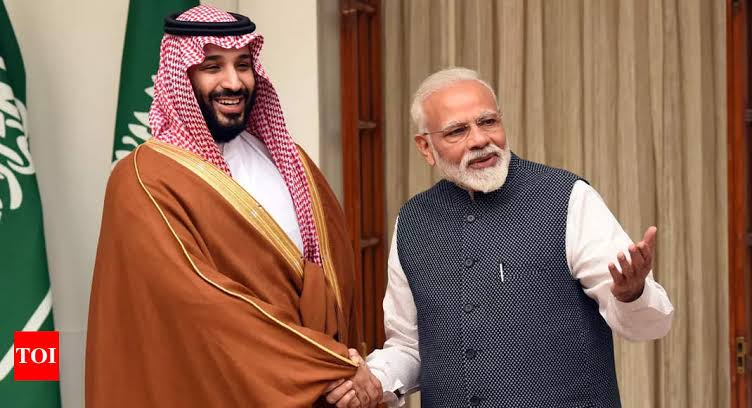
Cook further stated that the Gulf, the United Arab Emirates and Saudi Arabia were aggressively seeking ways to expand relations with India, which is a significant shift because both countries, but particularly the latter, have long aligned with Pakistan.
“The pivot to India stems in part from a common interest in containing Islamist extremism, but much of the pull is economic. The Emiratis and Saudis see opportunities in a country of 1.4 billion people that is less than a four-hour flight away. So far, the results are positive. In the first 11 months of the UAE-India Comprehensive Economic Partnership Agreement, which entered into force in May 2022, non-oil trade between the two countries reached 45 billion USD, which was an almost 7 per cent increase above the previous year,” Cook stated in his piece.
The ties between India and UAE propelled through I2U2–a grouping of Israel, India, the UAE, and the United States–which seeks to leverage the combined technological know-how and private capital to address alternative energy, agriculture, trade, infrastructure development, and more, he noted.
Saudi Arabia, which is India’s second-largest supplier of oil and gas, also wants to augment the energy relationship further by adding renewables into the mix.
“In April, the Indian new site Siasat.com reported that Riyadh and New Delhi were discussing a plan to link India’s energy grid to the kingdom (and the UAE) via undersea cables. It is unclear whether such an ambitious project will ever come to fruition, but those talks indicate that the Indian and Saudi governments are looking for ways to add to the existing 43 billion USD in trade between the two countries,” he stated in his piece in Foreign Policy.
Citing PM Modi’s recent state visit to Egypt, the author called it an episode in the ongoing Egyptian-Indian love fest, which came about six months after Egyptian President Abdel Fattah al-Sisi being the guest of honour at India’s 74th Republic Day celebration–his third visit to New Delhi since assuming power.
“Unlike with Israel, the UAE, and Saudi Arabia, trade between India and Egypt is relatively modest, worth about 6 billion USD. The Egyptian authorities, whose economic mismanagement has created a debt crisis and 30 per cent inflation, are seeking help from India. There is also talk of trade in rupees because the Egyptians are short of dollars,” the piece added.
However, Cook said Egypt’s multiple economic difficulties are not the only issues driving the burgeoning relationship, and India also regards Egypt as a gateway through which to send their goods to Africa and Europe.
“It is tempting for US policymakers and analysts to view India’s growing role in the region through the prism of great-power competition with China. At a level of abstraction, playing the “India card” seems like a wise move in the new great game,” he stated in his piece.
Citing the long enmity, border disputes, and even armed conflicts between India and China, the author said additional counterweight to Beijing in the Middle East would be helpful as the Biden administration shifts from de-emphasizing the region to regarding it as an area of opportunity to contain China.
“And Modi’s visit to Washington in late June was also a love fest, including a state dinner and address to a joint session of Congress,” he added.
However, the author stated that it is “unlikely” that New Delhi wants to be the strategic partner that Washington imagines, keeping in mind India’s closeness with Russia in the past, and even its recent stand during Russia’s war in Ukraine.
“New Delhi has condemned the Russian invasion but has not voted to condemn Moscow in the United Nations and is a prodigious procurer of Russian arms and oil,” he wrote.
He stated further that India diverges sharply from the US and Israel on Iran, adding that Washington should temper its expectations about what the expansion of India’s economic and security ties to the Middle East means.
“It is unlikely that India will line up with the United States, but it is also unlikely that New Delhi will undercut Washington as both Beijing and Moscow have done,” the author stated.
He added, “The evolution of India’s place in the Middle East reflects the changing international order and the willingness–perhaps even eagerness–of countries in the region to benefit from the new multipolarity”.
The author further stated that if the US’ Middle Eastern partners are looking for an alternative to Washington, it is better if New Delhi is among their choices.
“The United States may no longer be the undisputed big dog in the region, but as long as India expands its presence in the Middle East, neither Russia nor China can assume that role,” he added in the piece.
(With inputs from ANI)