
What is a 'Tribe' and the 4 C’s Identification?
June 24, 2026
  • Read Ecopy
  • Circulation
  • Advertise
  • Careers
  • About Us
  • Contact Us
Android AppiPhone AppArattai
Organiser
  • ‌
  • Bharat
    • Assam
    • Bihar
    • Chhattisgarh
    • Jharkhand
    • Maharashtra
    • View All States
  • World
    • Asia
    • Europe
    • North America
    • South America
    • Africa
    • Australia
  • Editorial
  • International
  • Opinion
  • RSS @ 100
  • More
    • Op Sindoor
    • Analysis
    • Sports
    • Defence
    • Politics
    • Business
    • Economy
    • Culture
    • Special Report
    • Sci & Tech
    • Entertainment
    • G20
    • Azadi Ka Amrit Mahotsav
    • Vocal4Local
    • Web Stories
    • Education
    • Employment
    • Books
    • Interviews
    • Travel
    • Law
    • Health
    • Obituary
  • Subscribe
    • Subscribe Print Edition
    • Subscribe Ecopy
    • Read Ecopy
  • ‌
  • Bharat
    • Assam
    • Bihar
    • Chhattisgarh
    • Jharkhand
    • Maharashtra
    • View All States
  • World
    • Asia
    • Europe
    • North America
    • South America
    • Africa
    • Australia
  • Editorial
  • International
  • Opinion
  • RSS @ 100
  • More
    • Op Sindoor
    • Analysis
    • Sports
    • Defence
    • Politics
    • Business
    • Economy
    • Culture
    • Special Report
    • Sci & Tech
    • Entertainment
    • G20
    • Azadi Ka Amrit Mahotsav
    • Vocal4Local
    • Web Stories
    • Education
    • Employment
    • Books
    • Interviews
    • Travel
    • Law
    • Health
    • Obituary
  • Subscribe
    • Subscribe Print Edition
    • Subscribe Ecopy
    • Read Ecopy
Organiser
  • Home
  • Bharat
  • World
  • Operation Sindoor
  • Editorial
  • Analysis
  • Opinion
  • Culture
  • Defence
  • International Edition
  • RSS @ 100
  • Magazine
  • Read Ecopy
Home Opinion

What is a ‘Tribe’ and the 4 C’s Identification?

We can Identify and classify a 'Tribe' or a 'Tribal community' with the Four C's (4C's) Characteristic Litmus test to understand the Kind of life they lead, which are Character, Culture, Custom and Cult

Adv. Shine P SasidharAdv. Shine P Sasidhar
Dec 8, 2022, 11:15 am IST
in Opinion
Follow on Google News
FacebookTwitterWhatsAppTelegramEmail

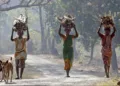
When the invaders came to India, they called the various Indigenous People as ‘Tribes’. Foreign colonizers used the term “Tribe”. Our history and Puranas also mention similar words such as Adivasis, Vanvasis & Attavyas. The time “Tribe” is not mentioned anywhere clearly.

Our Indian constitution has not exclusively drawn any criteria to identify ‘Tribe’. But the constitution has defined the Scheduled Tribes in Article 366 (25) as “scheduled tribe means such tribes or tribal communities or part of a group within such tribes or tribal communities as are deemed under Article 342 to be scheduled tribes for this constitution.”

Various dictionaries give different definitions for Tribe. According to the Cambridge dictionary, a group of people, often of related families, who live together, sharing the same Language, culture, and history, especially those who do not live in towns or cities. Whereas to the Oxford Dictionary of sociology, a tribe’ is a social group bound together by kin and duly associated with a particular territory; members of the Tribe share the social cohesion and are associated with the family with the sense of political autonomy of the nation. According to Britannica Encyclopedia, Tribe, in anthropology, is an abstract form of human social organization based on a set of smaller groups (known as bands), having temporary or permanent political integration, and defined by traditions of common descent, Language, culture, and ideology. Dictionaries define the purpose of Anthropology, which will conflict with legalistic usage.

There is some common consensus from all these universal definitions like culture, Language, cohesion and tradition. There are no universally accepted criteria for defining Tribe by social scientists when we consider the Indian complex scenario of vastly diversified culture to define any ethnic groups, especially for the legal purposes many parameters to be considered.

In the first backward class, the commission was set up in 1953; the preamble of their questionnaire about the ST observed as “The Scheduled Tribes can also be generally ascertained by the fact that they live apart in hills, and even where they live on the plains, they lead a separate, excluded existence, .and are not fully assimilated in the main body, of the people.: Scheduled Tribes may belong to any religion. They are-listed as Scheduled Tribes because of the Kind of life led by them.”

In the BN Lokur Advisory committee report of 1965 on Scheduled Caste and scheduled tribe list for revision, they have considered and observed slightly differently as “indications of primitive traits, distinctive culture, geographical isolation, shyness of contact with the community at large and backwardness. We have considered that tribes whose members have by and large mixed up with the general population are not eligible to be in the list of Scheduled Tribes.”

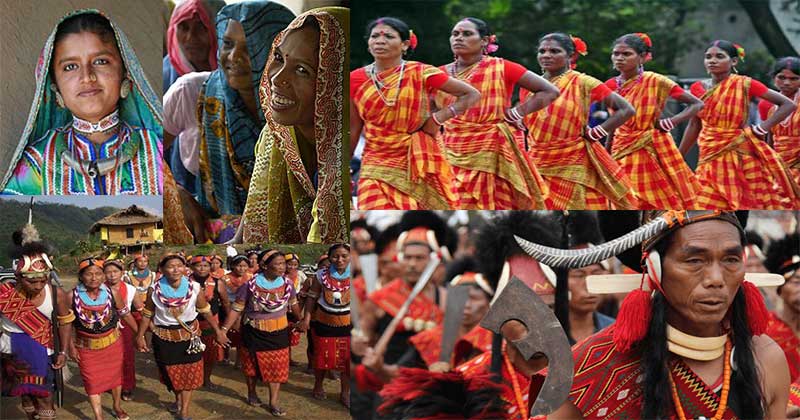
Considering all these factors, we can Identify and classify a tribe or a tribal community with the Four C’s (4C’s) Characteristic Litmus test to understand the Kind of life they lead, which are Character, Culture, Custom and Cult. ‘Character’ denotes social cohesion, introversion, type of Weapon they commonly used (Axe, Archery, sword), preference of living locations (Hills, River Banks or Gypsy), type/ dependency of livelihood (Hunting forest-dwelling, agriculture) etc. The other 3 “C” are closely intertwined with each other but are also quite distinct. ‘Culture’ is the Language, dialect, dress, foods, songs, festivals and dances of each community. ‘Custom’ is the law they follow in society in the marriage, succession, selection/ election of the chief, decision making etc. ‘Cult’ decides the Faith, way of worship, deities, rituals, gods & goddesses, various pooja (prayer) & activities conducted on each customary occasion, like poojas & prayer songs, to be performed on multiple occasions from birth to death. All these characteristics together identify a tribe community and further a sub-group inside a specific tribe.

The Character of the Tribes, which lets them enjoy traditional territorial freedom and rights in the forest, was always suppressed. They were branded as fugitives from the history of Samrat Ashoka to British India. But the ancient history of Ramayana and Mahabharatha shows that Tribe’s freedom or rights were never questioned and were, instead, respected.

Outlook of the Character of the community changes to an extent after they attain education due to the influence of technology and the influence of the law of the land. Culture also influences the development of society. Still, traditions are always a matter of pride to the community and part of its identity, so traditions will always be maintained. Customs are the law which influences the direction of the land, and a certain level of reformation always happens. With the influence of Social reformers and Gurus, the customary laws and Cults always reformed for society’s advancement. The Last “C”, Cult, seems insignificant, but it has a crucial role in identifying a community’s identity. As said earlier, the Cult is connected with Faith. As the faith changes, the entire lifestyle of a tribe gets changed, and that, in turn, changes the identity of the community itself. As the tribes depended on nature, they worshipped the various deities associated with nature. Still, their worship and respect for nature and its gods fade as the faith changes. All the practices and traditions from birth to death will change, completely changing the culture and customs.

Hence identifying the importance of the Cult, which governs and influences all other characteristics of a community to identify or define the Tribe or tribal groups. The 4 C’s should be considered while determining the tribes to include and exclude from Scheduled lists.
Topics: Article 342tribes of IndiaConstitutionScheduled Tribestribal communitiesTribesIndigenous People as TribesTribe
Share4TweetSendShareSend
✮ Subscribe Organiser YouTube Channel. ✮
✮ Join Organiser's WhatsApp channel for Nationalist views beyond the news. ✮
Previous News

Chinese leader Jiang Zemin and his tainted Tibet legacy: Report

Next News

Himachal assembly results: Congress, BJP in neck-to-neck competition

Related News

Champai Soren demands inquiry into 'Delisting' and Church-Held land issues in Jharkhand

Jharkhand’s Tribal Identity Under Threat? Champai Soren seeks probe into conversions and church land holdings

Janjati Sanskritik Samagam: Unity, Integrity and security

The Uniform Civil Code debate in Assam has reignited questions around equality, cultural identity and constitutional reform in India

Equality Without Assimilation: Why Assam’s UCC debate goes beyond legal uniformity

Akhil Bharatiya Adhivakta Parishad explores India’s early constitutional battles over free speech and judicial review

The First Amendment at 75: Revisiting Organiser’s historic free speech battle against the Nehru government

A historical report examines missionary organisations in India, describing their wide-ranging activities across education, health, and social welfare, and their alleged role in conversions

Missionary Expansion in Colonial India: A detailed study of influence, conversion & cultural impact

Madhya Pradesh committee report on missionary activities and vanvasi conversions

MP committee report on missionary activities, vanvasi conversions & post-independence socio-political unrest

Load More

Latest News

External Affairs Minister S Jaishankar

Kanishka Bombing Anniversary: Jaishankar reaffirms India’s commitment to combat terrorism in all its forms

Rani Durgawati

Remembering Rani Durgavati: A woman can be a mother, an empress and an embodiment of an immortal resolve

Karan Singh Kept in Dark: Sheikh Abdullah Never Informed J&K’s Sadr-e-Riyasat of Syama Prasad Mookerjee’s Death (This image is generated by AI)

Syama Prasad Mookerjee Death Mystery: Karan Singh says Sheikh Abdullah never informed him

On the occasion of Dr Syama Prasad Mookerjee’s State-Level Balidan Diwas , Chief Minister Shri Mohan Charan Majhi and others at an event organized at Jayadev Bhawan on June 23, 2026

“Article 370 abrogation fulfilled Dr Syama Prasad Mookerjee’s dream,” says Odisha CM Majhi at Balidan Divas programme

Prakash Raj in Fresh Controversy as Court Issues NBW in Voter Registration Case (This image is generated by AI)

Karnataka: Prakash Raj faces legal scrutiny over alleged multiple voter IDs; Bengaluru Court issues NBW

The fall of Keir Starmer highlights a broader crisis in British governance, where leadership changes have failed to reverse long-term national decline

From Brexit to Starmer: Why Britain’s crisis lies beyond changing leaders in Westminster

Tribute to Rani Durgawati on her Martyrdom Day

Rani Durgavati Martyrdom Day: Immortal Warrior rani, defender of Tribal Pride, national honour & Sanatan values

President Droupadi Murmu confers the Padma Shri on former civil servant R.V.S. Mani on June 23, 2026.

Former MHA official RVS Mani honoured with Padma Shri for contributions to internal security

Tamil Nadu: Temple funds only for temple property; TVK govt concedes before Madras High Court

Keralam’s former Industries Secretary, Mohammed Haneesh IAS (Right Side)

Keralam Cashew Scam: Former Industries Secretary Md Haneesh apologises before High Court after contempt proceedings

Load More
  • Privacy
  • Terms
  • Cookie Policy
  • Refund and Cancellation
  • Delivery and Shipping

© Bharat Prakashan (Delhi) Limited.
Tech-enabled by Ananthapuri Technologies

  • Home
  • Search Organiser
  • Bharat
    • Assam
    • Bihar
    • Chhattisgarh
    • Jharkhand
    • Maharashtra
    • View All States
  • World
    • Asia
    • Africa
    • North America
    • South America
    • Europe
    • Australia
  • Editorial
  • Operation Sindoor
  • Opinion
  • Analysis
  • Defence
  • Culture
  • Sports
  • Business
  • RSS @ 100
  • Entertainment
  • More ..
    • Sci & Tech
    • Vocal4Local
    • Special Report
    • Education
    • Employment
    • Books
    • Interviews
    • Travel
    • Health
    • Politics
    • Law
    • Economy
    • Obituary
  • Subscribe Magazine
  • Read Ecopy
  • Advertise
  • Circulation
  • Careers
  • About Us
  • Contact Us
  • Policies & Terms
    • Privacy Policy
    • Cookie Policy
    • Refund and Cancellation
    • Terms of Use

© Bharat Prakashan (Delhi) Limited.
Tech-enabled by Ananthapuri Technologies