Chinese Communist Party Congress: Why China’s Colonies are Dreading Xi’s Return?
June 26, 2026
  • Read Ecopy
  • Circulation
  • Advertise
  • Careers
  • About Us
  • Contact Us
Android AppiPhone AppArattai
Organiser
  • ‌
  • Bharat
    • Assam
    • Bihar
    • Chhattisgarh
    • Jharkhand
    • Maharashtra
    • View All States
  • World
    • Asia
    • Europe
    • North America
    • South America
    • Africa
    • Australia
  • Editorial
  • International
  • Opinion
  • RSS @ 100
  • More
    • Op Sindoor
    • Analysis
    • Sports
    • Defence
    • Politics
    • Business
    • Economy
    • Culture
    • Special Report
    • Sci & Tech
    • Entertainment
    • G20
    • Azadi Ka Amrit Mahotsav
    • Vocal4Local
    • Web Stories
    • Education
    • Employment
    • Books
    • Interviews
    • Travel
    • Law
    • Health
    • Obituary
  • Subscribe
    • Subscribe Print Edition
    • Subscribe Ecopy
    • Read Ecopy
  • ‌
  • Bharat
    • Assam
    • Bihar
    • Chhattisgarh
    • Jharkhand
    • Maharashtra
    • View All States
  • World
    • Asia
    • Europe
    • North America
    • South America
    • Africa
    • Australia
  • Editorial
  • International
  • Opinion
  • RSS @ 100
  • More
    • Op Sindoor
    • Analysis
    • Sports
    • Defence
    • Politics
    • Business
    • Economy
    • Culture
    • Special Report
    • Sci & Tech
    • Entertainment
    • G20
    • Azadi Ka Amrit Mahotsav
    • Vocal4Local
    • Web Stories
    • Education
    • Employment
    • Books
    • Interviews
    • Travel
    • Law
    • Health
    • Obituary
  • Subscribe
    • Subscribe Print Edition
    • Subscribe Ecopy
    • Read Ecopy
Organiser
  • Home
  • Bharat
  • World
  • Operation Sindoor
  • Editorial
  • Analysis
  • Opinion
  • Culture
  • Defence
  • International Edition
  • RSS @ 100
  • Magazine
  • Read Ecopy
Home World Asia East Asia

Chinese Communist Party Congress: Why China’s Colonies are Dreading Xi’s Return?

In S. Mongolia, as already being practised widely in Tibet, Xi has started a government-sponsored ‘Love Jihad’ programme under which local women are encouraged through cash and job awards to marry Han settlers

Vijay KrantiVijay Kranti
Oct 22, 2022, 05:42 pm IST
in East Asia, World, China, Asia, Asia, Opinion, International Edition
Follow on Google News
FacebookTwitterWhatsAppTelegramEmail

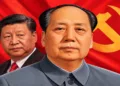
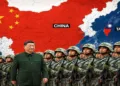
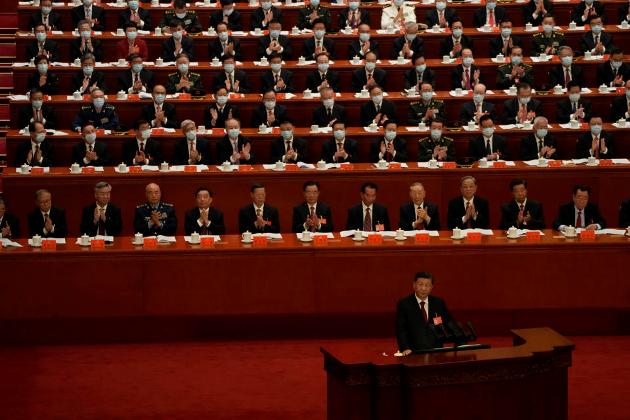
By the time the 20th Party Congress of the Chinese Communist Party (CCP) comes to a close, Xi is expected to have emerged as the second reincarnation of Chairman Mao Zedong, who successfully headed the Communist revolution and ruled over the CCP and China decisively, ruthlessly and unchallenged for 27 years (1949-1976) till his last breath. While Mao’s rule (1949-1978) is known for the consolidation of Communist dictatorship over China and the elimination of almost every single Chinese leader who had even an iota of real or imaginary potential of opposing the dictatorship of Mao or the CCP, Deng’s period (1978-1989) is known for emergence of China as a new economic and military power on the world scene. The history of President Xi since he took over as the General Secretary of the CCP and Chairman of the Central Military Commission in 2012 and subsequently as the President of China in 2013, has been marked with the emergence of a new China which is arrogant and threatening. His new Chinais now bent upon thrustingChina’s political, economic and military supremacy across the world through bullying and forcibly bending every international rule and institution to the whims and fancies of China and Xi himself.

It’s not therefore surprising that the idea of dealing with a permanently empowered Xi Jinping is sending shock waves among a large number of countries ranging from China’s South China Sea and East China Sea neighbours like Taiwan, Japan, S. Korea, Philippines, Vietnam, Brunei andother countries like India and Australia who have been facing Xi’s tantrums since long. The fears of these countries are further multiplied by the stark erosion of the influence of United States of America and near takeover of international institutions, especially those of the United Nationsby China.

No doubt that these nations still hold good chances of fighting back Xi and China’s hegemony through their collective efforts and resources. But there is another community of vulnerable countries and peoples who stand to lose their last chance of survival in the wake of emergence of an unchallenged and almighty Xi Jinping. These are those hapless countries namely Tibet, East Turkistan (Xinjiang), Southern Mongolia, Manchuria and Hong Kong that have been occupied and colonized by China over recent decades of history.

All of these five countries, put together, they account for less than 3 per cent of present-day People’s Republic of China’s (PRC) population but contribute more than half of land area and two-thirds of its vast natural resources. As far as Manchuria is concerned, it has practically ceased to exist even for statistical or academic ethnic studies because of systematic steps like massive Han settlement, forced marriages and replacement of Manchurian language with Chinese Mandarin since 1945 when Manchuria was assimilated into the ‘Republic of China.’It is interesting to note that today’s PRC proudly boasts of being a family of ’56-Sisters’ but the reality is that all other 55 non-Han nationalities, put together, account for less than 8 percent of its population because the Hans have managed to occupymore than 92 pc of the demographic pie of the PRC.

All this happened in the pre-Xi era. What worries the people of Tibet, Xinjiang and S. Mongolia today is that with the return of Xi as the permanent ruler and paramount leader of China, his ongoing campaign of establishing a Chinese society with what he has branded as a universal ‘Chinese Socialist Character’ is going to catch momentum. This campaign, already going on for the past few years is aimed at destroying their exclusive national and cultural identities and dissolving these communities into the vast sea of communist Han identity. This campaign is now bound to catch momentum. Since Xi came to power in 2012 he has taken the separate ethnic character, linguistic personality and these peoples’ longing for their lost national freedom as a personal challenge. The current set of communist rulers of China has been dismayed to watch that despite the strong doze of communism during the Cultural Revolution of Chairman Mao and strong controls of the Chinese military and police apparatus in past decades, the resistance among the Tibetans, the Uyghurs and the Mongols has refused to die. Xi and his comrade colleagues have been surprised to see that more than 157 Tibetans have committed self-immolation over past few years across Tibet to show their faith in the exiled Dalai Lama and to demand freedom for Tibet. The worst news for the communist rulers of Tibet was that all of the young men, women, monks, nuns and other Tibetans who burnt themselves alive in these acts had been consistently exposed to communist education and brainwashing and had never seen Dalai Lama or his independent rule since two generations.

In Xinjiang, too the Uyghurs have refused to give in to communist diktats, and there have been numerous incidents in with the Uyghur youths hit back violently at the Han settlers whose numbers have crossed over the local populations over past decades.  In one incident in China’s popular industrial town of Kunming on 1st March 2014, a group of seven protesting Uyghur youths stabbed more than 140 Han commuters and killed 31 of them. In yet another event of July 2009 when a mob of Han factory workers lynched and murdered 8 Uyghur labourers who were brought in from Xinjiang as cheaper substitutes of the Hans, thousands of  Uyghurs back home in Urumqi swept across the city in retaliation and butchered hundreds of Chinese policemen and Han settlers.In Southern Mongolian too, which China calls as ‘Inner Mongolia’ the Chinese colonial masters have been facing massive public protests against occupying their lands for new mining and industrial projects and settling Han migrants from China.

To tame the Uyghurs, Tibetans, and the Mongols Xi has started a series of projects in their respective countries over past few years which are aimed at neutralizing the impact of ethnic values and exclusive lingual identity of their populations. These steps include pushing millions of Uyghurs into intern camps and exposing them to exhaustive Marxist indoctrination. In Tibet he has banned use of Tibetan language at all school levels and has started a chain of communist residential schools where nearly a hundred thousand Tibetan kids of 4 years and above age have been forcibly admitted. These schools are aimed at producing a new generation of Tibetans who would look Tibetan in their body appearance, but they will be pure Han communists in their hearts. In S. Mongolia, as already being practised widely in Tibet, Xi has started a government-sponsored ‘Love Jihad’ programme under which local women are encouraged through cash and job awards to marry Han settlers.  No surprise that for the colonies of China, the emergence of an unchallenged and almighty Xi Jinping for life is going to be a serious threat.

(The writer is a senior Indian journalist and a keen China watcher. He is Chairman, the Centre for Himalayan Asia Studies and Engagement  ‘CHASE’ New Delhi)

Topics: CCP20th Party Congress of the Chinese Communist Party20th Party CongressChinese Communist Party
Vijay Kranti
Vijay Kranti
Senior Journalist, Tibetologist and Chairman of Centre for Himalayan Asia Studies and Engagement [Read more]
Share9TweetSendShareSend
✮ Subscribe Organiser YouTube Channel. ✮
✮ Join Organiser's WhatsApp channel for Nationalist views beyond the news. ✮
Previous News

Arunachal chopper crash: Search, rescue mission ends with recovery of fifth and last body

Next News

Global Punjabi Association thanks PM Narendra Modi for sanctioning ropeway project at Hemkund Sahib

Related News

Mounting debt and shrinking revenues are forcing Beijing to rethink the size and structure of its sprawling bureaucracy

China’s Economic Crisis Reaches the Bureaucracy: Beijing downgrades officials amid debt and fiscal strain

Chinese President Xi Jinping

China Back to Mao Era? Xi unveils new doctrine of party supremacy over state and people

As economic pressures mount, Beijing is tightening control over business, investment and society, placing security and stability above growth

Xi, the CCP and China’s New Reality: Why regime survival now matters more than economic growth

As Beijing tightens its grip ahead of June 4, dissidents inside China face surveillance and intimidation while activists abroad keep alive the memory of the 1989 Tiananmen crackdown

Tiananmen at 37: How China suppresses remembrance of the massacre through fear, censorship and surveillance

Tiananmen Square Massacre: When Tanks Met Students—The Night China Crushed Its Democratic Hope!

Tiananmen Square Massacre: When Tanks Met Students—The Night Communist China Crushed Its Democratic Hope!

Organised protest ecosystems driven by ideology, identity politics and digital mobilisation are increasingly testing democratic systems in India and the United States

Protest Industry: Why democracies like India and US are under persistent threat

Load More

Latest News

40 years after Air India Kanishka bombing, CSIS publicly blames Canada-based Khalistani terrorists

Air India Kanishka Bombing: CSIS for first time blames Canada-Based Khalistani terrorists for 1985 airplane explosion

Madras High Court

Madras HC rules conversion to Islam cannot claim backward class Muslim reservation, strikes down TN Govt order

Union Minister Shivraj Singh Chouhan

‘Save the Fields’: Union Minister Shivraj Singh Chouhan urges farmers to revive traditional farming practices

Tension escalated in Uttarakhand after a group of Nihang Sikhs allegedly breached police barricades at state border

Uttarakhand: Nihang Sikhs breach police barricades, trigger massive security alert across the state

Massive explosion rocks Agartala Apartment

Tripura Blast: Massive explosion in Agartala apartment leaves several injured, probe underway

Joint Drill being held by security forces in Arunachal Pradesh

Arunachal Pradesh: Army-ITBP joint drill boosts border security readiness

Tamil Nadu: ED raids 21 sites in probe into 2017 TRB polytechnic lecturer recruitment scam, freezes 56 bank accounts

FCRA 2026: Centre bans foreign funds for religious conversion activities (This is an AI generated image)

FCRA 2026: Centre bans use of foreign funds for religious conversion, tightens NGO oversight

Uttar Pradesh's education system undergoes transformation under Yogi government

Uttar Pradesh’s Education Sector’s Transformation Story: From access to excellence under the Yogi government

Mounting debt and shrinking revenues are forcing Beijing to rethink the size and structure of its sprawling bureaucracy

China’s Economic Crisis Reaches the Bureaucracy: Beijing downgrades officials amid debt and fiscal strain

Load More
  • Privacy
  • Terms
  • Cookie Policy
  • Refund and Cancellation
  • Delivery and Shipping

© Bharat Prakashan (Delhi) Limited.
Tech-enabled by Ananthapuri Technologies

  • Home
  • Search Organiser
  • Bharat
    • Assam
    • Bihar
    • Chhattisgarh
    • Jharkhand
    • Maharashtra
    • View All States
  • World
    • Asia
    • Africa
    • North America
    • South America
    • Europe
    • Australia
  • Editorial
  • Operation Sindoor
  • Opinion
  • Analysis
  • Defence
  • Culture
  • Sports
  • Business
  • RSS @ 100
  • Entertainment
  • More ..
    • Sci & Tech
    • Vocal4Local
    • Special Report
    • Education
    • Employment
    • Books
    • Interviews
    • Travel
    • Health
    • Politics
    • Law
    • Economy
    • Obituary
  • Subscribe Magazine
  • Read Ecopy
  • Advertise
  • Circulation
  • Careers
  • About Us
  • Contact Us
  • Policies & Terms
    • Privacy Policy
    • Cookie Policy
    • Refund and Cancellation
    • Terms of Use

© Bharat Prakashan (Delhi) Limited.
Tech-enabled by Ananthapuri Technologies