The critical issues that needs to be addressed on the ” Need for Reforms in the Recruiting System of the Indian Armed Forces” are simple: “Is there a need for reforms in the Recruiting System currently in vogue in the India Armed Forces? Next, When did the system change last? What reasons led to the change? What are the current shortfalls and its consequences? Due to rapidity of combat systems technology advancement and the “New War Fighting Environment of Hybrid Warfare and Full Spectrum Operations in all Domains”, what reforms are vital and inescapable?
Let me at the outset highlight that “Reforms in Recruiting System of the Indian Armed Forces” is long overdue; but extraordinarily complex problem. There are no easy solutions. With dynamic changes in the development of sophisticated combat systems, even the “Reforms in Recruiting System of the Indian Armed Forces” must keep pace with them, more aptly, remain abreast of them.
“Wise learn from experiences of others; fools learn from their own experiences; and idiots refuse learn from even their own experiences” is mankind’s lesson for eternity.
Persisting with Status quo or blindly reverting to status quo ante is disastrous. Change is an imperative. To be fair and balanced, all alike must accept the need for change/reforms in principle and offer constructive and creative criticisms instead of vociferous destructive criticism in favor of retaining status quo ante. Armed forces are not a welfare organizations. They are meant for war where the option is not for the second best.
Remember those indulging in destructive criticism, particularly senior veterans, that the Indian military is not to be viewed as an organization for offering jobs for all and sundry and retaining them on par with the civilian babus to retire at 58 or 60.
Militaries world over have ideas about what kind of wars they’re likely to fight, how they plan to fight them, and the best way to balance capability, capacity, and readiness. Conventional wars often come down to attrition, where manpower and materiel matters more over time than many other elements. Their core choices are not driven by an attempt to balance resources and attain force flexibility, but also by a coherent set of beliefs about how the armed forces should organize to fight adversaries. There are clear problems with competence, scaled-up employment, and integration.
Some of the basic facts of the Indian Armed Forces include: Total Strength (14,74,945): Army – 12,37,117; Navy – 67,252; Air Force – 170,576. And, the Indian Army has a variety of combat units that require separate skill sets to include: Infantry Battalions – over 400; Armor Regiments – 68 including PBG; 27+21 Mechanized Infantry Units; Artillery units – 253 plus 56 AD units, 44 radar and SATA units/btys; over 70 Combat Engineer units.
Viewed in the above framework of combat units – fighting arms or the teeth – none can deny the imperative to ensure physically fit and mentally suitably equipped soldiers to endure the rigors of waging battles for short duration extending over 14-20 days and also for long duration. No uniform thumb rule must be used for screening and selection of new entrants. Specific criteria must be identified and defined for each fighting/combat arm.
Undeniably, recruiting shortages in skill sets ultimately result into capability shortages in combat. More significantly, investing in technology over personnel is a sure recipe for disaster. Updating legacy personnel systems and career paths must ensure the Indian military recruits acquire the capabilities needed for the 21st century and beyond.
The end objective must remain enhancing combat capability by a judicious man-technology mix in all departments and domains of “Future Warfare”.
Let me recount my experiences as an infantryman. When I joined the Indian Army in 1959, the recruiting system for soldiers was based on 7 years active service and 8 years in reserve with class 5 as minimum educational qualifications. Due to antiquated ways and methods of recruitment and training methods, Indian Army suffered “military humiliation” of the worst order in 1962. Except in the Eastern Ladakh, the PLA hounded and crushed the formations and units in North East Frontier Agency. The PLA captured 3968 Indian prisoners of war. Over 1,500 died unable to negotiate the high altitude mountains and another 1,500 went missing.
Why? The casualties were due to lack of endurance, physical fitness, and poor leadership. Field Marshall Maneckshaw, who came as Corps Commander, insisted on all alike to be “a la Chindits” with capability to cover 20 miles (32 kms) every night for 7 nights with back pack weighing 40lbs self contained.
As a Battalion Commander deployed on the Highest posts of the Indian Army in Chola Pass area in 1981-1982, let me also highlight that every soldier is not medically found fit for High Altitude/Terrestrial Area environment. Even today the infantry battalions (Authorized Strength – Officers 20; JCOs 65 and Other Ranks 798) have an average of 50 to 70 low medical category soldiers who are fit to carry sedentary duties only. With units having an average 100 to 120 vacancies, the combat capability and effectiveness is grossly reduced.
Furthermore, as a Brigade Commander in the high intense counter insurgency environment in Mon district of Nagaland in 1985-88, not every unit is mentally tuned to conduct “influence operations” to win over the hearts and minds of the people.
So what? For today’s and emerging future battlefield environment, an intake of physically and mentally tough and suitably qualified and skilled recruits with quick uptake for various combat trades – infantryman, tank and artillery specialists, engineers, airmen with different skill sets, and naval personnel.
All those insisting on status quo ante – a welfare measure – must stop indulging in negative criticism and also politicizing the issue.
In hindsight today, physical fitness and endurance is one part only; the other part is technology expertise of state-of-the-art combat systems and also conduct of “Hybrid Warfare”. So, it involves an exhaustive study to identify minimum standards of educational qualifications for various combat units within the Army, Navy and Air Force.
Remember that the combat technology advancements for fighting arms – armor, artillery, infantry and engineers – differs from Signals, AMC and EME and services like the ASC and AOC. There should be no hesitation and nagging doubts about ensuring the “youthful, fighting fit and qualified” soldiers in the “Fighting Arms”. Whereas the requirements of technical personnel for the Signals, AMC and EME differ. So also, the requirements for the ASC, AOC and others.
Therefore, all those indulging in destructive criticism and inciting violent protests resisting change or reforms to the archaic system are only paving the way for another “humiliation” far worse than 1962 War.
History and the present-day events show the flaws of faulty recruitment policies. Not only, the Indian military must be prepared and optimized for a short and sharp war, but also be prepared to sustain a major conventional conflict ending in a eye-ball-to-eye ball confrontation like in Eastern Ladakh.
Next, the “Blind men of Hindustan – political masters and bureaucracy” who presided over the system in the last 40 years are squarely responsible for the present absurd state of affairs. Even those senior hierarchy of Generals, Admirals and Air Marshalls, who served them, are also squarely responsible for the present status. For they remained mute on the need for reforms at all levels. None of them thumped the tables for demanding the implementation of “Lateral Induction” to Central Para Military Forces and other Police Forces or demanding enhancement offer of the “Golden Handshake.”
Ipso facto in 2019, the Army gave its approval to extend the services of soldiers by two years and began a study to work out another phase-wise formula to retain trained manpower for a longer period. Also, an all-encompassing study was launched to identify arms and services in which soldiers can be retained for a longer period that failed to see the light of the day. Approximately 60,000 soldiers retire every year to keep the fighting arms of the Army young and battle-ready. “It takes a minimum of three years to train a soldier. We allow him to leave once he achieves proficiency in his stream. The aim is to retain trained manpower,” one officer said then.
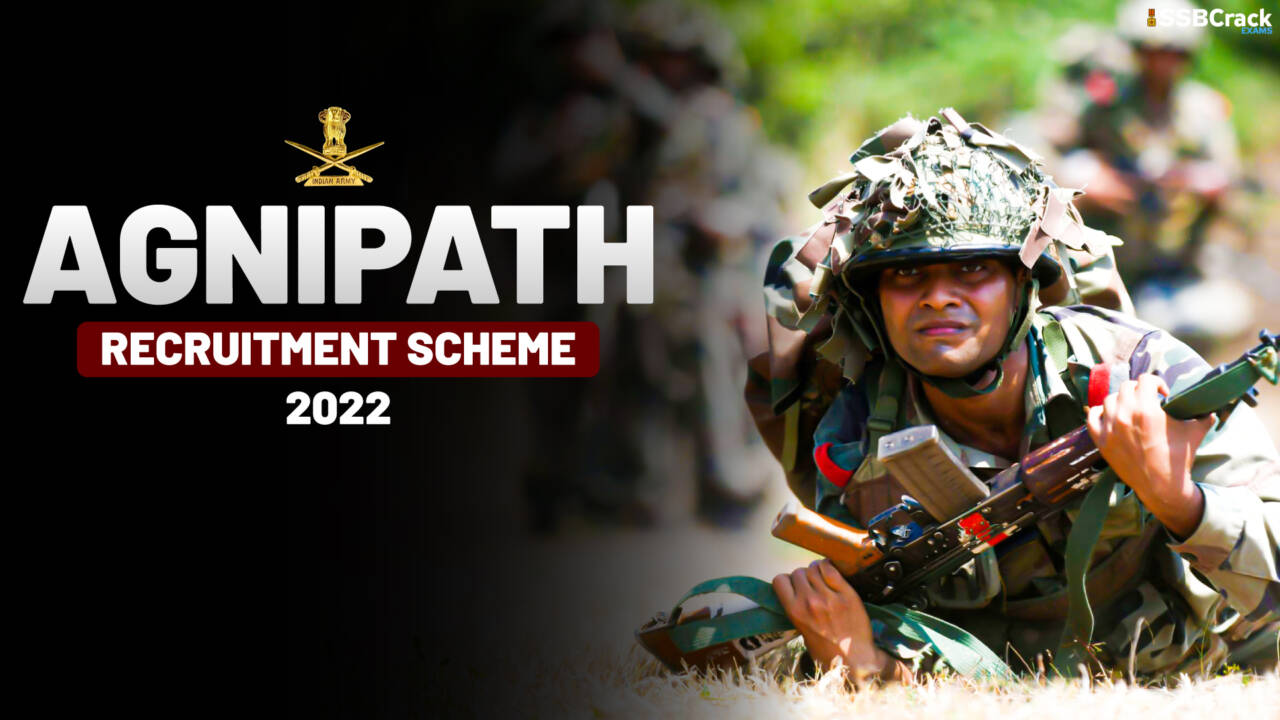
The Agnipath scheme may be viewed as the early stage of the reform process that must go through modifications based on the accumulated wisdom of past wars/conflicts and future trends.
None can condemn the idea behind the government proposal to ensure enhanced battle preparedness, selection of the very best, optimal balance between youth and experience and induction from technical institutes. The scheme is intended to provide opportunity for youth to fulfill the dream of joining the armed forces to serve the nation, imbibe military discipline, skills, physical fitness, confident and better citizens, offer good financial package and 100 percent opportunity for permanent enrolment.
Most critical is that the military must avoid the pitfall of investing in weapons systems and platforms without investing in modern personnel systems; and retaining legacy personnel systems. Of course, longer service kind of system could also potentially increase retention through better matching of new service members’ skills with military specialties, which lowers training costs for highly technical skill sets.
A recommended solution is to reduce the qualifying age modified to 16-20-year from the suggested 17 1/2 years to 21-years. Also, to increase the 4-year engagement length to 5-6 years. It would enable soldiers to acquire and master skill sets vital for combat efficiency and effectiveness. Also, the intake may be reviewed and increased to 60,000 per year to offset the personnel going on retirement and fill the existing shortfalls in combat arms units.
Ipso facto, there is also a higher demand for personnel with requisite technical skills and talent to man technical assignments in strategic and tactical missile units, aerospace forces and cyber specialists. Such personnel cannot be easily replaced. And, 4-year service periods would not enable them to be properly trained on technical skills. The shortage of qualified personnel creates an internal struggle for capability that cannot be satisfied.
Also, there is increasing competition between the private sector and armed forces for personnel with highly technical skills. In particular, the Space Force and Cyber domain are increasing that demand by competing “for talent with the high-paying industry.” In the war for talent, short-term recruitment is a nonstarter based on the existing body of work revealing the inefficiencies and inability to create and retain highly technical skills.
Therefore, all three services must carry out in-depth studies to identify the reasons for seeking discharge. Today’s armed forces have many jobs requiring extensive training, such as aviation, cyber, AMC and STEM. Most seek discharge after gaining expertise in technical domains for better pay in private industry closer to homes. So, it is an imperative for the armed forces to review pay scales after every 5-years and also enhance post-pension compensation packages. Such compensation must ensure that the military is on equal footing when compared to civilian market wages.
If the military is unable to compete monetarily with the private sector for such skills, then it needs a new military career path that reflects what young men and women now seek from their employers: good work-life balance, learning and development, and hybrid or remote work. Most importantly, the career path needs to not only match today’s operating environment in terms of providing the requisite capability but also acknowledge the desires of those the military is looking to recruit.
These recommendations do come with challenges. The previous retirement system required a military service member to serve 20 years to become retirement eligible, but now a service member must be permitted to walk away prior to 20 years with money in their pocket. For ensuring retention, higher pays and compensation packages must be assured.
Many right thinking senior veterans welcome Agnipath as the need of the Indian armed forces – army, air force and navy. They want youngsters in the battle ground to thwart the enemies. However, they express their apprehensions over the effective implementation scheme particularly at the entry and training level. The existing one-year system of training recruits needs to be abandoned. Instead, the focus of recruit training must be on ensuring mastery of all combat systems to operate on joining units.
Fortunately, the move to announce implementation of “Lateral Induction” not only into Central Para Military Forces but also all State Police Forces is a welcome measure. Opponents of the scheme are blind to the categorical assurance that 75 per cent of filtered will be relocated in the para-military forces like BSF, CRPF, or state police. While welcoming the scheme, the Chief Minister of Uttar Pradesh, Yogi Adityanath, has announced that his government is willing to relocate future Agniveers in the state police and other allied departments. What is needed is a firm assurance from the government.
To sum up, the armed forces can no longer delay the introduction of reforms in the recruiting system and induction training syllabi. The changes that were made post-1962 enhanced the combat capabilities that enabled the battles to be won in 1965 and 1971. Later developed extension of service tenures mostly as a welfare measure when successive government failed to implement the demand of the armed forces for “Lateral Induction”. However, the “New War Fighting Environment” demands technical expertise of far more complex nature than ever before. With rapid pace of combat systems technology obsolescence, there is a dire need to implement reforms in the recruiting and induction training system besides higher pay packages and post-retirement compensation to specialists.