Tapping Indus Waters Treaty
June 4, 2026
  • Read Ecopy
  • Circulation
  • Advertise
  • Careers
  • About Us
  • Contact Us
Android AppiPhone AppArattai
Organiser
  • ‌
  • Bharat
    • Assam
    • Bihar
    • Chhattisgarh
    • Jharkhand
    • Maharashtra
    • View All States
  • World
    • Asia
    • Europe
    • North America
    • South America
    • Africa
    • Australia
  • Editorial
  • International
  • Opinion
  • RSS @ 100
  • More
    • Op Sindoor
    • Analysis
    • Sports
    • Defence
    • Politics
    • Business
    • Economy
    • Culture
    • Special Report
    • Sci & Tech
    • Entertainment
    • G20
    • Azadi Ka Amrit Mahotsav
    • Vocal4Local
    • Web Stories
    • Education
    • Employment
    • Books
    • Interviews
    • Travel
    • Law
    • Health
    • Obituary
  • Subscribe
    • Subscribe Print Edition
    • Subscribe Ecopy
    • Read Ecopy
  • ‌
  • Bharat
    • Assam
    • Bihar
    • Chhattisgarh
    • Jharkhand
    • Maharashtra
    • View All States
  • World
    • Asia
    • Europe
    • North America
    • South America
    • Africa
    • Australia
  • Editorial
  • International
  • Opinion
  • RSS @ 100
  • More
    • Op Sindoor
    • Analysis
    • Sports
    • Defence
    • Politics
    • Business
    • Economy
    • Culture
    • Special Report
    • Sci & Tech
    • Entertainment
    • G20
    • Azadi Ka Amrit Mahotsav
    • Vocal4Local
    • Web Stories
    • Education
    • Employment
    • Books
    • Interviews
    • Travel
    • Law
    • Health
    • Obituary
  • Subscribe
    • Subscribe Print Edition
    • Subscribe Ecopy
    • Read Ecopy
Organiser
  • Home
  • Bharat
  • World
  • Operation Sindoor
  • Editorial
  • Analysis
  • Opinion
  • Culture
  • Defence
  • International Edition
  • RSS @ 100
  • Magazine
  • Read Ecopy
Home Bharat

Tapping Indus Waters Treaty

WEBDESKWEBDESK
Sep 28, 2021, 12:34 pm IST
in Bharat, Books
Follow on Google News
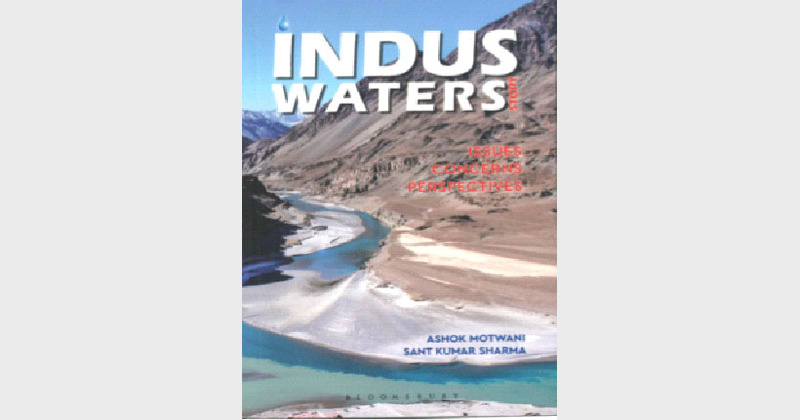
Indus Waters Story: Issues, Concerns, Perspectives

Indus Waters Story: Issues, Concerns, Perspectives

FacebookTwitterWhatsAppTelegramEmail
The book, Indus Waters Story, by Ashok Motwani and Sant Kumar Sharma highlights the contentious issue of Indus waters sharing between India and Pakistan 

Indus Waters Story: Issues, Concerns, Perspectives; Bloomsbury India Publications, pp 236, Rs 699.00

It is often said that Bharat has won all wars against Pakistan on battle front but invariably lost on the publicity front.  This is true in the case of the Indus Water Treaty (IWT), too, which was signed between India and Pakistan in 1960. According to the treaty, the control of three Eastern rivers – the Beas, Ravi and Sutlej – was given to India, while the water flowing in three Western rivers – the Indus, Chenab and the Jhelum – was controlled by Pakistan. The Western rivers contribute about 80 per cent of annual flows in the Indus basin flows. This disparity in water sharing has left many wonder why India settled for such a disadvantageous arrangement. However, it must be mentioned here that the general awareness about the Treaty has been woefully low in India. Only after the Pulwama terrorist attack that there was a demand for cancellation of the Treaty to “teach Pakistan a lesson”. 

Pak’s Hostility Apparent

Despite the perception among political classes in India as Pakistan has walked away with lion’s share of water resources from the Indus Water Systems through the Treaty, the narrative within the Islamic republic is very hostile to India. The general level of awareness in Pakistan is pretty high. Pakistani media is replete with articles on the Treaty critical of India. Terrorists like Hafiz Saeed had pledged to wage war against India over “water terrorism” unleashed by it. It is  their narratives that have been flooding  the cyberspace so far and domestic perceptions in Pakistan.

There are a lot of misgivings about the Treaty among the masses. There aren’t adequate literature which articulate India’s perspectives on the issue. The book, Indus Waters Story: Issues, Concerns, Perspectives, by Ashok Motwani and Sant Kumar Sharma, is a laudable attempt to bridge the gap and put the issue in right perspective. 

One of the questions that one encounters in discussions on the Treaty is: ‘Can India unilaterally cancel the Treaty?’ Another oft-repeated question is: ‘Can India stop the rivers from flowing into Pakistan?’To these questions, the authors write: “Trying to punish Pakistan through the stoppage of the flow of waters is too easy to conjure up for many. It seems to them like a very easy and catchy option but it is way too difficult when it comes to the implementation part. International riparian laws in vogue now, division of river waters under the IWT and many other factors will come into play, if at all India tries to use water as a weapon against Pakistan and bring it to heel. In short, it is easier said than done.” 

Evaluating Success of Treaty

Further, one needs to bear in mind that goodwill is a must if a treaty between two countries must work. In that way, the Treaty has survived many a tumultuous period in the past six decades. Arguably, it is one of the most successful water-sharing treaties in the world. 

The book examines what, within the scope of the Treaty, can be done by India to exercise its rights. What is required for that is an understanding of the nuances of the Treaty, the political will to go ahead with exercising India’s rights to the fullest and the enterprise to ask engineers to design projects aimed at doing so

It is wrong to perceive that the Treaty was a total sellout of India’s interests. As Niranjan D. Gulhati, the chief Indian negotiator, wrote in Indus Waters Treaty: An Exercise in International Mediation:  “The dispute over the waters of the Indus, between India and Pakistan, is notable not only for its size, significance and complexity, but also in that it was brought to conclusion by a comprehensive Treaty that benefits both sides enormously.” 

Similarly on the 80:20 division of waters, some experts say that the Eastern Rivers travel significant distances in the plains of India. As such, in the plains, they offer India a significant potential for developing storage dams and these dams were indeed built once the Treaty was signed. “The signing of the Treaty also led to a significant enhancement of the potential of the Bhakra dam, then under construction, as the treaty was being negotiated.” 

All three Western rivers, which have been allotted to Pakistan, remain mountainous in most of their journey on the Indian side. “There are very few sites on them available while they traverse through Indian territories for creating any significant storage for irrigation. It needs to be borne in mind that the conditions prevailing when the IWT was negotiated made it imperative for India to try to maximise its irrigation potential to ensure food security.” 

Thus, the book–a well-researched and balanced one at that — brings to the fore the sensitive issue of water sharing between two perennially hostile nuclear nations. There are some sticky issues which need to be resolved in the larger interest of peace in the region. 

Furthermore, the book examines what, within the scope of the Treaty, can be done by India to exercise its rights. What is required for that is an understanding of the nuances of the Treaty, the political will to go ahead with exercising India’s rights to the fullest and the enterprise to ask engineers to design projects aimed at  doing so. 

 

Share1TweetSendShareSend
✮ Subscribe Organiser YouTube Channel. ✮
✮ Join Organiser's WhatsApp channel for Nationalist views beyond the news. ✮
Previous News

Why Modi’s recent trip to America is part of an important plan

Next News

Kanhaiya Kumar takes home Air Conditioner from the CPI party office before joining Congress

Related News

Mizoram CM Lalduhoma says Myanmar refugee influx has become a burden

Myanmar refugee influx has become a burden on Mizoram: CM Lalduhoma calls it a “Burden”

Prime Minister Narendra Modi

PM Modi to launch Rs 21,770 cr mega projects in Surat & Daman; Infrastructure, healthcare among key projects

Ebola medical countermeasures that were sent by Bharat arrived at Africa’s Ebola Continental Supply Chain mechanism in Entebbe, Uganda bringing the total to just under 50MT

Ebola Crisis in Uganda: India delivers life-saving medical supplies to African nation

Cabinet approves Rs 9,585 crore scheme to replace old trucks and buses in Delhi-NCR

Delhi-NCR gets major pollution relief push as centre clears Rs 9,585 cr vehicle replacement scheme for trucks and buses

A representative image generated using AI

BHAVYA Scheme to transform India’s Manufacturing Landscape: DPIIT secretary calls for investment-ready industrial parks

Keralam: Madrasa Ustad Shemeer Asari sends Obscene video to Girls in WhatsApp Group, asks if they can do the same

Keralam: Madrasa Ustad Shemeer Asari sends Obscene video to Girls in WhatsApp Group, asks if they can do the same

Load More

Latest News

Mizoram CM Lalduhoma says Myanmar refugee influx has become a burden

Myanmar refugee influx has become a burden on Mizoram: CM Lalduhoma calls it a “Burden”

Prime Minister Narendra Modi

PM Modi to launch Rs 21,770 cr mega projects in Surat & Daman; Infrastructure, healthcare among key projects

Ebola medical countermeasures that were sent by Bharat arrived at Africa’s Ebola Continental Supply Chain mechanism in Entebbe, Uganda bringing the total to just under 50MT

Ebola Crisis in Uganda: India delivers life-saving medical supplies to African nation

Cabinet approves Rs 9,585 crore scheme to replace old trucks and buses in Delhi-NCR

Delhi-NCR gets major pollution relief push as centre clears Rs 9,585 cr vehicle replacement scheme for trucks and buses

A representative image generated using AI

BHAVYA Scheme to transform India’s Manufacturing Landscape: DPIIT secretary calls for investment-ready industrial parks

Keralam: Madrasa Ustad Shemeer Asari sends Obscene video to Girls in WhatsApp Group, asks if they can do the same

Keralam: Madrasa Ustad Shemeer Asari sends Obscene video to Girls in WhatsApp Group, asks if they can do the same

Board outside the office of Karnataka Lokayukta

Karnataka government accused of shielding tainted officials as Lokayukta probes remain stalled

Ritabrata Banerjee Claims LoP Post as Revolt Rocks Mamata Banerjee's Party

TMC vs TMC in Bengal: Expelled leader Ritabrata Banerjee stakes claim to LoP post, deepening crisis in Mamata’s party

DRDO, IAF successfully flight-test indigenous RudraM-II air-to-surface missile

DRDO, IAF conduct successful RudraM-II Missile trials under extreme conditions, boosting India’s defence self-reliance

India receive the fourth squadron of the Russian-made S-400 air defence system

India receives fourth S-400 missile squadron from Russia, bolstering air defence

Load More
  • Privacy
  • Terms
  • Cookie Policy
  • Refund and Cancellation
  • Delivery and Shipping

© Bharat Prakashan (Delhi) Limited.
Tech-enabled by Ananthapuri Technologies

  • Home
  • Search Organiser
  • Bharat
    • Assam
    • Bihar
    • Chhattisgarh
    • Jharkhand
    • Maharashtra
    • View All States
  • World
    • Asia
    • Africa
    • North America
    • South America
    • Europe
    • Australia
  • Editorial
  • Operation Sindoor
  • Opinion
  • Analysis
  • Defence
  • Culture
  • Sports
  • Business
  • RSS @ 100
  • Entertainment
  • More ..
    • Sci & Tech
    • Vocal4Local
    • Special Report
    • Education
    • Employment
    • Books
    • Interviews
    • Travel
    • Health
    • Politics
    • Law
    • Economy
    • Obituary
  • Subscribe Magazine
  • Read Ecopy
  • Advertise
  • Circulation
  • Careers
  • About Us
  • Contact Us
  • Policies & Terms
    • Privacy Policy
    • Cookie Policy
    • Refund and Cancellation
    • Terms of Use

© Bharat Prakashan (Delhi) Limited.
Tech-enabled by Ananthapuri Technologies