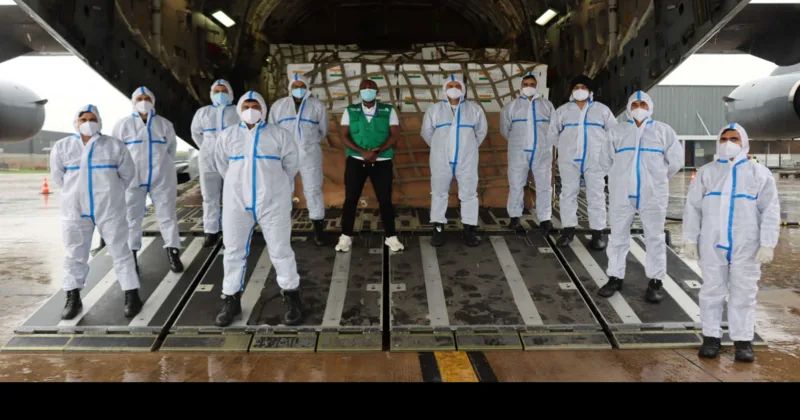
Amidst the rapidly spreading outbreak of the Ebola virus in the African nations of Uganda and the Democratic Republic of Congo (DR Congo), India has once again demonstrated its commitment to fulfilling global humanitarian responsibilities. The Government of India has dispatched a large consignment of essential medicines and medical equipment to Uganda to assist in combating the health crisis in the affected regions.
Specifically, a state-of-the-art C-17 Globemaster-III transport aircraft of the Indian Air Force took off from New Delhi on June 2, 2026, to undertake this mission of delivering relief supplies. This move by the Narendra Modi-led central government not only underscores India’s humanitarian commitment but also reinforces its role as a reliable partner during times of global health emergencies.
An IAF C-17 Globemaster-III airlifted critical medical aid from New Delhi to Uganda on 02 Jun 26 to combat the Ebola virus outbreak.
The mission demonstrates #IndianAirForce response capability during humanitarian contingencies.#IndianAirForce #HumanitarianAssistance… pic.twitter.com/YEJqIHul1M
— Indian Air Force (@IAF_MCC) June 3, 2026
India’s Assistance Amidst the Ebola Crisis
It is noteworthy that Uganda is currently grappling with a fresh outbreak of the Ebola virus. In light of the mounting pressure on healthcare services and the persistent threat of the infection spreading further, India has provided immediate assistance. The relief supplies dispatched include life-saving medicines, infection control equipment, Personal Protective Equipment (PPE) kits, medical consumables and other essential healthcare resources. Indian officials believe that this aid will play a pivotal role in bolstering the capacity of local health institutions, facilitating the treatment of infected patients and helping to break the chain of transmission.
Rising Infections in DR Congo and Uganda
The current Ebola outbreak is not confined solely to Uganda; the infection is also spreading rapidly in the neighboring Democratic Republic of the Congo. According to available data, as of May 27, 906 suspected cases had been recorded in DR Congo, resulting in 223 fatalities. Meanwhile, by May 29, a total of 134 confirmed cases of infection had been reported across both nations, including 9 cases in Uganda.
According to health agencies, 18 deaths have been reported so far among the confirmed cases. Experts believe that controlling the infection remains challenging in border areas due to constant movement and a weak healthcare infrastructure.
India is proud to support Africa’s efforts in strengthening public health resilience and Ebola response capacities.#HealthSecurity #IndiaAfrica https://t.co/1DTfLL6lLh
— India in Zambia (@indiainzambia) June 2, 2026
Situation Worsens in the Final Week of May
A significant surge in the rate of infection has been recorded since May 21. During this period, 49 new confirmed cases were reported, while 8 new deaths were confirmed. Additionally, 160 new suspected cases and 47 suspected deaths were also recorded.
Health experts state that the sudden spike in Ebola cases indicates that the virus is still actively spreading. If effective measures are not taken in a timely manner, the infection could reach densely populated areas, potentially exacerbating the situation further.
Demonstration of Indian Air Force Capabilities
This mission has once again proven the Indian Air Force’s proficiency in global relief operations. The C-17 Globemaster III is one of the Indian Air Force’s most critical strategic transport aircraft. This aircraft is capable of transporting large quantities of relief material, medical equipment, military resources and humanitarian aid over long distances.
In previous years as well, the Indian Air Force has conducted numerous successful missions to deliver relief in regions affected by earthquakes, floods, pandemics, and war. The aid dispatched to Uganda is being hailed as yet another example of India’s “Humanity First” policy.
What is the Ebola Virus?
Ebola Virus Disease (EVD) is considered one of the world’s most dangerous infectious diseases. It is a Viral Hemorrhagic Fever that affects humans as well as certain other primates, such as monkeys and chimpanzees. The disease was first identified in Africa in 1976. The virus was named after the Ebola River, which flows near the region where its first major outbreak was recorded. Since then, several outbreaks have emerged periodically across Central and West Africa.
How Does Ebola Spread?
According to global health experts, the Ebola virus primarily spreads from wild animals to humans. Fruit bats, porcupines, and certain primates are considered potential carriers of the virus. Once a person becomes infected, the disease can spread to another individual through direct contact with their blood, sweat, saliva, vomit, feces, urine and other bodily fluids. The infected person’s clothing, bedding, medical equipment or other contaminated objects can also serve as vehicles for transmitting the infection. This is why infection control and personal protective measures are accorded the utmost importance in regions affected by Ebola.
Why is this disease dangerous?
Ebola is considered a highly lethal disease. According to data from the World Health Organization, its average fatality rate is approximately 50 percent. However, across various outbreaks, this rate has been recorded to range from 25 percent to as high as 90 percent. Early symptoms of the disease include high fever, headache, weakness, muscle pain and a sore throat. In severe cases, patients may face complications such as internal and external bleeding, organ failure and multi-organ dysfunction.
Details: An IAF C-17 Globemaster III airlifted critical medical aid from New Delhi to Uganda on 2 June to support efforts against the Ebola outbreak. Fast response, global support and humanitarian diplomacy in action.
👉🏻 Follow @BharatKaDevansh for more. pic.twitter.com/yizs0p0UTf
— Devansh Kumar (@BharatKaDevansh) June 3, 2026
The 2014–16 Outbreak: The World’s Largest Ebola Crisis
In the history of Ebola, the outbreak that swept across West Africa between 2014 and 2016 is considered the most devastating. It began in Guinea and subsequently spread to Sierra Leone and Liberia. This epidemic claimed thousands of lives and impacted the lives of millions of people. The World Health Organization declared it a global health emergency. According to experts, that outbreak taught the world that the fight against infectious diseases requires not merely local efforts, but global cooperation.
Strengthening India’s Global Health Diplomacy
The medical aid dispatched to Uganda represents more than just relief material; it also symbolizes India’s emerging global health diplomacy. During the COVID-19 pandemic, through its “Vaccine Maitri” initiative, India provided vaccines and medical assistance to numerous countries. Now, amidst the Ebola crisis, by extending assistance to friendly nations, India has reinforced the message that global health security is a shared responsibility.
India: A Reliable Partner in Times of Crisis
The medical assistance dispatched by India to Uganda amidst the rising Ebola infections in Africa, stands as a significant example of humanitarian cooperation. While this initiative is proving instrumental in saving the lives of thousands of people, it also underscores India’s international role and its sensitivity toward global health crises. Notably, this initiative by India has once again emerged as a powerful testament to global solidarity and humanitarian cooperation.