India’s air defence capabilities have received a major boost with the arrival of the fourth squadron of the Russian-origin S-400 Sudarshan air defence missile system. Defence sources indicated that the system reached the country a few days ago and is expected to be inducted into an operational area in the near future.
The latest delivery marks the fourth of the five S-400 squadrons contracted under the Rs 35,000-crore India-Russia defence agreement signed in 2018. Three squadrons have already been deployed and are operational with the Indian armed forces, forming a crucial component of India’s strategic air defence network.
The induction comes at a time when India is actively enhancing its preparedness against evolving aerial threats, ranging from hostile aircraft and drones to cruise and ballistic missiles.
Why the S-400 Matters
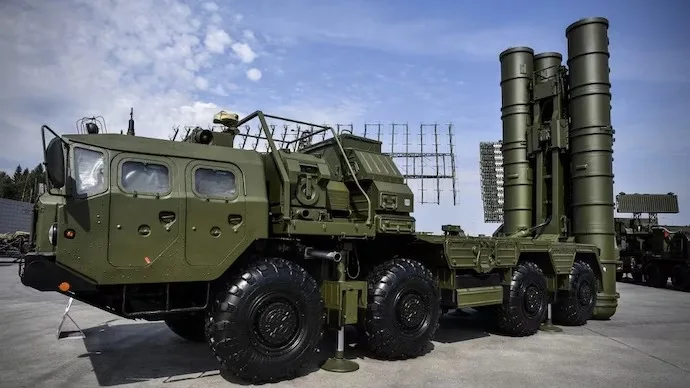
Widely regarded as one of the most sophisticated long-range air defence systems in the world, the S-400 Triumf, designated as ‘Sudarshan’ in Indian service, is capable of detecting, tracking, and neutralising multiple targets simultaneously.
The system can engage fighter aircraft, stealth platforms, airborne early-warning aircraft, drones, cruise missiles, and ballistic missiles at varying ranges and altitudes. Its advanced radar architecture enables it to monitor vast stretches of airspace and intercept threats long before they reach strategic targets.
Military experts have often described the S-400 as a force multiplier that significantly enhances a nation’s defensive capabilities by creating a layered protective shield over sensitive military and civilian infrastructure.
Each S-400 squadron is a complex and highly integrated combat package comprising 16 vehicles, including command-and-control units, surveillance radars, engagement radars, and missile launchers.
A squadron consists of two batteries, each equipped with six launchers, allowing a single squadron to deploy up to 128 missiles. Under the India-Russia agreement, India is acquiring 60 launchers and approximately 6,000 missiles capable of engaging targets at ranges between 120 kilometres and 380 kilometres.
The system’s ability to intercept threats at multiple distances creates a robust, layered defence structure capable of handling simultaneous attacks from different directions.
Delayed but Delivered
India signed the S-400 deal with Russia in 2018, but the delivery schedule was affected by disruptions caused by the Russia-Ukraine conflict.
While the first three squadrons were inducted nearly two years ago, subsequent deliveries witnessed delays due to logistical and production challenges. With the fourth squadron now delivered, only one unit remains to be supplied under the original contract.
Despite geopolitical uncertainties and Western sanctions affecting Russian defence exports, both countries have continued to implement the agreement, underlining the strategic importance of India-Russia defence cooperation.
The arrival of the fourth squadron significantly enhances India’s ability to defend its airspace against conventional and emerging threats.
The S-400’s capability to engage multiple targets simultaneously across different altitudes and distances makes it a critical component of India’s integrated air defence strategy. Defence planners view the system as an essential deterrent against hostile aerial incursions and missile attacks.
With four squadrons now available, India can expand protective coverage over key military installations, strategic assets, major urban centres, and critical infrastructure.
India Plans Further Expansion
India’s efforts to strengthen long-range air defence are unlikely to stop with the current five-squadron acquisition.
The Defence Acquisition Council (DAC) has already approved the proposal for the acquisition of five additional S-400 squadrons, reflecting the country’s long-term focus on building a comprehensive air and missile defence shield.
If the proposal progresses, India will substantially increase its long-range interception capability and broaden strategic coverage across multiple theatres.
Alongside foreign acquisitions, India is pursuing self-reliance in air defence through Project Kusha, an ambitious indigenous long-range air defence programme.
The project aims to develop a homegrown system capable of matching many of the operational capabilities offered by the S-400. Once completed, Project Kusha is expected to provide India with advanced interception capabilities against aircraft, drones, cruise missiles, and ballistic missiles.
The programme forms an important part of the government’s Atmanirbhar Bharat initiative and involves several Indian defence companies, including Solar Industries, as development and production partners.
A Milestone in Defence Modernisation
The arrival of the fourth S-400 squadron marks another major step in India’s ongoing military modernisation drive. As security challenges continue to evolve across the region, strengthening air defence remains a key priority for India’s defence establishment.
With four of the five contracted squadrons now delivered and the final unit expected in the coming months, India’s air defence shield has become significantly stronger. The induction not only enhances the country’s ability to detect, track, and destroy aerial threats but also reinforces its strategic deterrence posture in an increasingly complex security environment.