India has two choices: First is to come into an understanding of global significance of China and befriend it in a fundamental and strategic sense of demonstrating India’s self-reliant capability; Second: Make only proactive efforts with the US to keep China ‘contained. ‘What is to be determined is the choice to be made and how that choice is to be made’
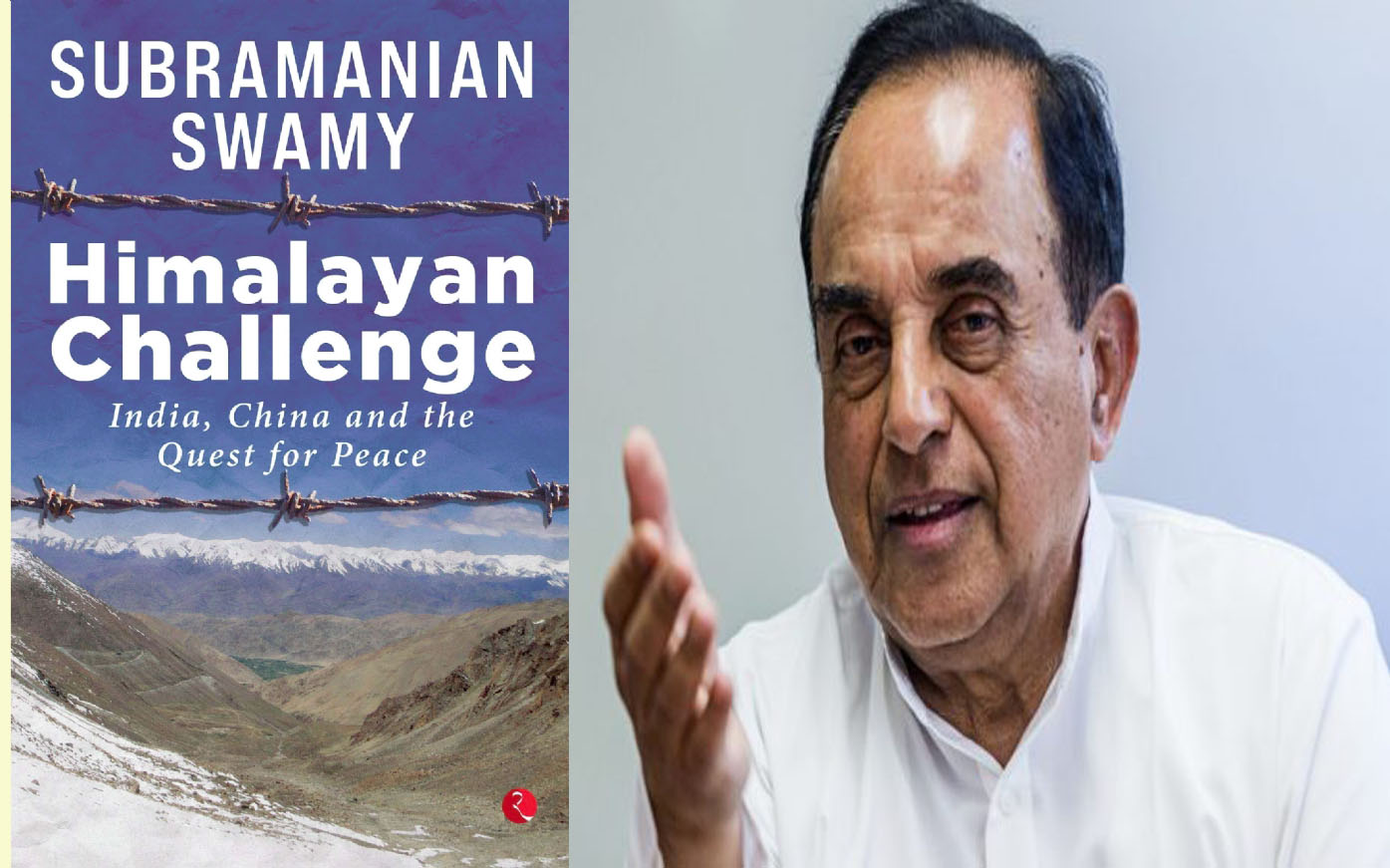
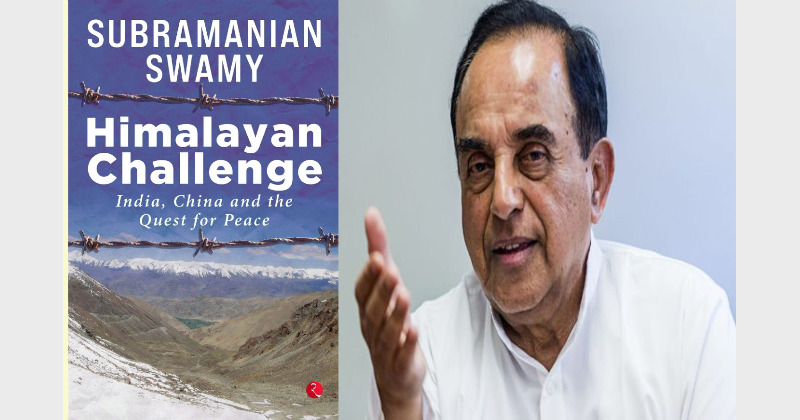
Himalayan Challenge Subramanian Swamy,
Publication: Rupa, pp 256, Rs 595.00
Publication: Rupa, pp 256, Rs 595.00
Dr Subramanian Swamy has been in the news mostly for the wrong reasons in recent times. In his quest for political power, he has upset many people. But, to me, the real loss is of an intellectual and strategist. Earlier when I was trying to understand China and Chinese, he had gifted me his book – India’s China Perspective. Now, he has updated and re-presented his deep knowledge with a different approach in his new book – Himalayan Challenge, India, China and the Quest for Peace. Despite being a complex subject, Dr. Swamy has presented his analysis and views in a very easy flowing style in well structured sections.
According to Dr. Swamy, Tibet is the crux of the problem between the two huge neighbouring countries who till recently had never fought for 2500 years despite very long common borders. A rare instance in the human history. Every other country has fought border wars with its neighbours except India and China. He then unravels unknown facts about Tibet, and its relationship with China and India. He explains the blunders committed by India due to its lack of clarity in enunciating its policy towards Tibet and exposes China for deliberately muddling up the relations with Tibet and India.
Sanskritisation of China
The book has six chapters. The first is The Discovery of China where Dr. Swamy explains how India influenced China through its spiritual and academic might for nearly 1500 years. The close relations between the two led to what he calls the “Sanskritisation of China”. So deep has been the influence that it has seeped into the roots of that nation, despite periodic attempts by different rulers to get rid of it. He also touches upon Chinese influence on India in some fields. This part clearly makes the reader realise closeness of the two biggest and oldest civilisations of the world.
The second chapter traces the history of Tibet and its turbulent relationship with China. He also then goes on to explain India’s relations with Tibet, and the confusion that India’s policy makers have created due to lack of clarity and objectivity. This has led to confused strategy in tackling Tibet issue that could result in lasting peace with China. Dr. Swamy highlights the Chinese games to use Tibet as a pawn to keep harassing India. He quotes Nehru to show that Nehru was aware of the international designs in Tibet but he did not develop his views based on this awareness. China has distrust for India because of its hazy and unclear policy about Tibet. This Tibet policy, or rather lack of Tibet policy is the crux of the problems between India and China.
In the third chapter about McMohan Line, he doesn’t spare the British for leaving behind forged and unacceptable border maps, in what he calls ‘British perfidy’. Indian establishment has neither acknowledged and nor tried to clear the air with China about these British maps. Dr Swamy shows through documents, Nehru’s refusal to accept the British skulduggery and acknowledge that there was genuine problem in delineating and demarcating the Indo-China border. Obtuse attitude of Nehru led to complicating the matter that could have been resolved when India and China had parity in defence and security and Communist China was trying to find its feet.
Lack of Coherent Strategy
In the fourth chapter, the Professor goes into painful details of the 1962 war and how unrealistic aggression of Nehru and sharing opaque information with Indian people led to complicating the issue. He talks about uneasy relations between China, the then USSR and now Russia and India, and fallacy of India depending upon Russia. The fifth chapter goes into the complicated issue of uneasy co-existence between India and China. The flip-flop of various regimes and mistakes committed due to lack of clear strategy is highlighted here.
Chapter six finally dwells on how to engage with China. He underlines the fact that economic strength, national security and foreign policy are interconnected and they must work in tandem. He then goes onto present the strengths and weaknesses of the two countries, in various fields of defence and economies.
With objective data, he shows that China is much ahead of India in most fields, but how India can over-take China soon in economic field if certain policies are adopted. He argues that one should not only go by quantitative strengths but also qualitative strengths. He explains how the Indo-China border terrain is more in favour of India, and how India can have an upper hand. Finally, he argues it would be much better option for India to have co-operative relation with China that needs speaking with clarity and firmly with China as equals, leaving behind the1962 mindset; rather than work with USA to compete with China. But, to understand his formulation, one needs to read and understand the factors that he enumerates in this chapter.
The book has some interesting documents in the annexure. The letter written by Sardar Patel highlighting hegemonic approach of China and Nehrus’s dismissive airy response tells us how we lost the initial advantage against China. Nehru sent the note he had despatched to the foreign affairs department without any covering note to Patel. Such was his contempt about intellectual capabilities of his colleagues that Nehru added, “Cabinet discussion would not be useful because ‘most members of the Cabinet have hardly followed these intricate conversations and consultations.” Most interesting is the conversation between Chinese strongman Deng Xiaoping and Dr. Subramanian Swamy in April 1981 during his path breaking meeting in China where Indian Ambassador too was present. It shows that clear frank exchange of opinions is appreciated by China and works better than a woolly approach.
The highlight of the book is the lucid style and easy flowing presentation of history, facts, strategies and his own opinions. Though most of the book reflects the view of a Professor and a brilliant academic and strategist, the politician and his ego does peep through many times; for example, when he discusses Atal Behari Vajpayee and Prime Minister Modi. He mentions his views about the blunder Vajpayeeji committed in handling China. To rub the salt in, he reminds of 18 one-on-one meetings between Xi and Modi ji that did not produce any results, two-three times, due to lack of clarity about what India wishes to achieve, according to him. Otherwise he hardly repeats any argument in the entire book. Refusal of Indian establishment to acknowledge his contribution to re-establish Indo-Chinese relations obviously rankles with the politician. One can overlook such few friction points, and read this book to understand the conundrum in the relations between the two countries.
To quote Dr. Swamy, “During the next two decades, India will, therefore, need to make a crucial choice: whether to come into an understanding of global significance with China and befriend it in a fundamental and strategic sense of demonstrating India’s self-reliant capability (Option A) or make only proactive efforts with the US to keep China ‘contained’ (Option B), What is to be determined is the choice to be made and how that choice is to be made.”
(The Writer is an author and columinist)