The Samiti, the largest women’s organisation in the country, stands out among feminist outfits in terms of its philosophy. Rooted in the ethos of the country, it believes in the ideals of matrutva (motherhood), kartrutva (duty consciousness) and netrutva (leadership)
-Aparna Singh
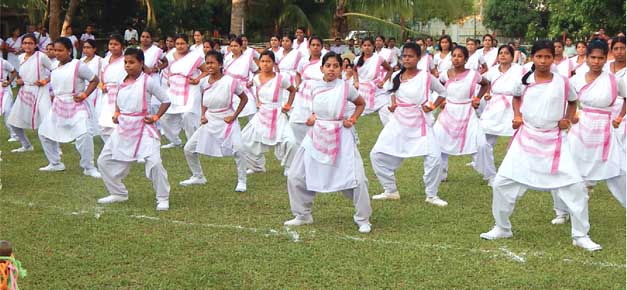
The journey of the plight of women in India and indeed, across the world was in huge contrast. While ancient India, guided by the philosophy of the Vedas, always regarded women as the source of power and prosperity, the same was not accorded to the women in other parts of the world which was mostly under the influence of Semitic philosophy which regarded women as inferior beings. Under the influence of such Semitic philosophy and the medieval degradation of our society, the plight of women in India also became deplorable. Many socio-cultural movements took up the task of reinstating the old glory to women. Surprisingly, most of such movements were initiated by men. West never had any past to look up to for the respectable place of women in society. They saw exploitation by men as the reason for their pitiable condition and it was this that gave rise to the male-female dichotomy which dominates the feminist discourse around the world including India.
Rashtra Sevika Samiti, the world’s largest voluntary organisation for women, has remained outside the national discourse on women either out of choice or has been purposely denied its legitimate place. They labellled it as traditional, orthodox and communal which does not stand for gender concerns
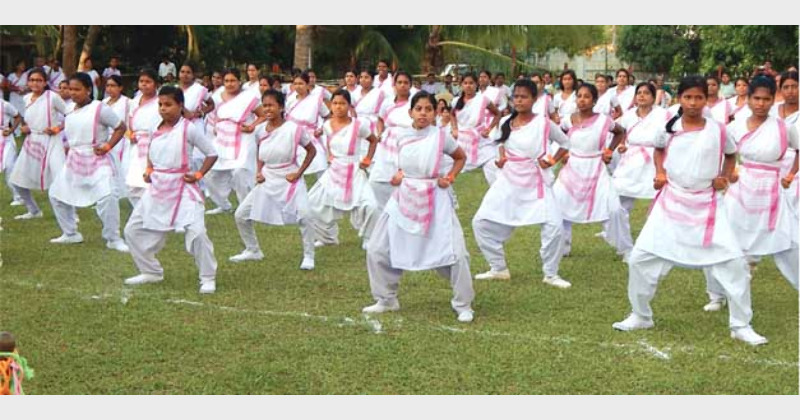
Rashtra Sevika Samiti, the world’s largest voluntary organisation for women, has remained outside the national discourse on women either out of choice or has been purposely denied its legitimate place. They labelled it as traditional, orthodox and communal which does not stand for gender concerns and reinstates patriarchy. If we dive down the structure, function and the life of the sevikas, one will not find a match for its contemporaneity. As early as the 1930s and 40s a sevika named Bakultai Devkule, a shooter, motorist, swimmer, first sevika and the all India General Secretary (karyavahika) of Rashtra Sevika Samiti, married a non-RSS affiliate, against the wishes of her father. There are numerous examples which defy that Samiti is orthodox and patriarchal. The founder, Vandaneeya Lakshmi Bai Kelkar (Mausiji) herself becoming a widow at a very early stage undertook the task of forming such a vast organisation on October 25, 1936. She along with another lady named Vandaneeya Saraswati Tai Apte took the organisation across the country. Modernity can be gauged from the fact that sevikas, consisting of married and unmarried women, bow before them every morning in the shakhas. Their contribution to nation-building made them sacred transcending their identities as widows, the mere sight of whom is abhorred by the orthodox elements of the society.
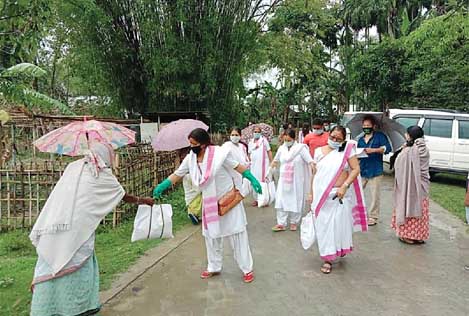
During the Covid pandemic, the Samiti distributed 4,26,237 gloves,
masks and PPE kits, 1,09,696 ration kits and served 4,23,794 food packets
masks and PPE kits, 1,09,696 ration kits and served 4,23,794 food packets
Rashtra Sevika Samiti took up the cause of women not considering them as victims but to unlock the potential of the 50% of the population necessary for nation-building. Labelling it as orthodox is to delegitimise its genuine efforts to make women take a lead role in its endeavour to bring glory to the motherland
Since its inception Samiti has always stood for a strong and determined role of women in nation-building. The feminist movements could not find resonance with this organisation because it was anathema to their basic understanding of the relationship between men and women as binaries. Samiti advocated that they are complementary to each other unlike any other feminist organisation around the world or even within the country, who always saw conflict between them. Samiti is often accused of not upholding the rights of women. It was therefore denied a place in the national discourse. Not playing victims and taking up a more responsible role in nation-building was seen as a dent on the feminist agenda. The three ideals of Samiti for matrutva (motherhood), kartrutva (duty consciousness) and netrutva (leadership) in Jija mata, Ahilyabai and Rani Lakshmi bai respectively are themselves stark examples of denying the gender roles ascribed to women of the contemporary society. Beauvoir, a protagonist of feminism in the western world, was a lady who stood for individual rights and liberty to the extent that she openly displayed her bisexuality and even resorted to child abuse as an expression of female liberty. Taking the inspiration from such proponents for women rights will instil similar ethos in the movement which we are witnessing is the blatant display of woman as a commodity. Succumbing to the western idea of feminism and women rights which was in perpetual competition with men, Indian feminist movement also fell prey to such ideas.
Rashtra Sevika Samiti took up the cause of women not considering them as victims but to unlock the potential of the 50% of the population necessary for nation-building. Labelling it as orthodox is to delegitimise its genuine efforts to make women take a lead role in its endeavour to bring glory to the motherland. It reiterates that economic strength cannot be the sole factor deciding the capability of a person to make a constructive impact on the existing social structure. Economic independence for women to secure their safety post-marriage tussle, as advocated by the feminist is a lesser objective of Samiti. Imagine if every man claimed to be economically dependent only to support himself, what would happen to the existing social system where most women are dependent on men for their economic needs? For Samiti earning a livelihood is not to just become self-dependent but to become dependable for their children, family and particularly for the nation.
When Samiti refers to women as matrushakti it not only refers to a biological mother but the one who sows the seeds of empathy, character, sensitivity, morality and affection among the upcoming as well as contemporary generations. Such tasks are also shouldered by pracharikas (full-time workers) who have chosen to never become biological mothers but are referred to as matrishakti because they instil the moral character and love for the nation in their sevikas. Samiti has held that women are more capable in many skills not only because mythology or the dharma says so, but it has also been proved in many pieces of research in the modern world. A 2018 research report of Robby Berman in the World Economic Forum found that at any hour of the day women are capable of doing more work than men. Another study published in BMC Psychology found that women are better at multitasking than men. Just like the reproduction, capability of women is not their achievement but their anatomy, similarly capability to do more work is because of the genetic makeup of the brain. Samiti acknowledges these differences not to look down upon the other gender but as a greater responsibility to contribute towards the family, society and the nation.
Mausiji, addressing the annual meeting of all India Rashtra Sevika Samiti held in Mumbai in 1953, said that ‘woman is the charioteer of life and man is the hearse (jeevan roopi rath ki saarthi stri hai aur purush rathi hai). She wondered if man represents motion then who has put him into motion? It is the woman who puts the man into motion. Unlike the claims of the feminists that Samiti is a traditional organisation which seeks to uphold Brahmanical rituals, it has always kept its mission of nation-building above everything else. During the annual meeting of all India Rashtra Sevika Samiti held in Wardha in 1961 from November 13 to 15, the sister in law (wife of Mausiji’s husband’s elder brother) of Mausiji, who was also her very close associate passed away. She performed the final rites and joined the meeting on 14th evening and on the 15th, she was there till the finale. She said that ‘Person’s loyalty is not important but loyalty to element is important (vyakti nishtha nahi tatva nishtha hi mahatvpurn hai). Setting an example before her sevikas that no ritual, no tradition is as important as the task of reinstating Bharat Mata to her past glory.
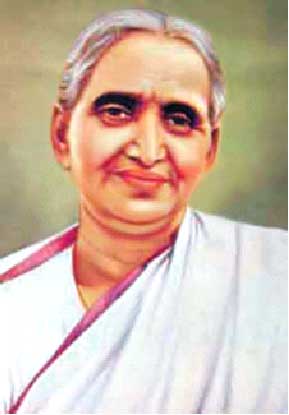
Pramukh Sanchalika Lakshmibai Kelkar
Feminist outfits could not find resonance with Samiti because it was anathema to their understanding of the relationship between men and women as binaries. Samiti advocated that they are complementary to each other unlike any other feminist organisation, who always saw conflict between them
Samiti works pan India and in more than 18 other countries. With more than 2700 shakhas and 475 plus sewa projects Samiti proactively addresses the challenges before the society. During the pandemic, it distributed 4,26,237 gloves, masks and PPE kits, 1,09,696 ration kits and served 4,23,794 food packets. Samiti is aware of the vices existing in the society and vehemently opposes subjugation and oppression of women and also prepares its sevikas to confront and oppose such situations. But it sees the permanent solution not simply in legal protections and perpetual competition with men but in preparing a generation with virtues. Samiti takes up this task on themselves as the first teacher of their child. It is the only organization by the women, of the women and for the nation, which talks about its duties first and their rights later.
(The author is a State Tax Officer and a research scholar in XLRI, Jamshedpur and writes on economics and socio-cultural issues)