Here is how millets can make India?s food basket climate-resilient
September 19, 2026
  • Read Ecopy
  • Circulation
  • Advertise
  • Careers
  • About Us
  • Contact Us
Android AppiPhone AppArattai
Organiser
  • ‌
  • Bharat
    • Assam
    • Bihar
    • Chhattisgarh
    • Jharkhand
    • Maharashtra
    • View All States
  • World
    • Asia
    • Europe
    • North America
    • South America
    • Africa
    • Australia
  • Editorial
  • International
  • Opinion
  • RSS @ 100
  • More
    • World Hindu Congress 2026
    • Op Sindoor
    • Analysis
    • Sports
    • Defence
    • Politics
    • Business
    • Economy
    • Culture
    • Special Report
    • Sci & Tech
    • Entertainment
    • G20
    • Azadi Ka Amrit Mahotsav
    • Vocal4Local
    • Web Stories
    • Education
    • Employment
    • Books
    • Interviews
    • Travel
    • Law
    • Health
    • Obituary
  • Subscribe
    • Subscribe Print Edition
    • Subscribe Ecopy
    • Read Ecopy
  • ‌
  • Bharat
    • Assam
    • Bihar
    • Chhattisgarh
    • Jharkhand
    • Maharashtra
    • View All States
  • World
    • Asia
    • Europe
    • North America
    • South America
    • Africa
    • Australia
  • Editorial
  • International
  • Opinion
  • RSS @ 100
  • More
    • World Hindu Congress 2026
    • Op Sindoor
    • Analysis
    • Sports
    • Defence
    • Politics
    • Business
    • Economy
    • Culture
    • Special Report
    • Sci & Tech
    • Entertainment
    • G20
    • Azadi Ka Amrit Mahotsav
    • Vocal4Local
    • Web Stories
    • Education
    • Employment
    • Books
    • Interviews
    • Travel
    • Law
    • Health
    • Obituary
  • Subscribe
    • Subscribe Print Edition
    • Subscribe Ecopy
    • Read Ecopy
Organiser
  • Home
  • Bharat
  • World
  • Operation Sindoor
  • Editorial
  • Analysis
  • Opinion
  • Culture
  • Defence
  • International Edition
  • RSS @ 100
  • Magazine
  • Read Ecopy
Home Bharat

Here is how millets can make India?s food basket climate-resilient

A new study has found that while almost all grain crops are sensitive to these changes, adding more coarse grains or millets in crop production mix may help make food supply withstand vagaries of climate change

Archive ManagerArchive Manager
Jul 1, 2019, 06:44 pm IST
inBharat
Follow on Google News
Facebook
Twitter
WhatsAppTelegramEmail
 

Dinesh C Sharma
 
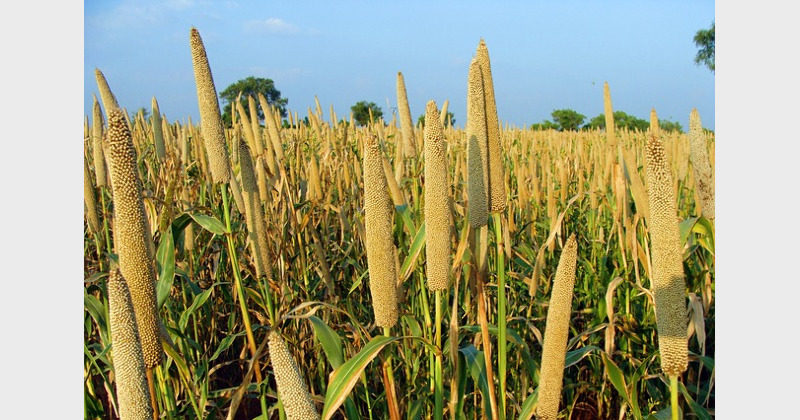
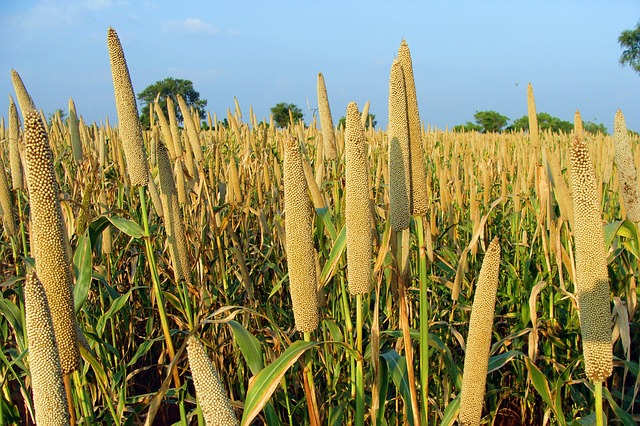
New Delhi, July 1 (India Science Wire): Increasing temperatures, changing monsoon and more frequent extreme climate events are posing a threat to food security in India. A new study has found that while almost all grain crops are sensitive to these changes, adding more coarse grains or millets in crop production mix may help make food supply withstand vagaries of climate change.
 
In the past 45 years, the overall monsoon rainfall has decreased, there is greater variability in daily rainfall, temperatures have risen, extreme events have gone up and so has frequency of droughts. The study quantified the impact of all these changes on crop yields all over the country during this period (1966 – 2011).
 
The analysis revealed that compared to rice, alternative grains (finger millet, maize, pearl millet and sorghum) are significantly less sensitive to climate variability and generally experienced smaller decline in yields under climate extremes. All these are mostly rain-dependent crops and grown during the kharif season. Wheat, grown in the rabi season, was not included in the analysis.
 
In general, the yields of alternative grains are lower than rice, but in certain districts, coarse grains performed better than rice under rainfed conditions. For example, pearl millet and sorghum in central India and maize in many parts of the country. This means there is already an opportunity to increase climate resilience and grain production both by increasing crop area for these grains.
 
 
Since rice yields, compared to all the coarse grains, are more sensitive to fluctuations in rainfall in both irrigated and rainfed areas, replacing it with coarse grains will help stabilize grain production across a range of climatic conditions, the study has said. This, along with other strategies like building buffer stock to absorb climate shock, developing drought-tolerant varieties and boosting irrigation could help meet the climate challenge.
 
At present, rice accounts for 44 per cent of annual grain production and 73 per cent of grain production during the kharif season. The rest 27 percent of grain production during kharif comes from maize (15%), pearl millet (8%), sorghum (2.5%) and finger millet (1.5%). The study examined how far these coarse grains and rice are climate resilient.
 
District-level crop production and climate data was taken from various sources and database such as the ICRISAT Village Dynamics South Asia and the India Meteorological Department. Climate sensitivity of the five crops for each district was then determined through modelling. The study findings have been published in journal Environmental Research Letters.
 
“This study shows that yields from grains like millet, sorghum and maize are more resilient to extreme events like droughts. Their yields vary significantly less due to year-to-year changes in climate and generally experience smaller declines during droughts. But yields from rice, India’s main crop, experience larger declines during extreme weather conditions. This means reliance on a single crop – rice – during kharif makes India’s food supply potentially vulnerable to the effects of varying climate,” explained Kyle Frankel Davis of Columbia University, who led the study, while speaking to India Science Wire.
 
 
However, replacing rice with millets is not going to be an easy affair. “Agriculture is intimately linked with socio-economic factors and market forces, all of which affect crop choice. If poorer and subsistence farmers are choosing alternative crops more than rice farmers, then how can mixing crops to increase stability at a national level affect crop choices? A better option would be to incentivise poor farmers to increase their crop diversity to reduce the sensitivity of rice to rainfall variability,” commented Raghu Murtugudde, visiting professor of earth system science at IIT Bombay. He is not connected with the study.
 
 
Health and nutrition benefits of millets could be an additional advantage, according to researchers. Davis said “our study provides evidence that these crops can offer benefits to the food system beyond nutrition. In addition, increasing production of alternative grains helps save water, reduces energy demand and greenhouse emissions from agriculture. This study shows that diversifying crops that a country grows can be an effective way to adapt its food production systems to the growing influence of climate change.”
 
The research team included Kyle Frankel Davis (Data Science Institute, Columbia University); Ashwini Chhatre (Indian School of Business, Hyderabad); Narasimha D Rao (Yale University); Deepti Singh (Washington State University, Vancouver); and Ruth DeFries (Columbia University). (India Science Wire)

 
Share
Tweet
SendShareSend
✮ Subscribe Organiser YouTube Channel. ✮
✮ Join Organiser's WhatsApp channel for Nationalist views beyond the news. ✮
Previous News

Woman asked husband for Rs 30 to buy veggies, gets Triple Talaq in return! Man booked for thrashing and divorcing his wife

Next News

First Ever India International Cooperatives Trade Fair (IICTF): A unique initiative for taking farmers, artisans & other members of cooperatives directly to the global trade arena

Related News

India reiterates freedom of navigation and regional security amid escalating West Asia Conflict

West Asia Conflict: India condemns Houthi attacks across Red Sea; Reiterates regional peace & freedom of navigation

Representative Image

India slams Pakistan’s fake claims on INS Kolkata-PNS Hunain collison; Exposes dangerous manoeuvre of the Pak Navy

Anto Augustine in police custody

Keralam: Messi-Gate accused, Reporter TV MD Anto Augustine suffers setback as Wayanad court rejects bail

Karma yogi engineer Bharat Ratna Visvesvaraya’s fight against the calculated left wing class warfare

NIA issues non-bailable warrant against Pahalgam terrorist

J&K: NIA issues non-bailable warrant against Lashkar commander Sajid Jatt, chief conspirator of Pahalgam terror attack

HAL hands over LCA Tejas Trainer & HTT-40 to IAF; Reflects India’s indigenous airpower & military capabilities

Load More

Latest News

India reiterates freedom of navigation and regional security amid escalating West Asia Conflict

West Asia Conflict: India condemns Houthi attacks across Red Sea; Reiterates regional peace & freedom of navigation

Representative Image

India slams Pakistan’s fake claims on INS Kolkata-PNS Hunain collison; Exposes dangerous manoeuvre of the Pak Navy

Anto Augustine in police custody

Keralam: Messi-Gate accused, Reporter TV MD Anto Augustine suffers setback as Wayanad court rejects bail

Karma yogi engineer Bharat Ratna Visvesvaraya’s fight against the calculated left wing class warfare

NIA issues non-bailable warrant against Pahalgam terrorist

J&K: NIA issues non-bailable warrant against Lashkar commander Sajid Jatt, chief conspirator of Pahalgam terror attack

HAL hands over LCA Tejas Trainer & HTT-40 to IAF; Reflects India’s indigenous airpower & military capabilities

One-Dish Weddings, Billion-Dollar Tanks: Why Pakistan Rations Citizens While Selling Defence to Gulf| Austerity Paradox

One-Dish Weddings, Billion-Dollar Tanks: Why Pakistan Curbs Citizens While Selling Defence to Gulf & Sponsoring Terror

Hyderabad NIA Court sentences 9, including 8 Bangladeshis, to life imprisonment in human trafficking case

Sri Lankan Tamil migrant worker Sivarasa Anojan faces the death penalty in Saudi Arabia

Sri Lankan migrant worker Sivarasa Anojan faces death sentence in Saudi Arabia over alleged social media post on Islam

Saneesh George (File Photo

Keralam: Congress leader Saneesh George arrested while allegedly using MDMA drugs

Load More
  • Privacy
  • Terms
  • Cookie Policy
  • Refund and Cancellation
  • Delivery and Shipping

© Bharat Prakashan (Delhi) Limited.
Tech-enabled by Ananthapuri Technologies

  • Home
  • Search Organiser
  • Bharat
    • Assam
    • Bihar
    • Chhattisgarh
    • Jharkhand
    • Maharashtra
    • View All States
  • World
    • Asia
    • Africa
    • North America
    • South America
    • Europe
    • Australia
  • Editorial
  • Operation Sindoor
  • Opinion
  • Analysis
  • Defence
  • Culture
  • Sports
  • Business
  • RSS @ 100
  • Entertainment
  • More ..
    • Sci & Tech
    • Vocal4Local
    • Special Report
    • Education
    • Employment
    • Books
    • Interviews
    • Travel
    • Health
    • Politics
    • Law
    • Economy
    • Obituary
  • Subscribe Magazine
  • Read Ecopy
  • Advertise
  • Circulation
  • Careers
  • About Us
  • Contact Us
  • Policies & Terms
    • Privacy Policy
    • Cookie Policy
    • Refund and Cancellation
    • Terms of Use

© Bharat Prakashan (Delhi) Limited.
Tech-enabled by Ananthapuri Technologies