New Study Claims Pakistan?s Nuclear Arsenal may have Plateaued, But Security Experts Remain Sceptical
June 6, 2026
  • Read Ecopy
  • Circulation
  • Advertise
  • Careers
  • About Us
  • Contact Us
Android AppiPhone AppArattai
Organiser
  • ‌
  • Bharat
    • Assam
    • Bihar
    • Chhattisgarh
    • Jharkhand
    • Maharashtra
    • View All States
  • World
    • Asia
    • Europe
    • North America
    • South America
    • Africa
    • Australia
  • Editorial
  • International
  • Opinion
  • RSS @ 100
  • More
    • Op Sindoor
    • Analysis
    • Sports
    • Defence
    • Politics
    • Business
    • Economy
    • Culture
    • Special Report
    • Sci & Tech
    • Entertainment
    • G20
    • Azadi Ka Amrit Mahotsav
    • Vocal4Local
    • Web Stories
    • Education
    • Employment
    • Books
    • Interviews
    • Travel
    • Law
    • Health
    • Obituary
  • Subscribe
    • Subscribe Print Edition
    • Subscribe Ecopy
    • Read Ecopy
  • ‌
  • Bharat
    • Assam
    • Bihar
    • Chhattisgarh
    • Jharkhand
    • Maharashtra
    • View All States
  • World
    • Asia
    • Europe
    • North America
    • South America
    • Africa
    • Australia
  • Editorial
  • International
  • Opinion
  • RSS @ 100
  • More
    • Op Sindoor
    • Analysis
    • Sports
    • Defence
    • Politics
    • Business
    • Economy
    • Culture
    • Special Report
    • Sci & Tech
    • Entertainment
    • G20
    • Azadi Ka Amrit Mahotsav
    • Vocal4Local
    • Web Stories
    • Education
    • Employment
    • Books
    • Interviews
    • Travel
    • Law
    • Health
    • Obituary
  • Subscribe
    • Subscribe Print Edition
    • Subscribe Ecopy
    • Read Ecopy
Organiser
  • Home
  • Bharat
  • World
  • Operation Sindoor
  • Editorial
  • Analysis
  • Opinion
  • Culture
  • Defence
  • International Edition
  • RSS @ 100
  • Magazine
  • Read Ecopy
Home Bharat

New Study Claims Pakistan?s Nuclear Arsenal may have Plateaued, But Security Experts Remain Sceptical

Security experts, however, remain sceptical of the new estimate. ?I am not sure of the assessments since there are always so many assumptions made when calculating the fissile material available ? the burn in power reactors, the quality of uranium ore and so on. All external estimates put Pakistan as having more nuclear weapons," says a security expert at a Delhi-based think tank

Archive ManagerArchive Manager
Sep 28, 2018, 07:24 pm IST
in Bharat
Follow on Google News
FacebookTwitterWhatsAppTelegramEmail
Dinesh C Sharma

 
Security experts, however, remain sceptical of the new estimate. “I am not sure of the assessments since there are always so many assumptions made when calculating the fissile material available – the burn in power reactors, the quality of uranium ore and so on. All external estimates put Pakistan as having more nuclear weapons,” says a security expert at a Delhi-based think tank

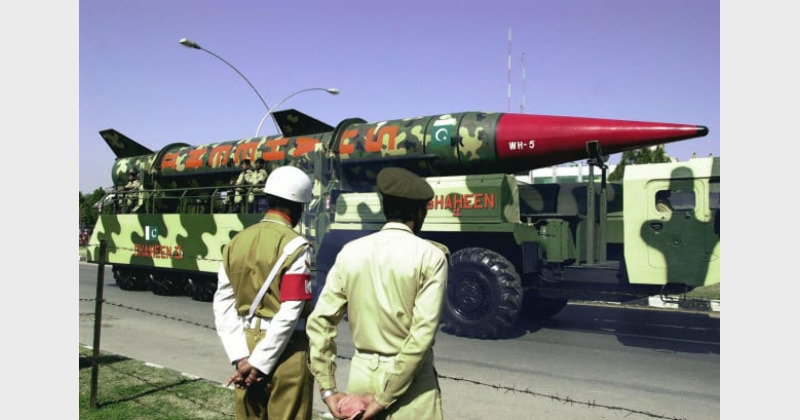
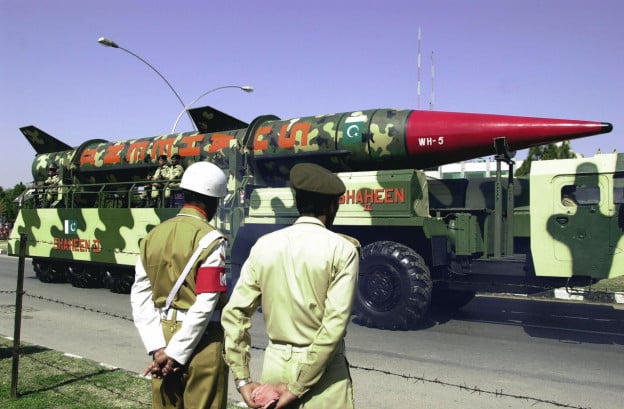
New Delhi, September 28 (India Science Wire): A new study has estimated the size of Pakistan’s nuclear stockpile to be lower than present estimates, attributing it to shortage of uranium.
The study estimates that Pakistan could at best have between 112 and 156 nuclear weapons. Of them, about 78 to 104 would be highly enriched uranium (HEU)-based weapons and 34 to 52 would be plutonium weapons.

A 2016 study by American researchers had estimated the size of Pakistan’s nuclear stockpile to be in the range of 204 to 306 in 2014. According to the International Panel for Fissile Materials (IPFM), Pakistan had 120 to 130 warheads made up of both types at the end 2010.
 
“We believe that because of uranium shortages, Pakistan’s nuclear arsenal has reached a plateau and can only grow very slowly. Any alternative explanation for an increased arsenal size should provide a satisfactory and consistent explanation for uranium sourcing by Pakistan,” the researchers have said in their study published in Current Science, flagship scientific journal of the Bangalore-based Indian Academy of Sciences.
 
In the absence of any direct information about weapon production capacities of different countries, the amount of fissile material that a country possesses is used to determine the number of nuclear weapons it can make. The new study does the same, but researchers say they looked at the demand and supply situations in Pakistan in an integrated way. The estimate is based on publicly available information about nuclear facilities of Pakistan and on certain assumptions such quality of uranium ore and burn up of reactors.
 
The analysis takes into account demand of domestically produced yellowcake or uranium concentrate in three major facilities – Karachi Nuclear Power Plant, Kahuta enrichment facility and plutonium production reactors at Khushab.
If it is assumed that the Karachi plant operates for 150 days on an average and the capacity of Kahuta is taken as 11,000 SWU (Separative Work Unit) along with low burn-up of Khushab reactors, the total (cumulative) demand for yellowcake to feed all three facilities comes to 1884 tonnes. As against this, Pakistan would have produced 1584 tonnes of yellowcake cumulatively till 2014. The Karachi power reactors would have needed 805 tonnes of yellowcake for continuing operations till the end of 2014, leaving the rest for production of HEU and plutonium to be used in weapons programme, the study says.
 
Given the information about working of enrichment and plutonium production facilities till 2010, Pakistan would have accumulated 1482 kg of HEU and 154 kg of weapon grade plutonium. “The non-availability of yellowcake after 2010 makes it imperative that these estimates of nuclear weapons are valid as of 2014,” the paper says. For making one HEU weapon, the estimate used is 12 to 18 kg of HEU, while it is 4 to 6 kg of plutonium per weapon for the second type.
 
“Pakistan does not have high grade uranium ore in the country. It is well known that Pakistan is not a major uranium producing country. Its potential uranium reserves are also not very large, though many of the areas are still unexplored,” explained Lalitha Sundaresan of the National Institute of Advanced Studies, Bengaluru, who has co-authored the paper with Kaveri Ashok of the Center for Science, Technology and Policy, Bengaluru.
 
Security experts, however, remain sceptical of the new estimate. “I am not sure of the assessments since there are always so many assumptions made when calculating the fissile material available – the burn in power reactors, the quality of uranium ore and so on. All external estimates put Pakistan as having more nuclear weapons. The point is: does it matter? I would imagine (one just requires) 50 or even 10 weapons (for) deterring an adversary,” commented Dr Manoj Joshi, Distinguished Fellow at the Observer Research Foundation, New Delhi. (India Science Wire)
ShareTweetSendShareSend
✮ Subscribe Organiser YouTube Channel. ✮
✮ Join Organiser's WhatsApp channel for Nationalist views beyond the news. ✮
Previous News

Lokmanthan is an effort to reclaim the great legacy of Bharat: Vice President Shri M Venkaiah Naidu

Next News

For Saving the Childhood, For Making Healthcare Accessible

Related News

The Vedic age saw remarkable women sages, known as Rishikas, who composed hymns and shaped India's spiritual and philosophical heritage

Rishikas of Vedic Age: How Gargi, Maitreyi & other women shaped ancient India’s spiritual and philosophical tradition

Police in AAP-Ruled state of Punjab lathi charge sit-in protesters

Punjab: ITI candidates seeking jobs lathi-charged outside PSPCL HQ; opposition slams AAP Govt over police action

From constables to DGP, India's police system follows a structured chain of command that governs law enforcement across the country

From Constable to DGP: Understanding India’s police hierarchy, powers & recruitment system

The terracotta dice that challenges historical assumptions and highlights India's millennia-old civilisational heritage

How a 4,500-year-old terracotta dice is reviving the debate on India’s civilisational continuity & Vedic heritage

The Porumamilla inscription and the ancient science behind a reservoir that survived 650 years

India’s 655-Year-Old Water Policy: The Porumamilla inscription that turned stone into a manual of hydrology

India’s Permanent Representative to the United Nations Ambassador Harish Parvathaneni

India slams Pakistan at UNSC for peddling false narratives on Jammu & Kashmir

Load More

Latest News

The Vedic age saw remarkable women sages, known as Rishikas, who composed hymns and shaped India's spiritual and philosophical heritage

Rishikas of Vedic Age: How Gargi, Maitreyi & other women shaped ancient India’s spiritual and philosophical tradition

Police in AAP-Ruled state of Punjab lathi charge sit-in protesters

Punjab: ITI candidates seeking jobs lathi-charged outside PSPCL HQ; opposition slams AAP Govt over police action

From constables to DGP, India's police system follows a structured chain of command that governs law enforcement across the country

From Constable to DGP: Understanding India’s police hierarchy, powers & recruitment system

The terracotta dice that challenges historical assumptions and highlights India's millennia-old civilisational heritage

How a 4,500-year-old terracotta dice is reviving the debate on India’s civilisational continuity & Vedic heritage

The Porumamilla inscription and the ancient science behind a reservoir that survived 650 years

India’s 655-Year-Old Water Policy: The Porumamilla inscription that turned stone into a manual of hydrology

India’s Permanent Representative to the United Nations Ambassador Harish Parvathaneni

India slams Pakistan at UNSC for peddling false narratives on Jammu & Kashmir

Keralam: Pathanamthitta temple property occupied beyond lease period reclaimed by devotees

A series of high-level engagements signals New Delhi's growing focus on building interoperable security networks across the Indo-Pacific

India strengthens Indo-Pacific security architecture with new defence and maritime partnerships

Prime Minister Narendra Modi

“Makes every Indian proud”: PM Modi hails India’s 7.7 per cent GDP growth in FY 2025-26

Once known for maoist violence, Minpa now leads healthcare revolution with telemedicine services in Sukma

From Maoist Stronghold to Healthcare Hub: How Chhattisgarh’s Minpa is transforming through telemedicine & development

Load More
  • Privacy
  • Terms
  • Cookie Policy
  • Refund and Cancellation
  • Delivery and Shipping

© Bharat Prakashan (Delhi) Limited.
Tech-enabled by Ananthapuri Technologies

  • Home
  • Search Organiser
  • Bharat
    • Assam
    • Bihar
    • Chhattisgarh
    • Jharkhand
    • Maharashtra
    • View All States
  • World
    • Asia
    • Africa
    • North America
    • South America
    • Europe
    • Australia
  • Editorial
  • Operation Sindoor
  • Opinion
  • Analysis
  • Defence
  • Culture
  • Sports
  • Business
  • RSS @ 100
  • Entertainment
  • More ..
    • Sci & Tech
    • Vocal4Local
    • Special Report
    • Education
    • Employment
    • Books
    • Interviews
    • Travel
    • Health
    • Politics
    • Law
    • Economy
    • Obituary
  • Subscribe Magazine
  • Read Ecopy
  • Advertise
  • Circulation
  • Careers
  • About Us
  • Contact Us
  • Policies & Terms
    • Privacy Policy
    • Cookie Policy
    • Refund and Cancellation
    • Terms of Use

© Bharat Prakashan (Delhi) Limited.
Tech-enabled by Ananthapuri Technologies