 While prejudicial policies of the Pakistan Government have killed the language, a large section of Pakistanis are still keen to learn Hindi
Vivek Shukla
Noted actor Balraj Sahni and great lyricists like Shailendra and Anand Bakshi learnt their Hindi in their schools and colleges in Rawalpindi. Brilliant Hindi writers Krishna Sobti, Devindra Satyarthi, Upinder Nath Ashk and many more had started writing in the present day Punjab of Pakistan. Hindi was flourishing in present day Pakistan till August 14, 1947. Sadly, the epitaph of Hindi was written in Pakistan. Hindi was ‘declared’ the language of Hindus. Hindi publications were shut down, schools and colleges stopped teaching it. And the reason is that it was considered the language of the enemies.
Death Knell for Hindi
Prior to August 14, 1947, Hindi was taught across present day Pakistan in prestigious colleges like Government College, Lahore, FC College, Dyal Singh College. The Partition proved to be death-knell for several Lahore-based organisations working for the growth of Hindi. Among them was the Hindi Pracharini Sabha which was running from the office of Roop Lal, a foot-soldier of Hindi in Lahore. It used to organise debates in schools and colleges in Lahore, Sargodha, Rawalpindi and other big cities of West Punjab (now Pakistan). Even Hindi was taught in Sindh, Baluchistan and other areas. Karachi University had a rich Hindi department. As a matter of principle, Hindu ladies invariably learnt it either in schools, colleges or through classes conducted by Hindi Pracharini Sabha. However, all this came to an end in Pakistan.
Prof Narinder Mohan, a noted Hindi poet and authority on Sadat Hasan Manto, said, “My father, Mr Roop Lal, coined the slogan then ‘Hindi banegi Bharat ki Bindi’. Those were the days when Hindi hardly got any state patronage in Punjab. Yet, dozens of people were involved in teaching Hindi to students.” Lahore had three Hindi newspapers Arya Gazette, Prakash and Amar Bharat. All of them had good circulation too. Arguably, Hindi writers coming from Pakistan had given new dimension to the language. They did not mind using Hindi and Punjabi words in their stories, poetry and novels. For instance, Instead of ‘Kintu- Prantu’, they have started using ‘Agar-Magar.’
The Enemy Language
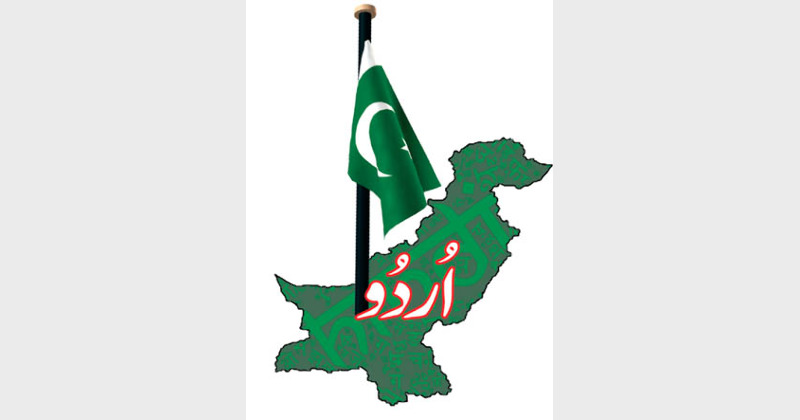
Bigots in Pakistan started calling Hindi as the language of the enemy. Therefore, it had no future there. It had to die. Moreover, if you scan through the language policy of Pakistan, you would know that it is so flawed. While the Pakistan was created for Muslims in 1947, it was split in 1971 mainly due to their extremely flawed language policy. Can you believe that the seed of split of Pakistan was sown by none other than Mohammad Ali Jinnah himself? It was Jinnah who declared on March 21, 1948 in Dacca, “Urdu, and only Urdu” embodied the spirit of Muslim nation and would remain as the state language. This was unacceptable to people of East Pakistan (now Bangladesh). And after Jinnah’s announcement, unending protests against imposition of Urdu became part of East Pakistan life. Dhaka university campus was the bastion of pro-Bangla protestors. Like any other day, they were making protests, though peaceful on February 21, 1952. And then suddenly, Pakistani police started firing on those young guys, killing dozens of students. That was the day when East Pakistan decided to snap ties with rest of the Pakistan. In the backdrop of these facts, it was not possible for Hindi to survive there.
Revival of Hindi
While Pakistani leadership did everything to bury Hindi in Pakistan, it is coming back there slowly but surely. Thanks to Bollywood, satellite TV channels and interaction among Indians and Pakistanis in foreign soil, especially in Gulf region, an average Pakistani is freely using several Hindi words. The words like ‘Vivaad’, ‘Atoot’, ‘Charcha’, ‘Patni’, ‘Ashirvaad’, ‘Shanti’, ‘Vishwas’ are spoken by the Pakistanis. Returning to the partition of India, Urdu was seen as the language of Muslims while Hindi became the language of the Hindu community. The issue of language became highly politicised with it becoming a religious issue as well with slogans such as ‘Ik Allah, Ik Quran, Ik Nasl, Ik Zubaan…’ But associating oneself with Urdu to be known as Muslims was a kind of false pride. That is also one of the issues on the basis of which later East Pakistan separated from West Pakistan to become Bangladesh. Then the Urdu-speaking West Pakistan looked at Bangla as a regional language just as it sees other regional languages such as Sindhi, Balochi, Punjabi, Pashto, Hindko, etc.
Interestingly enough, large number of Pakistanis who are keen to study Indian culture, are studying Hindi through internet. There is indeed a tremendous quench among them to learn it. Pakistan too has also realised that by burying Hindi in Pakistan, they have dug up their own grave. After all, you are a looser if you stop teaching and learning any language. Once Pakistani envoy in Delhi Abdul Basit told this writer that his country cannot ignore Hindi as it is the most widely spoken language of our immediate neighbour. So, it is like ‘better late than never’.
Hindus across Sindh region are also learning Hindi in a big way. Hindus have a sizeable number in Karachi, Hyderabad and other parts of Sindh. They are desperate to learn some of the notable Hindu religious books in Hindi. And as there is no facility of Hindi teaching there since ages, they have no option but to learn it from their fast dwindling elders. This
dwindling tribe had learnt Hindi during the pre-Partition days. Says Chander Kohli, a Sindh born Hindu NGO worker currently based in Dubai, “I learnt Hindi from my elders in Karachi. Now I teach Hindi to youngsters. While Sindhi is our
mother tongue, yet we learn it in order to study the religious scriptures of our religion.” All said and done, it is so sad that a language had to die as it was clubbed with one religion.
(The writer is a senior journalist and former Editor of Somaiya Publications, New Delhi)