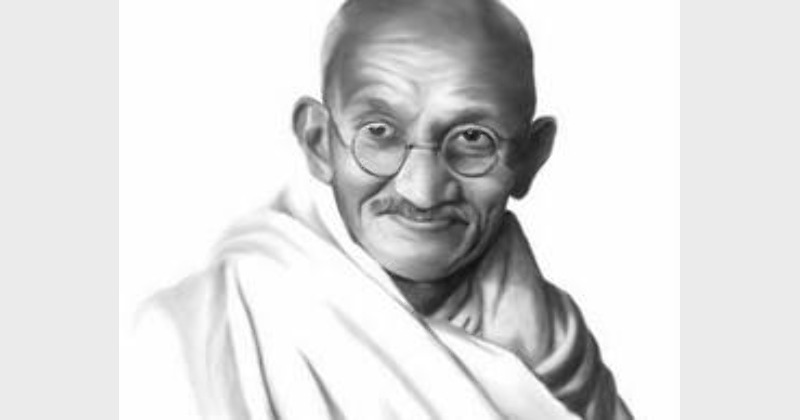
Sardar Patel and Jawaharlal Nehru: Two contrasting figures
June 5, 2026
  • Read Ecopy
  • Circulation
  • Advertise
  • Careers
  • About Us
  • Contact Us
Android AppiPhone AppArattai
Organiser
  • ‌
  • Bharat
    • Assam
    • Bihar
    • Chhattisgarh
    • Jharkhand
    • Maharashtra
    • View All States
  • World
    • Asia
    • Europe
    • North America
    • South America
    • Africa
    • Australia
  • Editorial
  • International
  • Opinion
  • RSS @ 100
  • More
    • Op Sindoor
    • Analysis
    • Sports
    • Defence
    • Politics
    • Business
    • Economy
    • Culture
    • Special Report
    • Sci & Tech
    • Entertainment
    • G20
    • Azadi Ka Amrit Mahotsav
    • Vocal4Local
    • Web Stories
    • Education
    • Employment
    • Books
    • Interviews
    • Travel
    • Law
    • Health
    • Obituary
  • Subscribe
    • Subscribe Print Edition
    • Subscribe Ecopy
    • Read Ecopy
  • ‌
  • Bharat
    • Assam
    • Bihar
    • Chhattisgarh
    • Jharkhand
    • Maharashtra
    • View All States
  • World
    • Asia
    • Europe
    • North America
    • South America
    • Africa
    • Australia
  • Editorial
  • International
  • Opinion
  • RSS @ 100
  • More
    • Op Sindoor
    • Analysis
    • Sports
    • Defence
    • Politics
    • Business
    • Economy
    • Culture
    • Special Report
    • Sci & Tech
    • Entertainment
    • G20
    • Azadi Ka Amrit Mahotsav
    • Vocal4Local
    • Web Stories
    • Education
    • Employment
    • Books
    • Interviews
    • Travel
    • Law
    • Health
    • Obituary
  • Subscribe
    • Subscribe Print Edition
    • Subscribe Ecopy
    • Read Ecopy
Organiser
  • Home
  • Bharat
  • World
  • Operation Sindoor
  • Editorial
  • Analysis
  • Opinion
  • Culture
  • Defence
  • International Edition
  • RSS @ 100
  • Magazine
  • Read Ecopy
Home General

Sardar Patel and Jawaharlal Nehru: Two contrasting figures

Archive ManagerArchive Manager
Dec 23, 2013, 12:00 am IST
in General
Follow on Google News
FacebookTwitterWhatsAppTelegramEmail


It
seems to me very unfair on the part of politicians and the media to take part in comparing Vallabhbhai  Patel, honoured as Sardar and Jawaharlal Nehru who became independent India’s first Prime Minister. Vallabhabhai Patel, hailing from a  farming family was deen-rooted in the Indian soil while Jawaharlal Nehru, an upper-class anglicised Kashmir Brahmin was from his very childhood raised to be British in cultural upbringing. The two differ as chalk and cheese, no matter who the chalk is and who the cheese.

From his very early days Nehru was taught at home by an English tutor, spent his teens and early manhood in Britain and, when Gandhi preferred to have him as the country’s first Prime Minister he explained his choice on the playful but sustainable theory that “Jawaharlal is the only Englishman in my camp”.

The Mahatma preferred Nehru as his successor, noting in passing, as his successor, Nehru would carry forward his vision for a prosperous India. it was the biggest mistake he made. For the Mahatma, the village was the centre of progress; for Nehru it was urban India and socialism as he saw it. Was he to be blamed? Nehru was the product of his father Motilal’s ambitions and if he turned out to be an Indian version of the British Labour Party leadership, why blame him? Nehru was insensitive to Hindu feelings, witness his pronounced antipathy towards the renovation of the famous Somnath Temple. He was even opposed to President Rajendra Prasad inaugurating the opening of the renovated temple while it was the Sardar who raised the necessary funds to get the work done.

Nehru and the Sardar differed strongly on many issues and if they worked together on many others it was because they shared one guru: the Mahatma. In December 1950 the Sardar introduced the Preventive Detention Bill in Parliament which Nehru strongly supported claiming that it was “fully democratic”.

Earlier, in 1937 Nehru was opposed to the Congress participating in the general elections based on the Government of India Act, 1935. In his book The Re-Discovery of India, Meghnad Desai quotes Nehru as saying that he was opposed to Congress “taking office under British Imperialism”. But the Sardar, the great party organiser was all in favour of it, on the recommendation of no less than the Mahatma. That subsequently it was Nehru who travelled throughout the length and breadth of the country to fight for his party is another matter.

As Desai has noted: “Patel had his legitimate claims; he accepted (Gandhi’s) decision but the tensions remained between the fiery Left-wing ideologue and the pragmatic Rightist Patel”. On the passing of the Quit India resolution in August 1942 the Sardar had blind faith in Gandhi who thought that the Japanese would not invade India and were only against the British. But Nehru thought otherwise. 

There were differences between Nehru and Sardar over the offer of the Cripps Mission. There were, of course, wide differences within the party leadership. Gandhi totally rejected the Cripps offer as a post-dated cheque on a crumbling bank, but it is claimed Nehru encouraged Cripps “to go ahead with the scheme even if there was a refusal by Congress”. In his book on Gandhi, the Dutch scholar Koenrad Elst says it was Gandhi who frequently sidelined the Sardar in favour of Nehru. It must have pained the Sardar no end. At one point in time he even wished to resign from his role as Home Minister and Deputy Prime Minister and it was only after Gandhi was assassinated that the Sardar swore to stand by Nehru till the end. It was first Gandhi and his determination not to break up the party that led Sardar to yield to Nehru. Gandhi’s death merely strengthened Sardar’s determination to stand by the appointed leader. That speaks of his greatness. On the tortuous subject of dealing with princes – especially the Nizam – there are reports of dissidence between the two leaders. Nehru was not kindly disposed towards VP Menon because he was too close to the Sardar.

In his book India’s Parliamentary Democracy on Trial, Madhav Godbole says how upset Nehru was when Menon published two books on the unification of India which Sardar had suggested Menon should. As Nehru saw it, the publication of the books in their present form was likely to embarrass government greatly and might even create fresh problems and difficulties.

The Congress was Gandhi’s creation but it was the Sardar who held it together administratively speaking. But then if here was no Gandhi there would have been no Sardar and probably there would have been no Nehru as well.

Would Sardar have quit the party had Gandhi been alive? No one can tell and it is an irrelevant issue now. Let me end by saying that in reunifying India Sardar stood head and shoulders over Nehru and deserves all the praise we can lavish on him. Were Sardar the Prime Minister, today there would have been a different India. But why speculate over past history? Let the statue of the great Sardar arise, a long-differed honour is due to him as the second Ashoka of India’s history. Sardar Vallabhbhai Patel zindabad.


ShareTweetSendShareSend
✮ Subscribe Organiser YouTube Channel. ✮
✮ Join Organiser's WhatsApp channel for Nationalist views beyond the news. ✮
Previous News

Shifting sands of the American policy towards Islamic countries

Next News

Big fight in Bihar, who to be Congress poster boy against Modi dislikes

Related News

Uttar Pradesh leads in Bharat's green transformation

World Environment Day 2026: On his birthday, Yogi Adityanath’s green vision powers Uttar Pradesh’s transformation

As Khalistani networks seek new platforms beyond the West, Azerbaijan has emerged as a key venue for conferences, campaigns and narratives aligned with the Pakistan-Turkey axis against India.

Khalistan’s New Grazing Ground: Azerbaijan emerges as new hub for Turkey-Pakistan backed anti-India networks

Kochi IPL Mystery: Why Did Sunanda Pushkar Surrender Stake Amid Benami Claims Tied to Shashi Tharoor, Sonia Gandhi?

Kochi IPL Mystery: Why Did Sunanda Pushkar Surrender Stake Amid Benami Claims Tied to Shashi Tharoor, Sonia Gandhi?

BAPS Hindu Mandir Abu Dhabi wins “Tolerance Award 2026” for promoting peace, universal harmony and mutual respect

Former CPM leader PP Divya - Late Naveen Babu, ADM. (Left to Right)

Kannur ADM Naveen Babu’s death case: Keralam Cabinet approves CBI enquiry

(Left) Ramalinga Reddy (Right) KH Muniyappa

Karnataka: Ramalinga Reddy resigns, Muniyappa voices displeasure; Congress rebellion grows over portfolio allocation

Load More

Latest News

Uttar Pradesh leads in Bharat's green transformation

World Environment Day 2026: On his birthday, Yogi Adityanath’s green vision powers Uttar Pradesh’s transformation

As Khalistani networks seek new platforms beyond the West, Azerbaijan has emerged as a key venue for conferences, campaigns and narratives aligned with the Pakistan-Turkey axis against India.

Khalistan’s New Grazing Ground: Azerbaijan emerges as new hub for Turkey-Pakistan backed anti-India networks

Kochi IPL Mystery: Why Did Sunanda Pushkar Surrender Stake Amid Benami Claims Tied to Shashi Tharoor, Sonia Gandhi?

Kochi IPL Mystery: Why Did Sunanda Pushkar Surrender Stake Amid Benami Claims Tied to Shashi Tharoor, Sonia Gandhi?

BAPS Hindu Mandir Abu Dhabi wins “Tolerance Award 2026” for promoting peace, universal harmony and mutual respect

Former CPM leader PP Divya - Late Naveen Babu, ADM. (Left to Right)

Kannur ADM Naveen Babu’s death case: Keralam Cabinet approves CBI enquiry

(Left) Ramalinga Reddy (Right) KH Muniyappa

Karnataka: Ramalinga Reddy resigns, Muniyappa voices displeasure; Congress rebellion grows over portfolio allocation

MP Child Rights Commission uncovers massive record discrepancies at illegal residential Madrasa

MP Child Rights Commission uncovers massive discrepancies at Mandsaur Madrasa, questions fate of missing girls

Barkatullah University to be renamed as Vagdevi Bhojpal University

MP: Barkatullah University to be renamed as Vagdevi Bhojpal University; Varsity’s executive council approves proposal

How the Gulf Crisis Is Rewriting the Global Energy Order and Why India Holds the Next Ace

How the Gulf Crisis Is Rewriting the Global Energy Order and Why India Holds the Next Ace

Senior Advocate Prashant Bhushan

Delhi Anti-Hindu Riots: Prashant Bhushan’s ‘Cover Blown’? Held meetings, conspired with anti-nationals Umar, Sharjeel

Load More
  • Privacy
  • Terms
  • Cookie Policy
  • Refund and Cancellation
  • Delivery and Shipping

© Bharat Prakashan (Delhi) Limited.
Tech-enabled by Ananthapuri Technologies

  • Home
  • Search Organiser
  • Bharat
    • Assam
    • Bihar
    • Chhattisgarh
    • Jharkhand
    • Maharashtra
    • View All States
  • World
    • Asia
    • Africa
    • North America
    • South America
    • Europe
    • Australia
  • Editorial
  • Operation Sindoor
  • Opinion
  • Analysis
  • Defence
  • Culture
  • Sports
  • Business
  • RSS @ 100
  • Entertainment
  • More ..
    • Sci & Tech
    • Vocal4Local
    • Special Report
    • Education
    • Employment
    • Books
    • Interviews
    • Travel
    • Health
    • Politics
    • Law
    • Economy
    • Obituary
  • Subscribe Magazine
  • Read Ecopy
  • Advertise
  • Circulation
  • Careers
  • About Us
  • Contact Us
  • Policies & Terms
    • Privacy Policy
    • Cookie Policy
    • Refund and Cancellation
    • Terms of Use

© Bharat Prakashan (Delhi) Limited.
Tech-enabled by Ananthapuri Technologies