Let Pakistan learn to co-exist for its own sake
August 31, 2026
  • Read Ecopy
  • Circulation
  • Advertise
  • Careers
  • About Us
  • Contact Us
Android AppiPhone AppArattai
Organiser
  • ‌
  • Bharat
    • Assam
    • Bihar
    • Chhattisgarh
    • Jharkhand
    • Maharashtra
    • View All States
  • World
    • Asia
    • Europe
    • North America
    • South America
    • Africa
    • Australia
  • Editorial
  • International
  • Opinion
  • RSS @ 100
  • More
    • Op Sindoor
    • Analysis
    • Sports
    • Defence
    • Politics
    • Business
    • Economy
    • Culture
    • Special Report
    • Sci & Tech
    • Entertainment
    • G20
    • Azadi Ka Amrit Mahotsav
    • Vocal4Local
    • Web Stories
    • Education
    • Employment
    • Books
    • Interviews
    • Travel
    • Law
    • Health
    • Obituary
  • Subscribe
    • Subscribe Print Edition
    • Subscribe Ecopy
    • Read Ecopy
  • ‌
  • Bharat
    • Assam
    • Bihar
    • Chhattisgarh
    • Jharkhand
    • Maharashtra
    • View All States
  • World
    • Asia
    • Europe
    • North America
    • South America
    • Africa
    • Australia
  • Editorial
  • International
  • Opinion
  • RSS @ 100
  • More
    • Op Sindoor
    • Analysis
    • Sports
    • Defence
    • Politics
    • Business
    • Economy
    • Culture
    • Special Report
    • Sci & Tech
    • Entertainment
    • G20
    • Azadi Ka Amrit Mahotsav
    • Vocal4Local
    • Web Stories
    • Education
    • Employment
    • Books
    • Interviews
    • Travel
    • Law
    • Health
    • Obituary
  • Subscribe
    • Subscribe Print Edition
    • Subscribe Ecopy
    • Read Ecopy
Organiser
  • Home
  • Bharat
  • World
  • Operation Sindoor
  • Editorial
  • Analysis
  • Opinion
  • Culture
  • Defence
  • International Edition
  • RSS @ 100
  • Magazine
  • Read Ecopy
Home General

Let Pakistan learn to co-exist for its own sake

Archive ManagerArchive Manager
Oct 6, 2012, 12:00 am IST
inGeneral
Follow on Google News
Facebook
Twitter
WhatsAppTelegramEmail

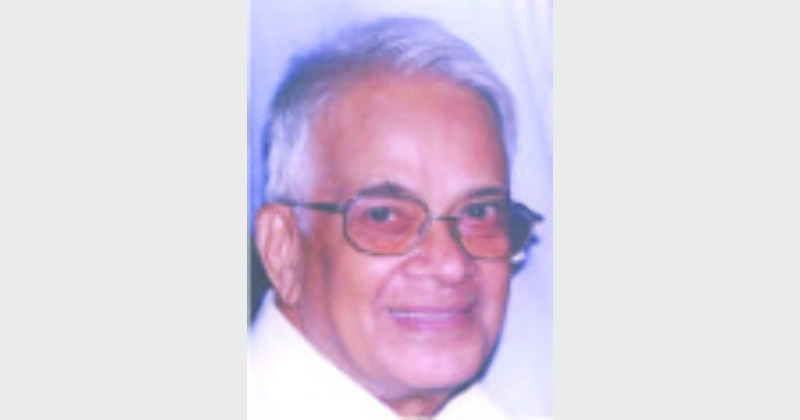
MV Kamath

During External Affairs Minister SM Krishna’s three-day visit to Pakistan in early September, his counterpart Hina Rabbani Khar is reported to have said that “we are willing to forge ahead without being held hostage to the past” and that Pakistan should look to the future. If she has been correctly reported, no wiser words have been said by any Pakistani leader in recent times. Raja Pervez Ashraf, current Prime Minister has similarly been quoted as saying that Pakistan desires good relations with India and “as a responsible nation”, it will “continue to play its role as an enabler and facilitator of peace and stability in the region”. Who, however, speaks for Pakistan? Its Prime Minister? Its Foreign Minister? The Pakistan Army Chief, Gen. Ashfaq Parvez Kayani? The Inter Services Intelligence (ISI)?
Earlier in May, then Prime Minister Syed Yusuf Raza Gilani was quoted as saying that “we want to start a new era of economic collaboration with India as well as enhanced people-to-people contacts, so that we leave behind a legacy of peace and prosperity for out future generations”. Put this in the context of US Secretary of State Hillary Clinton’s observation made in mid-June that Pakistan is “losing its sovereignty” and “large areas of it are ungoverned”. It is also common knowledge that Pakistan’s economy is on the down slide with little hope of improvement in the immediate future. In another decade, India, with an annual growth rate of 7.5 per cent is expected to have an economy worth 8.5 trillion dollars while Pakistan would be trailing way, way behind, trying desperately to get out of the economic quagmire it is now in. Pakistan needs India as never before. In private conversations Pakistani leaders are admitting that the militancy that the ISI unleashed against India with the sole purpose of destroying it with a thousand cuts has hurt Pakistan more than it has hurt its neighbour with more than 30,000 Pakistani killed in the last decade.
The word now seems to have gone that the only way Pakistan can survive is by making peace with India. as the columnist Seema Mustaga put it: “The signal seems to have gone down the line with former ISI officials, diplomats, retired Army Generals and others, all openly advocating peace and dialogue with no ‘ifs’ and ‘buts’ being attached this time around.” The fulcrum of Pakistan’s new policy it now appears is “Peace with India”. Mustafa concedes that no one can say how long this will last “but it does seem to be the new flavour, with the politicians giving it a huge boost”. It is difficult to believe that there is a perceptible and possibly genuine change of heart in Pakistani Army circles but at the same time these circles seem to have belatedly realised that their vicious anti-Indian efforts have only brought their country close to bankruptcy. This, more than anything else, seems to have been responsible for the changed Army mind-set. There are limits even to anti-India sentiments when it comes to one’s own survival. At the same time the Pakistani Armed forces must be only too well aware that not only are the Pashtuns fighting for freedom but Baluchistan is over half-way towards gaining independence. A fast disintegrating Pakistan can ill afford also to lose the goodwill of India. This gives India, to say the least, the upper hand in negotiations. This must be exercised with a great deal of finesse.
One, it must make it clear to Islamabad that the Kashmir issue is not negotiable and the sooner it is realised the better for improved Indo-Pak relations. Two, it must be made plain that for Indo-Pak trade to improve, India must be granted transit rights to Central Asia as well, that Pakistan has long denied India. Three, Pakistan must permit implementation of the Turkmenistan-Afghanistan-Pakistan-India (TAPI) Gas Pipeline Project that can give India access to Central Asian energy supplies. Four, the Pakistan Army must be told to control jihadi elements like the Lashkar-e-Toiba that targets India all the time as also other State-sponsored terrorist groups like Hafis Saed’s Jamaat-ud-Dawa. Five, the ISI must be warned to stop aid to the Indian Mujahideen (IM) and just as importantly to reveal the names and identities of their leaders. Six, Pakistan must accept that India has no ulterior motive in supporting Afghanistan’s infra-structure such as road-building and setting up educational institutions. Seven, Pakistan must ask China to quit the territory that it now accupies in Pakistan occupied Territory without further ado. China has no right to be there. Eight, an agreement must be arrived at on the Siachin and Sir Creek disputes, which should not be difficult, considering that both countries had almost reached an agreement on them in 1992. Acutally, the two sides were once again said to have neared agreement to demilitarise the zone in 2005, but circumstances had come in the way of a settlement. Nine, Islamabad must faithfully accord India the Most Favoured Nation (MFN) status which it had once agreed to give but for long has held back.
Following the Krishna-Khar talks, areas of cooperation in the fields of education, agriculture, environment, health, and Information Technology have been identified but cooperation in these and other allied fields must now be pursued with zest, particularly in the matter of trade and commerce so that, as agreed, by 2015 the target of 10 billion dollar mutual trade can be achieved. Understandably, there are sceptics who feel that all this is asking for the impossible.
But what are the options now open to Pakistan to survive? Pakistan has now apparently reached a stage of unrest with its Army itself being penetrated by jihadis as has been clearly noticed in recent times. If one is to believe an American author, David F Sanger, whose book Confront And Conceal: Obama’s Secret Wars reveals that US President Barack Obama fears Pakistan is due to disintegrate, then Pakistan has only one friend it can depend upon: India. That truth is possibly slowly dawning in Pakistani power circles. India has now two options: Let Pakistan disintegrate for one. The other is to go to its rescue. But then can India ever expect Pakistan to be a grateful nation? This is a matter for the people of India as a whole to decide. The time has come.

Share
Tweet
SendShareSend
✮ Subscribe Organiser YouTube Channel. ✮
✮ Join Organiser's WhatsApp channel for Nationalist views beyond the news. ✮
Previous News

Corporate convenience obsessed Manmohan Singh discredits liberalization

Next News

Singh has no conviction. Has always done what he has been asked to do

Related News

Students at the Gautam Buddha University, Greater Noida

Mann Ki Baat: PM Modi praises GBU’s mission ShakthiSAT, says dreams of daughters are now taking flight to space

Dutch TikTokker Angelo Bryson, known as Superhuman Unchained, at a pro-Palestine protest.

Dutch TikTokker recently converted to Islam livestreams stabbing three in Amsterdam; Watch video

From Kanchipuram to Kalamkari, India’s traditional textiles reflect its rich regional cultures and centuries-old craftsmanship

From Kanchipuram to Kalamkari: Exploring India’s rich traditional textiles and regional clothing heritage

Punjabi Influencer Abducted, Burnt Alive Near Morinda

Punjab Law and order crisis: Influencer Manjeet Kaur abducted, burnt alive after attack near Morinda

‘Dimagi Naxals’ romanticising Mao, Stalin and Pol Pot

The Swadeshi movement turned Indian enterprise into a powerful force for economic self-reliance, national pride and the struggle for Swaraj

Building Economic Swaraj: How Indian enterprises fought foreign rule and reclaimed national pride

Load More

Latest News

Students at the Gautam Buddha University, Greater Noida

Mann Ki Baat: PM Modi praises GBU’s mission ShakthiSAT, says dreams of daughters are now taking flight to space

Dutch TikTokker Angelo Bryson, known as Superhuman Unchained, at a pro-Palestine protest.

Dutch TikTokker recently converted to Islam livestreams stabbing three in Amsterdam; Watch video

From Kanchipuram to Kalamkari, India’s traditional textiles reflect its rich regional cultures and centuries-old craftsmanship

From Kanchipuram to Kalamkari: Exploring India’s rich traditional textiles and regional clothing heritage

Punjabi Influencer Abducted, Burnt Alive Near Morinda

Punjab Law and order crisis: Influencer Manjeet Kaur abducted, burnt alive after attack near Morinda

‘Dimagi Naxals’ romanticising Mao, Stalin and Pol Pot

The Swadeshi movement turned Indian enterprise into a powerful force for economic self-reliance, national pride and the struggle for Swaraj

Building Economic Swaraj: How Indian enterprises fought foreign rule and reclaimed national pride

Prime Minsiter Narendra Modi and Uzbekistan President Shavkat Mirziyoyev

India-Uzbekistan Herald New Chapter: Uranium deal, 30-day visa-free entry to Indians & $5bn trade propel bilateral ties

The new FCRA rules seek to curb unchecked foreign funding, strengthen financial accountability, and protect Bharat’s national security

Stopping Unchecked Foreign Money: How new FCRA rules protect Bharat’s security and financial sovereignty

Keralam CM VD Satheeshan, DCC member Chembil Anil (Left to Right)

Keralam Congress infighting surfaces in CM VD Satheeshan’s vehicle blockade; DCC member Chembil Anil arrested, remanded

Indian Logistics Data Bank tracks ten crore containers, transforming freight visibility and strengthening the nation’s logistics network

From Lothal Dockyard to Ten Crore Containers: India’s Logistics Data Bank transforms EXIM freight tracking

Load More
  • Privacy
  • Terms
  • Cookie Policy
  • Refund and Cancellation
  • Delivery and Shipping

© Bharat Prakashan (Delhi) Limited.
Tech-enabled by Ananthapuri Technologies

  • Home
  • Search Organiser
  • Bharat
    • Assam
    • Bihar
    • Chhattisgarh
    • Jharkhand
    • Maharashtra
    • View All States
  • World
    • Asia
    • Africa
    • North America
    • South America
    • Europe
    • Australia
  • Editorial
  • Operation Sindoor
  • Opinion
  • Analysis
  • Defence
  • Culture
  • Sports
  • Business
  • RSS @ 100
  • Entertainment
  • More ..
    • Sci & Tech
    • Vocal4Local
    • Special Report
    • Education
    • Employment
    • Books
    • Interviews
    • Travel
    • Health
    • Politics
    • Law
    • Economy
    • Obituary
  • Subscribe Magazine
  • Read Ecopy
  • Advertise
  • Circulation
  • Careers
  • About Us
  • Contact Us
  • Policies & Terms
    • Privacy Policy
    • Cookie Policy
    • Refund and Cancellation
    • Terms of Use

© Bharat Prakashan (Delhi) Limited.
Tech-enabled by Ananthapuri Technologies