
In this exclusive conversation for our readers, a scholar of Indian cultural traditions speaks at length on the deeper meaning of Onam, the distortions that have grown around the Mahabali-Vamana narrative, and why the festival remains the living essence of Arsha Sanatana Dharma.
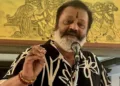
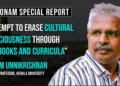
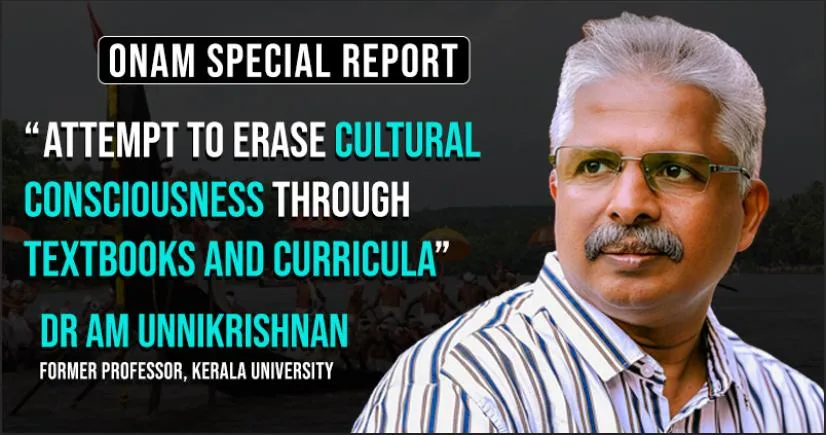
“Vamana does not conquer Mahabali; he releases him — relieving a great soul of a temporary cosmic charge and elevating him to a higher state, at Mahabali’s own willing surrender. The festival actually celebrates a ruler’s humility towards the divine and stands as a tribute to the remarkable golden age of peace, equality, and shared prosperity which Mahabali’s rule and his ongoing presence in memory embody.” said Dr A M Unnikrishnan, former Senior Professor at the University of Keralam.
He also questioned attempts to present Onam as a purely secular festival, arguing that its universal character should not be confused with the absence of a religious and philosophical foundation.
Q: Onam is celebrated by people across communities. Does its universal appeal make it a secular festival?
The perspective regarding all rites and rituals connected to our culture is all-embracing. The fundamental concept itself is universal. Everyone is welcome to practise and observe them.
However, the fact that these traditions are open to everyone does not mean that they are without a religious or philosophical foundation. Their practice and observance have historically been linked to worship, faith in God and traditional foundational concepts. Onam, therefore, should be understood as a celebration that originated from Vedic and Sanatana Dharma traditions. Its connection with the Dashavatara, particularly Vamana Murthy, is an important part of that tradition.
Q: The Mahabali story is often presented as one in which Vamana defeated and banished Mahabali. How do you view this interpretation?
he narrative that Mahabali was simply defeated, trodden down and banished by Vamana is the version that is repeatedly presented today. But there are clear reasons to question this interpretation.
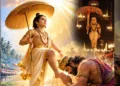
Vamana did not come to conquer Mahabali or commit an act of imperialistic subjugation. In fulfilling a particular divine purpose, Vamana relieved Mahabali of a responsibility and elevated him to another plane. The essence of the story is therefore not conquest. It is about duty, surrender, humility and spiritual elevation. There is no Aryan-Dravidian conflict embedded in this traditional understanding, nor is there an act of imperialistic domination.
Q: Then where did the Aryan Vamana versus Dravidian Mahabali interpretation come from?
There are clear vested interests behind introducing such distortions into the narrative. A framework of “Dravidian Mahabali versus Aryan Vamana” was introduced later and superimposed on the traditional story. We should look at the story beyond modern political interpretations. Its message is universal. It is about the human ego, surrender and spiritual elevation.
Regional variations in telling are possible. We see this even with the Ramayana. There are numerous versions across different regions and traditions, but the core philosophy remains unchanged. The same applies here.
Q: Is there historical evidence to show that Onam is an ancient tradition?
Yes. Sangam literature contains references to Onam dating back more than 2,000 years. Works such as Maduraikkanci provide evidence of the festival’s antiquity. The geographical region referred to as Thamizhakam was much larger than present-day Keralam. When the poet speaks of the region stretching from Kanyakumari to Gokarna, we are looking at a much broader cultural geography.
This beautiful celebration associated with equality was observed with grandeur across that region.
Q: What, according to you, is the deeper philosophical message of Onam?
What reaches us through the commemoration of Onam is an ideal administrative system and the memory of a ruler under whom people enjoyed peace, harmony, equality, freedom and prosperity.
That idea of equality and the absence of fundamental divisions is deeply rooted in Indian philosophy and Sanatana Dharma. The philosophical tradition of India emphasises that there is no fundamental distinction and that everything has significance. Advaita, which is at the heart of Sanatana Dharma, represents this non-dual understanding.
Q: Why do you oppose attempts to present Onam as a purely secular festival?
The universal acceptance of Onam is welcome. But the traditions associated with the festival do not need to be stripped of their religious and philosophical foundations in the name of secularism. The attempt to make Onam purely secular is being driven by partisan political forces that seek to divide people into factions and then position themselves as the sole protectors of their rights and interests.
There are also vested interests among those who are reluctant to accept the universal philosophy of Sanatana Dharma.
Q: When did this attempt to secularise Onam begin?
If we look at the broader political trends in the country, this became more visible after the rise of electoral politics, vote-bank politics and appeasement. Once political forces realised that religious, social and identity-based divisions could be used to mobilise votes and acquire political power, such interpretations gained ground. In Keralam, this process has been particularly visible over the past 25 years, although its groundwork may have been laid 10–15 years earlier.
Q: What role have school textbooks and curricula played in this?
This is not limited to Onam. There has been a systematic effort to twist, distort and, wherever possible, remove the foundational philosophies and lessons of Indian culture. In Keralam, this process has existed for a long time, beginning with the preparation of textbooks. A planned effort to detach people from their foundational cultural consciousness is being carried out through textbooks, curricula and syllabi.
Q: Why would such an effort be difficult for ordinary people to identify?
Because it is often presented positively. When the government celebrates Onam on a grand scale, people naturally assume that the cultural tradition is being promoted. They do not immediately question whether the philosophical and religious foundations of the festival are also being preserved. The argument is that people who already possess a universal outlook are being made to feel that embracing their own civilisational tradition is somehow incompatible with secularism.
Q: How significant is political interest in this process?
Political interest is the primary factor. Along with politics, narrow religious views also add fuel to it. Different groups with their own interests can converge around such a political platform. The result is an organised effort to promote divisive interpretations.
Q: Do you see any change in Keralam today?
Based on the feedback I receive from literary circles and intellectually independent young people, a new awareness is emerging. It is not simply conventional nationalism or religious identity. There is a growing interest in the spiritual essence of Bharat. Publishers have also observed greater interest among young people in Malayalam translations of ancient Tamil works and other traditional literature. Interestingly, this trend is particularly visible among young tech professionals.
Q: Why do you think young professionals are turning towards spirituality?
They may be realising that material pleasures and temporary worldly attractions cannot provide ultimate peace. After pursuing material prosperity, some are beginning to look towards the spiritual traditions of their ancestors and explore deeper questions about life and existence. That is how I see this new generation becoming interested in the spiritual path.
Q: So, in your view, what does it mean to reclaim Onam?
Reclaiming Onam does not mean preventing anyone from celebrating it. Its universal acceptance should always be welcomed. But reclaiming Onam means recognising its civilisational depth and understanding the philosophical tradition from which it emerged. It means looking beyond flowers, feasts and modern political interpretations and recognising the deeper message of dharma, equality, surrender and spiritual elevation embedded in the traditional understanding of the festival.