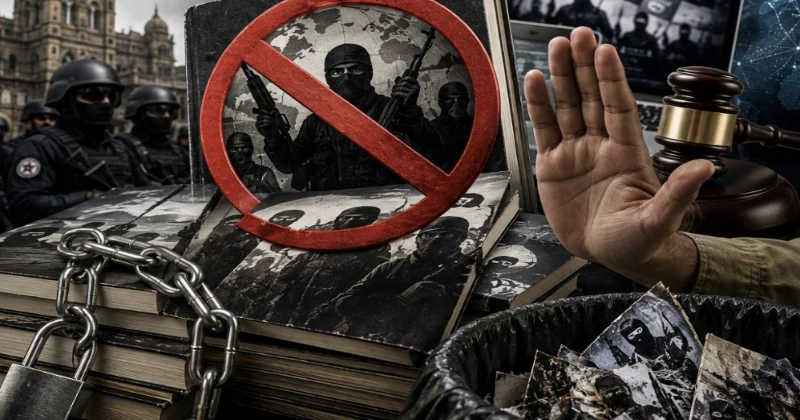
Mumbai: The Maharashtra government has ordered the forfeiture of 114 publications and documents linked to proscribed terrorist organisations including ISIS, ISKP, AQIS, and the Hizbul Mujahideen’s Pir Panjal Regiment in a major crackdown on extremist propaganda and radicalisation.
The sweeping action, notified by the Maharashtra Home Department through a gazette on August 6, targets both physical and digital copies of material that authorities say can facilitate the propagation of violent extremist ideology, radicalisation and terrorist recruitment.
The order directs authorities to seize and forfeit the identified magazines, books, documents and other material, while also covering their publication, printing, circulation, distribution, sale, exhibition, possession and storage.
The move follows intelligence inputs, cyber surveillance and investigations carried out by the Maharashtra Anti-Terrorism Squad (ATS) and other security agencies. According to the government, these investigations indicated that extremist literature and propaganda material connected with banned terrorist organisations continued to circulate despite existing restrictions.
The scale of the action is significant, with the government identifying 114 publications and documents allegedly associated with proscribed terrorist organisations. Among the material named in the notification are publications such as Voice of Khurasan Magazine, The Revolutionary Resurgence, Kashmir Kifah – Resilience & Courage, The Soul of Resistance and Nawai Gazwa-e-Hind.
According to the Maharashtra government, the material is not merely ideological or political literature but forms part of a wider ecosystem of extremist propaganda that can be used to glorify terrorism, spread radical narratives and influence vulnerable individuals.
Authorities have specifically cited concerns that such material can glorify violent extremism, encourage radicalisation, facilitate recruitment into terrorist organisations and encourage activities prejudicial to India’s sovereignty and integrity.
Significantly, the government’s action is not confined to printed books and magazines. The forfeiture order extends to digital copies and electronic circulation, reflecting the growing role of online platforms in the dissemination of extremist propaganda.
The order covers material that may be published, printed, circulated, distributed, sold, exhibited, possessed or stored. This potentially brings digital repositories and electronically circulated copies within the scope of the action.
The Maharashtra government has invoked Section 98(1) of the Bharatiya Nagarik Suraksha Sanhita (BNSS), 2023, for the forfeiture proceedings. The provision empowers the government to take action against publications considered prejudicial to public order, national security, or the sovereignty and integrity of India.
The latest notification comes against the backdrop of sustained efforts by Indian security agencies to disrupt extremist propaganda networks and prevent radicalisation before it develops into terrorist recruitment or violent activity.
According to sources cited in connection with the development, the Maharashtra ATS played a key role in identifying the material, with intelligence inputs and cyber surveillance contributing to the government’s assessment.
Security agencies have long maintained that terrorist organisations rely on propaganda as a critical component of their operational strategy. Extremist publications can serve multiple purposes: portraying terrorist organisations as legitimate movements, glorifying individuals involved in violence, disseminating ideological narratives, demonising opponents and attempting to persuade susceptible individuals to join or support militant organisations.
The Maharashtra government’s notification specifically points to the potential of such material to promote radicalisation and terrorist recruitment.
The concern is particularly acute in the digital environment, where extremist content can be repeatedly reproduced and circulated even after the original source has been removed. By targeting the material itself, the government is seeking to disrupt one of the mechanisms through which extremist organisations attempt to build ideological influence.
The list reportedly includes material associated with some of the world’s most prominent jihadist terrorist organisations. The Islamic State (ISIS/IS) and its regional affiliate, Islamic State Khorasan Province (ISKP), have repeatedly used propaganda to attract recruits and promote their violent ideology.
The notification also identifies material linked to the Al-Qaeda in the Indian Subcontinent (AQIS), the regional branch of the Al-Qaeda network. Publications associated with Hizbul Mujahideen’s Pir Panjal Regiment have also been included in the government’s list.
By bringing literature connected to multiple proscribed organisations under a single forfeiture order, Maharashtra has signalled that the crackdown is aimed at the broader extremist propaganda ecosystem rather than at one particular organisation.
The Maharashtra government’s action represents a significant escalation in the fight against extremist propaganda. The authorities have made clear that their concern extends beyond individuals directly involved in terrorist activity to the networks and materials that can allegedly support the radicalisation process.
The government’s stated objective is to prevent extremist ideology from gaining traction among vulnerable sections of society and to stop propaganda from becoming a gateway to recruitment, incitement and violence.
The order also highlights the increasing importance of cyber surveillance and intelligence-led investigations in identifying extremist material that may otherwise remain outside the reach of conventional policing.