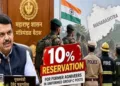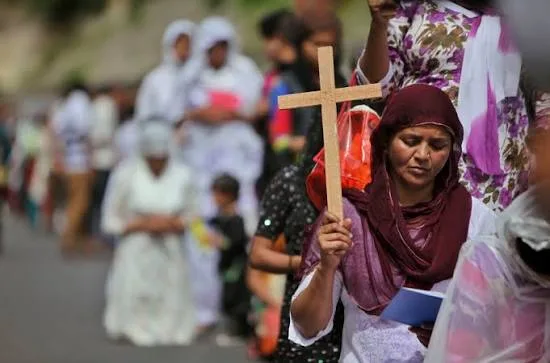
The Maharashtra government has constituted a 27-member committee to examine whether members of the Scheduled Tribe (ST) community who convert to another religion should continue to be eligible for reservation and other government welfare benefits, reopening a long-debated issue concerning tribal rights and religious conversion.
According to a Government Resolution (GR) issued by the Tribal Development Department on July 16, the committee will be chaired by Tribal Development Minister Ashok Uike. It has been tasked with studying the constitutional and legal provisions governing ST reservation after religious conversion, reviewing policies followed by the Centre and other states, and recommending an appropriate policy framework for Maharashtra.
The government has not specified a deadline for the committee to submit its report.
What the panel will examine
The committee will assess whether existing constitutional provisions permit continuation of reservation and welfare benefits for ST individuals after they convert to another religion. It will also examine legal precedents, welfare policies and recommendations that could guide the state government’s future decision-making.
Unlike Scheduled Castes (SCs), whose reservation is linked to religion under the Constitution (Scheduled Castes) Order, 1950, there is currently no such restriction for Scheduled Tribes. Under Article 342 of the Constitution, a person’s ST status is not determined by the religion they profess.
Demand for delisting converted STs
The issue has gained prominence in recent years following demands by organisations affiliated with the the tribals.
In May this year, the Janjatiya Suraksha Manch (JSM), backed by the RSS-affiliated Vanvasi Kalyan Ashram, submitted memoranda to President Droupadi Murmu and Prime Minister Narendra Modi seeking the “delisting” of Scheduled Tribe members who convert to another religion.
The organisation argued that individuals who abandon traditional tribal faith, customs and cultural practices after religious conversion should no longer be entitled to reservation benefits meant for Scheduled Tribes. It also sought amendments or clarifications to the Constitution (Scheduled Tribes) Order, 1950, along with stronger anti-conversion laws.
The demand received further attention after tribal gathering in New Delhi, attended by Union Home Minister Amit Shah, also called for excluding ST members who convert to Christianity or Islam from reservation benefits.
Background of the Issue
The formation of the committee follows an assurance given by the Maharashtra government during the 2025 Monsoon Session of the Assembly after BJP legislators raised concerns over alleged religious conversions among tribal communities in Nandurbar district and questioned whether converted ST members should continue receiving reservation benefits.
Earlier, in 2023, the Mahayuti government had constituted a three-member committee to investigate allegations that ST students who had converted to other religions were availing reservation benefits while seeking admission to Industrial Training Institutes (ITIs).
An interim report submitted in March 2024 identified 257 students admitted under the ST quota who had declared religions other than Hinduism. Although the government announced scrutiny of these admissions, no further action was taken following objections raised by tribal organisations and legal experts.
Significance for Maharashtra
Scheduled Tribes constitute 9.35 per cent of Maharashtra’s population. According to the 2011 Census, the state’s ST population increased from 85.77 lakh in 2001 to over 1.05 crore in 2011.
The Census recorded that 97.2 per cent of the ST population identified as Hindus, while around 1.13 lakh Muslims, over 20,000 Christians, nearly 21,000 Buddhists, and smaller numbers of Sikhs and Jains were also listed under the ST category.
Between 2001 and 2011, the Muslim ST population grew by 49.1 per cent, the Buddhist ST population by 114.8 per cent, and the Jain ST population nearly sixfold, while the Christian ST population declined by 34.8 per cent, according to Census data.
Committee Composition
Apart from Ashok Uike, the panel includes Minister of State for Tribal Development Indranil Naik, Food and Drug Administration Minister Narhari Zirwal, MLAs representing Scheduled Tribe constituencies, and the Commissioner of the Tribal Research and Training Institute (TRTI), Pune, who will serve as the member secretary.
The committee’s recommendations are expected to shape Maharashtra’s policy on reservation and welfare benefits for Scheduled Tribe members after religious conversion.