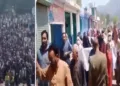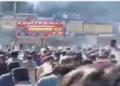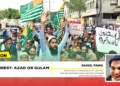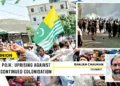

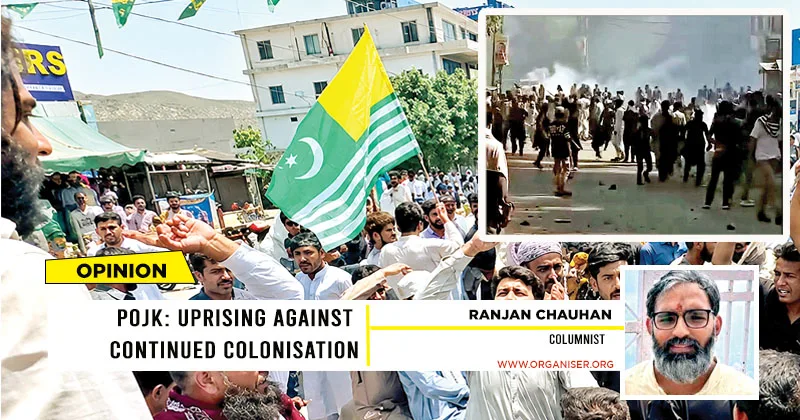
Between June 8 and 9, 2026, Rawalakot in the Poonch division of Pakistan Occupied Jammu Kashmir (PoJK) became the flashpoint of the territory’s gravest crisis in years. Protests led by the Jammu Kashmir Joint Awami Action Committee (JAAC), over electricity bills, subsidised wheat and a string of broken Government commitments, were met with a crackdown that JAAC and residents describe as a massacre of peaceful demonstrators. A communications blackout, enforced since June 5 by the occupied Government, has cut the region off from the outside world.
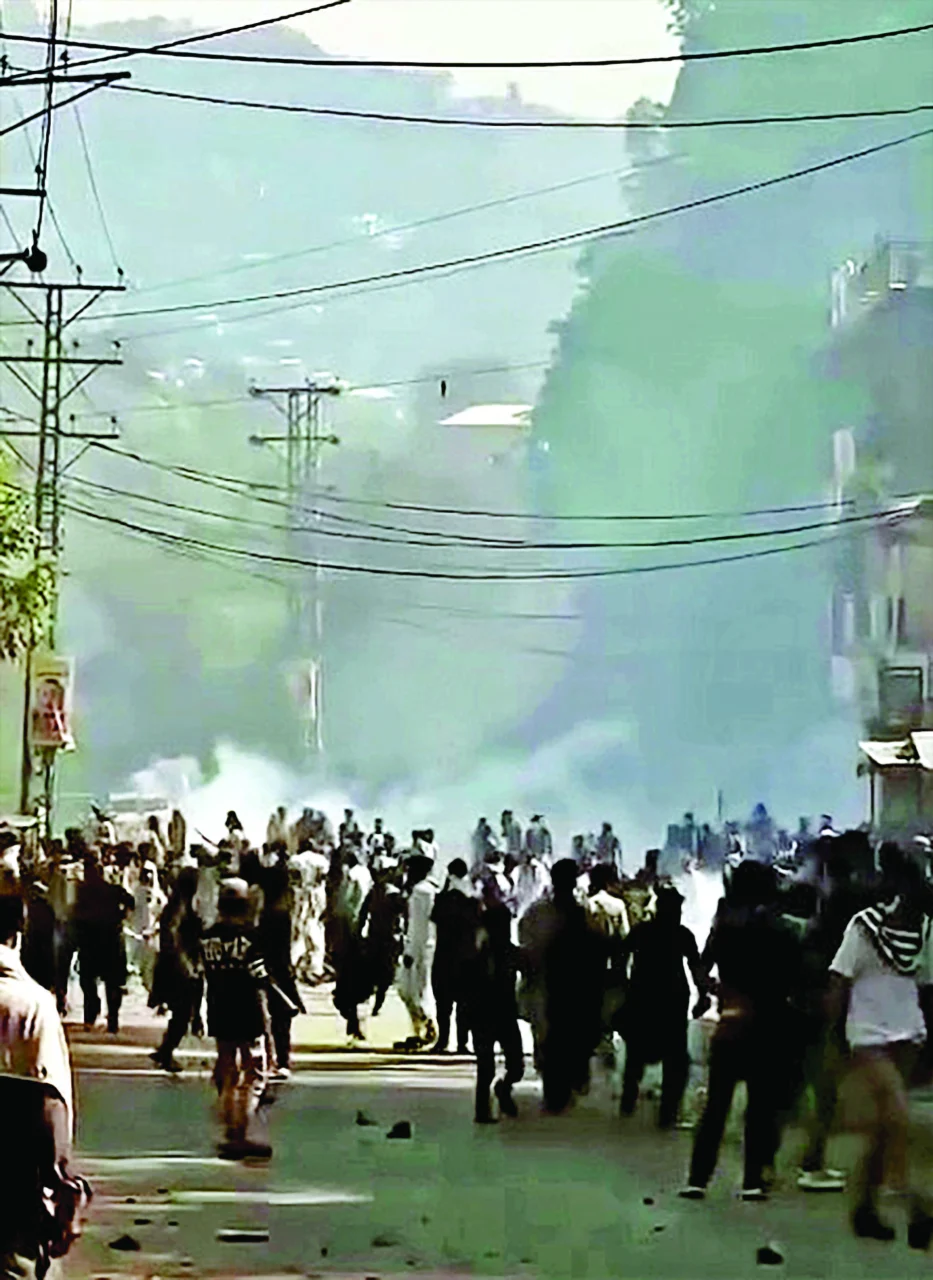
The immediate spark was the killing of JAAC activist Shahzeb Habib, shot near the Barmang Bridge around midnight as the territory braced for a shutdown call. His death and the Government’s decision, days earlier, to ban JAAC under anti-terror laws after months of negotiating with it, brought residents onto the streets of Rawalakot roughly 14,000 security personnel already requisitioned, the gatherings, including mourners at the Combined Military Hospital, were met with live fire.
Jammu and Kashmir
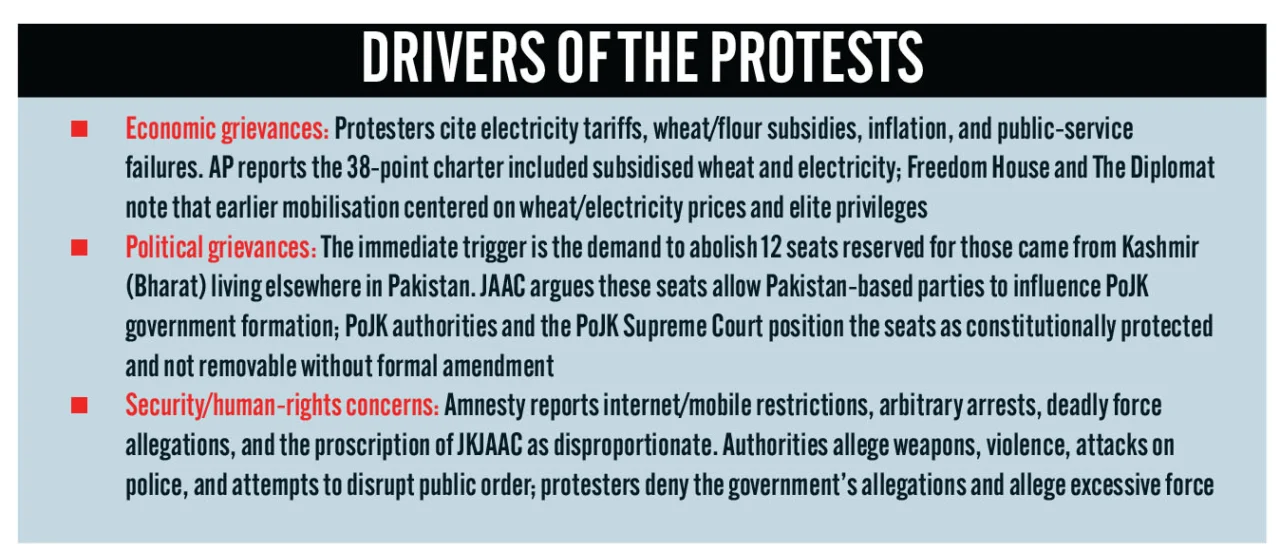
The JAAC demanded subsidised flour, electricity priced against local hydropower output, and an end to elite privileges. After the government broke a signed 38-point agreement, the coalition reignited mass protests across the region. A central demand is the complete abolition of the 12 legislative Assembly seats reserved for Jammu and Kashmir natives, which undermine genuine regional representation because local residents are barred from contesting them. They also do not want mainstream Pakistani political parties exploiting these refugee seats for electoral engineering.
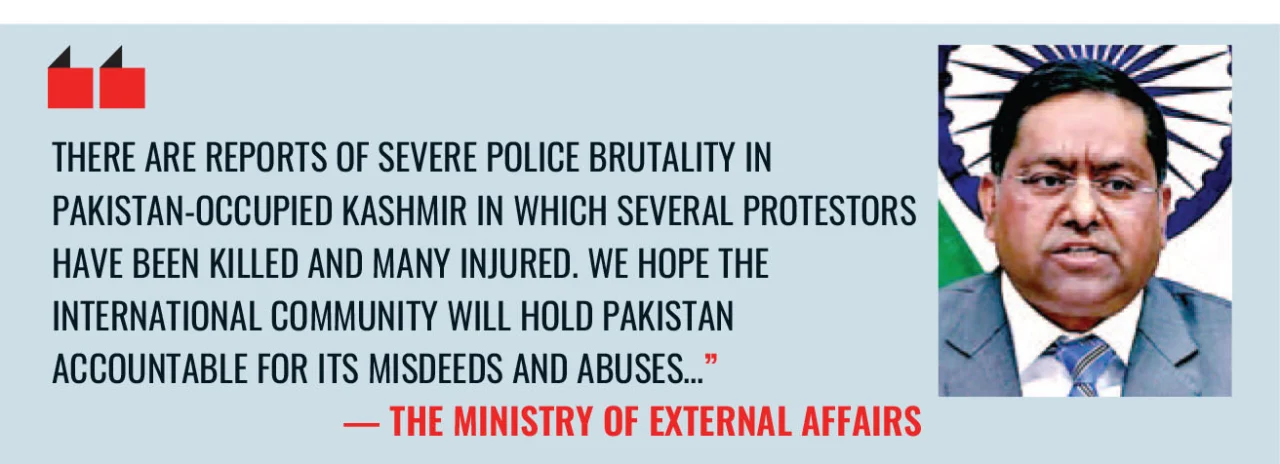
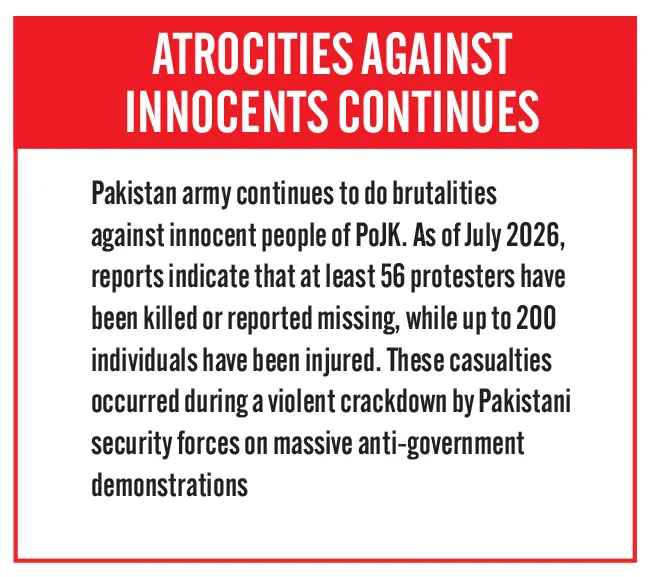
JAAC have confirmed that till now more than 300 civilians were killed and around 200 injured in the firing, along with obstructed funerals and denial of medical care. The blackout made independent verification of the casualty record nearly impossible.
Historical Context
Under the Indian Independence Act, British India was partitioned into two dominions — India and Pakistan — on the basis of religion. The Princely States, under the Government of India Act 1935 (as amended in 1947), were given the option to accede to either India or Pakistan. On October 22, 1947, the Pakistan Army launched a planned military invasion of Jammu and Kashmir, a princely state. On October 26, 1947, Maharaja Hari Singh signed the Instrument of Accession to India, making Jammu and Kashmir an integral, legal part of the Dominion of India.
Azadi echoes across POJK: Timeline of the event
- May 2023–2024: JAAC evolved from local protests over wheat subsidies, electricity tariffs, elite privileges, and grievances over misgovernance into a region-wide mobilisation network involving traders, transporters, lawyers, students, and civic groups. Freedom House notes that 2024 protests saw tear gas, internet blackouts, arrests, and gunfire, followed by concessions on wheat/electricity prices and elite privileges
- Sep–Oct 2025: JAAC broadened its charter to 38/39 points, including legislative reform and abolition of refugee-reserved seats. Reuters reported deadly unrest, phone/internet shutdowns, and an October 4, 2025 agreement under which the government pledged development and electricity-system commitments
- May end–June 3, 2026: Talks failed over the 12 refugee seats. An all-parties conference in Muzaffarabad rejected extra-constitutional abolition of the seats; JAAC boycotted and reiterated its June 9 protest call
- June 5-7, 2026: PoJK authorities banned JAAC under the PoJK Anti-Terrorism Act, issued a travel advisory for June 5-20, deployed additional security, and sealed JAAC’s office. Radio Pakistan reported police recovered weapons during the office raid; JAAC rejected the ban as an attempt to silence a rights movement
- June 8-9, 2026: Rawalakot clashes produced the highest casualties. Reuters reported 11 killed and 70+ injured; Dawn confirmed seven civilians and four law-enforcement personnel killed; AP/AFP earlier reported seven killed. The 9 June strike shut businesses and transport across several areas, with Muzaffarabad heavily affected and Mirpur witnessing large mobilisation
- June 10-11, 2026: A Pakistan Army Mi-17 crashed near Muzaffarabad amidst heightened security deployments; Reuters and AP report the military attributed it to technical fault and did not link it to protests. Reuters later reported 22 personnel killed
- Early July 2026: Pakistani authorities launch a brutal crackdown, arresting JAAC leader Shaukat Nawaz Mir and over 600 civil rights activists
- July 5, 2026: Massive retaliatory demonstrations erupt across all 10 districts of PoJK. Protesters demand food, medicine, and the release of detained leaders. Some factions begin waving the Indian flag and appealing to Bharat for humanitarian help, calling for the Line of Control (LoC) to be opened
- July 7, 2026: The JAAC issues a 48-hour ultimatum to the government in Islamabad, threatening to launch a “grand and final” action on July 9 if conditions remain unmet
- July 9, 2026: The ultimatum expires, with protests stretching into their fourth week. The JAAC continues to rally the Kashmiri diaspora for indefinite sit-ins
Bharat approached the United Nations against Pakistan’s aggression on Indian territory. By then, the Pakistani army had already killed thousands of people. The United Nations called on Pakistan’s forces and nationals to vacate Jammu and Kashmir. Instead of withdrawing, Pakistan consolidated and expanded its illegal occupation and has defied these binding obligations for more than seven decades.
The Pakistan Army carried out the Mirpur Massacres killing around 20,000 civilians and roughly 5,000 women being abducted. The families settled there for generations were effectively eliminated. On the morning of October 22, 1947, forces organised by the Pakistan Army attacked Muzaffarabad. Civilians were gunned down in the streets before they could grasp what was happening. Women were abducted, never to return. The invaders set the city on fire. The same happened in Bhimber, Kotli, Poonch and Bagh.
The Uprising
The roots of the 1955 revolt reach back to 1950, when Islamabad dismissed the government of Sardar Muhammad Ibrahim Khan, the territory’s first President. Ibrahim returned to his strongholds of Rawalakot and Pallandri and declared a separate administration in defiance of the Muslim Conference’s Supreme Head, a post Pakistan had created to govern the region as a colony. His core support came from the Sudhan community. Poonch had two rival governments in effect from 1951 to 1956: Ibrahim’s, sustained by his military experience and popular backing, and the “Azad” administration run under Pakistan’s Ministry of Kashmir Affairs, which held the real power. Notably, ‘Azad Kashmir’ is the term used by Pakistan – never accepted by Bharat.
Pakistan distrusted Ibrahim, suspecting that he was against the Government of Pakistan. The Ministry’s manoeuvering went as far as impersonation: the National Conference leader Sheikh Abdullah recorded that Pakistan, doubting Ibrahim’s pliancy, paraded a Kashmiri-origin bureaucrat in his place. The figurehead presidency of “Azad” Kashmir, a post whose authority rested entirely with the Ministry of Kashmir Affairs, was held from 1952 to 1956 by Colonel Sardar Sher Ahmed Khan. He had served in Ibrahim’s Government, holding the defence, education and health portfolios, and was among the leading guerrilla commanders of the Azad Kashmir movement. He resigned when Ibrahim’s Government fell.
Clashes between the Sudhans and the Pakistani army stationed in Poonch steadily worsened, and by 1955, the so-called Azad Kashmir forces were powerless. The breaking point came in February 1955 with an assassination attempt on Sher Ahmed Khan. The revolt was declared, and Poonch remained in open conflict for the next year and a half, its people demanding that Pakistan honour the democratic promises it had made.
The Response Of Pakistan
Pakistan’s response was swift and overwhelming. The Punjab Constabulary, alongside the Army’s 12th Division, was deployed from Murree to crush the revolt. The brutal operation, remembered as the “PC Pak Search Sudhan Operation” was among the Pakistan Army’s second major operation against the native population of Poonch in PoJK.
The suppression was brutal. In its 2021 retrospective on the forgotten revolt, The Express Tribune records that many Sudhans were “killed on the spot,” with little or no trial, and that entire villages were burned as collective punishment for sheltering or sympathising with the rebels. No reliable death toll exists: the Pakistan Army controlled every record of the operation, and the dead were never independently counted, an early instance of the information control that, seven decades later, would reappear as the communications blackout over Rawalakot. The fighting ended in October 1956. Sardar Ibrahim and his men surrendered after a peace deal was brokered with the government of Pakistan, laying down their weapons under Mushtaq Ahmed Gurmani to demonstrate to the Ministry of Kashmir Affairs that the revolt had failed, the very ministry whose oppression they had risen against.
A leadership reshuffle followed. In May 1956, Sher Ahmed Khan was removed, and Mirwaiz Yousaf Shah was installed as President for a few months, until Sardar Abdul Qayyum took the office. Rather than extend democratic power to the people of Poonch, the Ministry of Kashmir Affairs used the revolt’s defeat to tighten its grip. It revised the “Rules of Business” so that no post in the Azad Kashmir Government could be paid above Rs 150, and the region could spend no more than one lakh rupees a year. Any figure enjoying the confidence of the Muslim Conference’s working committee could become president, but the final say rested with the Ministry, which also controlled the post of joint secretary to the chief advisor.
Draconian Security Laws
The deteriorating situation produced a battery of draconian security laws. The 1953 Public Safety Act empowered the security forces or the government to arrest without warrant anyone deemed to be acting against “public safety”, and to detain that person, with no right to be brought before a court, for up to six months at a time, by written order.
The detention was executive, not judicial: there was no charge, no trial, and no protection of rights, and the six-month term could be renewed indefinitely. The provision became a tool for targeting political dissidents. The Pallandhri Act, though named for a tehsil of Poonch, was enforced across all of PoJK. Its special tribunal could try anyone brought before it, and its judgements could be neither appealed nor revised. The accused could not put their case to a jury; the court could convict without the charges ever being read out, on the strength of witnesses alone; and the prosecution could introduce new witnesses in the middle of proceedings. These courts handed down convictions that terrorised the population. This chapter of Pakistan’s brutal atrocities has been deliberately erased from the historical memory.
The 1955 revolt established the governing template for every subsequent cycle of oppression in PoJK: Pakistan’s occupying authority removes a popular local figure, deploys its army to suppress the resulting protest, achieves a period of forced quiet, and the next cycle begins. The sequence has not changed.
Systematic Suppression
1967, Mirpur: The Mangla Dam, completed by Pakistan’s occupying authority on the Jhelum River in Mirpur District, forcibly displaced between 1,00,000 and 1,50,000 people from their ancestral homes. This was not development. It was the forced seizure of PoJK’s land and water resources by Pakistan’s occupying administration for the benefit of Pakistan’s national grid.
1974, Muzaffarabad: The PoJK Interim Constitution Act entrenched the loyalty oath documented above. Independence advocacy was made a constitutional offence.
2002, Muzaffarabad: On November 21, 2002, Saeed Asad, a Kashmiri nationalist author and government employee, was suspended from service for writing a book on the Mangla Dam that questioned Pakistan’s right to exploit water resources belonging to PoJK. His book was treated as sedition. The incident was documented by Human Rights Watch (HRW).
2003, Rawalakot: Reuters journalist Waheed Kiyani was arbitrarily arrested by Pakistan’s ISI on July 10, 2003 as he returned from covering a political meeting in Rawalakot. The arrest was documented by HRW based on interviews with event organisers.
On October 8, 2005, a 7.6-magnitude earthquake struck, killing an estimated 73,000 people across Pakistan and PoJK. The catastrophic death toll was a consequence of the structural underdevelopment that Pakistan’s extraction-without-investment model had imposed on PoJK for six decades. International relief agencies documented the absence of emergency infrastructure, inadequate construction standards, and the chronic underinvestment that is the direct result of Pakistan treating PoJK as a resource territory rather than a community to be governed.
May 14, 2013, Rawalpindi: Sardar Arif Shahid, 62, chairman of the All Parties National Alliance (APNA) and president of the Jammu Kashmir National Liberation Conference (JKNLC), was shot dead outside his home in Rawalpindi. No Pakistani media reported the killing. No leader in Pakistan issued a condemnation. Professor Pervez Hoodbhoy, writing in the Express Tribune on May 30, 2013, described Shahid’s murder as a targeted killing of a major Kashmiri nationalist leader in Pakistan. The case has never been investigated.
2011, location undisclosed: A doctor and human rights activist from PoJK was killed, allegedly by Pakistan’s ISI. The Hans India, citing documentation of the victimisation of social activists in PoJK published May 2021, records this case alongside others. The victim’s identity was withheld in published accounts at the time.
2020-21, Muzaffarabad: Afzal Sulehria, Kashmir National Party leader, was reported by The Hans India (May 2021) to have become an ISI target after writing to Pakistan’s army chief in December 2020. His letter demanded a halt to all under-construction hydropower projects in PoJK and the public disclosure of deals between the PoJK Government and Chinese construction companies. He had campaigned against the diversion of the Kishan Ganga and Jhelum rivers for Pakistan’s grid.
At the 58th Session of the UN Human Rights Council in March 2025, UKPNP leader Jamil Maqsood, citing Pakistan’s own Human Rights Commission reports, stated that over 450 young people from PoJK face blasphemy charges, with many sentenced to death or life imprisonment. At the 60th Session of the UNHRC in October 2025, Nasir Aziz Khan, spokesperson for the United Kashmir People’s National Party and an exiled activist from PoJK, cited 6,500 documented cases of enforced disappearances from PoJK.
Every election held in PoJK under Pakistani occupation has been accompanied by documented allegations of rigging. HRW, writing about the July 2006 elections, stated the result was ‘greeted with widespread charges of poll rigging by all opposition political parties and independent analysts’. The 12 reserved refugee seats in the PoJK Legislative Assembly function as a permanent structural mechanism ensuring that mainland Pakistani political parties, primarily PML-N and PPP, can control government formation in PoJK regardless of the popular vote. This is the documented record of 75 years of Pakistan’s illegal occupation of territories of Jammu and Kashmir.
A civil-society alliance, born from Pakistan’s exploitation of PoJK’s resources, grew into the most significant popular challenge to Pakistan’s illegal occupation since 1947. The Jammu Kashmir Joint Awami Action Committee (JAAC) was formally constituted in September 2023 as a civil society umbrella uniting traders, transporters, teachers, lawyers, students, and civic activists from across Pakistan-Occupied Jammu and Kashmir. Its founding was the organic product of decades of resource extraction, broken promises, and constitutional suppression by Pakistan’s occupying army and its civilian instruments. In May 2024, a six-day protest wave across PoJK resulted in at least five deaths including one police officer. Pakistan Army paramilitary Rangers opened fire on demonstrators. PoJK PM Chaudhry Anwar-ul-Haq announced a Rs 23 billion grant with subsidised wheat and electricity prices on May 13, 2024. JAAC declared a historic win on May 14 and called off the protests.
The Agreement and Its Unravelling
Between September 29 and October 4, 2025, JAAC launched a region-wide shutter-down and wheel-jam strike across PoJK on a 38-point charter of demands. At least nine people were killed including two police officers. Pakistan’s occupying administration suspended mobile and internet services from September 28. On October 4, the Pakistan federal government signed a formal agreement with JAAC covering all 38 demands. A 90-day implementation deadline was set.
2026: The Mass Uprising and Violent Military Crackdowns
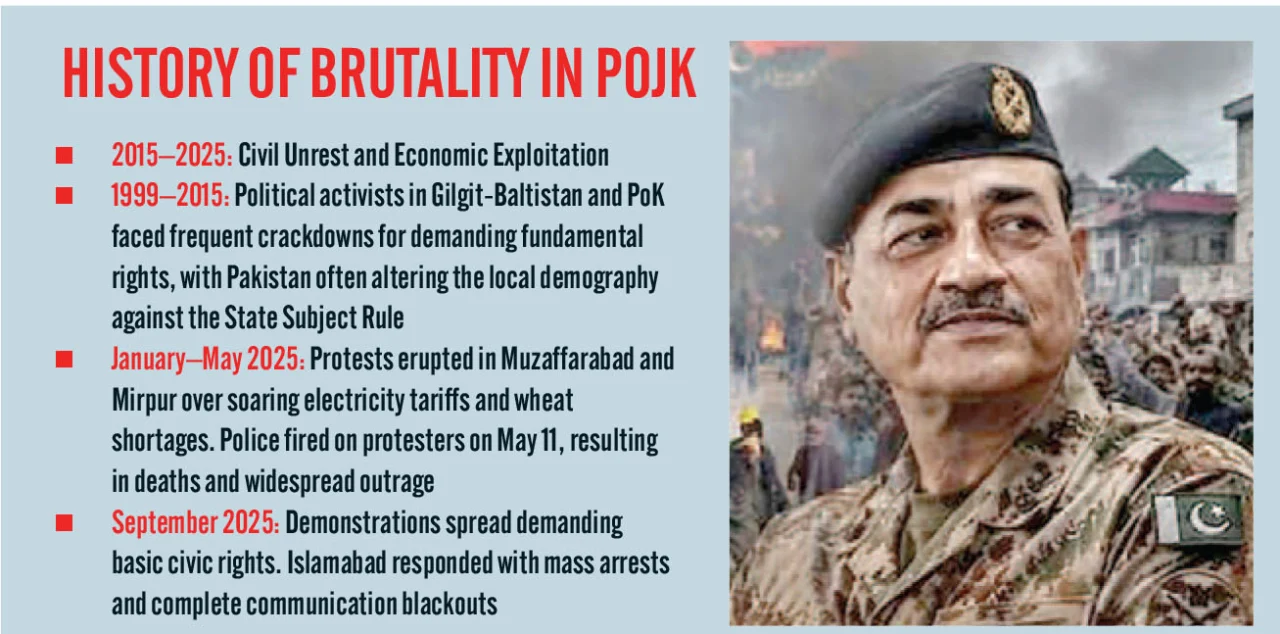
- June 8, 2026: Peaceful protests over flour/electricity prices and a controversial Supreme Court verdict on refugee seats turned violent when security forces opened fire, killing 11 to 15 civilians and injuring hundreds
- June 9–11, 2026: Over 1.5 lakh locals protested the brutality, paralysing the region with mass strikes. Authorities labeled the Joint Awami Action Committee (JAAC) a “proscribed organisation,” placed a Rs 1 crore bounty on four key protest leaders, and enforced an internet blackout
- July 2026: The crackdown continued with reports of an economic and medical blockade and Pakistan Rangers firing on demonstrators, resulting in additional fatalities and the detention of hundreds of civil rights activists. The situation drew international condemnation from human rights groups and global diaspora protests
By January 3, 2026, the deadline had expired with limited progress. JAAC disputed the government’s claim that 35 of 38 demands were met. The two unresolved demands, abolition of the 12 Pakistan-backed refugee seats and electoral reform, were those requiring constitutional amendments Pakistan was not willing to initiate. On June 6, 2026, the PoJK Supreme Court issued an advisory opinion confirming the 12 seats have constitutional protection under Article 22 and cannot be removed without amendment under Article 33. This was the legal constraint Pakistan never disclosed when signing. The banning of JAAC in June 2026 came eight months after signing an agreement with it. PTI Secretary General Omar Ayub Khan’s observation stands as the clearest summary of the political reality: if JAAC was a terrorist organisation, why did Pakistan spend eight months negotiating with it, signing agreements with it, and holding monthly review meetings with it?
The June 2026 Crisis
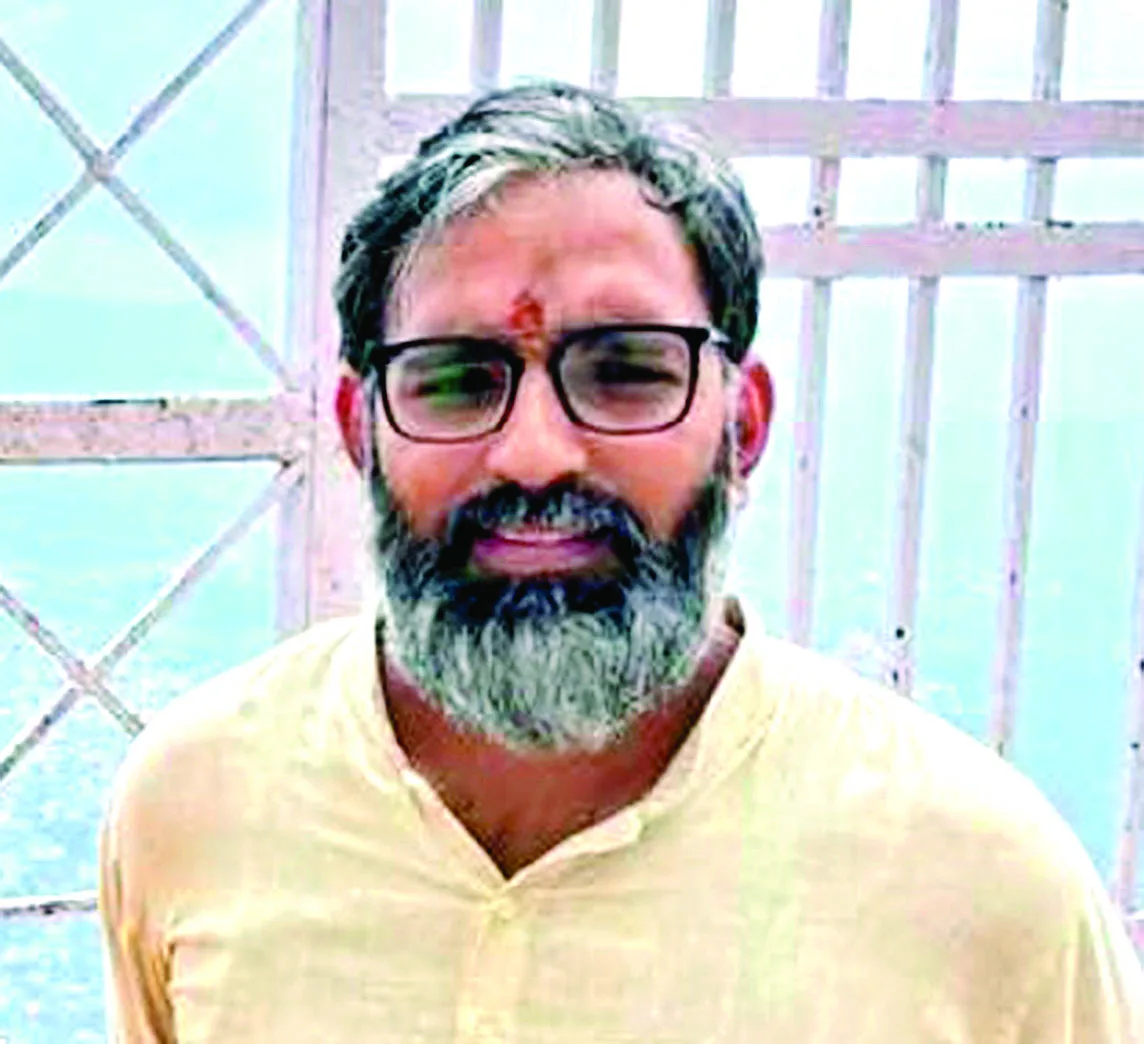
On June 5, 2026, the PoJK Home Department declared JAAC a proscribed organisation under Section 12 of the PoJK Anti-Terrorism Act, 2014. The ban came hours after the PoJK Election Commission announced July 27 as the election date. Internet and mobile services were suspended the same night across PoJK. Over the following 18 hours, 72 JAAC members were arrested across the territory. Shahzeb Habib was a JAAC executive member and trader from Rawalakot. He did not carry a weapon. On the night of June 5, Pakistan Army-directed security forces intercepted a vehicle near Barmang Bridge in the Khaigla area of Rawalakot carrying Sardar Umar Nazir Kashmiri, a JAAC core leader. A bullet grazed Kashmiri’s ear. Shahzeb Habib, who was in the vehicle or its proximity, was shot and killed. His body was taken to the Combined Military Hospital in Rawalakot. His family refused a post-mortem by state doctors they did not trust. His burial was eventually carried out by the administration and Pakistan Army-directed police; his family did not have autonomous control of the funeral of their own dead.
PoJK Inspector General of Police Captain (Retd) Liaqat Ali Malik formally requested 14,000 security personnel from the Pakistan federal government in addition to the existing troops to secure the region from June 7 to 21. The deployment was not a response to violence; it was a pre-emptive mobilisation timed to the protest dates. The specification that 40 per cent be armed with live ammunition (not riot control equipment) and the initial plain clothes deployment of Islamabad Police, is consistent with pre-planned operational design under Pakistan Army GHQ direction.
Protest and the Toll of Killings
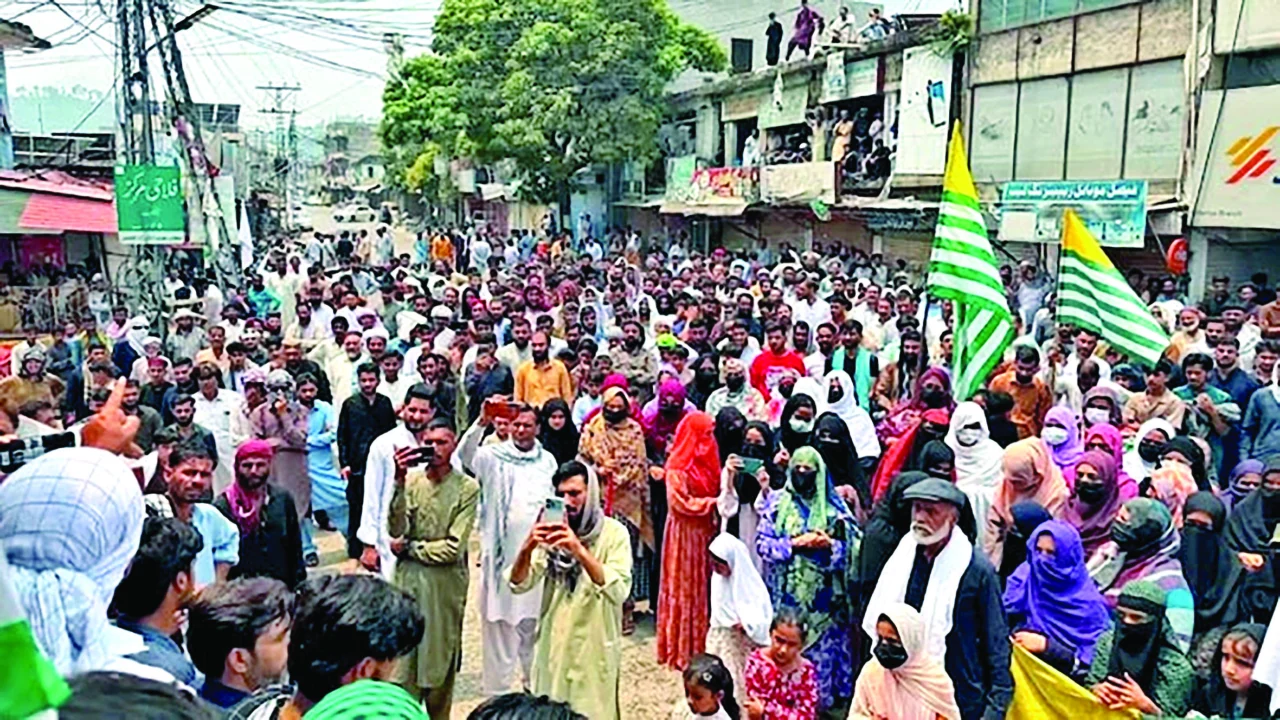
According to the JAAC and residents of Rawalakot, Pakistani security forces carried out a targeted massacre of peaceful demonstrators on June 8 and 9. JAAC leaders said that over 30 civilians were killed and around 200 injured, with no further details as the Government of Pakistan imposed a communications blackout across the territory on June 5 and continues to control all access to the casualty record.
Sub-Inspector Sardar Inayat, an officer in the PoJK police force, was reportedly executed by the Pakistan Army. He was killed for refusing orders to use deadly force against unarmed civilian protesters during a major civil uprising in the region.The arithmetic of the cover-up by Pakistan is familiar. Until the blackout lifts and independent observers are allowed in, the Government’s numbers deserve to be treated as what they are: the defendant’s version of events.
By June 9, the territory-wide shutdown was comprehensive and documented. Markets were shuttered across PoJK. Lawyers’ associations boycotted courts in protest against the arrest of Amjad Ali Khan. JAAC march columns converged from multiple directions toward Poonch.
Even in the month of July the fresh protests have started. Ironically, as of June 10, 2026, the UN issued no formal statement. The Security Council was not convened. The UNHRC issued no emergency communication. The US Embassy was described as monitoring the situation. The EU issued no statement. The Human Rights Commission of Pakistan, an independent domestic body, stated it was deeply alarmed, questioned the use of anti-terror laws against JAAC, and announced a fact-finding mission that was not granted access as of publication date.