
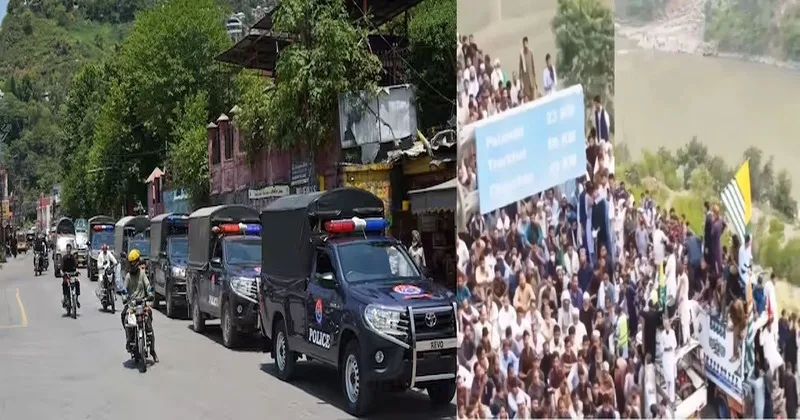
A wave of unrest has swept through Pakistan-occupied Jammu & Kashmir (PoJK) after the Pakistan Government banned the Joint Awami Action Committee (JAAC), a civil society alliance that has led several protests over economic and political issues in recent years.
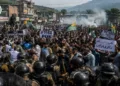
According to reports, at least 11 people were killed and more than 70 injured during clashes between protesters and security forces in Rawalakot ahead of a region-wide shutdown planned for June 9. Police and paramilitary forces moved to disperse protesters linked to the JAAC, which was declared a banned organisation by the regional administration last week under anti-terrorism legislation.
However, according to unofficial sources and videos circulating on social media, claims have emerged that more than 500 people have been killed by the Pakistani Army. These claims have not been independently verified.
The violence erupted as supporters of the JAAC gathered outside a hospital morgue where the body of a fellow activist had been taken following an earlier shooting incident.
Activists and local groups have claimed that internet services and mobile networks have remained disrupted across PoJK, including Muzaffarabad, Rawalakot, Poonch, Mirpur, and the Neelum Valley.
The JAAC is seeking the implementation of a 38-point agenda that includes subsidised flour and electricity, and the abolition of 12 seats reserved in the regional legislative assembly for Kashmiris.
In videos doing the rounds on social media, the streets of Pakistan-occupied Jammu & Kashmir can be seen echoing with slogans against Pakistan, the Pakistani government, and Army Chief Asim Munir, as protesters demand greater rights and a referendum to decide the region’s future.
Why are people protesting in PoJK?
The latest demonstrations were triggered by the decision to reserve 12 seats in the 45-member Legislative Assembly for refugees who live outside Kashmir but elsewhere in Pakistan.
The JAAC argues that these seats undermine local representation and has demanded that the arrangement be scrapped.
The alliance has also raised concerns about inflation, electricity shortages, unemployment, governance issues, and what it describes as the political marginalisation of the region. Over the past two years, the group has organised large demonstrations against rising flour and electricity prices. Several of those protests also ended in clashes with security forces.
The situation has also sparked criticism from overseas Kashmiri groups, with demonstrations reported in the United Kingdom, the United States, and other countries. Members of the diaspora have accused Pakistan’s military establishment of suppressing dissent and have called for greater international attention to developments in the region.
Notably, a British parliamentary group has also raised concerns over reports of communication disruptions, arrests, and escalating tensions in Pakistan-occupied Jammu & Kashmir, and has sought clarification from the British Government regarding its assessment of the situation.
The letter, signed by nearly 30 MPs, urged the British government to “engage proactively and use all appropriate diplomatic channels to encourage de-escalation and a peaceful resolution” in the region.
Human rights concerns have also emerged, with people alleging raids on homes and the detention of protesters. International observers and journalists have raised questions about the deteriorating security situation, while rights advocates have called for transparency and accountability.
Meanwhile, many observers have drawn parallels with Pakistan’s history in 1971, arguing that the suppression of political dissent, growing public unrest, and allegations of human rights violations in Pakistan-occupied Jammu & Kashmir bear similarities to some of the factors that contributed to the crisis in East Pakistan and led to creation of Bangladesh.
India, meanwhile, maintains that the entire Union Territories of J&K including PoJk and Ladakh are integral and inalienable parts of India by virtue of the “complete, legal, and irrevocable accession” of the erstwhile princely state of Jammu and Kashmir to India in 1947.