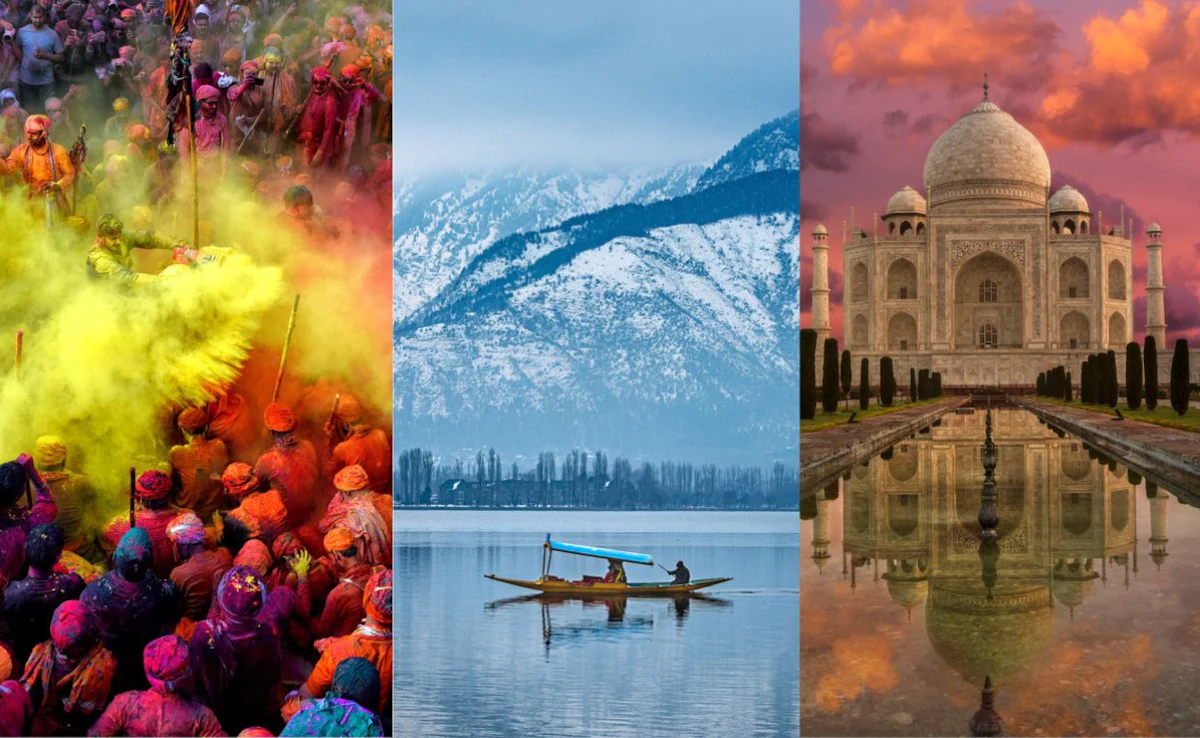
Tourism in India is no longer viewed merely as a leisure activity or a contributor to hospitality revenues. Over the past decade, it has evolved into one of the country’s most important engines of economic growth, employment generation, cultural preservation and regional development. From the snow-capped Himalayas and pristine beaches to ancient temples, wildlife sanctuaries and heritage cities, tourism today touches nearly every segment of India’s economy. It supports millions of livelihoods while creating opportunities for local businesses, artisans, transport operators, hoteliers, guides and entrepreneurs.
As India moves towards its vision of becoming a developed nation by 2047, tourism is increasingly being positioned as a key pillar of inclusive growth and national development. Government data released by the Ministry of Tourism shows how infrastructure development, destination-focused investments, digital reforms and sustainability initiatives have collectively transformed India’s tourism landscape between 2014 and 2026.
Tourism’s Growing Economic Contribution
Tourism remains one of the largest employment-generating sectors globally, and India has increasingly leveraged its vast cultural, spiritual and natural diversity to strengthen the industry. Every tourist journey creates economic activity across multiple sectors. Spending on accommodation, transport, food, handicrafts, entertainment and local services directly contributes to economic growth. In many rural and remote regions, tourism has emerged as one of the few sustainable sources of livelihood.
The scale of this growth is reflected in the numbers. Between 2014 and 2025, India recorded 181.25 million international arrivals and 93.35 million foreign tourist arrivals. While international arrivals include both foreign nationals and Non-Resident Indians (NRIs), foreign tourist arrivals account only for foreign nationals visiting the country. These figures underline the growing global interest in India as a tourism destination and demonstrate the expanding reach of the country’s tourism ecosystem.
One of the defining features of India’s tourism growth over the past decade has been the emphasis on infrastructure development. Tourism experts often point out that destinations are judged not only by their attractions but also by accessibility, cleanliness, safety and visitor facilities. Recognising this reality, the government launched a series of large-scale programmes aimed at transforming tourism infrastructure nationwide.
Improved highways, expanded airports, modern railway stations, better public amenities and stronger last-mile connectivity have significantly improved travel experiences across the country. Destinations that were once difficult to access are now connected through improved road, rail and air networks, bringing economic opportunities to previously underserved regions.
Swadesh Darshan: Building Tourism Circuits
A major turning point came in 2014 with the launch of the Swadesh Darshan Scheme. The programme sought to move beyond isolated tourism projects and instead develop integrated tourism circuits based on themes such as heritage, spirituality, wildlife, coastal tourism and eco-tourism.
Under the first phase of the scheme, 76 projects were sanctioned with investments exceeding ₹5,000 crore across 15 thematic tourism circuits. Of these, 75 projects have already been completed. The projects focused on improving roads, visitor centres, sanitation facilities, interpretation centres, accommodation infrastructure and tourist amenities. Officials say these interventions have significantly enhanced destination readiness, improved visitor convenience and generated economic opportunities for local communities.
Building on the success of the original programme, the government launched Swadesh Darshan 2.0 in 2022. The new version places greater emphasis on sustainability, destination management and immersive visitor experiences rather than simply creating infrastructure.
The initiative aims to transform destinations into experience-driven tourism hubs. At Tehri Lake in Uttarakhand, floating log huts have been developed to create a unique lakefront tourism experience while promoting adventure tourism. In Kurukshetra, Haryana, tourism infrastructure inspired by the Mahabharata has been created to offer immersive storytelling experiences rooted in India’s civilisational heritage. These efforts reflect the growing popularity of experiential tourism among both domestic and international travellers.
Spiritual Tourism Gets a Major Push
India’s spiritual heritage remains one of its strongest tourism assets. Every year, millions of pilgrims travel to temples, mosques, churches, gurudwaras, monasteries and sacred sites across the country. Recognising the economic and cultural significance of pilgrimage tourism, the government launched the PRASHAD (Pilgrimage Rejuvenation and Spiritual Heritage Augmentation Drive) Scheme.
Since its inception, 54 projects worth more than Rs 1,700 crore have been sanctioned under the scheme. The focus has been on integrated development of pilgrimage destinations through improved infrastructure, sanitation, safety measures and visitor facilities. Destinations such as Somnath in Gujarat, Srisailam in Andhra Pradesh and Govardhan in Uttar Pradesh have benefited from these interventions. The programme has improved the experience of pilgrims while creating new livelihood opportunities for local communities that depend on religious tourism.
Tourism and Regional Development
Tourism has increasingly been integrated into broader national development goals. The government has aligned tourism initiatives with programmes focused on the development of the North East, rural tourism, Purvodaya states and aspirational districts. The objective is to ensure that tourism-led growth reaches emerging destinations and remote communities rather than remaining concentrated in major urban centres.
Recent Union Budget announcements have further strengthened this approach through support for the development and maintenance of iconic tourist destinations. Policymakers believe such investments can stimulate entrepreneurship, create employment opportunities and strengthen regional economies.
SASCI Programme Targets Global Standards
The government’s tourism strategy received another boost through the Special Assistance to States for Capital Investment (SASCI) programme announced in Budget 2024-25. The initiative seeks to transform high-potential destinations into globally competitive tourism centres.
Under SASCI, 40 projects across 23 states have been sanctioned with a total investment of Rs 3,295.76 crore. The programme aims to improve visitor experiences, strengthen destination competitiveness and create tourism infrastructure that meets international standards.
As tourism numbers continue to rise, sustainability has become a critical priority. Popular destinations around the world face challenges ranging from overcrowding and environmental degradation to pressure on local resources. India has sought to address these concerns through a range of sustainable tourism initiatives.
Rather than concentrating visitors at a handful of popular locations, policymakers are promoting lesser-known destinations through initiatives focused on Himalayan trekking routes, birdwatching circuits, eco-tourism destinations, wildlife tourism, coastal tourism and turtle tourism. The goal is to distribute visitor flows more evenly while generating economic opportunities in new regions.
Travel for LiFE and Responsible Tourism
Sustainability efforts have also been strengthened through the Travel for LiFE (Lifestyle for Environment) initiative. The programme encourages tourists, businesses and local communities to adopt environmentally responsible practices. By promoting reduced waste generation, sustainable tourism practices and responsible visitor behaviour, the initiative seeks to ensure that tourism growth does not come at the expense of environmental conservation or cultural heritage.
India’s efforts in sustainable destination management have begun receiving international recognition. A major milestone was achieved when Mamallapuram became the first UNESCO World Heritage Site in South Asia to receive the prestigious Green Destinations Silver Certification. The achievement highlights India’s growing commitment to responsible destination management and sustainable tourism practices.
Complementing these efforts is the Challenge-Based Destination Development (CBDD) initiative. Under the programme, 38 projects worth ₹697.94 crore have been approved under the spiritual tourism and eco-tourism categories. Notable examples include the Panidihing Bird Sanctuary project in Assam and the Nizam Sagar reservoir eco-tourism project in Telangana. These projects seek to balance environmental conservation with economic development.
India Climbs the Global Tourism Rankings
India’s growing competitiveness is reflected in international tourism rankings. In 2024, the country recorded 20.6 million international arrivals and secured the 20th position globally. This marks a notable improvement from its 25th rank in 2016 and reflects sustained investments in infrastructure, connectivity, policy reforms and destination promotion.
Technology has become a key driver of tourism growth. The e-Tourist Visa system has significantly simplified travel procedures for international visitors, reducing paperwork and improving convenience. Digital platforms such as NIDHI and NIDHI Plus have streamlined registration and compliance processes for hotels, accommodation providers and travel operators. These reforms have contributed to a more transparent, efficient and business-friendly tourism ecosystem.
G20 Presidency Showcases India’s Tourism Potential
India’s G20 Presidency provided a major platform to showcase the country’s tourism capabilities to the world. Meetings were held across multiple destinations, exposing international delegates to India’s heritage sites, cultural traditions, crafts, hospitality and tourism infrastructure.
The presidency also highlighted India’s growing potential in MICE tourism, Meetings, Incentives, Conferences and Exhibitions. Industry experts believe this segment could emerge as a major source of high-value tourism and significantly boost India’s position in the global tourism market.
Infrastructure alone cannot create memorable tourism experiences. The people who interact with visitors, guides, hospitality workers, artisans, transport providers and entrepreneurs play a critical role in shaping a destination’s image. Recognising this, the government has invested heavily in skill development.
Between 2014 and 2025, more than 4.5 lakh individuals received training under the Capacity Building for Service Providers Scheme. The initiative has focused on improving service standards, employability and professionalism across the tourism sector.
Budget 2026-27 Strengthens Workforce Development
The Union Budget 2026-27 has further strengthened the tourism workforce agenda. Key proposals include the establishment of a National Institute of Hospitality and the upskilling of 10,000 tourist guides at iconic destinations. These measures are expected to improve visitor experiences while creating a highly skilled workforce capable of supporting the next phase of tourism growth.
The government’s broader vision links tourism directly to economic growth, employment generation and cultural preservation. According to official estimates, tourism contributes US$231.6 billion to India’s economy, making the country the world’s eighth-largest tourism economy.
The World Travel & Tourism Council (WTTC) projects that India could rise to fourth place globally over the next decade, reflecting the sector’s strong growth potential and increasing international significance.
Improved connectivity has been one of the biggest drivers of tourism growth. Expanded highway networks, modern airports, UDAN regional connectivity, Vande Bharat trains, railway station redevelopment projects and stronger last-mile infrastructure have made travel easier and more convenient than ever before.
Connectivity Revolution Expands Opportunities
Improved connectivity has emerged as one of the most significant drivers of tourism growth in India over the last decade. Massive investments in transport infrastructure have dramatically reduced travel times and improved access to destinations that were once considered remote or difficult to reach. Expanded national highways, modern airports, the UDAN regional air connectivity scheme, Vande Bharat trains, railway station redevelopment projects and improved last-mile infrastructure have collectively transformed the travel experience.
The impact of these investments is visible across the country. Destinations in the North East, Himalayan states, coastal regions and rural areas are witnessing increased tourist footfall due to improved accessibility. Better connectivity is not only encouraging tourism but also creating new economic opportunities for local communities, hospitality businesses and tourism entrepreneurs. As more regions become connected to mainstream travel circuits, the benefits of tourism are reaching areas that were previously left out of the growth story.
Strengthening India’s Global Tourism Presence
India’s international tourism outreach has also entered a new phase. The government has intensified efforts to position the country as a leading global tourism destination through a revitalised promotional strategy. The iconic Incredible India campaign has been strengthened through digital marketing, participation in international travel exhibitions, roadshows and strategic partnerships with tourism stakeholders across key source markets.
The focus is no longer limited to attracting tourists to a handful of well-known destinations. Instead, the strategy aims to showcase India’s diversity, from spiritual circuits and heritage destinations to eco-tourism hubs, adventure tourism locations and cultural experiences. By promoting lesser-known destinations alongside established tourism centres, India is seeking to attract a broader range of international travellers while distributing tourism benefits more evenly.
The expansion of the e-Visa system has further complemented these efforts by making travel to India easier and more convenient. Simplified visa procedures have reduced barriers for international visitors and enhanced India’s competitiveness in the global tourism market.
One of the most significant benefits of tourism growth has been its impact on employment generation. Unlike many industries that are concentrated in specific regions, tourism creates jobs across a wide range of sectors and locations. From hotel staff and tour operators to taxi drivers, local guides, artisans, photographers and small business owners, the sector supports millions of livelihoods.
Tourism also encourages entrepreneurship by creating demand for local products and services. Homestays, handicrafts, cultural performances, local cuisine and community-based tourism initiatives have opened new income streams for families and small businesses. In many rural and tribal regions, tourism has become an important source of supplementary income, helping reduce migration and support local economies.
Government initiatives aimed at developing tourism infrastructure and enhancing skill development are expected to further strengthen employment opportunities in the years ahead. As tourist arrivals continue to rise, the demand for trained professionals across hospitality, travel services and destination management is also expected to grow significantly.
Preserving Heritage While Promoting Growth
A key feature of India’s tourism strategy has been the effort to balance development with heritage conservation. The country’s rich cultural and civilisational legacy remains one of its greatest tourism assets, attracting visitors from across the world.
Projects undertaken under schemes such as Swadesh Darshan and PRASHAD have focused not only on improving visitor amenities but also on preserving and showcasing heritage assets. Restoration of historic sites, improved interpretation facilities, better visitor management systems and cultural programming have helped enhance the overall tourism experience while safeguarding heritage for future generations.
Officials believe that heritage tourism can serve as a powerful tool for cultural preservation by generating economic value from conservation efforts. As communities recognise the benefits of preserving local traditions, crafts and historical sites, tourism can play an important role in ensuring their long-term sustainability.
The transformation of India’s tourism sector over the last decade reflects a comprehensive approach that combines infrastructure development, digital innovation, sustainability, skill development and destination promotion. The results are increasingly visible on the ground, with improved visitor experiences, stronger local economies and rising global recognition.
More than 100 destinations have already been upgraded through various tourism infrastructure schemes, while plans to develop 50 additional destinations indicate that the next phase of growth is already underway. Programmes such as Swadesh Darshan, PRASHAD, SASCI, Travel for LiFE and the Challenge-Based Destination Development initiative are laying the foundation for a tourism ecosystem that is globally competitive, environmentally sustainable and economically inclusive.
As India advances towards its vision of Viksit Bharat by 2047, tourism is expected to play an even greater role in shaping the country’s development journey. The sector is no longer viewed merely as a contributor to leisure and hospitality. It is increasingly recognised as a catalyst for economic growth, employment generation, cultural preservation, regional development and international engagement.
The progress achieved over the last decade suggests that India’s tourism transformation is well underway. With continued investments, policy support and a focus on sustainability, the country is positioning itself to become one of the world’s leading tourism destinations. The coming decade will determine how effectively India can convert its immense cultural, spiritual and natural wealth into lasting economic and social gains, but the foundations for that future have already been laid.