Atal Bihari Vajpayee, while releasing Dr Rakesh Sinha’s book on Dr Hedgewar in 2003 reacted, “We are yet to learn more about Dr Hedgewar”. How did we reach such a situation? Swayamsevaks have never been accustomed to glorify self and hence alienated from the practice of news-breaking syndrome. But this mindset kept us insulated from the past, albeit not remote. Had Appaji Joshi not contributed a write up in Tarun Bharat in 1970, nobody could have been made aware of Subhas Chandra Bose’s visit to ailing Dr Hedgewar on a day prior to his demise. Secondly, the Sangh was not accustomed to pass any official resolution on its activities nor anything is made available in documented mode. The Left-liberal ecosystem seized these kinds of apparent lapses in post Independence Bharat and engaged in demolishing the RSS perspective of colonial days though their unverified narratives. Hence, some kind of positive discourse is urgently needed.
Dr Keshav Baliram Hedgewar, a born patriot made his debut as a revolutionary when he threw away sweets given to him in school on the occasion of Queen Victoria’s 60th anniversary in 1897, when he attempted to carve out a tunnel inside his house to replace the Union Jack from the Fort, and when he organised the collective raising of Vande Mataram slogan in his school.
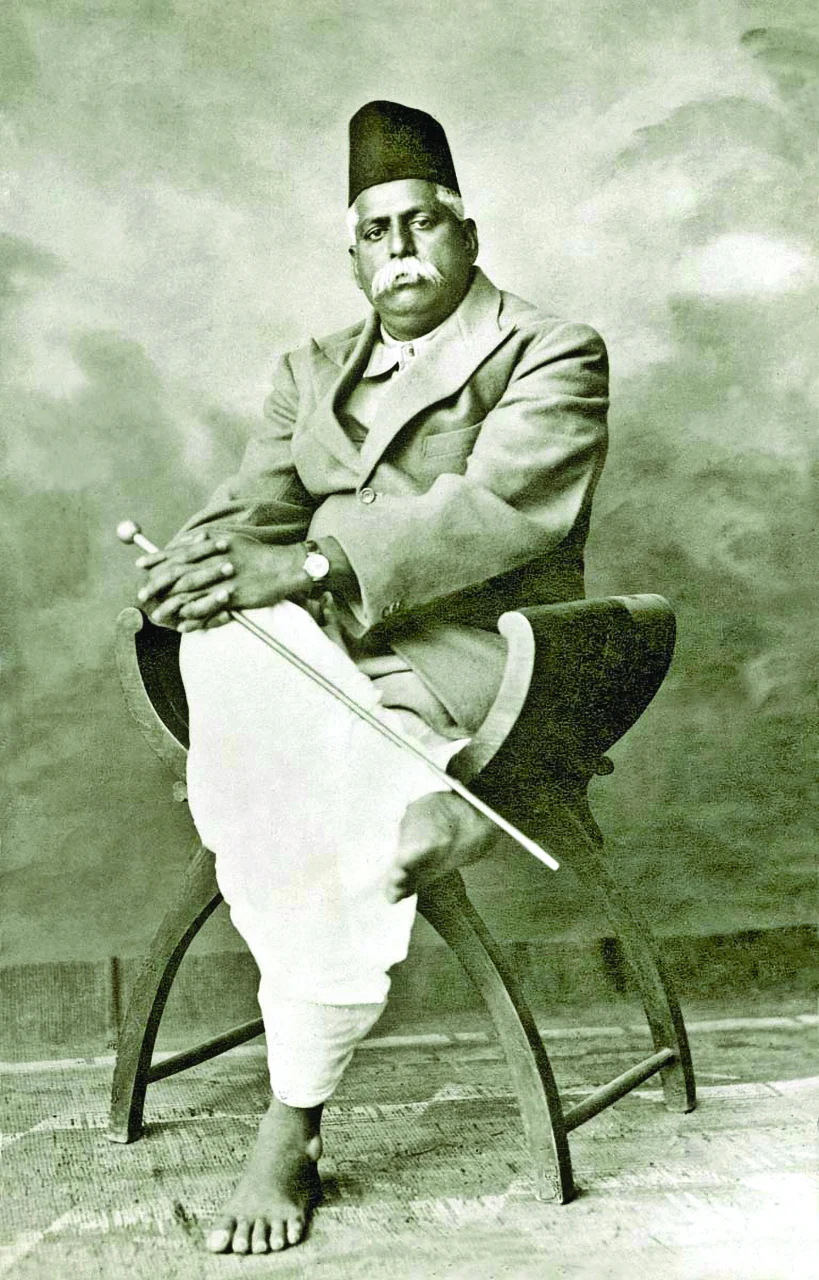
Dr Hedgewar joined the National Medical School (later National Medical College) in Calcutta, to covertly work closely with the revolutionaries. He became successful in joining ‘Anushilan Samiti’, an outfit run by Barindra Kumar Ghose, brother of Aurobindo. Returning to Nagpur after five years, Dr Hedgewar tried to pursue his revolutionary activities by procuring bomb from Goa; but he soon realised that while it may be used to create sensation for the time being it had no far reaching consequence. He was swayed with Lokmanya Tilak and joined his Home Rule League as well as the Congress. He attended the Amritsar Congress session in 1919. Even after passing away of Tilak on August 1, 1920, he continued in the Congress since it was the lone national platform in those days. He co-organised the Congress Annual session at Nagpur in December 1920 that was attended by 12,000 strong delegates.
Dr Hedgewar proposed a resolution in the session that said, “To establish democracy in India and liberate the world from the yoke of capitalism would be the aim of the Congress”. The Subject Committee, which screened the proposals, rejected it as too radical. However, Hedgewar ventured to meet Gandhiji personally to express his anguish on another matter. He met and told that he was apprehensive of the Khilafat issue lest it might alienate the Muslims from the fundamentals of Bharatiya patriotism. Gandhiji replied in negative.
Rest is history
Yet Dr Hedgewar continued in the Gandhian movement. In this course, he was prosecuted for his speech at Katol and Bharatpur in October 1920 for violation of Section 108 and 144 of IPC. He was arrested on February 13, 1921, and he himself pleaded in the Court. He argued: “I am ashamed that the chargesheet was being tried by an alien judiciary”. Judge Smelly concluded, “The defense utterance was more seditious than the original expression” and imprisoned him for one year. Dr Hedgewar observed ‘Jallianwala Bagh Day’ on April 13, 1922 along with co-prisoners.
On the day of Doctor ji’s release on July 12, 1922 the Executive Committee of the Swaraj Party was held at Nagpur. The leaders including Motilal Nehru, Vithalbhai Patel, C Rajagopalachari, Dr Ansari and Hakim Ajmal Khan attended the reception meeting of Dr Hedgewar at Venkatesh Natyagriha. In the meantime, Moplah carnage had been witnessed. Non-cooperation Movement had been withdrawn on February 4, 1922 on Chauri Chaura issue. Muslim hooliganism was at its peak following the withdrawal of the Movement.
Vision of National Consolidation
With this backdrop, Dr Hedgewar founded Rashtriya Sayamsevak Sangh (RSS) on Vijayadashami ie, September 27, 1925. While the national freedom was the immediate goal, the national consolidation was the higher and nobler objective to take this nation to greatest heights. The Swayamsevaks attended daily Shakhas in open fields, with synchronised collective prayers to Bharatmata with a vow to liberate her. To them, attending Shakha was a medium to participate in the freedom struggle. Their thought-structure displayed in the society ventilated a kind of atmosphere conducive for the sake of Independence.
Subhas Chandra Bose was released from Mandalay Jail after three years in 1927. There was an unprecedented rejuvenation amongst youth following his release. The same year, the Congress session met at Ahmedabad under the presidency of Motilal Nehru. It passed the resolution of Dominion Status for India since the Congress was overshadowed by the ‘Old Guard’ and ‘the No-changers’ (words employed by Bose). In the 1928 Calcutta session, the younger sector was preparing for a show down. Dr Hedgewar continued as a Member of the Executive Committee of the Central Province Congress. In this capacity, he arrived at Calcutta to support the demand of complete Independence. On the very first night of the session, he along with Babarao Savarkar, met Subhas babu and held discussions on all issues at stake, including the foundation of RSS. He lent his full support to the pro-changers. The resolution of complete Independence was moved by Bose in the plenary session, which was defeated by 1350 to 937 votes. Yet it was a pyrrhic victory of the pro-changers which paid its dividend next year and the resolution of complete Independence was passed in the Congress session of Lahore. It must be underscored that Dr Hedgewar had definite role in the 1928 session pressing for complete severance of British connection. This was one of his prime contributions in the freedom struggle.
Dr Hedgewar asked the swayamsevaks all across to hail the Congress resolution of complete Independence. Then came the public declaration to celebrate the Independence Day on January 26, 1930. Swayamsevaks held ‘Poorna Swaraj Diwas’ celebration in every Shakha at 6 pm. Swayamsevaks took a pledge to liberate this nation and dedicate for the service of the Motherland.
Among The Giants Of The Age
Dr Hedgewar had invited Vithalbhai Patel in the ‘Vijayadashami Utsav’ at Nagpur in 1927. Shivaram Rajguru of Poona was studying in Nagpur during 1927-28 and was a swayamsevak of Mohitewade Shakha. When Rajguru joined the revolutionary team of Bhagat Singh, Dr Hedgewar had regular secret meetings with him; once Bhagat Singh was also present. Bhagat Singh, Rajguru and Sukhdev threw bomb in the Punjab Assembly and later assassinated John Saunders on December 17, 1928. Rajguru triggered the pistol and in one shot, Saunders succumbed. Then the trio dispersed, and Rajguru reached Dr Hedgewar for shelter. The latter took him to Bhaiyaji Dani’s farmhouse at Umred, and assured that he would remain untouched so long as he stayed there. But Rajguru escaped to Poona. There he was arrested, and hanged at Lahore on March 23, 1923 along with his two other compatriots.
In 1931, Bose had been to Bombay and tried to contact Doctorji. But he was very ill and the attempt did not materialise. On December 25, 1934 Gandhiji along with Jamnalal Bajaj visited the RSS camp at Wardha. The next morning, Dr Hedgewar met Gandhiji at his ‘Ashram’ and deliberated with him for one hour. They spoke on Congress ‘Seva Dal’ functioning and RSS working methodology including Hindu consolidation. Gandhiji applauded. He testified it again on September 16, 1947 at Karol Bagh Shakha of Delhi while talking to the Swayamsevaks there. He recalled meeting the founder of RSS when he was alive, and appreciated the discipline and their patriotic fervour.
Dr Hedgewar also invited Dr Ambedkar in the ‘Makar Sankranti Utsav’ at Poona in 1938 and the RSS training camp there the next year. The question is how and why these eminent figures of pre-independence era were appreciating Dr Hedgewar?
Subhas Bose was travelling by train to attend the Tripuri session of the Congress where he was to preside for the second time. When the train was about to reach Nagpur station, he observed one uniformed contingent was marching through the road. One co-passenger apprised him that it was the RSS. Bose realised what Hedgewar was talking in 1928 had become a reality and he was enthused.
Followers of Doctorji later participated in the Quit India Movement, rescued the affected persons during the holocaust of Partition, saved Kashmir, and pioneered the liberation of Goa, Daman, Diu and Nagar Haveli
The National Executive meeting of Forward Bloc was going to be held at Nagpur on June 18-19, 1940. The next morning Subhas Bose along with a labour leader Ram Bhai Ruikar went to meet Dr Hedgewar at the residence of Babasaheb Apte. Two young pracharaks, Yadav Rao Joshi and Sri Krishna Puranik were present. Dr Hedgewar was resting due to his illness. The two tried to wake him up. But Bose declined and said that he would meet some other day. Dr Hedgewar passed away the next morning.
Followers of Doctorji later participated in the Quit India Movement, rescued the affected persons during the holocaust of Partition, saved Kashmir, and pioneered the liberation of Goa, Daman, Diu and Nagar Haveli.
It is a matter of irony compounded with agony that Dr Hedgewar has been deliberately marginalised in the history of freedom struggle. Leaders like Annie Besant and Bipin Chandra Pal remained in the dark. Perhaps ostensible reason is that they remained distant to the Gandhian approach only Subash Bose could withstand it. In spite of his world of differences with Gandhiji, he carved out his own way and is remembered as a great leader by all.
The story of Bharat’s freedom struggle is far richer than many conventional accounts suggest. A balanced understanding requires careful examination of all contributors, including Dr Hedgewar and the organisation he founded. Greater research, documentation, and critical scrutiny can help ensure that important chapters of national history receive the attention they deserve.