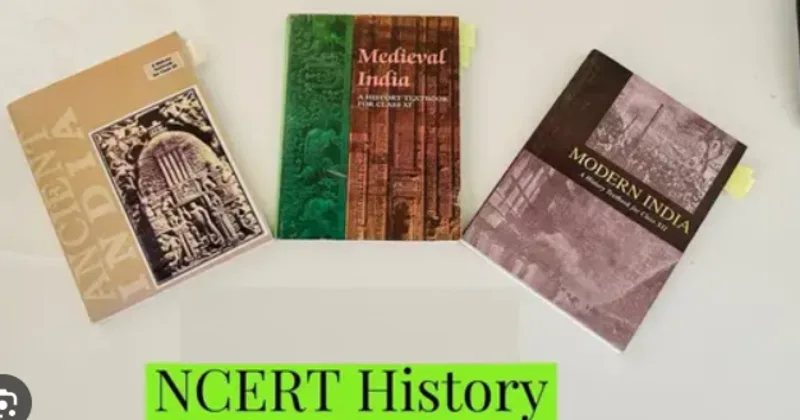
The writing of an Indian history in the educational curricula has become a rather controversial field of modern Indian academic and popular discussion. National Council of Educational Research and Training (NCERT), the largest national educational research organisation in India, which develops national curricula and textbooks, which are studied by millions of students, is at the centre of such controversies. The last few years have seen an unparalleled amount of questioning of the NCERT on how it teaches medieval history especially after the curriculum rationalization occasions that took place between 2023 and 2025. Such developments have raised heated scholarly debates on the issue of historical objectivity in the learning process and how intricate historical processes should be taught to the young students.
The relevance of this question lies not only in the field of academic discussion, but also in the primary issues concerning the role of historical education in the formation of the national consciousness and civic knowledge. The textbooks produced by NCERT represent the main point of contact between the professional historical field and popular historical awareness and hence the content and approach they adopt is vital in determining the way Indian society will learn about its medieval past. The modern setting of the discussions is complicated even more by the larger political and cultural discussion of the Indian identity, religious diversity, and the heritage of historical conflicts. Through a multidimensional analysis of NCERT treatment of medieval Indian history, this paper first looks at methodological basis on which the textbooks are developing and then looks at the change of content in the textbook which is seen as controversial.
The article will offer a fair evaluation of objectivity in the historical presentation of NCERT with the mention of its positive and negative aspects and putting them into the context of the expanded frameworks of historiographical methodology and educational theory. This study aims to make a contribution to the existing debates on best practices in historical education and the issues surrounding the problem of ensuring scholarly objectivity in pedagogic practice by analyzing primary textbook material, critiques of scholarship, and responses of institutions.
Theoretical Understandings and Methodological Approach
Historiographical Principles in NCERT Textbooks
The treatment of medieval Indian history provided by NCERT shows a high level of appreciation of modern historiographical concepts especially in the clarity of its recognition of the interpretive aspect of historical writing. This theoretical background is laid by the Class XI textbook Themes in World History according to which the historian always is a participant of a sort of selection process (NCERT, Themes in World History, p. 4). This recognition marks a major shift in positivist methods of historical writing that predominated the previous educational text, and adopts modern perspectives of history as a constructed knowledge that is susceptible to interpretative paradigms and forms of evidence.
Methodological sophistication can also be seen in the treatment of linguistic and temporal issues in historical reconstruction in the textbooks. The readings also present the students with some of the most fundamental challenges of historical interpretation by pointing out that historical records are available in many languages and that words also evolve over time (NCERT, Our Pasts II, p. 3). This linguistic awareness demonstrates a high level of semantic drift and cultural change, as it teaches students to be sensitive to language usage, instead of assuming easy access to the meanings and intentions of the words in the past.
Source Criticism and Evidence-Based Methodology
NCERT approach to medieval history has a background of systematic criticism of sources and evidence-based methodology which complies with professional historical criteria. This methodological priority is explicitly determined in the Class VII textbook Our Pasts II where it is written that historians apply various forms of sources to get to know about the past based on the time, they are studying the past and also depending on the nature of study (NCERT, Our Pasts II, p. 4). This assertion defines source-based inquiry as the primary foundation of historical knowledge separating scholarly historical practice and ideological interpretation or mythology of a culture.
The textbooks are particularly sophisticated in their approach to manuscript traditions and textual transmission, expounding the fact that as scribes duplicated manuscripts, they also made little alterations, a word here, a sentence there. These minor variations increased with centuries of copying into a point where manuscripts on the same text were vastly different between them” (NCERT, Our Pasts II, pp. 5-6). This awareness of textual instability and transmission errors is a high level of textual criticism source awareness training students to be highly sceptical of historical documents without overlooking the difficulties associated with trying to reconstruct past history using flawed records. Procedure of the assessment of the various types of sources is also an indication of methodological rigor. Concerning prashastis (royal eulogies), the textbooks point out that they are not necessarily true, but they also state that historians refer to them to learn how rulers would have preferred to see themselves (NCERT, Our Pasts II, p. 18). Such subtle method of source assessment is what would teach students to read history sources as a source of various forms of information, to differentiate between the facts and the ideology in the historical source and to find the historical merits of the source in both directions.
New Curriculum developments and Academic Responses
The 2023-2025 Rationalization
The latest and most important change in the presentation of the history of the medieval Indian population by NCERT took place with the curriculum rationalization exercises between 2023 and 2025. These reforms included serious revisions to the textbook material such as the deletion of whole chapters about medieval courts, especially Class XII textbooks, Kings and Chronicles and The Mughal Courts. As well, the allusions to the historical events and processes, as well as the conversation on the Partition and the communal violence, were deleted or changed considerably. Such modifications were formally explained away as the needed adaptation to learning disruptions due to the COVID-19 pandemic, and the NCERT officials claimed that shortening of the content would result in reduced academic pressure among students. These changes were more than mere content hacking, as they involved major reinterpretation of history.
The publication of new Class Eight textbook materials in July 2025 gave especially harsh descriptions of medieval rulers, whereby Babur is described as a cruel and merciless conqueror who had murdered whole communities of cities and Aurangzeb as a ruler who had murdered temples and gurdwaras and had a history of religious intolerance (Times of India, “‘Akbar brutal but tolerant'”). A Note on Some Darker Periods in History that was included in the textbook tried to offer pedagogical rationale to these characterizations, but generated heated scholarly controversy as to what best practices are in exposing young students to adversarial historical content.
Scholarly Critiques and Academic Response
The historians who belong to leftist schools of thought have contributed largely to the academic reaction to the changes in the curriculum by NCERT, and historians like Romila Thapar, Irfan Habib, and Upinder Singh among others. These scholars and certain others have come out with a collective pronouncement to denounce the revisions as being representative of a non-academic partisan plan, requiring the removal of material removals (EdxLive, “NCERT syllabus rationalisation). It should be noted, though, that much of this resistance seems informed by an ideological devotion to the status quo in terms of historiography which has long dominated the Indian scene on historiography. Though their critiques are authoritative they tend to lean towards the defence of the status quo in terms of ideological reasons rather than a balanced re-evaluation of the intricate medieval Indian history. The recent revisions of the NCERT are a well-intentioned and essential change in reducing the pedagogical imbalances that occurred in the past, and offer a more subtle view of the history of the Middle Ages. The changes are critical in responding to long-standing omissions by introducing new perspectives, which were previously marginalized by the previous scholarly and political orthodoxies.
By reshaping the historical discourses to incorporate challenging historical realities about the rulers and the social-religious relationships, NCERT is rendering history education more indicative of the pluralistic and holistic orientation. Such reconsideration fosters the growth of critical thinking in students, fosters the desire to listen to different opinions and deconstructs mono-dimensional representations build-up by deep-seated ideological prejudice.
The fact that the revised textbooks have been described by Romila Thapar as a politicized and skewed record of the Indian past ignores the positive efforts of offering alternative ways of historical investigation outside the traditional paradigms. Her worry about selective omissions appears to be based in opposition to stories that upset established ways of reading of the world as opposed to being a tough scholarly critique of method.
On the same note, the analysis provided by Irfan Habib where the changes can be linked to specific political interests undermines the possibility of curriculum changes to democratize the knowledge of history and provide new generations with a more critical and reflective perspective. The academic dissent, as a whole, should be considered critically in the context of its ideological premises and the need to reconcile an academic rigorousness with the educational inclusivity and the unity of the country.
Institutional Defence and Justification
Official statements by NCERT on academic criticism have always focused on procedural legitimacy and pedagogical necessity instead of actually addressing substantive scholarly issues. The justifications given by director Dinesh Prasad Saklani to justify the changes have mostly been in the form of the pandemic-related educational issues, including that during the Covid pandemic, there has been a significant amount of learning loss, and that the students have experienced a great deal of trauma due to this situation and therefore content reduction is essential in order to help stressed students through reduction in the amount of content in the textbooks (NDTV, “Textbooks Revised Because). Such justification tries to put the curriculum changes in a pedagogical context instead of an ideological context.
Although aspirational goals of the educational end results have also been stressed by the institutional defence, Saklani writes that NCERT strives to produce good citizens, not violent and depressed people and insists that hatred and violence are not what should be taught in school and should not be the content of textbooks (Curriculum Magazine, NCERT textbooks revision). Though whatever they might seem to be, noblish, critics claim that such aims are a wrong form of simplification of history and are likely to make the historical learning more digestible, and hence, distort the very essence of education.
Analysis of Objectivity in Medieval History Presentation
Under these major changes of contents, NCERT textbooks have not lost vital methodological components that help in objective historical investigation. This basic dedication to source-based inquiry still survives, with the textbooks still underlining the notion that historians use various forms of sources to know about the past based upon the time one studies and the kind of research being conducted (Our Pasts II, p. 4). Such methodological basis gives the continuity to the traditional scholarly tradition and retains the structure of critical historical thought.
The sophisticated nature of their way of historical interpretation is also maintained in the textbooks as they still recognize the constructed character of historical knowledge. The identification of the fact that, in writing or analysis of history, the historian is never in a vacuum, but is engaged in a selective process (Themes in World History, p. v) is also one of the key pedagogical principles, as it makes sure that students see history as an interpretive practice, not a mere transmission of facts. This methodological transparency offers critical thinking skills needed out of a particular content area.
Moreover, it is the clear attitude toward historical facts that should be most welcome in the revised textbooks since they do not hide or whitewash controversial moments. As an example, the description of his own self-identification as a ghazi, a fighter of the Islamic expansionism, gives insight into the socio-political and religious interests in the conquests of Babur and the multi-layered nature of the medieval power politics (NCERT, Themes in World History, p. 35).
Other open-minded treatments are also the mention of the policy of the Aurangzeb which affected the Hindu temples and the non-Muslim communities and the description of violent inter-religious conflicts in their historical contexts, which is done with a scholarly touch (NCERT, Our Pasts II, pp. 58-60; Themes in World History, p. 78). It is a more outspoken account in contrast to earlier NCERT books on medieval history which were generally marked by a very critical approach to native cultural aspects and a selective celebration of some rulers and ideologies to fit the current leftist intellectual orthodoxy.
Earlier versions would either subject to downplay or silence instances of religious warfare by Islamic authorities or apologise these using ideological prism, occasionally distorting facts in a politicized manner to fit a politicalized account (Ojha 265). Such a strategy sidelined a significant part of the Indian intricate history and undermined objectivity. In comparison, the revisions in the present day assume a more mature position in historiography, with a devotion to historical accuracy as it existed, without political interpretation. They make students think critically about primary sources and other points of view to facilitate cultivating subtle knowledge as opposed to dogmatic devotion (NCERT, Our Pasts II, p. 43).
These new textbooks use the integrative approach to focus on all the religious groups, acknowledging peaceful coexistence as well as conflicts in the pluralistic Indian society. The fact that elaborate accounts have been given regarding the socio-religious processes, including the role of Sufi saints and Bhakti movement leaders also indicates the intent of the presentation of the history in an all-inclusive but non-edited way (NCERT, Our Pasts II, pp. 50-52).
The recent approach by NCERT goes beyond the reductive accounts by prefiguring methodological rigor and pedagogical fairness, therefore, providing learners with critical tools that would help them to understand the multifaceted cultural and religious landscape of medieval India in its entirety.
Issues with Objectivity in the History Textbooks of NCERT in the past
The previous versions of NCERT medieval history textbooks showed clear violations of the principle of the historiographical objectivity, which was usually affected by the existing ideological tendencies and undermined the academic integrity. They also had the propensity to clean up or even leave out controversial historical facts particularly those surrounding some Muslim rulers and communities, therefore compromising the methodological foundations on which a plausible history writing cannot be based upon.
According to Romila Thapar, such depictions often told a biased story and played down instances of religious strife and socio-political conflict as an implicit effort to produce a whitewashed historical image that would suit some ideological agenda (Thapar qtd. in Ojha 265). This trend was based on the urge to put a spin on colonial-era stereotypes, correct the historical marginalization, but nevertheless led to distorted depictions of the history, which obscured the complexity and contradictions of medieval Indian history.
The previous textbooks also had the propensity to favour certain rulers or movements in a selective manner where those movements or rulers were most of the time presented through a politically inclined lens which undermined the need to engage historiography in a manner where it remained balanced. As an example, the Mughal rulers have been portrayed in some cases by critics as largely culturally tolerant and progressive, whereas such inconvenient factors as military conquests, religious policies, and administrative repression have been diminished or justified (Ojha 261-263). These biased manifestations provided the danger of inculcating a blind faith in pre-conceived accounts as opposed to making students explore and interpret the many-sidedness of past events.
In addition, this sanitization inspired a reductionist course, which diminished the importance of the indigenous agency, underestimated the plurality of religions, and ignored the socio-cultural processes that could not be included in the dominant narratives that were being advocated by the ideological paradigm that reigned at the time. Such omissions distorted the development of critical historical thinking capacity in students and narrowed the range of education to politically charged interpretations by hiding contradictions and complexities.
These weaknesses of historiography underscore the necessity of the continued revisions by NCERT, which endeavor to revive methodological rigor by engaging openly with a variety of sources, recognition of interpretative problems, and incorporation of multiple and heterogeneous views. All this should be done to restore the role of history education in creating knowledgeable, critical and unified citizenship.
Contemporary Debates and Scholarly Discourse
The Question of Historical Balance
The present-day discussion concerning NCERT textbooks is based on more profound disagreements regarding the interpretation of the concept of historical objectivity and the necessary approaches towards striking a balance in historical presentation.
Proponents of the new developments, such as historian Makhan Lal, claim that there was a need of a certain amount of correction of the historical facts in school history textbooks as these books emphasized too much on Muslim rulers and that the Mughal rule was one of the most bloodthirsty in Indian history (BBC, “India history debate). According to this view, the past methods of textbooks were guilty of having their own brand of bias in selective focus or in sanitization of unpleasant historical truths. In this perspective, new changes can be viewed as rectifying measures that are meant to bring more balance to history as opposed to ideological disproportion.
This argument implies that the objective historical presentation entails recognizing violence and conflict as opposed to minimizing them even when it poses pedagogic challenges to do so. This view is that challenging hard historical facts are necessary elements of an inclusive approach to historical education.
Academic Standards and Institutional Integrity
There have been criticisms that the recent rewrites of NCERT textbooks have undermined the academic standards of past books as a result of the cut corners being cut and lack of academic consultation. The allegations of not consulting the original authors and not being able to have open review procedures have caused doubts regarding institutional integrity and the dedication to collaborative scholarship. This has been emphasized by former NCERT director J.S. Rajput when he cites that the general rule is that the original authors are consulted when it comes to making changes to the text” (India Today, “From the India Today archives”), meaning that the recent changes went against these well-known academic guidelines.
Nevertheless, one should note that the recent curriculum rationalization was developed with pedagogical purposes in order to make the history education more accessible and balanced in the post-pandemic learning environment. As far as historical inquiry is concerned, NCERT has maintained some basic tenets of historical inquiry (source criticism, interpretive awareness, development of critical thinking abilities in learners) hence preserving the methodological integrity of the textbooks. The fact that the organization is open to academic discussion and continuous enhancement proves that it is committed to the development of the educational processes instead of sticking to the previous regulations and making sure that history education is up-to-date, rigorous, and accessible in modern India.
Pedagogical Philosophy and Educational Goals
The arguments also demonstrate that there are some differences in the pedagogical philosophy that should be applied in the field of historical education. The very aim of NCERT to produce not violent and depressed citizens but positive citizens express the valid worries of education in the social formation. Such a desire, however, has to be weighed against academic requirements to present historical facts in their context and truth even when such facts may indicate unpleasant facts about conflicts and violence of the past.
The trick is to create pedagogical strategies that would be scholarly but be able to fit a wide range of student groups at various stages of their development. It would also need advanced knowledge of both historical methodology and educational psychology to make sure that sophisticated historical processes are not presented to the young learners in a way that might bury them in inappropriate information at the expense of both their factual and critical thinking abilities.
Global Approaches to Controversial History
The method that NCERT uses in the representation of medieval Indian history might be considered in the light of the international practice of addressing the problematic material on the task of teaching history. This is a common problem with many educational systems that are finding it difficult to provide complex historical processes of religious conflict, cultural transformation, and political violence. The most effective methods usually focus on transparency of the methodology, source-focused analysis, and clear recognition of the interpretive problems instead of refusing to discuss challenging issues.
The fact that the textbooks realize that we cannot merely state that the West did not influence what was going on in other parts of the world, and at the same time, does not adopt the Eurocentric as well as the civilizational nationalist extremes in understanding the global historical events (Themes in World History, p. v). This moderate management of cross-cultural impact will be best practices in global historical education.
Areas for Improvement and Future Directions
Enhanced Scholarly Collaboration
The development of NCERT as a way of dealing with medieval history would be improved by more co-operation with the wider academic community, such as consulting medieval Indian historians on a regular basis in revision. Such a partnership can contribute to the fact that the textbook adaptations would be scholarly, but, at the same time, they would fulfill pedagogical objectives. Periodic cycles of reviews by outside academic professionals might offer a continuous security of quality and assist in keeping pace with the changing history of scholarship.
Continued Methodological Innovation
The textbooks too can use further methodological innovation based on the existing strengths in the areas of source criticism and interpretive awareness. There may be better incorporation of archaeological materials, visual materials and primary source passages that will allow the students to receive a closer access to historical evidence without the need to obscure the pedagogical scaffold. Online auxiliary materials may provide more resources to the teachers and other higher-level students, and accessibility to the content of the primary textbook will not be lost.
Pedagogical Research and Assessment
Evidence-based advice on curriculum development in future could be achieved through systematic studies on the educational usefulness of various methods of teaching medieval history. It might be possible to evaluate student learning outcomes, development of critical thinking, and understanding of history to different pedagogical methods and optimize the ratio of academic accuracy and accessibility of the educational methods.
Conclusion
Essentially, the writing of the medieval Indian history in the school textbooks by the NCERT, reveals a complex adherence to a methodology of evidence and source and critiquing. Based on the elements of professional historiography directly, the textbooks emphasize the idea that historians draw on a variety of sources to learn about the past depending on the time time they are learning about and the type of study they are conducting (NCERT, Our Pasts II, p. 4). This express emphasis on the variety of sources used and interpretive factors makes the students able to use the tools of historical analysis and this is reminiscent of E.H. Carr in the book What is History? when he writes that: The historian is also on an endless task of shaping his facts to his interpretation and his interpretation to his facts (Carr, 1961). This methodological openness is an emphasis on the NCERT of scholarly integrity and Objectivity, the gold standard of historical practice, as Arthur Marwick declared and in which case historians must ensure that they keep bias and manipulation at bay at all times, at what Arthur Marwick called the grand and sublime, the Nature of History (1989).
Although the new changes in the curriculum have raised alarm in one section of academicians about losing traditional consultation procedures, it must be noted that the changes have been made in the wider context of NCERT that has been seen to have made a willing contribution towards academic excellence and pedagogical innovations. The content changes are indeed committed to valid attempts to find the right balance of the history and pedagogy. The approaches, used in introduction of these changes, with the procedural issues, are to be discussed in the context of overriding history of NCERT scholarly cooperation and institutional integrity over a period of decades.
The modern controversies about the NCERT textbooks, instead of de-meriting the credibility of the institution, actually shed light of the critical insight of basic strains between scholarly objectivity and pedagogical accessibility that defines exemplary historical teaching in various democratic societies. It is these complicated challenges that NCERT has managed to negotiate successfully without losing the effectiveness of education in various student groups that make it successful. The care with which the institution delivers intricate historical processes to the young learners shows exemplary dedication to the presentation of facts and their delivery to the clients in a manner that is not opposed by their age. The stated principle of NCERT to produce positive citizens does not only demonstrate valid educational ends but it goes further to indicate visionary leadership in identifying the critical roles of education in bringing about social cohesion and ensuring scholarly necessities to provide historical evidence.
The indications point overwhelmingly to the fact that the methodological framework behind NCERT has presented an exceptionally solid background to the objective heritage of learning that can be emulated in every educational establishment in the world. The prolonged focus on the textbooks on source criticism, awareness of interpretation and critical thinking skills succeed in providing the students with the necessary instruments of advanced historical knowledge that goes way beyond the particular subject matter. The recognition of the scholarly discussion and of the complexity of historiography continues to hold critical ties with professional academic norms and to provide younger scholars with access to more advanced ideas, an educational accomplishment of great importance. The relevance of the successes of NCERT is not limited in any way to the actual issues of education but covers the underlying concerns of the constructive role historical knowledge plays in democratic states. At time when historical narratives are becoming increasingly polarized, the long-standing adherence to methodological transparency and evidence-based analysis by NCERT is a precious shield against any tendency to spread pseudo-historical assertions and ideological distortion. Such a principled attitude of the institution is a strong indication of a lot of optimism as regards the future of historical knowledge in modern India, especially considering that NCERT has been able to display a tendency of scholarly leadership and innovation in education.
Re-writing of history especially the medieval Indian history is a long overdue and needed effort as it serves as an indication of the increasing awareness of the multiplicity and multi-layeredness of India in the past. The new amendments made by NCERT are a very important initial step into this process because it brought about the needless concealment and whitewashing of some facts, which had been affected by ideological prejudices, especially, the leftist views on historiography. This re-engagement with transparency and equal representation makes it possible to be more honest about history with its challenging moments, multiple histories, and complications being brought to reality instead of being softened or simply ignored. The study of history as a subject and specifically textbooks on history provided by NCERT, is an essential instrument to mould young minds to build a knowledge and critical awareness of the civilizational and cultural ethos of India.
NCERT endeavours to give the students a sense of objective pride which is based on critical knowledge as opposed to uncritical eulogy through its pedagogical practice. This learning promotes the learners to love the rich horizon of Indian heritage as well as appreciate the past errors in history, including when deficiency in shatrubodh (discernment in recognizing the opponent) social separations, complacency, and inability to unite were the factors that undermined the cohesiveness of the society. The recognition of these constraints in the curriculum implies the development of mature historical consciousness that appreciates historical learning to create a more powerful and more inclusive society. The inclusion of these components in the curriculum of the medieval Indian history, not only facilitates the importance of the achievement of scholarly rigor and historical accuracy, but also fosters values that are critical to democratic citizenship.
The main idea of NCERT strategy is its advanced ability to realize that historical education must provide students with intellectual means and critical attitudes to think about history in a sophisticated manner instead of merely conveying some fixed conclusions. This education ideology represents wider democratic ideals of being well informed citizens and engaging in reasonable discussion coupled with practical adherence to academic standards. In commemoration of the achievements gained thus far, more work needs to be done in streamlining and extending this strategy so that history education may play a significant role towards the creation of all-round, culturally informed, and mindful individuals who are in the position to participate in the complex and changing history of India.