



What good is a mighty fortress if the enemies we fear are already living comfortably inside it? We may build high walls around our homes, install sophisticated security systems, and take every possible precaution against outside threats. Yet we hardly give serious thought to the anger, greed, arrogance, and jealousy that quietly take hold of our minds. These unwelcome guests do not even have to break open the doors. We ourselves let them in by becoming slaves to worldly cravings and unrestrained sensual indulgence. Strangely enough, we are so alert to dangers outside our homes yet remain almost blind to the enemies quietly taking over our minds. Is this not a peculiar contradiction in human behaviour? Well, if we dig a little deeper, it is against this backdrop that we can better appreciate the higher philosophy of Maa Durga, the Divine Mother whom countless worship as the supreme protector against the very evils we knowingly or unknowingly harbour within.
The Sanskrit word “durga” refers to a fort or stronghold that is difficult to penetrate. The name also carries the sense of overcoming difficulties and dangers. Just as a fort shelters those within its walls and protects them from danger, we look upon Maa Durga as our protector and refuge from all evil, within and without. We feel safe in her divine embrace and sense her all-pervasive energy around us. Many people tend to regard divinity as something beyond the reach of science and ordinary reasoning. But the ancient Hindu sages were never content with merely accepting outward appearances. Through contemplation and spiritual inquiry, they sought to understand the deeper nature of existence and consciousness. Their conception of Shakti, the Divine Power embodied by Maa Durga, is far broader than what modern physics understands by energy. Of course, the two should not be confused. Yet the ancient idea that life and the cosmos are sustained by an underlying divine power gives us much to ponder, particularly when we consider how intricately everything in nature is interconnected. And the more we ponder over it, the more we realise how little we truly know about the mysteries of existence.
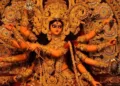
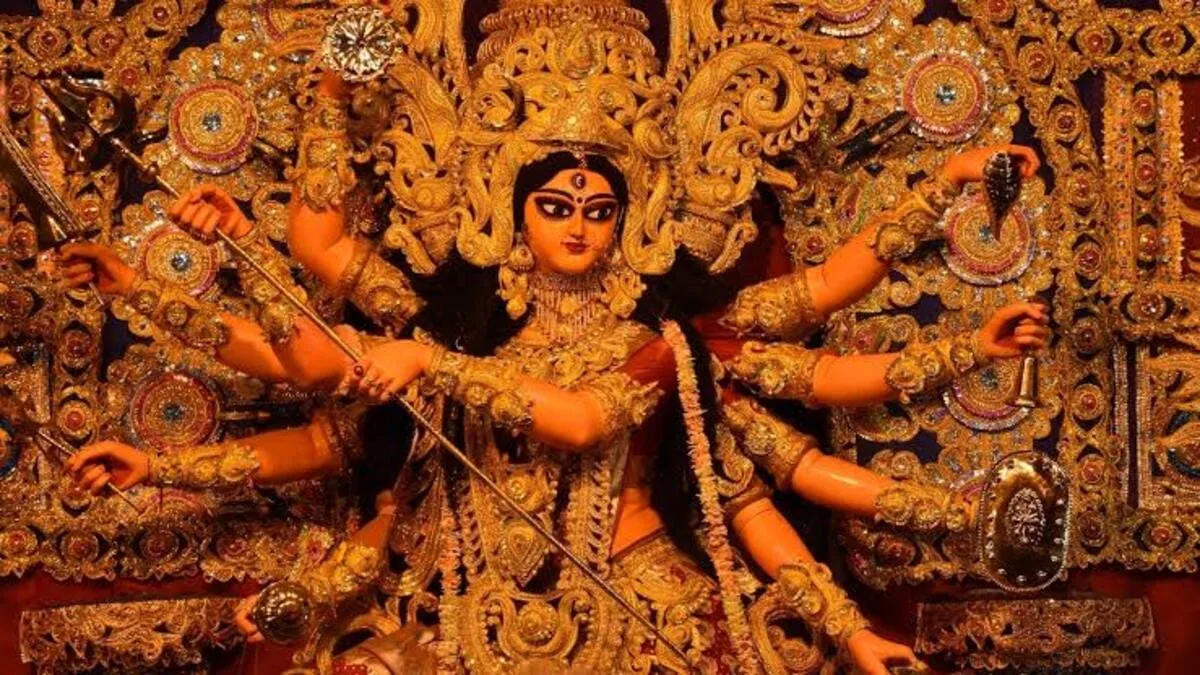
The philosophy behind our worship of Maa Durga, the embodiment of Shakti, goes much deeper than the religious rites and ceremonies we perform with devotion. If we examine the Goddess’s attributes thoughtfully, we discover a range of philosophical meanings that bear directly on our everyday lives. For example, let us look at the weapons she wields. The Trishul, or trident, is often interpreted as symbolising the three gunas of Prakriti: sattva (clarity and harmony), rajas (activity and desire), and tamas (inertia and ignorance). These three qualities, according to Samkhya philosophy, operate throughout manifested nature and influence our thoughts, actions, and behaviour. How they interact and keep us bound to worldly existence is itself a vast and complex subject, worthy of deeper contemplation. The Sudarshan Chakra, bestowed by Lord Vishnu, may be understood as symbolising the ceaseless movement of cosmic order and the power that upholds righteousness. Indra’s thunderbolt, or vajra, may be seen as a symbol of firmness of character, determination, and the strength to withstand adversity.
The “conch” is associated with the sacred sound AUM, which the sages contemplated as an expression of the ultimate reality underlying the universe. The spear, bestowed by Agni, the Fire God, may be interpreted as representing the purifying power of fire and the strength needed to overcome obstacles. The sword symbolises intellect and wisdom, particularly “Viveka”, the faculty of discrimination that enables us to distinguish the real from the unreal and, in practical life, right from wrong. Without this faculty, even a highly educated person may find himself wandering in the darkness of ignorance. After all, academic qualifications do not necessarily make a person wise. The bow and arrows may be likened to potential power being converted into action, just as potential energy is transformed into kinetic energy in physics. This, of course, is a useful analogy rather than a scientific explanation of the sacred weapons.
The axe symbolises the craftsmanship of Vishwakarma and the power to remove what is harmful and make way for constructive change. The lotus represents purity, wisdom, and liberation through knowledge. The serpent necklace, traditionally associated with Shesha, the king of serpents, carries another layer of symbolism connected with the divine and cosmic order. Undoubtedly, the interpretations of these sacred attributes vary, and their deeper significance cannot be fully explained in a few lines.
Beyond all these philosophical interpretations and outward expressions of worship, there is another aspect of Maa Durga that is particularly close to the hearts of her devotees: her motherly compassion. Maa Durga is the divine force to whom we turn for protection against worldly suffering, trusting in her omnipresent and all-powerful nature. She embodies the perfect union of power and mercy that we recognise in loving mothers everywhere. Just imagine a mother who is gentle and affectionate towards her child but becomes fiercely protective when that child’s life is threatened. Would we call her cruel because she fights against the danger? Certainly not. Her courage springs from love. It is in this same spirit that devotees look upon the formidable yet compassionate form of Maa Durga.
Let us, therefore, look beyond the fearsome weapons and the magnificent outward form of the Mother Goddess. The philosophy of Durga calls upon us to strengthen the fortress of our own character and prevent the enemies within from ruling our lives and obstructing our pursuit of higher wisdom and spiritual bliss. The sages repeatedly emphasised the need to discipline the mind and rise above excessive attachment to worldly pleasures. For how can we hope to realise our higher nature when our thoughts remain entangled in the fleeting attractions of the material world?
After all, what greater tribute can we offer Maa Durga than to conquer the “Mahishasura” (demons) within ourselves? We may celebrate her victory over evil every year, but should we not also make an earnest effort to overcome the greed, arrogance, and uncontrolled desires that actually rob us of inner peace? Perhaps the real celebration of Durga’s victory begins when we learn to keep these inner enemies at bay. Gradually, we free ourselves from the shackles of excessive attachment to material things. This includes those forms of entertainment that, under the guise of devotion, merely “excite our senses” rather than uplift our minds. Even the sacred tradition of Garba can lose its spiritual purpose when devotion gives way to ostentation and sensual exhibitionism. Sadly, in our eagerness to turn almost every celebration into a grand entertainment show, we sometimes allow the very spirit of devotion to take a back seat. What an irony it would be if we celebrate the destruction of Mahishasura, while merrily nurturing his very traits within ourselves! Let our Garba remain an expression of devotion, rather than turn into a display of “garva” (pride, vanity and titillation), which only blocks us from experiencing the boundless bliss within.