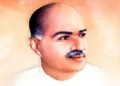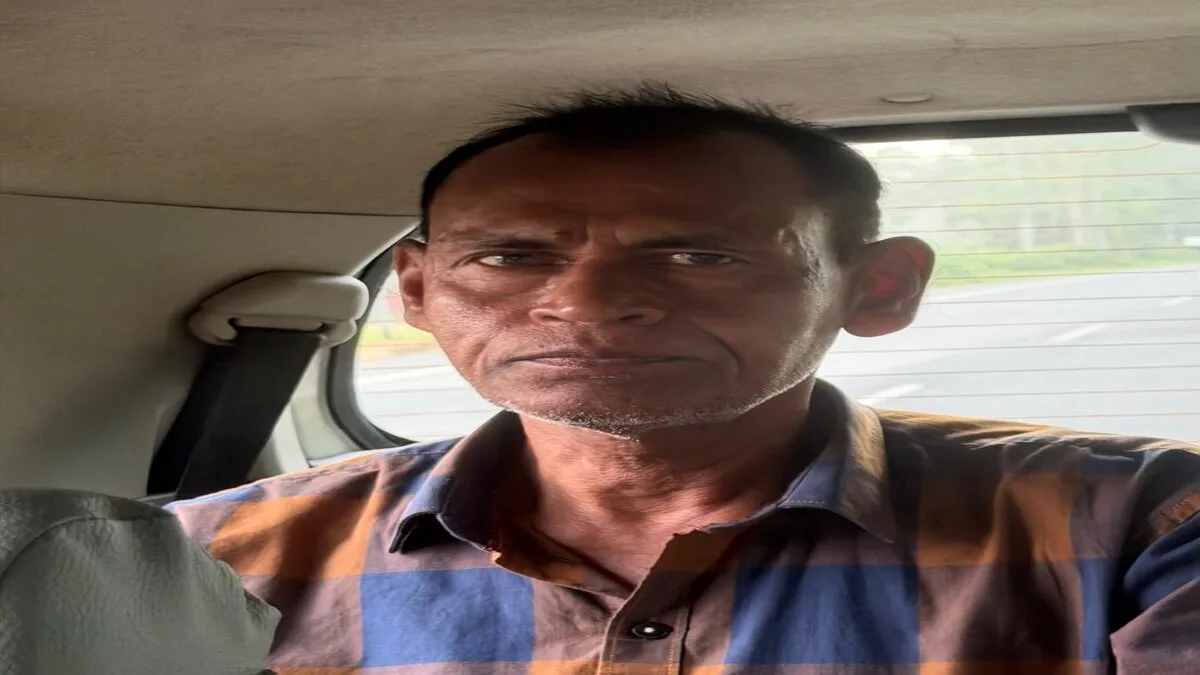
KOLKATA: In a significant operation against Maoist insurgency, the Special Task Force (STF) of Kolkata Police has arrested senior CPI (Maoist) leader Asim Mandal, alias ‘Akash’. The arrest took place in Patashpur, East Midnapore district, West Bengal, near the Jharkhand border. Mandal, a Central Committee member of the banned outfit and secretary of its West Bengal State Committee-I, had evaded security agencies for over 15 years.
The 64-year-old Maoist leader was apprehended from the Patashpur area early Thursday. He was among the senior Maoist leaders wanted by security agencies in West Bengal, Jharkhand, and Odisha. A combined reward of Rs 2.20 crore had been announced for information leading to his capture—Rs 1 crore by the Jharkhand government and Rs 1.20 crore by the Odisha government.
Mandal had arrived in Patashpur, where his in-laws reside, in an attempt to maintain a low profile. Police sources indicated he had been using a changed appearance and relying on local contacts to avoid detection. The circumstances surrounding his presence in the area are now part of the ongoing investigation.
Kolkata Police STF Tracks Down Long-Absconding Maoist Leader
The arrest followed intelligence-led efforts by the Kolkata Police STF to trace Mandal, who had remained underground for years, moving through forested and inter-state areas associated with Maoist activity.
West Bengal Chief Minister Suvendu Adhikari commended the STF following the arrest. He stated that the operation demonstrated the effectiveness of the state police force in tracking a senior Maoist leader who had remained outside the reach of law enforcement for over 15 years.
The arrest comes amid ongoing security operations along the West Bengal-Jharkhand border and in the wider Dalma-Jungle Mahal belt. Security agencies have been focusing on disrupting remaining Maoist networks, particularly those operating across state boundaries.
Investigation Underway Into Mandal’s Network and Activities
Following Mandal’s arrest, investigators are examining his alleged links with Maoist cadres and supporters across three states. Two bags containing Maoist literature, books, and electronic equipment were recovered from him, and this material is currently being examined as part of the ongoing investigation.
Investigators are also expected to question Mandal about the organization’s remaining networks, contacts, and activities in the Bengal-Jharkhand-Odisha region. However, details concerning specific intelligence gathered during interrogation have not been officially disclosed.
The arrest could provide security agencies with valuable information about the organizational structure and movement of Maoist cadres operating in the forested areas of Jharkhand and Odisha. Any such assessment will depend on the outcome of the investigation.
Wanted in Dozens of Cases Across Three States
Mandal has been associated with a large number of criminal cases registered in West Bengal, Jharkhand, and Odisha. Recent reports indicate approximately 55 cases, while some local reports broadly describe the figure as over 100 cases. The exact number and status of individual cases will be established from official police and court records.
His name has appeared in cases involving attacks on security forces, explosions, and other violent incidents attributed to Maoist groups.
Among the incidents with which his name has been associated is the 2008 Burudih landmine blast in the Ghatshila area of East Singhbhum, which resulted in the deaths of a police officer and several other personnel. Security agencies have also linked him to Maoist activity in Jharkhand’s Saranda and Kolhan regions.
Mandal was also reportedly named in connection with the killing of former Jharkhand MP Sunil Mahato, although the precise legal status of allegations in individual cases remains a matter for the courts.
From Student Activism to Senior Maoist Leadership
Mandal’s association with the extremist movement dates back to the 1980s when he was a college student in West Bengal. He subsequently joined the People’s War Group and gradually rose through the Maoist organizational structure.
Originally from the Chandrakona area of Paschim Medinipur district in West Bengal, he became involved over the years in the expansion of Maoist activities in Jungle Mahal and adjoining areas of Jharkhand.
After the formation of the CPI (Maoist) in 2004 through the merger of major Maoist groups, Mandal assumed important organizational responsibilities. His activities were particularly associated with the Bengal-Jharkhand belt, where the Maoist movement had established networks in forested and tribal regions.
Security agencies have described him as one of the surviving senior leaders of the older generation of the Maoist organization operating in eastern India.
Mandal’s importance within the Maoist organization increased following the death of senior Maoist commander Mallojula Koteswara Rao, popularly known as Kishenji, in 2011.
Operations in Saranda and Kolhan
Mandal’s name has frequently appeared in accounts of Maoist activity within the Saranda and Kolhan forest regions of Jharkhand, areas historically significant to the insurgent organization.
The Bengal-Jharkhand border and adjoining forest belts have historically posed particular challenges for law enforcement due to the Maoist cadres’ ability to move between jurisdictions. Consequently, security operations in these areas have necessitated coordination between police forces and central security agencies.
In recent years, sustained anti-Maoist operations have led to the arrest, surrender, or displacement of several senior cadres. Mandal’s arrest occurs against this broader backdrop of intensified operations in eastern India.
Rs 2.20 Crore combined reward
The reward announced for Mandal underscored his status as a senior wanted Maoist leader.
The Jharkhand government had announced a reward of Rs 1 crore, while the Odisha government had announced Rs 1.20 crore, bringing the combined bounty to Rs 2.20 crore.
His activities extended beyond the boundaries of any single state, making him a subject of interest for law enforcement agencies across all three states.
The interstate nature of the investigation is likely to remain important following his arrest, particularly as agencies examine his contacts and activities in Jharkhand and Odisha.
Bengal Government pledges to prevent expansion of extremist networks
Reacting to the arrest, Chief Minister Suvendu Adhikari stated that the West Bengal government would not permit attempts to revive or expand Maoist networks within the state. He commended the Kolkata Police STF for tracking Mandal after years of evading law enforcement.
I commend the Officers and Personnel of the @KolkataPolice STF in successfully tracking and apprehending Asim Mandal @ Akash, Central Committee Member and Secretary of the West Bengal State Committee-I, CPI (Maoist), from Lalat; Patashpur, Purba Medinipur.
Evading law… pic.twitter.com/Z5hHDNgssA
— Suvendu Adhikari (@SuvenduWB) September 17, 2026
The Chief Minister’s remarks came as security agencies continued their efforts to prevent the re-emergence of Maoist activity in areas that had previously experienced insurgency.
The administration has emphasized that security operations will persist against organizations and networks involved in extremist violence.
Arrest marks another phase in anti-Maoist operations
The arrest of Asim Mandal represents a significant development in the long-running investigation into Maoist networks operating across West Bengal, Jharkhand, and Odisha. His decades-long association with the insurgent movement, senior organizational position, and alleged involvement in multiple cases had made him a high-priority target for security agencies.
For investigators, the immediate focus will be on establishing the full legal record against him, analyzing the material recovered at the time of his arrest, and determining whether he maintained active links with Maoist cadres in the eastern Indian forest belt.
While the arrest removes a senior figure from the organization’s underground leadership structure, the broader security assessment will depend on the information emerging from the investigation and the extent to which agencies can identify and disrupt any remaining operational networks.
The case is expected to involve coordination among police and security agencies in West Bengal, Jharkhand, and Odisha as investigations into Mandal’s past activities and Maoist links continue.