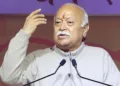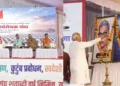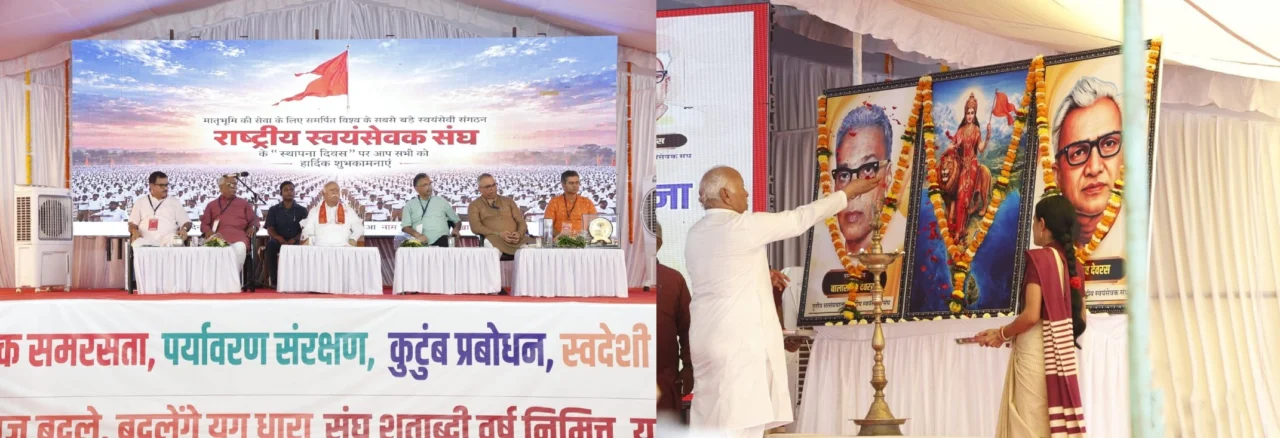
KARANJA: “Where direct work for society is being carried out, there is little need for speeches, as the substance and impact of service matter more than words,” said RSS Sarsanghchalak Dr Mohan Bhagwat while speaking at the inauguration of the Smriti Bhavan and Madhav Netralaya in Karanja, the ancestral village of RSS’s third Sarsanghchalak Balasaheb Deoras and senior Pracharak Bhaurao Deoras.
Dr Bhagwat said the welfare of the nation is ultimately linked with the welfare of every individual.
He said Mahatma Gandhi did not limit his work to politics but also engaged political workers in service. Several great personalities similarly contributed to society through different fields, making service an integral part of nation-building.
“If the country prospers, you and I will also prosper. Until that happens, no matter how much we struggle individually, we will not receive security and prestige. When a country is secure and respected, the lives of its people are also secure and respected anywhere in the world,” Dr Bhagwat said.
Sangh prepares people for selfless service
Explaining the role of the RSS, Dr Bhagwat said the organisation works to develop qualities among people, strengthen their organisational abilities and inspire devotion towards the motherland. It also encourages people to consider everyone as their own and cultivate a spirit of service.
He said this was precisely the work undertaken throughout their lives by Balasaheb Deoras and Bhaurao Deoras.
Dr Bhagwat added that people trained through the Sangh go on to work independently in different fields, while the organisation does not claim credit for their individual contributions.
Dr Bhagwat explained that the word Swayamsevak itself signifies a person who voluntarily undertakes service. He said society must reach people who have remained deprived of education, employment opportunities or adequate healthcare for a long period.
He stressed that service should not remain limited to providing immediate assistance to those in need. The larger objective should be to empower people so that they become self-reliant and capable of standing on their own feet.
Meeting the needs of the last person in society and enabling him to become capable and self-reliant is the true purpose of service, he said.
Collective participation, not individual recognition
Dr Bhagwat emphasised that social service should be based on collective participation rather than individual recognition. Every person involved in a social initiative has an important role to play in taking the work forward.
He said the spirit of service should be free from the desire for credit or personal recognition, with everyone contributing according to their ability.
He also highlighted the Baratiya tradition of service, sacrifice and compassion, saying that seeing the suffering of others and making efforts to alleviate it is a distinctive feature of the country’s cultural ethos.
Captain Smit Machchhar’s courage reflects Bharat’s cultural values
Dr Bhagwat cited the courage of Captain Smit Machchhar, who saved passengers aboard a Dubai-Tel Aviv flight despite sustaining knife injuries, as an example of the values rooted in India’s soil and culture.
He said Captain Machchhar risked his own life to ensure the safety of the passengers and demonstrated the spirit of placing the lives of others above personal safety.
“Just recently, all the passengers of an aircraft remained safe. Captain Smit Machchhar, despite sustaining knife injuries, did not worry about his own life and saved them. The qualities of this soil are present in Smit Machchhar. These are the qualities that have come down through the culture of this land,” Dr Bhagwat said.
Captain Machchhar, who was flying from Dubai to Tel Aviv, prevented the co-pilot, who had injured him, from taking control of the aircraft and attempting to crash it. His actions have received appreciation across the world. Prime Minister Narendra Modi also spoke to the pilot over a video call and praised his courage.
Dr Bhagwat said Bharat’s civilisational ethos has produced generations of people who respond to the suffering of others with compassion and a willingness to act.
He said the country has produced numerous great personalities who dedicated themselves to the welfare of society and the nation. “Our soil is such, and our culture is such, that seeing the suffering of others brings tears to our eyes,” he said.
Dr Bhagwat called upon people to draw inspiration from the lives of great personalities and translate their values into action, saying that national welfare, human service, sacrifice, dedication and collective participation remain essential to building a secure and harmonious society.