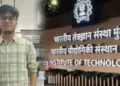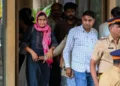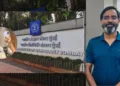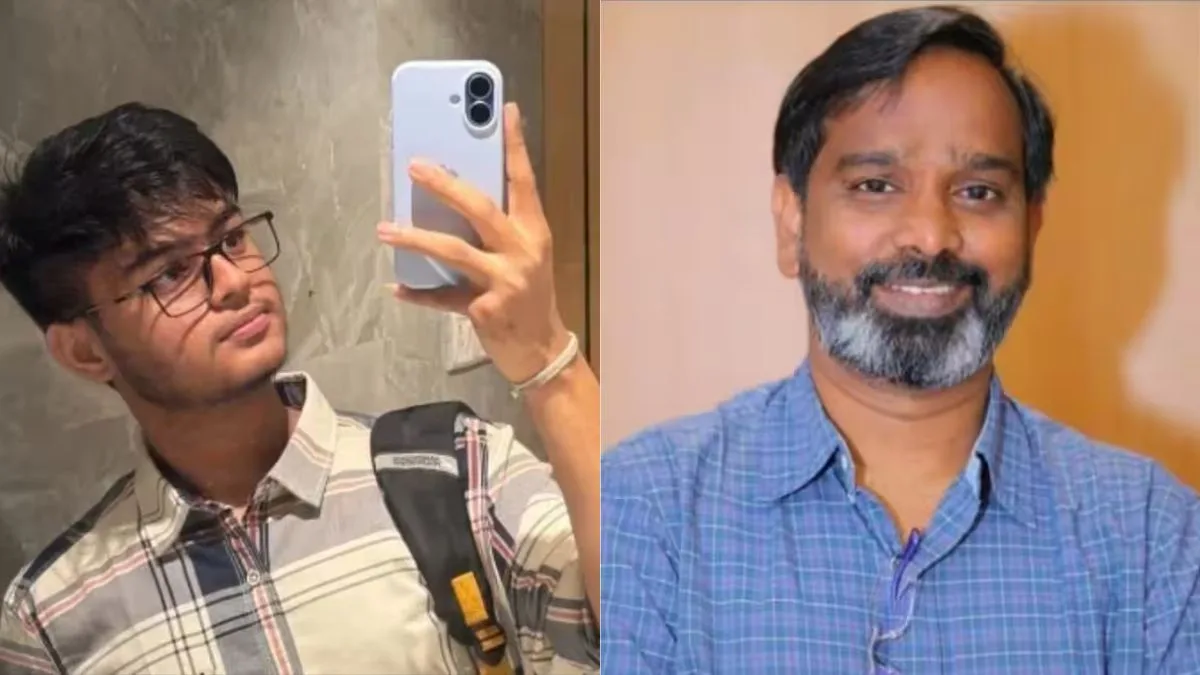
Mumbai: The Indian Institute of Technology (IIT) Bombay has suspended Professor Suryanarayana Doolla from his position as Dean of Administrative Affairs with immediate effect. The decision follows the death by suicide of second-year BTech student Sahil Ravindra Wakode and subsequent campus protests.
Doolla continues as a faculty member in the Department of Energy Science and Engineering. Sahil Wakode, approximately 20–22 years old and from Yavatmal, Maharashtra, was found dead in his room in Hostel Number 4 on the Powai campus on the evening of September 18, 2026. He was a second-year student in the Department of Energy Science and Engineering.
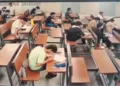
According to an official statement issued by IIT Bombay on September 19, Wakode was found using a mobile phone during a mid-semester examination earlier that day. The institute stated that he had uploaded the examination question paper to ChatGPT to seek answers.
No disciplinary action was initiated against him. The instructor and the Head of the Department discussed the matter with him, counselled him, and assured him that the incident would not adversely affect his academic career. He subsequently returned to his hostel room and was later found dead.
Wakode’s parents filed a complaint alleging institutional harassment and caste-based discrimination. Based on the complaint, Powai police registered an FIR under Section 108 of the Bharatiya Nyaya Sanhita (abetment of suicide) and relevant provisions of the Scheduled Castes and Scheduled Tribes (Prevention of Atrocities) Act.
The FIR names Professor Suryanarayana Doolla, who was the invigilator during the examination, along with other officials. The case has been transferred to the Mumbai Crime Branch for investigation. Police have seized the student’s phone; no suicide note has been reported. Student protests began on the campus after the death. On the evening of September 20, IIT Bombay Director Professor Shireesh B. Kedare met protesting students and signed an 18-point charter of demands.
On September 21, IIT Bombay posted on X: “We apologise for the statements contained in our earlier communication concerning the circumstances surrounding the unfortunate demise of Sahil. The details and circumstances leading up to the incident remain subject to investigation by the appropriate authorities. In view of the ongoing investigation, it was inappropriate to have set out or characterised details relating to the events preceding his demise before they had been duly established through the appropriate investigative process.”
The institute also stated: “Director IIT Bombay has NOT resigned. We categorically state that the related news is false.”
IIT Bombay Faculty members staged protest in support of Professor Doolla
Faculty members at IIT Bombay staged a protest in support of Professor Doolla. The IIT Bombay Faculty Forum issued a statement expressing condolences to the student’s family and solidarity with Doolla, stating that he was discharging his duties in line with the institute’s Senate-approved academic policies when he reported the alleged academic malpractice.
Professor Doolla holds a B.Tech in Electrical Engineering from Nagarjuna University (2000), an M.Tech in Energy Systems Engineering from IIT Bombay (2002), and a Ph.D. in Power Systems from IIT Delhi (2007).
He has received teaching awards including the Prof. S. P. Sukhatme Excellence in Teaching Award (2021) and has previously served as Warden of Hostel 6 and in roles related to national entrance examinations.
Compensation demanded by the father
The Scheduled Castes and Scheduled Tribes (Prevention of Atrocities) Act, 1989, commonly referred to as the SC/ST Act or “Dalit Atrocities Act”, has been invoked in this case. Mumbai Police registered an FIR based on the complaint by Sahil Wakode’s father. Sahil Wakode’s father, Ravindra Wakode (also referred to in some reports as Ravindra Chakradhar Wakode or similar variants), and the family demanded compensation as one of several conditions before accepting the body and during subsequent statements. The family’s advocate stated that the demands included the immediate release of compensation to the family under the provisions of the SC/ST (Prevention of Atrocities) Act.
The “Dalit Atrocities Act” is the common informal name for the Scheduled Castes and Scheduled Tribes (Prevention of Atrocities) Act, 1989 (as amended). It is the same legislation already applied in the Sahil Wakode FIR, under sections covering alleged caste-based insults, humiliation, and related offences, charged alongside abetment of suicide.
It includes charges under the SC/ST Act (specifically provisions covering alleged caste-based insults/humiliation such as Sections 3(1)(r) and 3(1)(s) in reports) along with abetment of suicide under BNS Section 108. The FIR names Professor Suryanarayana Doolla and other officials. The case was later transferred to the Crime Branch.
The invocation is based on the parents’ allegations of casteist remarks and harassment over the preceding months. These allegations remain under investigation and have not been judicially established. IIT Bombay has stated that the student had not filed any prior complaint of caste discrimination with its SC/ST cell or administration.
Other related demands covered monetary assistance in line with the Act’s relief and rehabilitation rules. The students’ 18-point charter (signed by the Director) also sought “fair and prompt monetary assistance” for families of recent student deaths at the institute, in consultation with the families.
What the Wakode family’s advocate says
Advocate Nitin Kamble (also reported as Nikhil Kamble in some outlets), representing the family, outlined the following demands:
1. Transfer of the investigation to the Crime Branch.
2. Allowing the father and 3–4 persons nominated by him to monitor the probe.
3. Supervision by a Joint Commissioner of Police.
4. State opposition to any anticipatory bail applications by the accused at all court levels.
5. Appointment of a special public prosecutor (and additional high-court counsel nominated by the father).
6. Immediate release of compensation under the SC/ST Act.
7. Fast-track / speedy trial before the special court.
8. Challenging any court orders favourable to the accused.
German citizen’s role?
The deceased student’s family initially refused to claim the body until assurances on investigation transfer and related points were given; they later accepted it after the case was moved to the Crime Branch. Social-media posts circulating on 21 September 2026 refer to Navneet Pal, described as a German citizen and Overseas Citizen of India (OCI) cardholder as playing the role of instigator.
These posts allege that she has been “playing a background role in instigating students” in the IIT Bombay protests related to the case, with some linking her to Marxist groups and calling for an investigation into her role and possible violation of OCI norms. No verified public statements from Navneet Pal herself claiming or framing the incident as specific “Dalit targeting” appear in the available news reports or official records as of 21 September 2026 afternoon. IIT Bombay has denied prior caste-discrimination complaints from the student to its SC/ST cell.