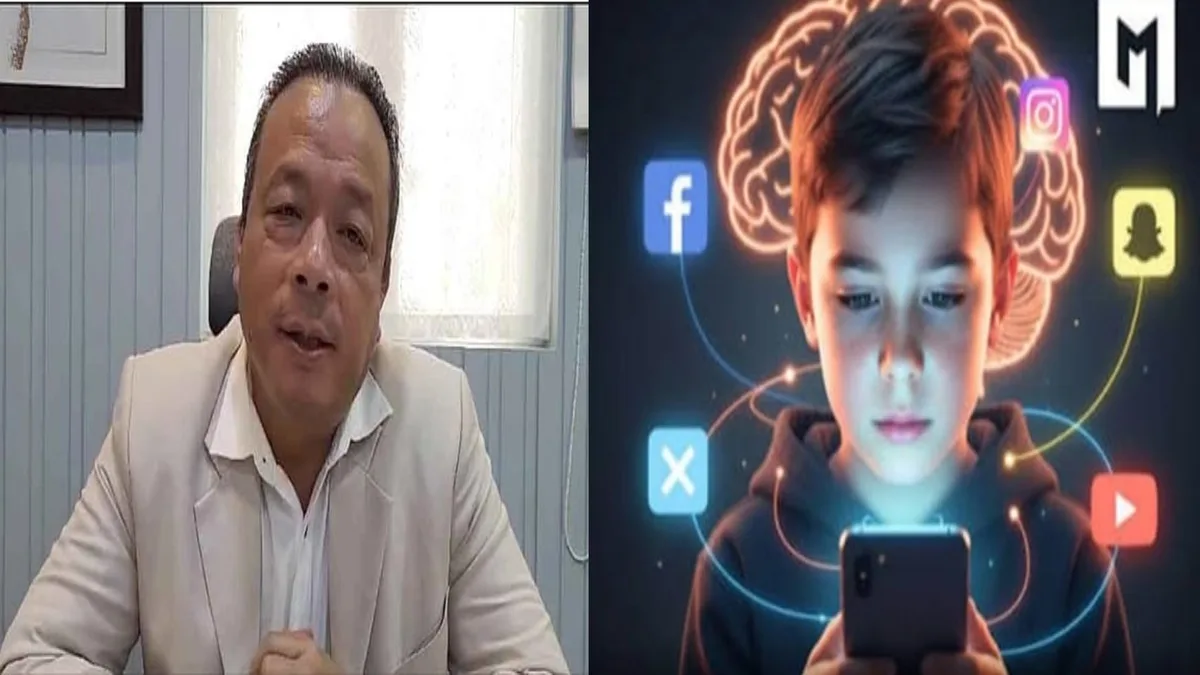
Meghalaya MLA Paul calls for digital detox to protect young minds
September 19, 2026
  • Read Ecopy
  • Circulation
  • Advertise
  • Careers
  • About Us
  • Contact Us
Android AppiPhone AppArattai
Organiser
  • ‌
  • Bharat
    • Assam
    • Bihar
    • Chhattisgarh
    • Jharkhand
    • Maharashtra
    • View All States
  • World
    • Asia
    • Europe
    • North America
    • South America
    • Africa
    • Australia
  • Editorial
  • International
  • Opinion
  • RSS @ 100
  • More
    • World Hindu Congress 2026
    • Op Sindoor
    • Analysis
    • Sports
    • Defence
    • Politics
    • Business
    • Economy
    • Culture
    • Special Report
    • Sci & Tech
    • Entertainment
    • G20
    • Azadi Ka Amrit Mahotsav
    • Vocal4Local
    • Web Stories
    • Education
    • Employment
    • Books
    • Interviews
    • Travel
    • Law
    • Health
    • Obituary
  • Subscribe
    • Subscribe Print Edition
    • Subscribe Ecopy
    • Read Ecopy
  • ‌
  • Bharat
    • Assam
    • Bihar
    • Chhattisgarh
    • Jharkhand
    • Maharashtra
    • View All States
  • World
    • Asia
    • Europe
    • North America
    • South America
    • Africa
    • Australia
  • Editorial
  • International
  • Opinion
  • RSS @ 100
  • More
    • World Hindu Congress 2026
    • Op Sindoor
    • Analysis
    • Sports
    • Defence
    • Politics
    • Business
    • Economy
    • Culture
    • Special Report
    • Sci & Tech
    • Entertainment
    • G20
    • Azadi Ka Amrit Mahotsav
    • Vocal4Local
    • Web Stories
    • Education
    • Employment
    • Books
    • Interviews
    • Travel
    • Law
    • Health
    • Obituary
  • Subscribe
    • Subscribe Print Edition
    • Subscribe Ecopy
    • Read Ecopy
Organiser
  • Home
  • Bharat
  • World
  • Operation Sindoor
  • Editorial
  • Analysis
  • Opinion
  • Culture
  • Defence
  • International Edition
  • RSS @ 100
  • Magazine
  • Read Ecopy
Home Bharat

From social media to smartphone obsession: Meghalaya MLA Paul Lyngdoh warns of growing digital threat to young minds

Meghalaya legislator Paul Lyngdoh has urged stronger measures to address the growing impact of excessive social media and smartphone use on young minds. The article highlights concerns over digital addiction, declining concentration, emotional instability and the need for a meaningful digital detox            

Salil GewaliSalil Gewali
Sep 19, 2026, 06:30 pm IST
inBharat, Meghalaya
Follow on Google News
Meghalaya legislator Paul Lyngdoh has urged measures to address the impact of excessive social media and smartphone use on young minds

Meghalaya legislator Paul Lyngdoh has urged measures to address the impact of excessive social media and smartphone use on young minds

Facebook
Twitter
WhatsAppTelegramEmail

SHILLONG: Our times are steeped in technological wonders. The luxuries and conveniences have, in fact, overwhelmed us all. None of us wishes to be left behind. What is most noteworthy is that some of those technological advantages are also being abused to an extreme extent. This misuse has gone so far as to weaken both body and mind. Yet we remain unconcerned about their impact at the individual level. We merrily ignore the hard times countless households across the nation are experiencing as a result of these consequences. Coming to the point, I say with utmost emphasis that we have gravely corrupted our minds by plunging too deeply into digital conveniences—most dangerously, into the grip of social media.

Leaving aside adults, the younger generation’s growing engagement in social media has now become a serious cause for concern. The way platforms such as Instagram, Facebook, WhatsApp, and YouTube flood young minds with endless and often unhealthy content deserves serious study. Many psychologists and neuroscientists have long expressed alarm at this trend. This issue was also raised very thoughtfully recently by MLA and former Minister of Arts and Culture of Meghalaya — Bah Paul Lyngdoh. We must thank Bah Paul Lyngdoh for drawing attention to the matter in the Meghalaya Assembly and urging the government to give it serious thought.

One assistant principal of a Higher Secondary School asserts: “In today’s world, mobile phones have become a serious source of distraction and harmful exposure for schoolchildren. Of course, what begins as a harmless habit of watching cartoons or short videos, which parents often allow, soon grows into a dependency that is deeply harmful.” Very true. We often notice how young children or teenagers become restless without their devices. When they get a little older, they cannot sit through a single lesson without popping their head up to check for new likes or notifications. Frankly speaking, they find it very difficult to focus on their studies for even ten minutes. Whether one agrees or not, these constant distractions, especially from academic work, have taken a heavy toll on one’s performance, discipline, and mental balance. What is most disturbing is that much of the content served to users is selected by systems designed to hold their attention for as long as possible. Sensational, provocative, obscene, or emotionally charged material is deliberately promoted to catch more eyeballs and go viral. The “algorithms,” cunningly devised by money-hungry companies to push such content, are no less dangerous.

Also Read: Was a Hindu Mandir once standing here? ASI probes ancient well beneath demolished Saharanpur mosque

Yes, steady dependence on this stream of visuals gradually hardens into “obsession”. Is this not worse? The young mind, unable to resist the lure of flashy visuals and endless scrolling, clings to the cell phone as if it were its second self. When this obsession is interrupted, for instance, when parents take away the phone, the reaction can be extreme, exploding into anger. Some even throw weird tantrums, refusing food or pushing it away, when their parents snatch their mobile sets.  This anger does not rise against the parents, but against the fact that they are forced to part with the phone — the very object that has already enslaved the child.

To say that “repeated anger’ brings a kind of “memory blindness” is no exaggeration. When anger takes hold, the mind loses stability. Its ability to think critically may then begin to weaken. In a deeper sense, “loss of memory” does not mean ordinary forgetfulness. It means losing touch with “innate wisdom”, values, and past experiences that should guide present judgment. Let me draw a comparison in modern parlance — if the data in a laptop’s RAM were suddenly erased while it was running, active programs would freeze, unsaved work would disappear, and the system might crash. In much the same way, when children keep losing memory due to an obsession with digital distractions or with sensory objects, their minds begin to malfunction. They gradually lose their sense of responsibility, not only toward their studies but also toward their family, society, and even their own well‑being.

How can we overlook the rising number of youths committing shocking acts, even heinous crimes, simply because they were restricted from using mobile phones or objects of obsession? A few weeks ago in Maharashtra, a heart‑breaking tragedy unfolded when a 19‑year‑old boy, distressed by his parents’ argument over payment issues for an iPhone they had purchased, jumped from the edge of a hill in anger. What unfolded next was even more spine‑chilling. In a desperate attempt to save his son, his father also fell, and moments later, his mother committed suicide by jumping from the same place after seeing both her son and husband fall to their deaths. Is this not reason enough for the government to act decisively and urgently on such dreadful issues? Closer to home, in Meghalaya, probably about two years ago, a 10-year-old girl from the village of Mawryngkneng committed suicide after her parents asked her to focus on her studies and not use her phone.

It is not that children do not love their parents or deliberately wish to harm themselves. Their minds are overpowered by delusion born of memory loss, unable to grasp critically that the love of their parents and the care for themselves is far more precious than any mobile phone.  This is the tragic danger of unchecked digital obsession in the present times. It uncontrollably interferes with the faculty of judgment, weakens memory, and distorts values, leading to choices that can destroy families and shake society to the core.

Thus, when happiness and pleasure are encouraged to be sought only from external sensory gratifications as addictive as drugs, we fail ourselves, we fail our society, and we fail our civilisation. The Meghalaya legislator Bah Paul has already pressed the wake‑up button. Nations like Australia, Finland, Sweden, Poland, China, and France have taken strong measures to uninstall digital waste from young minds. India, it seems, is still busy hitting snooze!




Topics: Meghalayamental healthChildrenDigital DetoxYoung mindsSmartphone AddictionPaul LyngdohSocial Media Addiction
Share
Tweet
SendShareSend
✮ Subscribe Organiser YouTube Channel. ✮
✮ Join Organiser's WhatsApp channel for Nationalist views beyond the news. ✮
Previous News

‘Indian’ in Mahmud Ghazni, Accused of Compromising RAW Ops, Hameed Ansari Now Declares Hindu Right-Wing Danger to India

Next News

Karnataka: Ganapati procession follows approved mosque route in T Narasipura amid allegations of police high-handedness

Related News

West Asia: USS Lincoln crew faces mental health risks & resource deficit; Signals US pressure to sustain operation

Lessons from France: Why India needs stronger digital safety laws for children?

Illegal Bangladeshis arrested in assam and Meghalaya

Assam, Meghalaya crack down on illegal migration: 14 Bangladeshi infiltrators arrested in 24 Hours

Exercise Pragati at Umroi Army Camp, Meghalaya

Exercise PRAGATI 2026: 13 nations unite at Umroi to boost operational readiness; Reaffirm Indo-Pacific peace & security

3 Bangladeshis caught at the Digar Khal naka checkpoint in Assam

Entered India in 2012, now fleeing home: 3 Bangladeshis caught trying to slip out through Meghalaya

Representative Image

Ahead of NEET, NTA promotes tele-MANAS helpline: Issues mental health advisory; No exam is more important than life

Load More

Latest News

Ganapati murti visarjan procession at T. Narasipura on September 18

Karnataka: Ganapati procession follows approved mosque route in T Narasipura amid allegations of police high-handedness

Meghalaya legislator Paul Lyngdoh has urged measures to address the impact of excessive social media and smartphone use on young minds

From social media to smartphone obsession: Meghalaya MLA Paul Lyngdoh warns of growing digital threat to young minds

'Indian' in Mahmud Ghazni, Accused of Compromising RAW Ops, Hameed Ansari Now Declares Hindu Right-Wing Danger to India

‘Indian’ in Mahmud Ghazni, Accused of Compromising RAW Ops, Hameed Ansari Now Declares Hindu Right-Wing Danger to India

IIT Bombay expresses grief over student’s suicide, says no disciplinary action followed ChatGPT exam incident

India’s diverse dance heritage showcases the rich cultural traditions, stories and celebrations of all 28 states

Dancing Through Bharat: A fascinating journey across the traditional dance forms of all 28 states

From Berlin to Braj, Sudevi Mataji’s spiritual journey became a lifelong mission of Gau Seva, caring for over 2,500 cows

From Berlin to Braj: How Sudevi Mataji turned her spiritual search in Bharat into four decades of Gau Seva

Dr Mohan Bhagwat inaugurates ‘Sangh Anubhavshala’ in Indore; centre showcases RSS’s century-long journey, work & ideals

Jammu administration tightens scrutiny of Rohingya and Bangladeshi settlements as families begin dismantling huts

Rohingya begin exodus in Jammu: Families dismantle huts after notices amid scrutiny of Bangladeshi nationals

Houthi expansion along Yemen’s Red Sea coast puts Saudi Arabia and regional shipping under growing pressure

Shia terrorists Houthis tighten grip on Bab el-Mandeb, threaten Saudi oil and Red Sea shipping routes

Bangladeshi national Biplob Soren was taken into custody after working at the Indian Naval Academy in Ezhimala using fake documents

Security breach at Keralam Naval Academy: Bangladeshi man with fake Aadhaar caught working at Ezhimala in Kannur

Load More
  • Privacy
  • Terms
  • Cookie Policy
  • Refund and Cancellation
  • Delivery and Shipping

© Bharat Prakashan (Delhi) Limited.
Tech-enabled by Ananthapuri Technologies

  • Home
  • Search Organiser
  • Bharat
    • Assam
    • Bihar
    • Chhattisgarh
    • Jharkhand
    • Maharashtra
    • View All States
  • World
    • Asia
    • Africa
    • North America
    • South America
    • Europe
    • Australia
  • Editorial
  • Operation Sindoor
  • Opinion
  • Analysis
  • Defence
  • Culture
  • Sports
  • Business
  • RSS @ 100
  • Entertainment
  • More ..
    • Sci & Tech
    • Vocal4Local
    • Special Report
    • Education
    • Employment
    • Books
    • Interviews
    • Travel
    • Health
    • Politics
    • Law
    • Economy
    • Obituary
  • Subscribe Magazine
  • Read Ecopy
  • Advertise
  • Circulation
  • Careers
  • About Us
  • Contact Us
  • Policies & Terms
    • Privacy Policy
    • Cookie Policy
    • Refund and Cancellation
    • Terms of Use

© Bharat Prakashan (Delhi) Limited.
Tech-enabled by Ananthapuri Technologies