BHUBANESWAR: Nuakhai, one of the most important community festivals of western Odisha, is far more than a celebration of the arrival of new rice. Rooted deeply in the agrarian life of the region, the festival brings together farmers, tribal communities, families and people from different social groups in a collective expression of gratitude to nature, the presiding deities and the forces that sustain life.
Celebrated on the fifth day of the bright fortnight of Bhadrava, known as Bhadrava Shukla Panchami, Nuakhai marks the offering of the season’s first harvested crop to the presiding deity before it is consumed by the people. The festival is popularly associated with Nua—new—and Khai—eating. In essence, it is the sacred act of consuming the new harvest only after it has been offered to the deity.
For the people of western Odisha, where agriculture has historically remained the foundation of social and economic life, Nuakhai represents the culmination of months of hard work in the fields. At the same time, it is a festival of family reunion, social reconciliation, cultural expression and community solidarity.
A festival rooted in agriculture
The agricultural calendar of western Odisha is closely intertwined with traditional festivals and rituals. Different stages of cultivation are marked by ceremonies through which farmers express reverence for Mother Earth, rain, crops, cattle and the deities associated with agricultural prosperity.
The cycle begins with Akhimuthi Anukula on Akshaya Tritiya, when farmers worship the Earth and seek blessings for a favourable agricultural season before sowing or beginning cultivation. Prayers are offered for adequate rainfall, fertile soil and a good harvest. As agricultural activities progress, other traditional observances accompany different stages of farming.
After ploughing, transplanting and other major agricultural activities are completed, farmers observe rituals associated with cattle. On Shravan Purnima, cows and bullocks are worshipped in recognition of their indispensable contribution to agriculture.
By the month of Bhadra, the landscape of western Odisha begins to acquire a distinctive character. Paddy fields turn green and later golden, with the paddy swaying gently in the breeze. Wild sugarcane grass spreads like a white carpet across parts of the countryside, while seasonal flowers add colour to the landscape.
It is against this backdrop that Nuakhai arrives, symbolising the moment when the farmer’s labour begins to yield its first fruits.
The sacred importance of ‘Anna’
The central place occupied by rice in Nuakhai reflects the larger significance of anna in Bharatiya civilisation. For generations, rice has been the staple food of western Odisha and an integral part of the region’s cultural identity.
The ancient Indian understanding of food goes beyond its nutritional value. Anna is regarded as a manifestation of life itself and as a fundamental link between nature, human existence and the cosmic order. The Bhagavad Gita also establishes a close relationship between food, rain, sacrifice, action and the sustenance of living beings.
The celebrated Odia nature poet Gangadhar Meher similarly emphasised the importance of food in human life. His poetic expression of the centrality of anna reflects the agrarian consciousness that continues to characterise western Odisha.
Nuakhai therefore gives sacred importance to the new grain. The first produce is not treated merely as an agricultural commodity. It is regarded as a gift of nature and the result of the combined efforts of the farmer, the soil, rain, cattle, seeds and divine grace.
Ancient roots and historical evolution
There is no conclusive historical evidence establishing the precise origin of Nuakhai or the exact period when the festival first began to be observed in western Odisha. However, the tradition is deeply embedded in the agrarian and indigenous cultural history of the region.
The importance of the first harvest can be traced across several ancient agricultural civilisations. Rituals associated with grain, harvest and offerings to deities were central to the cultural life of early agrarian societies, including the Vedic, Indus Valley and other ancient civilisations.
Local oral traditions connect the institutionalisation of Nuakhai in western Odisha with the Chauhan ruler Ramai Dev, who established his kingdom at Patnagarh in the medieval period. According to this tradition, Ramai Dev recognised the importance of farmers and tribal communities in consolidating the newly established Chauhan kingdom. He accepted existing local traditions and accorded an important position to the worship of Samalei, who became associated with the ruling dynasty.
Over time, Nuakhai developed from a predominantly local agrarian observance into a major community festival encompassing different social groups.
In the earlier period, the date and auspicious moment for observing the festival varied across different principalities and communities. Royal priests associated with important temples traditionally determined the tithi and lagna for the offering of the new harvest.
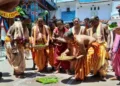
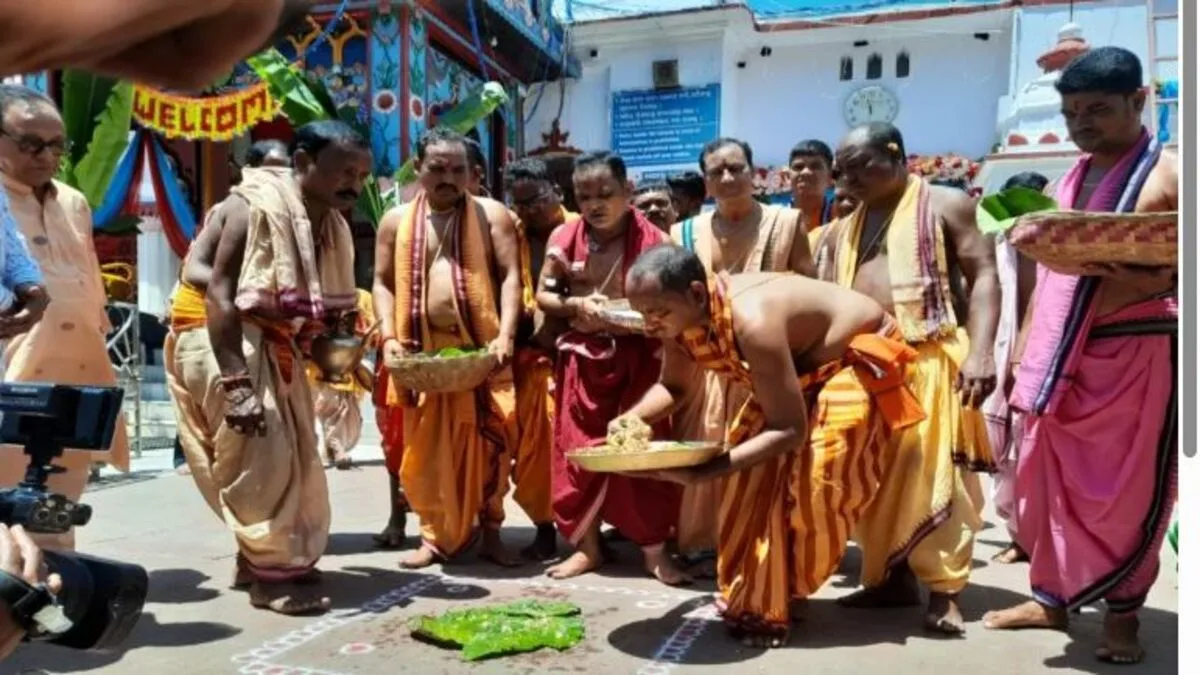
At places such as Bhawanipatna, Bolangir, Patnagarh, Sundargarh and Sonepur, the rituals were traditionally associated with the presiding deities of major temples. The offering of Navanna to the deity by the chief priest preceded the community’s consumption of the new rice.
A major change came in 1991 when the Odisha government declared Bhadrava Shukla Panchami—the day following Ganesh Puja—as the common occasion for Nuakhai and declared it a state holiday. This helped provide a common public framework for the celebration while preserving the distinctive local traditions associated with different regions and communities.
Rituals begin before the festival
Nuakhai preparations traditionally begin several days in advance. Homes are cleaned and decorated, new clothes are purchased, and households make arrangements for the special food and rituals. Clay pots, bamboo baskets, puja materials, groceries and other items required for the celebration are collected. The day before Nuakhai, the head of the family traditionally visits the paddy field to collect the new crop.
Before harvesting the selected paddy, rituals are performed with offerings such as milk, flowers, ghee and unboiled rice. The new crop is then brought home, where it is ceremonially received by the senior woman of the household.
The night before Nuakhai is also a time of intense preparation. Women traditionally grind rice using pestles to prepare ingredients for pitha, manda and other delicacies. Water is collected in advance, and leaves required for serving the ceremonial meal are gathered. These preparations are not merely household chores. They are part of a living cultural tradition in which knowledge, rituals, food practices and social customs are passed from one generation to another.
Leaves, food and the bond with nature
One of the most fascinating aspects of Nuakhai is its connection with nature. Traditionally, different communities use leaves collected from trees and plants to serve the ceremonial meal.
Leaves such as Kure, Shal, Bhelua, turmeric and others have an important role in the preparation and presentation of Nabanna Bhog. Different communities have historically followed their own customs regarding the leaves used for consuming the new rice.
The practice of eating the Nuakhai meal from leaves instead of metal or modern utensils is known in many places as Khalidana. Women begin preparing the leaf plates ahead of the festival. This tradition provides a striking reminder of the sustainable practices embedded in indigenous and rural culture. The use of locally available leaves connects food directly with the surrounding ecosystem and reflects an older way of living in which agriculture, forests and household life were closely connected.
The landscape itself becomes part of the festival. Paddy fields, wild grasses, seasonal flowers, trees and agricultural animals together create the natural setting in which Nuakhai is celebrated.
Worship of cattle and mother earth
Nuakhai also reflects the deep respect traditionally shown towards domestic animals. On the festival day, cows and bullocks are bathed and worshipped. In some traditions, sacred threads or rakhi are tied around their horns or bodies, and they are offered fresh green grass.
For an agricultural society, cattle have historically been indispensable for ploughing, transportation and other farming activities. Their worship during Nuakhai represents an expression of gratitude for their contribution to agricultural life.
Rituals are also performed in the fields, with farmers offering prayers to Mother Earth and the deities associated with the paddy fields. At home, family deities are offered the new rice along with traditional sweets and preparations such as manda pitha and khiri. Only after the ceremonial offering do family members consume the new food.
Nuakhai Juhar: A celebration of respect
Perhaps the most powerful social dimension of Nuakhai is Nuakhai Juhar Bhet. After consuming the new harvest, younger members of the family offer respect to elders, who bless them. Relatives, neighbours and friends exchange greetings and visit one another.
The tradition extends beyond the immediate family. People meet members of different communities and social groups, strengthening bonds of friendship and mutual respect.
Nuakhai has therefore acquired a unique reputation as a festival that encourages reconciliation. Old disputes are often set aside, misunderstandings are forgiven and people renew their relationships. In this sense, Nuakhai becomes an expression of the Indian ideal of Vasudhaiva Kutumbakam—the world as one family.
A festival of food, folk culture and community
The Nuakhai meal is itself an important cultural expression. Traditional rice, dal, vegetables, saga bhaja, khiri, pitha, manda and several region-specific preparations form part of the feast.
In western Odisha, traditional food is inseparable from identity. Many dishes prepared during Nuakhai carry memories of village life and ancestral traditions.
The afternoon and evening bring another dimension to the celebrations. People visit temples to seek the blessings of local deities. Traditional games, wrestling and other community activities are organised in many localities.
Cultural gatherings known as Nuakhai Bhetghat provide a platform for folk music and dance. Traditional forms such as Dalkhai, Rasarkeli, Mailajada and Ghumra are performed, allowing younger generations to experience the cultural heritage of the region. Thus, Nuakhai is simultaneously a religious festival, an agricultural celebration, a family occasion and a cultural carnival.
From villages to global communities
The changing social structure and migration of people from western Odisha have expanded the geographical reach of Nuakhai.
Thousands of people from the region now live and work in cities such as Delhi, Mumbai, Bengaluru, Chennai and Kolkata. Unable to return to their ancestral villages every year, they organise Nuakhai Bhetghat programmes in their adopted cities.
The tradition has crossed India’s borders as well. Odias living in countries including the United States, the United Kingdom and Japan organise community gatherings to celebrate Nuakhai. These events serve as cultural bridges. Traditional Sambalpuri music, dance, food, dress and community rituals are presented to younger generations who may have grown up away from their ancestral villages.
Bhubaneswar, too, has witnessed Nuakhai Bhetghat programmes for decades, bringing together people from western Odisha and helping preserve their cultural identity in the state capital. Such gatherings have become important platforms for the preservation, documentation and public presentation of folk traditions that face the risk of weakening amid rapid urbanisation and social change.
A message of social harmony
The greatest strength of Nuakhai perhaps lies in its ability to bring people together. The festival transcends caste, community, economic status and geographical boundaries. Farmers and farm labourers, tribal and non-tribal communities, elders and youngsters all participate in different aspects of the celebration.
Its message is particularly relevant in an age when social relationships are increasingly shaped by urbanisation, migration and individual lifestyles. Nuakhai reminds people that prosperity is not merely an individual achievement. It is connected with the wellbeing of the community and the natural world.
The act of offering the first harvest before consuming it represents humility and gratitude. The practice of greeting elders represents respect. Sharing food represents fellowship. Forgiving past differences represents reconciliation. Worshipping cattle and the Earth represents ecological consciousness. Together, these practices make Nuakhai a festival of social harmony.
A living tradition for the future
Nuakhai has changed with time. Modern lifestyles, urban migration and changing food habits have altered many traditional practices. Yet the essence of the festival remains remarkably resilient. At its heart lies a simple but profound idea: the first food belongs first to the divine, nature and the community before it becomes an individual’s possession.
Nuakhai celebrates the farmer’s labour, the generosity of the Earth, the arrival of the new harvest and the bonds that hold society together. Its rituals preserve memories of an agricultural civilisation while its community gatherings give those traditions a new contemporary identity.
As the paddy sways in the Bhadra breeze, wild sugarcane blooms across the countryside and seasonal flowers brighten the landscape, western Odisha prepares to welcome its most cherished festival.
Nuakhai is therefore not merely about eating new rice. It is about beginning anew—with gratitude, forgiveness, respect and togetherness.
That is why Nuakhai continues to remain a true Gana Parva —a festival of the people, for the people and by the people. It carries the enduring message that agriculture sustains life, nature sustains agriculture, and social harmony sustains civilisation.