India’s school education system is slowly moving beyond the idea that better education only means more classrooms, buildings and facilities. The focus is now also on how children learn, how teachers teach and whether schools can prepare students for a rapidly changing world.
At the centre of this shift is the Pradhan Mantri Schools for Rising India (PM SHRI) Scheme, which aims to develop more than 14,500 existing schools as model institutions based on the vision of the National Education Policy (NEP) 2020.
PM SHRI aims to show what a modern school can look like
The PM SHRI scheme was launched on September 7, 2022, by the Department of School Education and Literacy under the Ministry of Education. It is being implemented as a Centrally Sponsored Scheme and has been planned with a total project cost of Rs 27,360 crore for 2022-23 to 2026-27. Of this, the Central share is Rs 18,128 crore.
The basic idea behind the scheme is quite straightforward. Instead of creating a completely new network of schools, the government wants to improve selected existing schools and turn them into examples that other schools can learn from.
As of July 2026, 13,092 schools have been selected across 36 States and Union Territories, which is around 90 per cent of the target. These schools cover 725 districts and 8,340 blocks and urban local bodies. More than 20 lakh students are expected to directly benefit from the initiative.
But PM SHRI is not being presented simply as an infrastructure scheme. The bigger focus is on creating schools where students get a better learning environment, teachers get support and children are given opportunities to learn through practical experiences rather than only textbooks and examinations.
The idea is bigger than better buildings
One of the important features of PM SHRI is that the selected schools are expected to become models for schools around them. The idea is that good practices developed in one school should not remain limited to that institution.
Schools are therefore expected to work with neighbouring institutions through mentoring, handholding, collaboration and clustering. In this way, a successful experiment in one PM SHRI school can potentially be adopted by other schools as well.
The scheme focuses on six broad areas based on the principles of NEP 2020. These include inclusive education, mentorship, green schools, experiential learning, better learning outcomes and quality infrastructure.
Even infrastructure is looked at differently under the programme. It is not enough for a facility to simply exist. Its adequacy, functionality, safety and overall learning environment are also considered. A school building, for example, is expected to be safe and welcoming, while classrooms should support better learning instead of being just spaces where students sit for lessons.
The schools are also expected to encourage 21st-century skills and develop connections with local communities and entrepreneurial ecosystems.
Moving children away from rote learning
For many years, Indian school education has faced criticism for its heavy dependence on memorisation. PM SHRI attempts to move learning towards a more practical and experience-based approach.
The schools continue to follow the CBSE or the relevant State or Union Territory curriculum. At the same time, they are expected to adopt the 5+3+3+4 curricular and pedagogical structure introduced under NEP 2020.
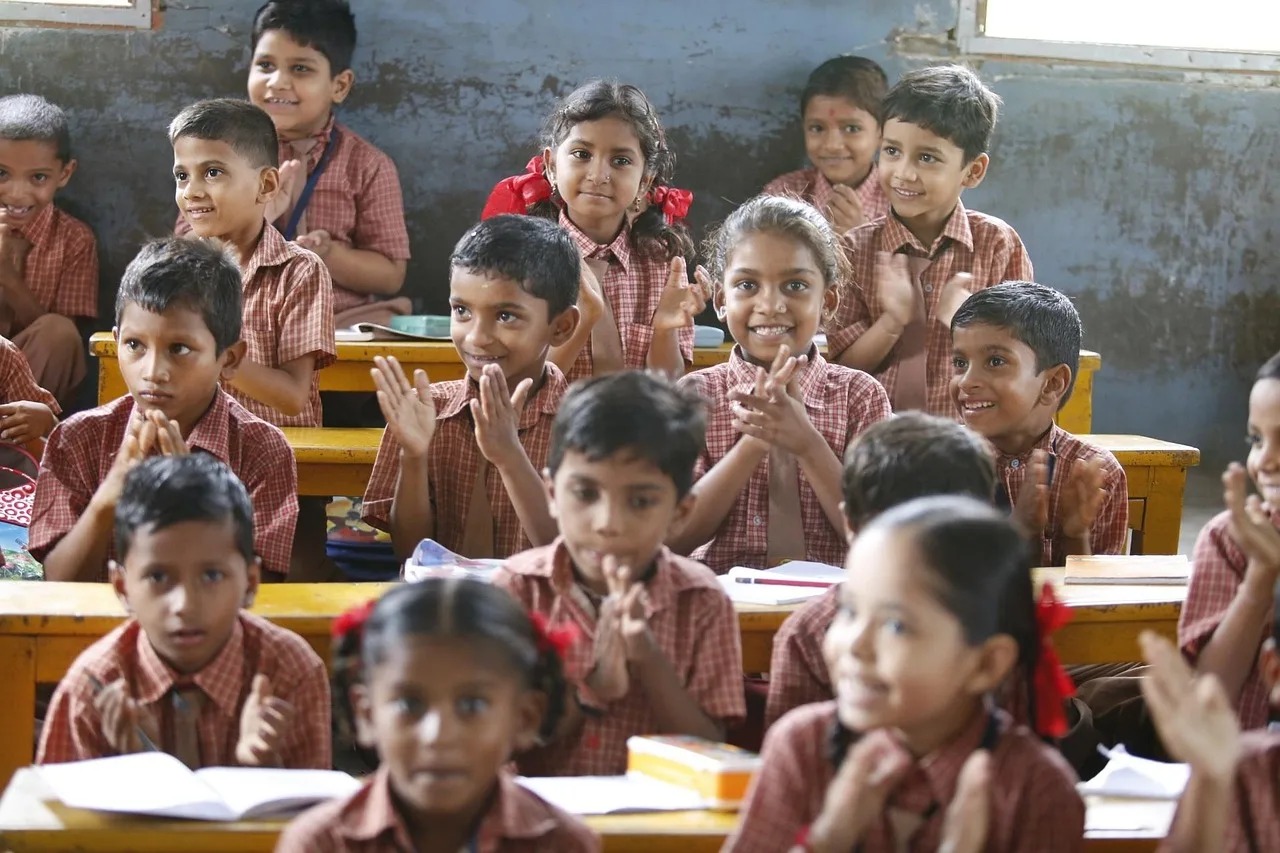
The focus is on making education connected to the real world. Students can learn through activities, projects and practical experiences rather than depending only on classroom lectures.
The concept of bagless days is one example. Students can be given opportunities to explore different skills and activities without the usual burden of carrying school books. Schools can also organise internships or exposure programmes with local artisans and people involved in traditional occupations.
Local arts, crafts and indigenous knowledge are also part of this approach. This can help children understand the culture and skills present in their own communities, while also giving them exposure to possible career and vocational choices.
Education under PM SHRI is therefore intended to go beyond marks. Sports, arts, life skills and socio-emotional development are also given importance. The larger aim is to help children become more confident, creative and adaptable.
Local languages get an important place
Another major part of the PM SHRI approach is inclusion.
India has a highly diverse school population, and children do not all enter classrooms with the same social, economic or linguistic background. For students from rural and underserved areas, the language used in classrooms can also make a major difference to how easily they understand lessons.
PM SHRI schools are encouraged to use the mother tongue, local or regional language, particularly during the early years of education.
The available UDISE+ 2025-26 data records 6,102 Sanskrit teachers, 1,994 Urdu teachers and 9,152 regional language teachers in PM SHRI schools.
The emphasis on local languages is closely linked with the effort to improve foundational literacy and numeracy. Children are more likely to understand basic concepts when learning happens in a language they are comfortable with.
At the same time, the approach gives local communities a greater role in the education process. It recognises that a child’s first learning environment is often the family and community around them, and schools can build on that knowledge.
Technology enters the classroom
Technology is another area where PM SHRI schools are expected to make a difference.
Selected schools are being supported with ICT facilities, smart classrooms, internet connectivity and digital learning resources. STEM-based programmes are also being promoted to encourage students to develop interest in science, technology, engineering and mathematics.
Digital platforms such as DIKSHA provide access to educational content and resources. The idea is not simply to put computers or smart boards inside classrooms, but to use technology in a way that makes learning more interactive.
For today’s students, digital literacy is becoming an important part of education. They need to know how to find information, understand it, question it and use it properly. Critical thinking and problem-solving are therefore becoming as important as remembering information.
Technology can also help schools in areas where access to educational resources may traditionally have been limited. However, the success of this approach will depend on how effectively teachers and students are able to use these facilities in everyday learning.
Teachers are a major part of the change
No education reform can work only through new infrastructure or technology. Teachers remain at the centre of the classroom, which is why teacher training has been given a significant place in the PM SHRI scheme.
Financial assistance of up to Rs 3 lakh per DIET is provided for capacity-building programmes. Support of up to Rs 2,500 per teacher is also available for training teachers, principals, special educators, ICT teachers and master trainers.
This training is important because the shift from traditional teaching to competency-based and experiential learning also requires teachers to change their methods.
A smart classroom by itself cannot transform education. The teacher has to know how to use digital resources, design activities, identify learning gaps and encourage students to participate. PM SHRI therefore tries to combine infrastructure with professional development.
A large network of schools
The 13,092 selected PM SHRI schools cover different levels of school education. They include 1,305 primary schools, 3,102 upper primary schools, 3,141 secondary schools and 5,544 higher secondary schools.
The network also includes 80 Kasturba Gandhi Balika Vidyalayas, 913 Kendriya Vidyalaya Sangathan schools, 620 Jawahar Navodaya Vidyalayas and four NCERT schools.
The numbers show the scale at which the programme is being implemented. The government is attempting to create a broad national network where the principles of NEP 2020 can be tested and demonstrated in actual classrooms.
For students, the intention is that a PM SHRI school should offer much more than basic schooling. It should be a place where academic learning, technology, sports, vocational exposure, arts and life skills come together.
Schools have to clear a challenge-based selection process
PM SHRI schools are not selected only because they need infrastructure improvement. The selection follows a three-stage Challenge Mode.
States and Union Territories first sign a Memorandum of Understanding with the Centre. Eligible schools are then identified using prescribed conditions and UDISE+ data.
The schools take part in an assessment covering several areas, including infrastructure, learning outcomes, teaching methods, PM POSHAN, vocational education, green initiatives and the commitment of stakeholders.
There are also different qualifying requirements for rural and urban schools. Urban schools need to secure at least 70 per cent, while rural schools need a minimum score of 60 per cent.
Physical inspections are carried out before the final recommendations are sent to the Ministry of Education. This process is intended to ensure that schools selected for the programme have the potential to become examples for others.
Green schools and environmental awareness
The PM SHRI model also places importance on sustainability.
Schools are expected to adopt green practices and make students more aware of environmental issues. This can include better use of resources, sustainable practices and activities that connect classroom learning with the environment.
For children, environmental education becomes more meaningful when it is linked to what they see around them. A school can become a practical space where students learn about waste management, water conservation, energy use and other environmental concerns.
The broader purpose is to make sustainability part of everyday school life rather than treating it as just another chapter in a textbook.
The real test will be the wider impact
The most important question for PM SHRI is not how many schools are selected, but whether the changes in these schools eventually influence the wider education system.
The programme has been designed with this larger objective in mind. If PM SHRI schools become centres of innovation, mentoring and collaboration, their practices can gradually reach neighbouring schools as well.
There has also been a substantial increase in the Central share of the approved Project Approval Board outlay. It rose from Rs 2,520 crore in 2023-24 to Rs 5,224 crore in 2026-27, an increase of around 107 per cent.
This reflects the expanding scale of the programme and the government’s focus on developing the selected schools.
Still, the success of PM SHRI will ultimately depend on implementation. New facilities have value only when they are properly maintained and used. Technology needs trained teachers, experiential learning needs planning, and inclusion requires continued attention to children who may need additional support.
A different idea of what a school should be
PM SHRI represents a broader attempt to change the definition of a good school in India.
A good school is no longer being viewed only through the number of classrooms it has or the examination results its students produce. The emphasis is increasingly on whether children feel safe and included, whether they understand what they are learning, whether teachers have the right support and whether students are prepared for life beyond school.
The programme’s ambition is therefore not limited to making 14,500 schools look better. It is to make them examples of how education can be more inclusive, practical, technology-enabled and connected to the needs of the future.
If the model works as intended, the benefits could extend beyond the selected schools. Their methods, training practices and learning models could influence other institutions and gradually create wider changes across India’s school system.
For a country with such a large and diverse school network, that ripple effect could be the most important part of PM SHRI. The idea is simple but ambitious: build some schools as examples today, so that better schooling becomes possible in many more schools tomorrow.