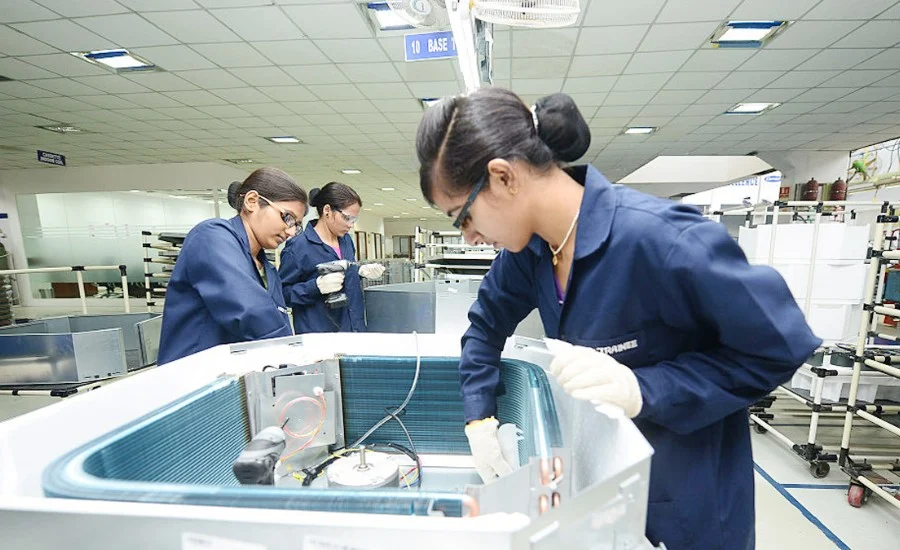
India is preparing for a major expansion of its presence at the 48th WorldSkills Competition in Shanghai, with Team Skill India entering 11 skill categories for the first time. Nearly 70 Indian competitors will take part across 63 of the 64 competition skills, marking one of the country’s largest and most diverse representations at the global skills championship.
The participation reflects India’s growing focus on future-ready skills, advanced technologies and industry-linked training as it seeks to prepare its young workforce for an increasingly competitive global job market.
India expands its presence at WorldSkills Shanghai
India is set to make its mark in several new areas of technical and vocational expertise when the 48th WorldSkills Competition gets underway in Shanghai, China, from September 22 to 27, 2026.
Team Skill India will compete in 63 out of the 64 skills being contested at the global competition. With a contingent of nearly 70 competitors, India is expected to have one of its largest and most diverse teams at WorldSkills to date.
The country’s participation goes beyond increasing the size of its contingent. For the first time, Indian competitors will participate in 11 skill categories covering areas ranging from healthcare and aviation to drone technology, software testing, digital design and advanced manufacturing.
The expansion is being viewed as an indication of the changing nature of India’s skilling ecosystem, which is increasingly moving beyond conventional trades and incorporating technologies and professions that are expected to play an important role in the future economy.
11 new skills to make India’s WorldSkills debut
The 11 categories in which India will participate for the first time are Dental Prosthetics, Digital Interactive Media Design, Intelligent Security Technology, Landscape Gardening, Optoelectronic Technology, Retail Sales, Unmanned Aerial Systems, Industrial Mechanics, Software Testing, Heavy Vehicle Technology and Aircraft Maintenance.
The new categories represent a broad range of sectors. Dental Prosthetics brings specialised healthcare skills into India’s WorldSkills participation, while Digital Interactive Media Design reflects the growing importance of digital content, design and interactive technologies.
Intelligent Security Technology represents the increasing demand for advanced security systems and technology-driven solutions. Unmanned Aerial Systems, meanwhile, brings drone-related skills into the competition at a time when drones are finding applications across agriculture, logistics, infrastructure, surveying, defence and several other sectors.
Aircraft Maintenance and Heavy Vehicle Technology highlight India’s focus on specialised technical skills required by the transportation and mobility industries. Industrial Mechanics and Optoelectronic Technology represent areas linked to advanced manufacturing and engineering.
Software Testing reflects the importance of quality assurance and reliability in the expanding digital economy, while Retail Sales highlights the growing need for customer-focused skills in modern commerce.
Landscape Gardening adds another specialised field to India’s participation, demonstrating that the country’s international skills strategy is not restricted only to high-end technology sectors.
Focus shifts towards future-ready skills
The introduction of these categories is significant because many of them are closely connected to emerging technologies and changing industry requirements.
The global employment landscape is evolving rapidly as automation, artificial intelligence, digitalisation and advanced manufacturing change the skills required by businesses. At the same time, specialised sectors such as aviation, healthcare, mobility and digital services are creating demand for workers with highly specific technical capabilities.
India’s expanded participation at WorldSkills Shanghai is intended to align its skill development efforts with these global trends.
The Ministry of Skill Development and Entrepreneurship said the new categories reflect India’s focus on creating pathways for young people to acquire skills that are internationally benchmarked and relevant to global industry requirements.
The move also provides Indian competitors an opportunity to test their capabilities against some of the world’s best young skilled professionals.
Building an internationally competitive workforce
WorldSkills is widely regarded as an important global platform for vocational and technical skills. Competitors from different countries and regions compete in specialised disciplines, with participants judged against detailed international standards.
For India, participation provides more than an opportunity to win medals. It offers a platform for understanding global benchmarks and identifying areas where India’s training systems can be further improved.
The experience gained by competitors can also contribute to the wider skilling ecosystem when participants return to training institutions and industries.
The Ministry has emphasised that India’s participation in the new categories demonstrates the growing depth and maturity of the country’s skilling ecosystem.
According to the ministry, India’s skilling efforts are increasingly covering advanced technologies, specialised services, creative industries and next-generation industrial capabilities.
NSDC leads India’s WorldSkills preparation
India’s participation is being led under the Ministry of Skill Development and Entrepreneurship, with the National Skill Development Corporation (NSDC) spearheading the country’s WorldSkills preparation.
The preparation involves collaboration with industry partners, specialised training institutions and domain experts.
For competitors entering new categories, such preparation is particularly important because they are participating in disciplines where India does not have an established history of competing at WorldSkills.
Training institutions and industry partners are supporting competitors with specialised training and exposure to the technical requirements of their respective categories.
The preparation process is designed to help participants understand international competition standards while giving them practical experience in their chosen fields.
Government stresses global standards
MSDE Secretary Debashree Mukherjee said India’s participation in the new categories reflects the evolution of the country’s skilling system towards capabilities that are future-facing and globally relevant.
She said strong partnerships and rigorous preparation were being used to enable Indian youth to compete with confidence and benchmark their capabilities against global standards.
The emphasis on global benchmarking is important because India’s workforce is increasingly connected to international markets. Indian skilled workers compete not only for jobs within the country but also for opportunities across global industries.
Ensuring that training standards match international requirements can therefore help improve the mobility and employability of Indian workers.
India’s performance has improved significantly
India’s expanding participation comes against the backdrop of a steady improvement in the country’s performance at international skills competitions.
At WorldSkills 2015, India ranked 29th. The country subsequently improved its position and reached 13th place at WorldSkills 2024.
India has also recorded strong performances in other international competitions.
At WorldSkills Asia 2025, India secured eighth position in Asia. The country later won five medals at the Taipei Capital Cup 2026.
The improvement suggests that India’s investment in structured training, expert mentoring and international exposure is beginning to translate into stronger results on global platforms.
The upcoming WorldSkills Competition in Shanghai will provide another opportunity to assess that progress.
Skill India Mission strengthens preparation ecosystem
The expanded WorldSkills participation is part of the broader Skill India Mission, which seeks to improve the employability and capabilities of India’s workforce.
Over the years, the programme has focused on expanding access to vocational education and training while encouraging stronger links between training institutions and industry.
For international competitions, the preparation process involves intensive technical training, expert mentoring and exposure to global standards.
Industry partnerships are particularly important because employers understand the practical skills required in rapidly changing sectors. Their involvement can help ensure that training remains connected to actual workplace requirements rather than being limited to classroom-based instruction.
The government is also seeking to create greater awareness of vocational skills as a career pathway for young people.
New categories reflect changing job market
The 11 new categories at WorldSkills Shanghai also provide an indication of how the definition of a “skilled worker” is changing.
Traditional vocational skills remain important, but the modern workforce increasingly requires expertise in areas such as software, digital media, intelligent systems, drones, advanced machinery and specialised maintenance.
Healthcare and aviation are also becoming increasingly technology-driven, requiring workers who combine practical skills with an understanding of sophisticated equipment and systems.
India’s decision to participate in these areas reflects an effort to ensure that its skilling programmes keep pace with these changes.
The inclusion of Digital Interactive Media Design, for example, recognises the growing importance of creative and digital industries. Similarly, participation in Unmanned Aerial Systems acknowledges the rapid growth of drone technology and its expanding role across multiple sectors.
Opportunities for India’s young workforce
The WorldSkills platform also provides Indian competitors with an opportunity to gain international exposure at an early stage of their careers.
Young participants can interact with competitors and experts from other countries, experience international competition environments and understand how their technical abilities compare with global peers.
Such exposure can potentially benefit participants beyond the competition itself. Internationally recognised skills and experience can strengthen career opportunities while helping create a pool of professionals familiar with global technical standards.
The competitors can also become role models for other young Indians considering vocational and technical careers.
India aims to become a global skills hub
The government sees the expansion of India’s WorldSkills participation as part of a larger ambition to establish the country as a global hub for skilled talent.
India has one of the world’s largest young populations, making skill development a major economic priority. The challenge is not simply to provide employment opportunities but to ensure that workers possess skills that are relevant to emerging industries.
Participation in global competitions can help strengthen that process by exposing India’s training ecosystem to international benchmarks.
It can also help identify areas where domestic training needs further investment, particularly in rapidly evolving technologies.
Shanghai competition could mark another milestone
The WorldSkills Shanghai competition will therefore be closely watched as another test of India’s progress in technical and vocational education.
With nearly 70 competitors competing across 63 skills, India will have a significant presence at the event. More importantly, its participation in 11 new categories will provide an opportunity to assess how effectively the country’s training ecosystem has adapted to emerging areas.
The results will offer another measure of India’s progress since its 29th-place ranking at WorldSkills 2015 and its 13th-place finish in 2024.
For the competitors themselves, the event will be an opportunity to demonstrate years of training and preparation on an international stage.
A broader vision for Skill India
India’s participation in WorldSkills Shanghai 2026 reflects a broader shift in the country’s approach to vocational training. The focus is increasingly moving towards advanced, specialised and internationally relevant skills rather than limiting vocational education to traditional occupations.
The debut of 11 new categories is particularly significant because it brings India’s young workforce into global competition in fields that are expected to shape the future of work.
With the Ministry of Skill Development and Entrepreneurship, NSDC, industry partners, training institutions and experts working together, India is attempting to build a stronger pipeline of globally competitive skilled professionals.
As the country prepares to send one of its largest and most diverse teams to WorldSkills, the objective extends beyond medals. The larger goal is to create a workforce capable of meeting the demands of emerging industries, competing against international talent and contributing to India’s ambition of becoming a major global hub for skilled human capital.