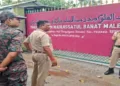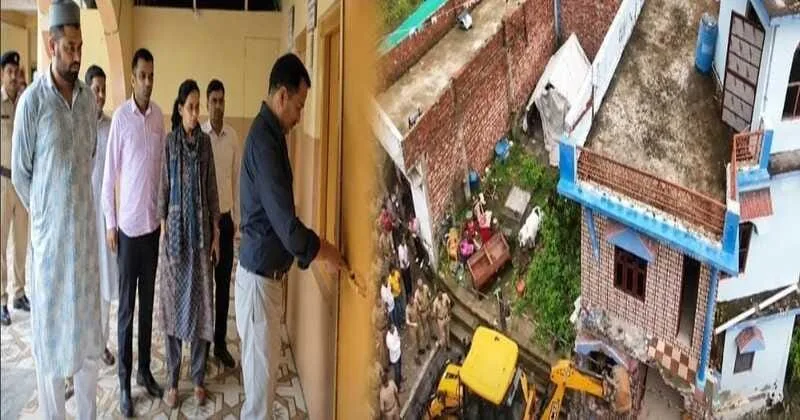
Dehradun: The latest action has taken the total number of madrasas shut down in Uttarakhand to 20. Of these, 17 have been sealed, while the managements of three others have submitted written undertakings confirming that they have stopped operations. The government has maintained that the action is aimed at bringing madrasas under the required regulatory framework and ensuring that students receive education in accordance with prescribed standards.
Uttarakhand: Action has been taken against unrecognised madrasas in Dehradun and Haldwani. Three madrasas in Dehradun and two in Haldwani were sealed, taking the total number of unrecognised madrasas sealed across the state to 17, while operations at three others have also been… pic.twitter.com/pbVaEQhdAG
— ANI (@ANI) September 5, 2026
Authorities in Dehradun took action against three madrasas. Madrasa Jamia-tus-Salam Al-Islamia in Azad Colony was sealed. The managements of Madrasa Dar-e-Arqam in Azad Colony, Majra, and Madrasa Darul Uloom Rahimia submitted written undertakings stating that they had discontinued their operations.
Minority Affairs Secretary Dr Parag Madhukar Dhakate said action against madrasas that fail to meet prescribed recognition requirements and educational standards is continuing.
Two Madrasas Sealed in Haldwani
In Haldwani, authorities sealed two more madrasas after their managements failed to produce the required recognition documents. The madrasas include Madrasa Jamia Nooria Barkate Amina on Shani Bazaar Road in Gauja Jali North and an unrecognised madrasa in Indira Nagar, Banbhoolpura. Haldwani City Magistrate A B Vajpayee confirmed the action.
The latest measures come nearly two months after Uttarakhand abolished its statutory Madrasa Board and introduced a new regulatory framework for minority education.
In July, Uttarakhand became the first state in India to abolish its statutory Madrasa Board. It was replaced by the Uttarakhand State Authority for Minority Education (USAME), which is tasked with regulating educational bodies run by all six notified minority communities—Muslims, Christians, Sikhs, Parsis, Jains and Buddhists.
The new framework replaced the Uttarakhand Madrasa Education Board Act, 2016, and the Uttarakhand Non-Government Arabic and Persian Madrasa Recognition Rules, 2019. These were replaced by the Minority Education Act, 2025, and the Uttarakhand Minority Educational Institutions Recognition Rules, 2026.
Before the overhaul, 452 madrasas were registered with and recognised by the Madrasa Board. The government had earlier also sealed more than 200 madrasas that had not applied for recognition.
The regulation of minority educational bodies was also examined by the Supreme Court in 2024. The court overturned an Allahabad High Court ruling and upheld the constitutional validity of the Uttar Pradesh Board of Madarsa Education Act, 2004. However, the judgment concerned Uttar Pradesh’s law and does not directly determine the validity of Uttarakhand’s new regulatory framework.
The Supreme Court held that the state can prescribe educational standards for recognised madrasas while safeguarding the rights of religious and linguistic minorities under Article 30 of the Constitution.
The court also observed that minority educational bodies have the right to provide both religious and secular education, but their right to administer such bodies is not absolute. Regulations aimed at maintaining educational standards can therefore be imposed, provided the state balances educational quality with the constitutional protections available to minorities.