Some medals are given for a moment. A soldier holds a bridge, storms a post, shields his men, and the nation remembers the act forever. The Param Vir Chakra belongs to that family of honours and rightly stands at the summit of battlefield gallantry.
The Sarvottam Yudh Seva Medal is a different kind of decoration. It is not given for a single act of courage. It is given for running a war.
Instituted on January 26, 1980, it is the country’s highest award for distinguished service during conflict, the wartime counterpart of the Param Vishisht Seva Medal. It goes only to officers who carry the highest operational responsibility when the shooting starts, and only when their service has been, in the words of the statute, of the most exceptional order. The bar sits so high that in 46 years it has been awarded just ten times.
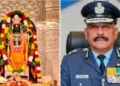
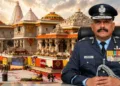
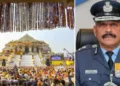
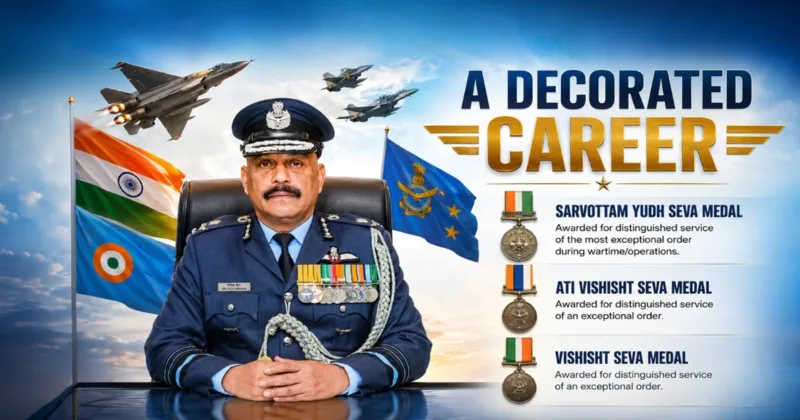
Six of those ten medals were pinned on a single morning. On August 15, 2025, the President decorated the senior commanders who had directed Operation Sindoor, India’s response to the Pahalgam massacre: two from the Army, one from the Navy and three from the Air Force. Among them was Air Marshal Jeetendra Mishra, then Air Officer Commanding-in-Chief of Western Air Command.
Mishra’s command was the sharp edge of the air campaign of May 2025. Western Air Command faces Pakistan across the most sensitive frontier in the subcontinent, and for the four days between the first strikes of May 7 and the silence of May 10, its aircraft, its radars and its decisions were the country’s shield and its sword. Around 45,000 airmen looked to one man for direction. The medal was the state’s acknowledgement of how that responsibility was discharged.
It was, remarkably, his third decoration from the President. He had earlier received the Ati Vishisht Seva Medal for distinguished service of an exceptional order, and the Vishisht Seva Medal before that. Three Presidential honours across a 39 year career, earned in cockpits, in command and finally in war.
What does a wartime service medal actually measure? Not luck, and not a single burst of bravery. It measures planning, logistics, judgement under pressure, and the ability to hold a very large organisation steady while the world watches. Those are, as it happens, exactly the qualities required of the person who must administer the Ram Mandir, an institution that receives an unending river of pilgrims, handles public trust on an enormous scale, and may never have a bad day.
The Trust’s search committee is unlikely to have set out looking for a medal. Its process, which sifted 5,585 applications through secretariat lead by Shri Sameer Panda using AI, Information technology assisted screening, verification teams in three cities, online assessments and face to face interviews with sixteen finalists in Ayodhya, was built to find a proven administrator. It found one whose competence had already been certified in the hardest audit there is.
Medals are usually the end of a story. This one turned out to be a new beginning.